Edgewood is small enough that most people driving through on Orange Avenue don't realize they've entered a separate city at all. It runs along that corridor just south of downtown Orlando, and at roughly 1,121 housing units, it's one of the smaller incorporated cities in the metro.
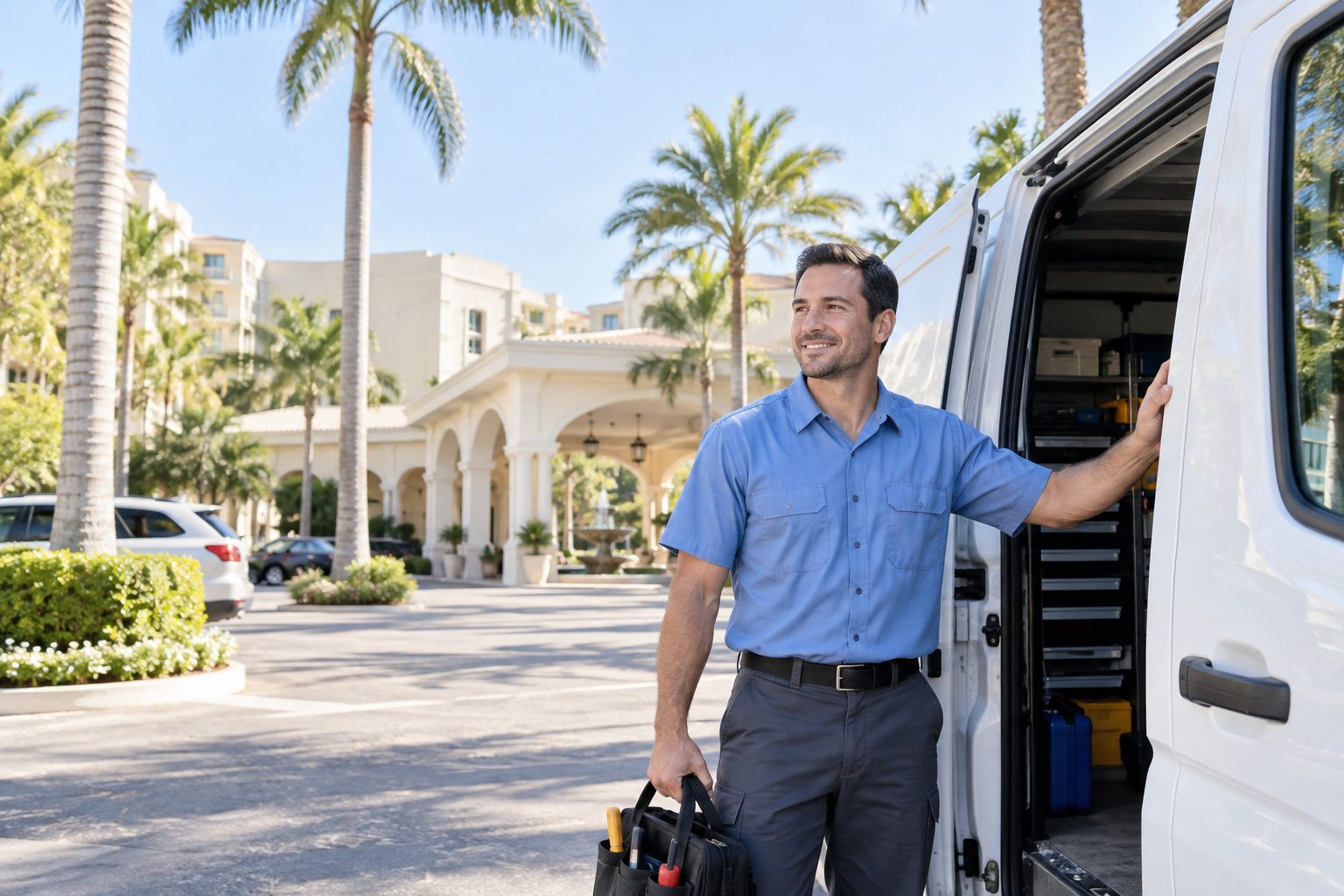
Almost all of that housing is single-family, and occupancy sits above 95 percent -- this is a settled, lived-in place, not a transient one. That matters for the kind of locksmith work that shows up here: it's residential, it's local, and it's rarely a commercial call.
With roughly 1,121 housing units and occupancy above 95 percent, Edgewood doesn't have the apartment turnover or the rental churn that drives a lot of rekey work in bigger cities nearby. Most calls here come from people who've lived in the same house for years and need a lock repaired, a key replaced, or a new deadbolt put in after a move-in or a break-in attempt -- not from property managers cycling through tenants.
A settled homeowner base also means fewer calls driven by move-outs and more driven by wear -- a deadbolt that's stiffened up after years in Florida humidity, a key that's been copied so many times it barely turns anymore, or a front door lock that's simply outlasted its useful life.
Edgewood's location, a few miles south of downtown Orlando along Orange Avenue, puts it in an odd spot: too small to have its own commercial strip, too close to the city to feel remote. For a mobile locksmith, that mostly means quick access -- we're not driving far to reach a house here, whichever ZIP code it sits in, 32809 or 32839.
That in-between position also means Edgewood addresses sometimes get lumped in with neighboring Orlando neighborhoods on paper, even though the city is its own incorporated municipality with its own local government. The lock on the door doesn't care about the boundary line, but knowing where a job actually is helps route the right hardware to the right house the first time.
Edgewood splits across 32809 and 32839, and a call to either side of the city means a short trip out from downtown Orlando rather than a long haul across the metro -- relevant on a hot afternoon when a family is standing outside a locked door with kids or pets waiting. The 32809 ZIP code stretches beyond Edgewood into surrounding areas too, so an address with that code isn't always inside the city, another small detail that matters more for routing a job correctly than for anything else.
Without a defined retail or office district, the calls we get in Edgewood are the basics done right: house lockouts, deadbolt installation, rekeying after you move in or after a housekeeper who still has a key stops working for you, and replacing worn locks on older single-family homes. There's nothing exotic to advertise here, and that's fine -- most homeowners just want the door to lock properly again.
We serve all of Edgewood, ZIP codes 32809 and 32839.
Lockouts, rekeys, and lock repair anywhere in Edgewood -- (407) 792-1378.
A lot of the single family homes in Edgewood were built decades ago, and many are the concrete block ranch style houses you see all across the older parts of Orange County. These houses were solidly built, but the door hardware on them often reflects a time when a single knob lock on the front door was considered enough. When we arrive at an Edgewood house for a lockout or a repair, it is common to find one or more of these:
None of these are emergencies on their own, but together they tend to mean a house that is harder to secure and more confusing to live in than it needs to be. A single visit can often sort all of it out.
If your front or back door has only a knob lock, adding a deadbolt is one of the most worthwhile upgrades you can make. A knob lock uses a spring latch that is angled on one side so it can close on its own. That same angle is what makes it easier to slip or pry. A deadbolt uses a solid, square ended bolt that has to be thrown with a key or thumb turn, and it extends much deeper into the frame.
Installing one on a door that never had it involves drilling a new bore hole through the face of the door and a smaller cross hole through the edge, then cutting a pocket in the frame for the bolt and mounting a strike plate. On older solid wood doors this is routine. On hollow core doors, which sometimes show up on back entries in older homes, there may not be enough solid material to hold a deadbolt securely, and replacing the door itself may be the better answer. We will tell you which situation you are in before drilling anything. The details are on our deadbolt installation and repair page.
In a settled community where people have lived in the same house for years, a very common problem is the key itself. A key cut from a copy of a copy loses a little accuracy each generation. Eventually you get a key that only works if you pull it back slightly, jiggle it, or lift up on the door. People often blame the lock, but the real issue is that the key no longer matches the pins inside.
The fix depends on what is worn. If the lock is in good shape, we can cut a new key to the correct code, or rekey the cylinder and cut fresh keys from the start. If the pins inside the lock are worn along with the key, rekeying replaces those pins and solves both problems at once. If you still have the original key that came with the lock, keep it in a drawer and use it only for making copies. That one habit prevents most of this.
Wrought iron security doors and window bars are common on older homes throughout the corridor south of downtown. They add a layer of protection, but they also add locks that people rarely think about until something goes wrong. Security door locks are exposed to rain and sun all day and tend to rust and seize. When they do, the key may turn partway and stop, or not go in at all.
Two points worth considering if your home has bars or a security door. First, make sure every bedroom window with bars has a quick release that opens from inside without a key. In a fire, bars that cannot be opened from inside are a serious danger. Second, try to get the security door on the same key as the main door behind it, so you are not fumbling with two different keys on a dark porch. Both are things we can look at while we are there.
Almost every older ranch house in the area has a sliding glass door to the backyard or a screened patio. Over time the rollers wear, the door drops in its track, and the latch on the handle no longer lines up with the keeper on the frame. At that point the door may look closed but is not actually latched. A dowel in the track helps, but it is a workaround. A proper repair realigns the door and replaces the latch, and a secondary lock such as a foot bolt or a pin through the frame adds real protection. Our sliding patio door locks page covers the options.
When a home has been broken into, or when someone clearly tried and failed, the first job is making the house secure again that same day. Kicked doors usually split the frame around the strike, and a new lock mounted into a split frame will not hold. The right repair reinforces the frame with a longer strike plate and screws that reach the wall framing, then installs or rekeys the lock. If keys were taken, or if you cannot be sure they were not, every exterior lock should be rekeyed. Our lock change after a break in page lays out that process step by step.
If you have had a break in, take photos of the damage before any repair for your records and any insurance claim, and file a police report if you have not already. We can work around a report being filed, but it is much easier to document the damage before we start changing things.
Because so many Edgewood homes have stayed in the same hands for a long time, we see situations tied to family changes. An adult child takes over care for a parent and needs to know who else has a key. A family member passes away and the heirs need to secure the house while the estate is sorted out. A house that has been a family rental for years is finally being sold.
In each case, the question is the same: nobody can say for sure how many keys are out there. Rekeying every exterior lock gives the family a clean starting point. For estate situations we will need to see some paperwork showing you have authority over the property, such as a letter of administration or a document from the attorney handling it. That can feel like extra hassle at a hard time, but it protects the property from anyone who might try to claim access without the right to it.
For an older homeowner who has caregivers, nurses or family visiting at different times, a keypad deadbolt can be easier than handing out physical keys. Each visitor gets their own code, and codes can be removed when someone stops coming. Many of these locks also keep a regular key cylinder as a backup.
Larger older lots in the area often have a shed, workshop, or detached garage in the back. These tend to have cheap hasps and padlocks, or a basic knob lock on a thin door. If you store tools, lawn equipment, or bikes back there, it is worth upgrading to a heavier padlock with a shrouded shackle, or a proper deadbolt on a solid door. Side gates on chain link or wood fences also benefit from a lockable latch, since the backyard is where most forced entries into single family homes are attempted, out of view of the street.
In Edgewood, as everywhere around Orlando, a summer afternoon usually means heat, then a downpour, then steam coming off the pavement. That cycle matters for locks in a couple of ways.
First, it matters for lockouts. A lockout in the middle of a summer afternoon is uncomfortable for anyone, and it can be dangerous for small children or pets left inside a car or a closed house without air conditioning running. If a child or a pet is locked inside a hot car, tell us right away when you call, and if the situation looks serious, call 911 as well. Emergency responders can act faster than anyone else in a true emergency.
Second, it matters for hardware. Doors swell with moisture, and a deadbolt that throws easily in the dry season may bind during the rainy months. Locks exposed to rain on a porch without an overhang can collect grit and rust. A little dry lubricant in the keyway once or twice a year and a quick check that the strike plate is still aligned will prevent a lot of problems.
Older homes with wood doors and original frames can be more vulnerable to wind driven rain and pressure than newer construction. Before a storm, check that every exterior door closes tightly and that the deadbolt goes all the way into the frame. Doors on the windward side benefit from a deadbolt at the top and one near the middle, or at least a slide bolt at the top and bottom on the inside of double doors. Know how to open your garage door by hand if the power goes out, and make sure there is a way to lock it again once it is down. After a storm, if a door has been damaged or a lock is jammed, avoid forcing it. A locksmith can usually open a stuck door without splitting the frame, which saves a much larger repair.
While most Edgewood work is residential, people still lock keys in their cars in driveways, at nearby stores, and at gas stations along Orange Avenue. For those calls we will need to know the year, make and model of the vehicle, where exactly it is parked, and whether the engine is running. We open vehicles with tools designed to avoid damage to the door, glass, and weather seals. If the key is lost rather than just locked in, we can often cut and program a new one on the spot for many vehicles, as described on our car key replacement page.
If you are replacing old locks in an Edgewood home, it is worth spending a little more for a solid deadbolt with a hardened bolt, a reinforced strike, and a finish meant for outdoor use in a humid climate. Cheap locks from big box stores often use thin metal and plated finishes that start to pit in a few years of Florida weather. A well made lock on a properly reinforced frame will outlast several of those, and it gives you a better door every day in the meantime. We can explain the differences in person and let you choose what fits the house and your budget.
Edgewood homeowners tend to take care of what they have and keep it for a long time. The same approach works for locks: get the right hardware installed properly once, keep track of who has keys, give it a little maintenance each year, and it will serve the house for a long time.