Six services, one number, and a price agreed before anyone drives out. Call
Locksmith work splits into five kinds of job, and they have very little in common with each other. A house rekey after a closing, a car with no key present, and a storefront door that has stopped latching are three different trades wearing the same name. Pick the one that matches your situation.
Move into almost any home in metro Orlando and the same question tags along: who else still has a key. A previous owner. A property manager. A contractor who never turned one in. A former roommate, a past tenant, an ex who moved out but not entirely. Residential locksmith calls start there more often than they start with a broken lock, the hardware on the door is usually working fine. What's unclear is who can still open it.
A person is on the wrong side of their own door right now. Keys are inside, in a car, or broken off in the cylinder. Nothing else about the situation outranks that one fact. Emergency locksmith work covers the gap between locked out and back inside, and the part right after that, when the door has to be made right again.
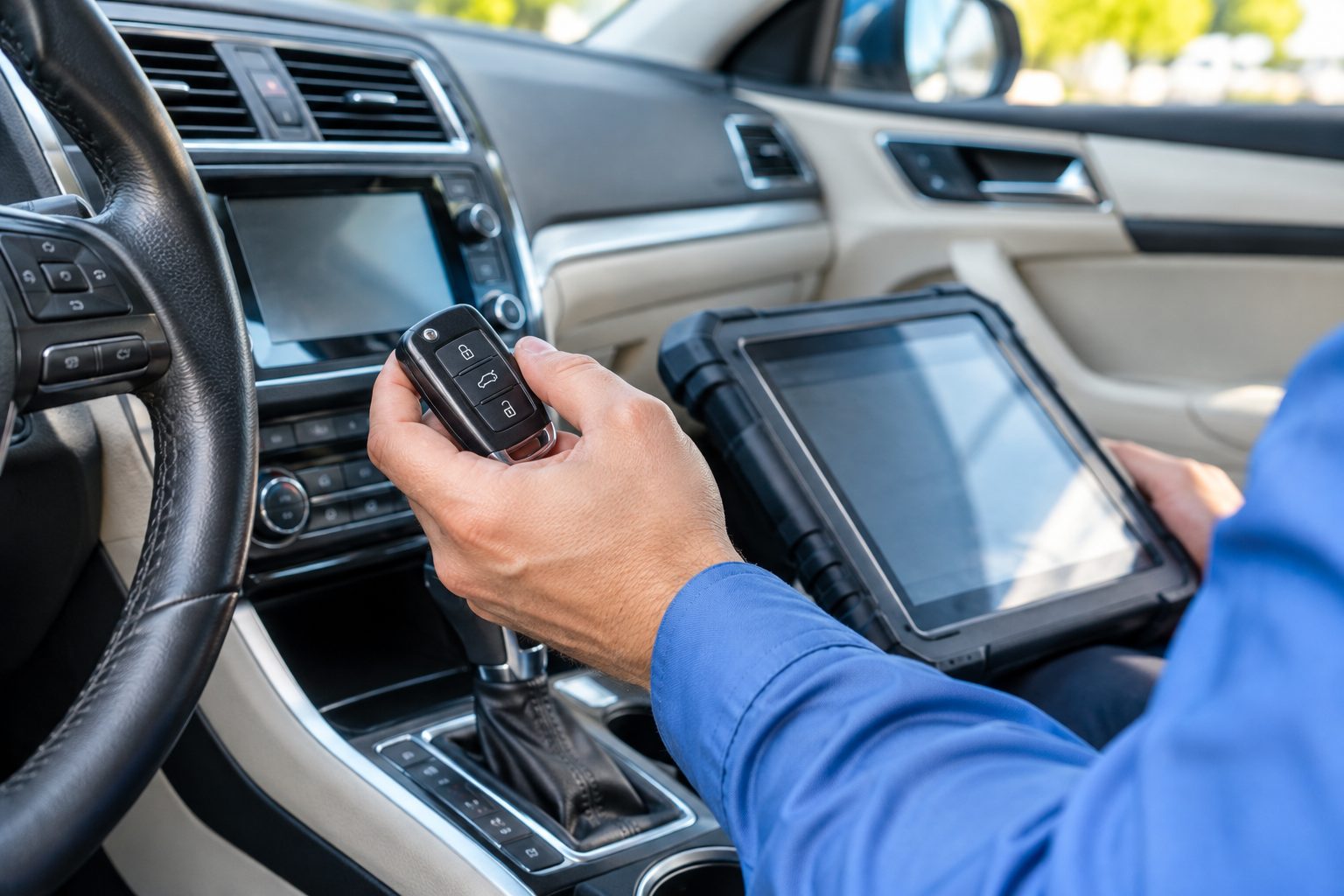
A car key hasn't been just a piece of cut metal in a long time. Since the late 1990s, most vehicles pair the physical key or fob with a transponder chip that talks to the car's immobilizer, a short radio exchange that has to go correctly or the engine won't start no matter how well the blade was cut. Cutting the blade is the mechanical half of the work, and it's also the smaller half. Getting the vehicle to accept the result is the actual job.
A front door on a house gets used a handful of times a day. A front door on a storefront gets used hundreds of times before lunch. Commercial hardware doesn't wear out on a calendar, it wears out on a cycle count, and a door that's three years old with heavy foot traffic can be more worn than a house door three decades older. That single difference reshapes almost everything about how this category of work gets approached.
Every lock has a limit, and most locks never get tested against it, a Grade 2 residential deadbolt is more than enough for a door that just needs to keep out an opportunist. This category starts past that point, where a standard cylinder is no longer the part of the door most likely to fail, and something else has to take over: a restricted keyway that can't be duplicated at a hardware store kiosk, an electric strike wired into a door's release logic, a closer tuned precisely enough to matter for compliance instead of just convenience.
Most people who call us do not describe their problem in locksmith terms, and they should not have to. "My key stopped working," "the door will not lock," and "I lost my keys" can each mean several different jobs. Here is how the most common situations usually map to the services above.
If none of those fit, describe what you see and hear. A lock that clicks, a key that spins, a door that has to be pushed or lifted, a keypad that beeps but does nothing: each points to a different cause, and the description helps us arrive with the right parts.
These three get confused more than any other choice in residential and commercial work. Rekeying changes the inside of the existing lock so a new key works and old keys do not. The hardware stays on the door. It is the right choice when the lock works well and looks fine, and the only problem is who has keys.
Replacing swaps the lock for a new one, usually of similar type. It makes sense when the lock is worn, damaged, corroded, or does not match the rest of the house. Upgrading means moving to something stronger or different: a heavier deadbolt, a reinforced strike, a restricted keyway, a smart lock, or commercial grade hardware on a business. It makes sense when the lock you have is not the right tool for the door. Many visits combine all three. One door is rekeyed, one worn lock is replaced, and the back slider gets a secondary lock.
When you call, we ask what happened, where you are and what kind of lock, car or door is involved. That lets us give a price over the phone before anyone drives out, so the number you hear is the one we are working from. If something on site changes the job, for example a lock turns out to be damaged in a way that was not visible from the description, we tell you before doing extra work.
On site, the first step for any lockout or key job is confirming that the person asking has the right to have it done. For a home, that is usually an ID with the address or another document tying you to the property. For a car, it is the registration or title matching an ID. For a business, it is someone authorized by the owner or the property manager. This step protects you. The same check applies to anyone who calls about your home or car.
A few details make any visit smoother.
Central Florida is hard on locks in ways that people who move here from colder places often do not expect. Humidity keeps moisture in keyways and on metal parts nearly all year. Heavy afternoon thunderstorms in summer soak doors and frames, which swell and throw deadbolts out of line. Direct sun heats dark doors and keypads well beyond the air temperature, draining batteries and expanding metal. And sand, pollen and dust find their way into every keyway.
None of this means Florida locks fail constantly. It means they reward a little attention. A dry lubricant once or twice a year, a quick check that each deadbolt throws without pushing the door, and a look at any key that starts to stick prevent many of the calls we get. When a lock does start to act up, the cause is often the door or the weather rather than the lock itself.
From June through November, it is worth keeping a short lock checklist in mind. Before a storm, make sure every exterior door closes and locks with the deadbolt, set the flush bolts on double doors, bar sliding doors, and check side doors on garages and sheds. Put spare keys, garage opener instructions and any lockbox codes somewhere you can reach if you evacuate. For businesses, make sure more than one person has keys and alarm codes.
After a storm, walk the property. Water and wind can shift frames, and extended power outages drain smart lock batteries and stop garage doors and electric gates. If a lock that worked before the storm now binds, have it adjusted before a key breaks.
Some calls follow the calendar. Late spring and late summer bring lease turnovers, especially near UCF, Full Sail and other schools, and a lot of rekeying for property managers. Summer brings more car lockouts, because people leave keys in running cars to keep the air conditioning on. The winter months bring seasonal residents opening up homes that sat closed for months, with locks that have gone stiff from disuse. Holiday travel brings lockouts from returning travelers whose keys stayed in a checked bag or with a house sitter. Knowing these patterns helps you plan. If you manage rentals, schedule rekeys early in turnover season.
We are mobile, and every service on this page is done at your location, whether that is a house, an apartment, a business, a parking garage or the side of a road. Coverage includes Orlando and the surrounding cities in Orange, Seminole, Osceola and nearby Lake County. City pages describe local details for places such as Winter Park, Kissimmee, Lake Nona, Sanford, Clermont and Alafaya. If you do not see your town listed, call and ask.
"I need new locks because I moved in." Not always. If the locks are in good shape, rekeying gets you the same result with the hardware you already own.
"A push-to-start car needs the dealer for a new key." For many makes and models, a replacement fob can be programmed at the car, without a tow.
"My smart lock means I do not need a key." Most smart locks still have a keyed backup, and dead batteries or electronics failures make that key important. Keep it somewhere you can reach from outside the house.
"Do Not Duplicate on the key means nobody can copy it." It does not. If controlling copies matters, a restricted keyway is the real solution.
"The lock is broken because it is hard to turn." Often the door has moved and the bolt is rubbing the strike. Fixing alignment usually fixes the lock.
Car key jobs are easier to understand once you know which kind of key the vehicle uses. A plain metal key with no chip, found on older vehicles, only needs to be cut. A transponder key looks like a regular key with a thick plastic head, but it has a chip inside that the car must recognize before the engine will run, so it has to be cut and then programmed. A remote head key combines the blade, the chip and the lock and unlock buttons in one piece. A flip key folds its blade into the fob. A smart key or proximity fob never goes into the ignition at all. The car senses it nearby, and a push button starts the engine. Most smart keys still hide a small mechanical blade inside for the door.
Knowing which one you have tells you roughly what the job involves. A spare for a car that still has one working key is simpler than a replacement when every key is gone, because the car's security system can often learn a new key more easily when an existing one is present. The pages for key fob replacement, key programming and the car keys by make section cover specific vehicles.
A lockout is usually an inconvenience, but a few situations change the priorities. If a child, an elderly person or a pet is locked inside a car, especially in Florida sun, call 911 first. A closed car heats up fast, and emergency responders can act immediately. If you are locked out at night, wait somewhere well lit, such as a store, a neighbor's porch or inside a friend's car. If you are locked out of a house and something inside is running, like a stove or a bath, tell us right away and consider calling the fire department if there is any risk.
If someone approaches offering to help open your door or car and you did not call them, decline. Wait for the service you called and confirm the company name when they arrive.
Whether you call us or someone else, a few questions help you avoid bad experiences. Ask for the company's name and confirm it when the technician arrives. Ask for a price, or at least a clear range, before anyone drives out, and ask what could change it. Be cautious of very low advertised prices that grow once the work begins. Ask whether they plan to pick or bypass the lock before drilling, since most residential lockouts do not require drilling. And expect to be asked for proof that you live at the address or own the car. A locksmith who does not check is one who would open your door for someone else too.
A lock is only as strong as what it is mounted in. On many homes, the easiest way to make a door harder to force is not a more expensive lock but longer screws in the strike and hinges, a solid core door instead of a hollow one, and a strike plate that spreads force across more of the frame. Sliding doors benefit from a bar in the track and a secondary lock. Windows near doors benefit from film or laminated glass. Lighting, trimmed shrubs near entries, and a visible camera or doorbell add to the picture. We are happy to point out the weak spots on any door we work on, whether or not you choose to change anything.
If you manage several properties or run a business with more than a few doors, it helps to think about locks as a system rather than one door at a time. Decide who needs access to what, keep a written record of keys issued, and set a standard lock and keyway across properties so parts and keys stay consistent. The master key systems and commercial security assessment pages explain how to set that up. For rental portfolios, building the rekey into every turnover checklist is the single habit that prevents the most problems.
Businesses also benefit from planning for the unusual day: the morning the only keyholder is sick, the night an alarm goes off and nobody can reach the building, or the week after a storm when power is out. Knowing who holds keys, where the spare set lives, and which doors fail locked or unlocked during an outage turns those days from emergencies into routine calls.
Describe the situation by phone and we will tell you what the job involves. Quotes are given by phone. Jobs that cannot be quoted without seeing them need a technician on site, and the service call charge is explained on the phone before anyone is dispatched.