If a baby, child or animal is locked inside a car, call 911 first. Heat inside a closed vehicle in Florida rises quickly, and minutes matter. This page explains why emergency crews come first, what to do while you wait, and how a locksmith can help afterward.
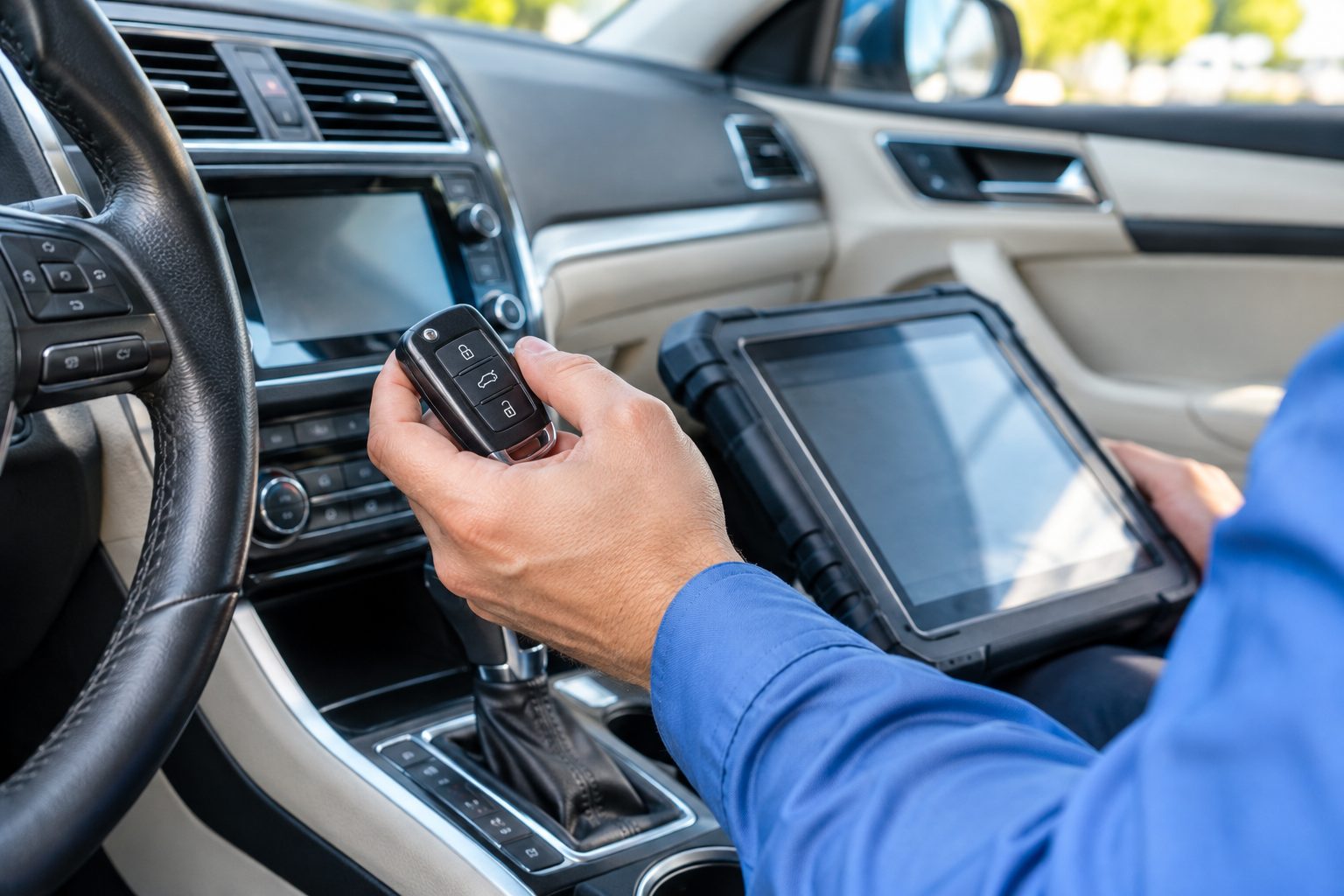
If a child is locked inside a vehicle, the first call is to 911. Not a locksmith, not a friend, not a roadside service. Emergency dispatchers can send fire rescue and law enforcement, who carry tools and training for this exact situation, and who are authorized to enter the vehicle immediately if a life is at risk. A locksmith cannot be there as fast as an emergency crew in most cases, and a locksmith is not an emergency service.
Tell the dispatcher your exact location, the color and type of car, how many people or animals are inside, their approximate ages, and whether they are awake and responsive. Stay on the line as long as the dispatcher asks you to. They may give you instructions suited to your exact situation, and those instructions override anything you read here.
This page is written for the moments after that call, and for the later stage when the emergency is over and the lock or key issue still needs sorting out. It is not a substitute for emergency services, and it does not describe how to open a car, because the safest and fastest path in a life-threatening case is professional rescue.
A parked car works like a small greenhouse. Sunlight passes through the windows, warms the seats, dashboard and floor, and those surfaces release heat as the air. The glass then traps that heat. In Central Florida, where summer sunshine is strong and humidity makes the heat harder for the body to shed, the inside of a closed car can become dangerous far faster than most people expect.
Cracking a window helps very little. Shade helps a little, but not enough to rely on. A car parked in the shade still warms in the heat of the day, and the sun moves. A dark dashboard or dark seats absorb more heat. An older child can sometimes cope longer than an infant, but young children heat up faster than adults because their bodies regulate temperature less efficiently.
Animals are at even greater risk. Dogs cool themselves by panting, and in a hot, humid, closed space panting stops working. The point to remember is that waiting is not safe. Even on a day that does not feel extreme, the interior of a closed car can reach dangerous heat. There is no safe amount of time to leave a child or animal unattended in a vehicle, and no amount of reassurance changes that.
While the call is in progress and help is coming, there are some safe, useful things you can do. Stay with the vehicle. Keep eye contact with the child if you can, speak calmly, and let them know help is on the way. If the child is old enough, they may be able to unlock the door from inside or press the unlock button, and you can coax them through it from the window with simple, calm instructions.
If the car has a key fob, try every button, since a second fob, a phone app or a spare key may be reachable. Many modern vehicles have a phone app or a roadside assistance service that can unlock the car remotely. Call the manufacturer's assistance line or the number on your insurance card only if the dispatcher says that is useful, and never at the cost of delaying the 911 call.
Do not leave the scene to look for a spare key unless the dispatcher says to, and do not ask a bystander to leave either. The more people who know where the car is and what is happening, the better. A bystander can flag down arriving responders or move the crowd to give them space.
If the child is in clear distress, such as limp, unresponsive or struggling to breathe, tell the dispatcher at once. They may advise you on what to do next, including whether to break a window yourself. That decision belongs to the dispatcher and to you in the moment, not to a web page.
Many people ask whether they should smash a window. This page will not give instructions for forcing entry. In an emergency, the dispatcher is the right person to talk through that choice with you, and Florida law generally gives some protection to people who act in good faith to rescue a child or animal in danger, though you should ask the dispatcher about your specific situation rather than rely on a general statement.
If a window must be broken, it is typically done on the side furthest from the child, using a tool made for the job, and with care for flying glass. Rescue crews do this quickly and safely. A rushed attempt by an untrained person can injure the child, and tempered side glass does not always break easily.
If you are at a theme park lot, a shopping center or a hotel garage, staff and security can often reach the scene fast, and they will call emergency services as well. Do not assume someone else has already called. If you see a child alone in a hot car, call 911 yourself.
A mobile locksmith is the right call when the situation is a lockout without immediate danger, such as keys inside the car with no child, pet or vulnerable person present. In that case a technician can open the vehicle with minimal damage, and our page on car lockout service explains how that works in general terms.
In a case where a child or animal is inside, a locksmith is a backup, not a first response. If emergency crews have already opened the vehicle, the locksmith's work comes later: repairing a damaged lock, a broken window latch, a key that was lost during the event, or a fob that no longer works. Our pages on a key fob not working and car key replacement are useful for those follow-up tasks.
If you are in a situation where a child is not in danger, such as an older child who is locked in, awake, calm, in a shaded and ventilated spot and able to talk with you, call for help promptly anyway and keep the child informed. If conditions change, call 911. When in doubt, always call 911 first.
Most of these incidents are not about carelessness. They are about routine and distraction. A parent juggling a stroller and bags closes a door with the key fob left on the seat. A toddler plays with a fob and presses lock. A car with an automatic locking feature locks as the driver steps away. A rental car with an unfamiliar fob locks when the driver does not expect it. A vehicle left running while the owner steps out can lock itself.
Smart keys add their own twist. A keyless vehicle may lock when the fob moves away from the car, and a fob left inside the cabin sometimes cannot be detected, causing the car to lock behind you. A dead fob battery can leave you unable to use the unlock button. Our guide on what an immobilizer is explains why modern keys depend on electronics.
Visitors to Orlando face particular risk. Parking lots at attractions are large, the sun is intense, and people are often tired and carrying a lot. A rental car with an unfamiliar key makes mistakes more likely. Our guide on rental car key lockouts explains what to do when the vehicle is a rental.
Prevention is simple and worth building into routine. Put something you need, such as a phone, a wallet or a shoe, in the back seat so you have to open the rear door every time you leave. Look in the back seat every time you park. Keep a spare key with a trusted person, not in the car. Never let a child play with a key fob, and keep fobs out of reach.
If you use a key fob with a lock button, learn how your vehicle behaves. Some cars lock automatically after a few moments, some lock when the fob walks away and some lock if the doors are closed with the engine running. Read the owner's manual so there are no surprises. If you have a phone app for your car, set it up in advance and test it.
Consider a spare key kept safely at home and one more with a family member who lives nearby. Our page on spare key duplication covers how spares are cut and programmed. And our guide to lockout prevention habits collects practical routines that reduce lockouts of every kind.
If you see a child or animal alone in a hot car, you can help. Note the car's description and plate, and look for signs of distress. Call 911 and give them the location. If you are at a store, ask staff to page the owner. Stay near the car until help arrives so you can tell responders what you saw.
Do not leave the scene because the owner returned. Let the responders decide whether the situation is resolved. Be kind to the owner, because most of these events are accidents. A calm approach is more likely to produce a quick resolution than an angry one.
If you are in a position to document the situation, a time stamped photo of the car and its surroundings can be useful to responders. Do not post personal details of the family on social media, since the focus is on safety, not blame.
Knowing the warning signs helps you describe the situation clearly to the dispatcher. In a child, flushed or very hot skin, unusual sleepiness, confusion, fussiness that turns to limpness, heavy sweating or an absence of sweating, vomiting and fast breathing are all reasons to say the situation is urgent. In an infant, the signs can be subtle, so any change from normal behavior counts. In a dog, heavy panting, drooling, bright red gums, stumbling or collapse are danger signs.
Tell the dispatcher what you can see, not what you guess. Say whether the child is moving, whether their eyes are open, whether they respond to your voice through the glass. Those details help the crew decide what equipment to bring and how fast to move.
Once the child is out, the right care is to move them to a cool, shaded place and let medical responders take over. Do not give food or drink to a child who is drowsy or confused, and follow the dispatcher's guidance on cooling. Even a child who seems fine afterward should be checked by medical professionals, because heat illness can progress after the event.
Parents and caregivers are often shaken after an event like this. It helps to remember that the goal was achieved: the child is safe. The later work of repairing a lock or replacing a key can wait until everyone has been looked after.
After a rescue, the car may need repair. A window may be broken or a lock damaged. Keys may have been lost in the confusion. The vehicle's electronics may have been disturbed by the entry. A locksmith or glass shop can take care of the practical work, and many drivers need a replacement fob or key because the original was locked inside or damaged.
When you call a locksmith for this follow-up, tell them what happened so they can plan. Mention whether the car still starts, whether the fob works, whether a window latch or door lock mechanism is damaged, and the make, model and year. For key work, they will ask for proof of ownership and identification, which is standard. Our guide on documents needed for car key replacement explains what to have ready.
Quotes are given by phone only, and a service call charge applies. That charge is explained on the phone before any technician is dispatched. For complicated work, an on-site visit may be needed. If there is any current danger to a person or animal, put down this page and call 911 now. When the emergency is over and you need help with the car, call and we will go through the steps with you.
Call 911 first. Emergency crews are trained and equipped to enter a vehicle quickly when a life is at risk, and they can arrive with the authority to act at once. A locksmith is a good call for follow-up repairs or for a lockout where no one is in danger. If you are unsure whether it is an emergency, treat it as one.
There is no safe length of time. Heat builds quickly inside a closed vehicle, and young children and animals are more vulnerable than adults. Cracked windows and shade do not make the cabin safe. If a child or animal is locked in, call 911 immediately and stay with the vehicle until responders arrive.
That decision should be made with the 911 dispatcher, who can assess the situation and guide you. Breaking glass can injure the child and is not always easy on modern windows. Rescue crews do this safely and quickly. Stay on the line, follow the dispatcher's guidance and do not rely on a web page for that choice.
Try it at once, but still call 911 first or have someone else call while you try. Many cars have an app, a spare fob or a roadside assistance line that can unlock the vehicle. Using them can be quicker than waiting, but they should not delay the emergency call, since crews can be on the way while you try.
Any reputable locksmith will tell you to call 911 first. A locksmith is not an emergency service and may not arrive as quickly as rescue crews. If the situation is not an emergency, such as an older child who is calm and safe, a technician can help, but conditions can change quickly, so call 911 if there is any doubt.
After a rescue, a locksmith can repair a damaged door lock, replace a lost or damaged key or fob, and program a new key to your car. They will ask for proof of ownership and identification. Quotes are given by phone, a service call charge applies and is explained before dispatch, and complicated jobs may need an on-site visit.
Describe the situation by phone and we will tell you what the job involves. Quotes are given by phone. Jobs that cannot be quoted without seeing them need a technician on site, and the service call charge is explained on the phone before anyone is dispatched.