Almost 23,000 housing units sit inside Altamonte Springs, and the 2020 census makes one thing clear: this is not a single-family town. Apartments and condos dominate the count, and that changes what a locksmith actually does here day to day, less porch-side deadbolt work, more building-by-building scheduling.
Where a subdivision city sends us to one front door at a time, Altamonte Springs sends us into buildings, hallway after hallway of units that share a leasing office, a maintenance closet, and a rekey schedule that never really stops. We work with residents directly and with the property managers who run these communities.
Every lease that ends is a lock that needs new pins. In a city built mostly of rental units, that is not an occasional job, it is the steady background work that keeps a property manager's book full. We cut new keys to match a rekeyed cylinder rather than swap the whole lockset, which keeps the unit's existing deadbolt and knob in place and keeps the cost down for whoever is paying the invoice.
Property managers here often want several units done in a single visit, a move-out on one floor, a move-in on another. We can sequence that kind of work in one stop instead of scattering it across separate calls, which is easier on a maintenance schedule than it sounds.
Apartment and condo living usually means a bank of mailboxes instead of a single box by the front door, and those locks fail the same way house locks do, worn tumblers, snapped keys, a resident who lost the only copy. A cluster box lock is a smaller mechanism than a deadbolt, and it is not always something a leasing office can source on its own, so having someone who carries the right blanks matters.
The same goes for shared gates, pool access, and package rooms. None of it is glamorous, but a locked-out mail carrier or a resident who cannot reach their own mail is not something to leave for later.
SR 436 through Altamonte Springs is one of the busier retail stretches in Seminole County, and Uptown Altamonte layers apartments over ground-floor shops rather than separating the two. That mix means a storefront lock and a residential deadbolt can be twenty feet apart in the same building, and the hardware for each is different.
Retail tenants along this corridor handle with commercial-grade cylinders, panic hardware on rear exits, and roll-down gates, none of it interchangeable with what goes on an apartment door upstairs. We carry stock for both because the corridor asks for both.
Mixed-use buildings also tend to have shared interior corridors connecting the retail level to the residential floors above, and those corridor doors are usually rated hardware rather than a standard residential lockset. Servicing one means knowing the difference before showing up with the wrong cylinder in hand.
Not everyone here rents. Condo buildings near Cranes Roost Park bring their own version of this work, an owner who wants to rekey after buying a resale unit, a homeowners' association that specifies a particular finish on any hardware facing a shared hallway, a fob or key system layered on top of the physical lock.
Rekeying a condo is usually simpler than rekeying a house, since there is often just the one entry door to handle with, but the paperwork and building rules around it can add a step that a single-family rekey never has.
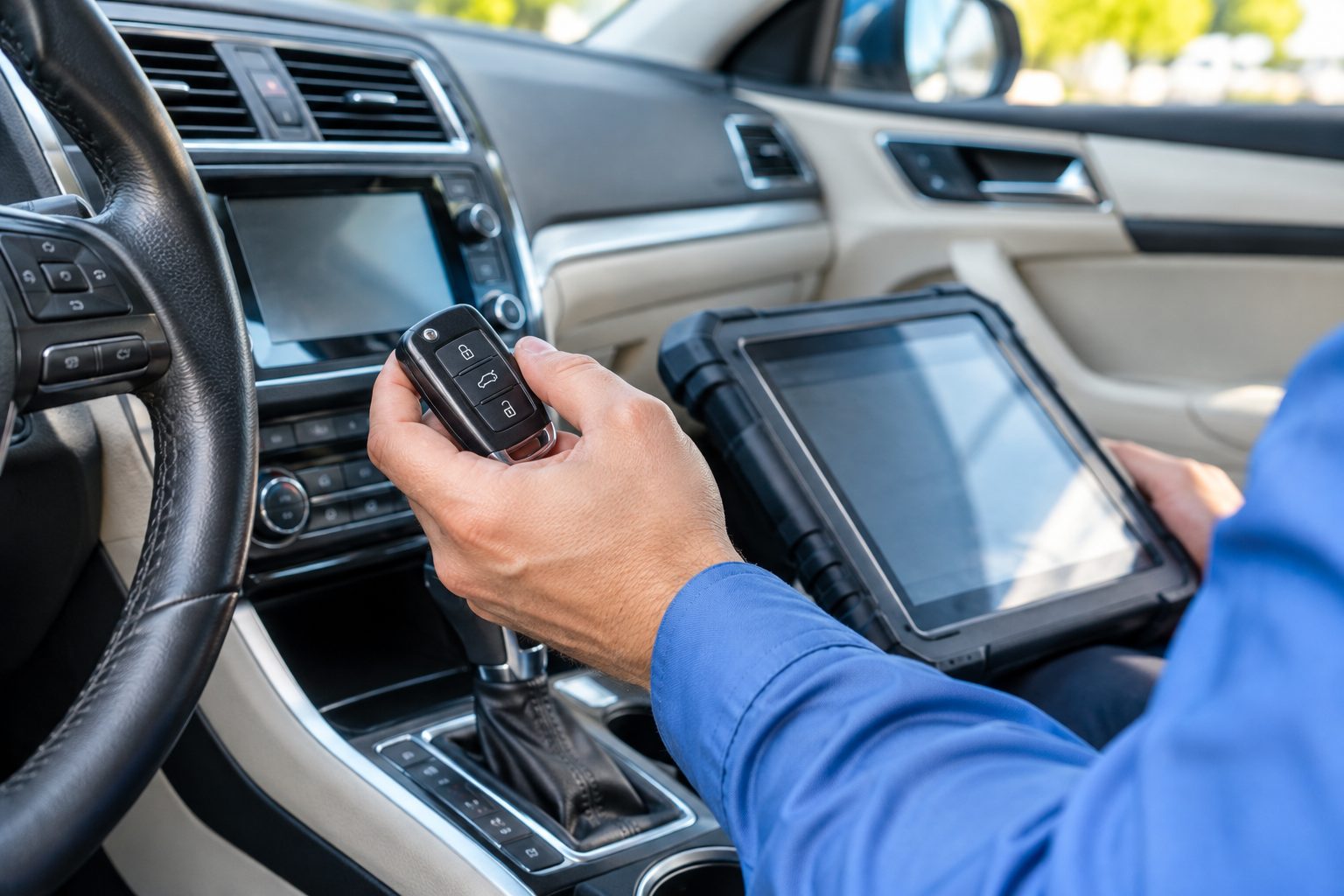
Altamonte Mall and the hospital nearby both mean parking lots, and parking lots mean lost keys, dead fobs, and doors locked with the keys still inside. A transponder key or a proximity fob for a modern car cannot be cut on a blank alone, it has to be programmed to the vehicle, which is a different job than the mechanical key cutting most people picture.
We carry equipment for a wide range of makes on the road today, so a lockout in a mall parking deck or a hospital lot is a job we can usually finish on site rather than referring out.
From Eastmonte to Uptown Altamonte, we cover both ZIP codes that make up Altamonte Springs, 32701 and 32714, as part of our regular mobile service area. That includes the apartment corridors along SR 436 and the condo buildings ringing Cranes Roost Park.
EastmonteUptown Altamonte3270132714
Can you rekey just one unit in a large apartment building?
Yes. Rekeying is done cylinder by cylinder, so we can handle a single unit or a full building without touching locks that were not part of the job.
Do you work directly with property managers?
Regularly. We can coordinate move-out and move-in rekeys around a leasing schedule instead of requiring a resident to be present for every visit.
What if my car uses a proximity fob instead of a key?
We carry programming equipment for a wide range of makes, so most fob and transponder replacements can be handled on site rather than sent to a dealer.
Can a condo association require a specific lock finish?
Yes, and it's worth checking your building's rules before ordering hardware. We can typically match common HOA-approved finishes on request.
Whether you're managing units off SR 436 or you locked yourself out of a condo near Cranes Roost, call We come to the address, apartment, condo, or storefront, rather than asking you to find
Most apartment lockouts in Altamonte Springs happen at the worst possible hour for the building staff. The leasing office keeps business hours, the maintenance technician is on call for water leaks and dead air handlers, and a resident standing in the breezeway at eleven at night with the key on the kitchen counter is low on that list. Some communities hand out a lockout number that routes to the same on-call tech, and some simply tell residents to wait until morning. When neither of those works for you, a mobile locksmith is the next option.
Before we open an apartment door, we need to know the person asking actually lives there. That is not a formality. In a building with a few hundred units, the wrong door being opened for the wrong person is a real risk, and we would rather take an extra minute than be the reason it happens. Have one of these ready when we arrive:
Once the door is open, we do not replace or rekey anything unless you ask. Many leases say the resident cannot change the lock without permission, because the property needs a working key for maintenance and emergencies. If you want the lock changed after a lockout, the right move is usually to ask the office to do it or to authorize us in writing, so your lease stays in good standing.
Garden-style complexes are common along Palm Springs Drive, Montgomery Road and the streets west of I-4, and in those buildings the ground floor unit gets the most attention from anyone checking doors. The front entry usually has a deadbolt. The sliding glass door onto the patio often has nothing more than a small hook latch that has been lifted in and out of its keeper for twenty years. Those latches wear, the door rollers wear, and after enough time the slider can be lifted off its track or pushed past the latch with very little effort.
For a renter, the fixes that do not require drilling the frame are the easiest to get approved. A charley bar or a cut dowel in the lower track stops the panel from sliding. A secondary lock that clamps to the track can be removed at move-out without leaving a mark. For owners in a condo, a keyed slider lock or a foot bolt into the threshold adds a real second point of engagement, and new rollers make the door sit properly in its frame again so the existing latch actually catches.
Second and third floor balcony doors get forgotten because nobody thinks about them, but a balcony shared with a neighbor or reachable from a stairwell landing deserves the same attention as a patio at ground level.
Altamonte Springs is mostly apartments, but the older neighborhoods around Spring Lake, Lake Orienta and the streets off Maitland Avenue have plenty of block homes built decades ago. Those houses tend to share a few problems. Original entry doors were often hung with a single knob lock and a light deadbolt, the strike plates were set with short screws into soft framing, and years of Florida humidity have swelled the door or dropped it on its hinges so the bolt drags against the strike.
A deadbolt that has to be forced to turn is not only annoying. It is the lock most people stop using, and a door that is never bolted is protected by the knob latch alone. Part of the job on these houses is making the door close cleanly again: tightening or replacing hinge screws, moving the strike plate so the bolt throws fully, and setting reinforcing screws long enough to reach the stud behind the jamb. The hardware can stay the same brand and finish if you like it. What changes is whether it actually does its job.
Many of these homes also have a side door into the garage or a utility room that was added later, and those doors are frequently a different key from the front. If you are tired of carrying three keys for one house, rekeying everything to a single key is a straightforward job as long as the locks are from compatible keyways, and we can tell you on site which ones are.
Central Florida summers are hard on door hardware in ways people do not always connect. West-facing doors on apartment breezeways and townhouse fronts take direct afternoon sun, and a dark painted metal door can get hot enough to expand in its frame so the deadbolt binds by late afternoon and works fine again after dark. That pattern, a lock that sticks only at certain times of day, almost always points to the door and frame rather than the lock itself.
The afternoon storms that roll through most days from June into September push rain sideways into keyways and latch pockets. Over time the lubricant inside the cylinder washes out, grit settles in, and the key starts to feel rough going in. A lock that has reached that point often responds well to cleaning and a proper dry lubricant. Heavy oil is the wrong fix because it collects the same grit that caused the problem. If the pins are already corroded, a rekey with new pins or a replacement cylinder is the more lasting answer.
Exterior mailbox banks get the same treatment. A cluster box on an open slab in full sun and rain ages faster than one under a covered walkway, and the small locks on individual doors are often the first part to fail.
Before a storm is named, it is worth a walk around your building or house with the locks in mind. Hurricane shutters on some condo buildings and houses are secured with keyed or wing-nut fasteners, and people discover the keys are missing only when the shutters need to go up. Pool gates, dumpster enclosures and perimeter gates at complexes usually have padlocks or keyed latches that have not been opened in months.
After a storm, a door that was fine the day before may not close because the frame shifted or swelled from water intrusion. We can adjust or reset hardware so the door locks again while the bigger repair is being arranged, which matters when you need to leave a damaged unit secured.
The area around AdventHealth Altamonte holds a lot of medical and professional office space, much of it in two and three story buildings with suites off a shared corridor. These tenants handle with a different set of lock problems than retail on SR 436. There are usually interior doors that need to stay locked for records or medication storage, staff who come and go on shifts, and a landlord who controls the building master key.
When a suite changes hands or an employee leaves on bad terms, the practical question is which doors need a new key and whether the building master still has to open them. We can rekey a suite so the new key works while the landlord's master continues to function, as long as the existing cylinders are part of that master system. If they are not, we will tell you plainly rather than guess. For interior storage doors, a keyed lever or a cabinet lock with restricted keys is often all that is needed, and it is a smaller job than people expect.
Seminole State College has a campus in Altamonte Springs, and the apartments nearby see a lot of short leases, roommates who change mid-year, and keys passed between people who do not always return them. If you move into a place and nobody can tell you how many copies of the key are out there, assume more than you think. Ask the office whether the unit was rekeyed at turnover. If it was not and they will allow it, a rekey is the simplest way to know that only the people on the lease can get in.
Roommate situations bring their own requests, such as a keyed privacy lock on a bedroom door. Check with the property first, since many leases treat interior locks the same as exterior ones. A lock that can be removed cleanly at move-out, with the original hardware put back, usually gets approved more easily.
People often call asking for new locks when a rekey would do everything they want. A rekey changes the pins inside the existing cylinder so old keys stop working. It keeps the hardware you have, which matters in condo buildings with finish requirements and apartments where the property wants the brand to stay the same. Replacing makes sense when the lock is worn out, damaged, the wrong grade for the door, or you want a different function such as a keypad.
Smart locks have become common in townhomes and newer condos around Uptown Altamonte. They work well when the door is properly aligned, because a motorized bolt has less force than a hand and will stall against a strike that is even slightly off. Before installing one, it is worth checking that the bolt throws smoothly by hand with the door closed. If it does not, fix the door first. Also keep in mind that keypads in full sun and heavy rain wear faster than the same unit under a covered entry, and that batteries run down sooner in heat, so keep a mechanical key or a fresh set of batteries handy.
Townhome communities in and around Altamonte Springs often combine private front doors with shared features: a gated entry, a pool with a keyed or fob gate, and a common mailbox kiosk. The homeowner owns the front door lock, but the association controls everything else. Before changing anything visible from the street, look at your HOA rules for hardware color and style. Most communities are fine with a lock swap as long as the finish matches, and a rekey never changes the outside appearance at all.
If you have lost a pool or amenity key that belongs to the association, the association usually has to authorize a new one, and some use restricted keys that only they can order. We can explain which case you are in once we look at the key or lock, which saves a trip back and forth between you and the management company.
This is a compact city with heavy traffic at a few choke points: SR 436 near the mall, the I-4 interchange, and Maitland Avenue at rush hour. When you call, a cross street or the name of the complex and building number is more useful than a street address alone, because many complexes share one address across dozens of buildings. Tell us which gate code to use, which building, and whether the unit faces the parking lot or an inner courtyard. Those details get us to the right door without circling the property.
Describe the situation by phone and we will tell you what the job involves. Quotes are given by phone. Jobs that cannot be quoted without seeing them need a technician on site, and the service call charge is explained on the phone before anyone is dispatched.