A strong lock is only as strong as the door and frame that hold it. In many Orlando homes the cylinder is fine while the frame is thin, the screws are short and the hinges are an afterthought. This guide walks through the parts of a door that people forget, and how to tell when something needs attention.
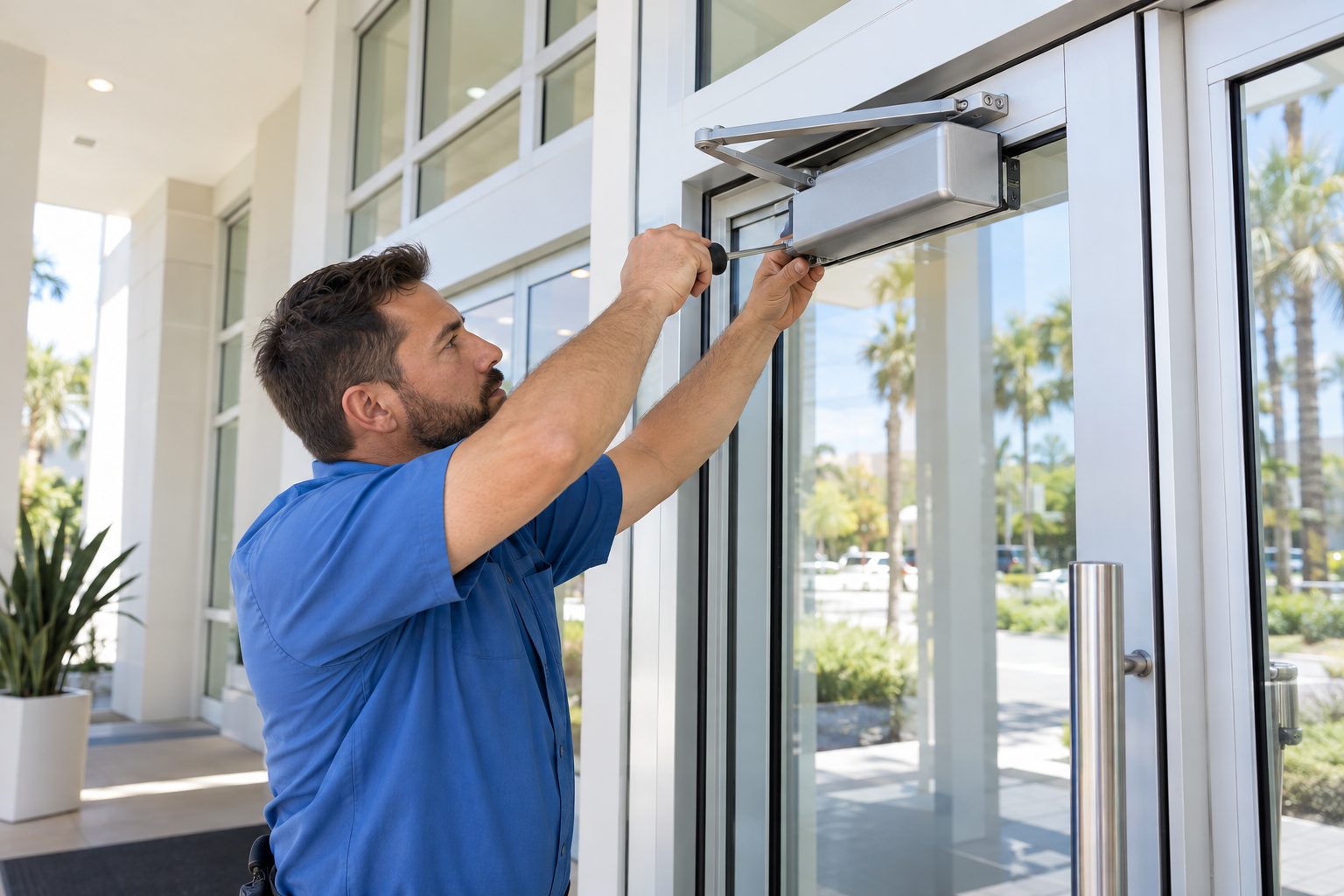
When people shop for security they usually look at the lock. They compare brands, finishes and features, and then install the new hardware on the same door and frame they already had. That is understandable, because the lock is the part you see and handle every day. But a door is a system made of a slab, a frame, a latch, a bolt, a strike plate, hinges, screws and the wall framing behind it. A weakness in any part limits the whole assembly.
A useful way to think about it is a chain. The deadbolt is one link, the strike plate is another, the screws holding the strike plate are another, the wood of the jamb is another, and the studs behind the jamb are the last one. If you replace the strongest link with something stronger, the chain does not get stronger. It still breaks at the weakest point. A good locksmith visit often starts by looking at the whole chain and picking the weakest link first.
In the Orlando area many homes were built with standard builder-grade doors and frames. Builders choose economical parts that meet normal needs. Those parts work well for decades in everyday use, but they were not selected to resist force. The good news is that most upgrades are modest, can be done in an hour or two on a typical door, and do not require replacing the door itself. This page explains what those upgrades are, and when a bigger change is the better choice.
The frame around a door has several named parts. The jamb is the vertical piece on each side and the header is the horizontal piece across the top. The stop is the thin strip the door closes against. On the latch side, the jamb has a pocket cut into it for the strike plate, and a hole for the bolt. Because that pocket is cut out of the wood, the jamb is thinner there than anywhere else, and it is the spot that experiences the most stress when someone pushes or kicks the door.
Many interior-style and builder-grade frames are made from softwood, or even finger-jointed pieces glued end to end. Over time, wood dries, shrinks, swells with humidity and gets damaged by termites or moisture. Florida is hard on wood frames. A frame that looks fine from the room side may be soft or split where the strike plate sits, or damp near the bottom where water has wicked up from a wet threshold. A screwdriver tip gently pressed into suspect wood will tell you quickly if it is soft, but if you find rot, the frame needs repair, not just new hardware.
Metal frames and reinforced frames behave differently. Steel frames in commercial buildings, and in some townhomes and condos, resist bending better but can be twisted or spread at the latch side if the wall behind is weak. Whichever type you have, the principle is the same: the latch-side jamb needs solid wood or metal and a solid connection to the wall framing behind it. A locksmith can see the difference at a glance, and can tell you whether a repair, a reinforcement kit or a replacement is appropriate.
The strike plate is the small metal plate on the jamb that the latch and the deadbolt enter. Many are installed with two short screws, about three quarters of an inch long, that bite only into the jamb itself. When force is applied, the screws pull out and the jamb splits. This is the single most common weak point on residential doors, and it is also one of the easiest to improve.
The usual improvement is to replace the short screws with longer ones, often three inches, that pass through the jamb and into the stud behind it. This ties the strike area to the wall framing instead of just the thin jamb. Some owners also fit a longer metal strike plate, sometimes called a high-security or box strike, which spreads the load across more of the jamb. These parts are inexpensive relative to their effect, and they work with the lock you already own. We describe the full process on our page about strike plate reinforcement.
Alignment matters as much as strength. If the bolt does not enter the strike hole cleanly, or the door has to be lifted or pushed to lock, the bolt is not fully engaged and the door is weaker than it looks. A bolt that rubs the edge of the hole is also wearing out the lock. If your deadbolt is hard to throw, do not force it, because forcing can bend parts. Instead check whether the door has dropped on its hinges, which leads to the next topic.
Hinges carry the entire weight of the door and keep the slab lined up with the frame. Most residential doors use three hinges, though heavier doors use more. On a typical builder door the hinges are fastened with short screws into the jamb only, just like the strike plate. Over time, heavy use, slamming and humidity-related swelling loosen those screws, and the door begins to sag. A sagging door rubs the frame, misaligns the latch, and puts uneven pressure on the lock.
The same improvement applies here. Replace at least the top screw in each hinge, and ideally all of them, with longer screws that reach the wall studs. This stiffens the whole door against sagging and against force. If the screw holes are stripped, the wood may need to be repaired with glue and dowels, or the holes filled and re-drilled, before longer screws will hold. That is a straightforward repair for a technician, and it is better than repeatedly tightening screws that keep coming loose.
Check the hinge condition too. Hinges that squeak or feel gritty are worn, and humidity-related corrosion can seize pins over time. Lubricating hinges with a suitable lubricant helps, but a hinge with a bent leaf or a worn knuckle should be replaced. When replacing, use hinges rated for the door's weight, and match their size so they fit the existing mortises. If the door has gaps at the hinge side larger than a few millimeters, a technician should look at the alignment before anything else.
Most front doors open inward, which means the hinges are on the inside, protected from outside tampering. Some doors open outward, common on patio and service doors, and on some porches and commercial exits. On an outswing door the hinges and their pins are on the outside, where a person could potentially tap out the pins and lift the door off the frame, even if the lock is locked.
There is a simple, well-known fix. Security hinges or hinges with a set screw or a pin that locks the knuckles together prevent the door from being removed even if the pin is pulled. Another approach is to add a hinge bolt or stud, a small metal projection in the edge of the door that fits into a hole in the jamb when the door is closed. Even with the pins removed, the door stays in place. A locksmith can fit either measure, and it is quick for most doors.
The principle applies to garage-side doors too, since a door from the garage into the house usually opens inward toward the house, which puts the hinges on the garage side. For more on that entry, see our guide on securing the garage entry. If you are not sure which way a door swings or where its hinges are exposed, call and describe the layout, and a technician can usually tell you from your description which fix suits.
The slab itself matters. A hollow-core interior door is made from thin skins over a cardboard grid, and it was never intended as an exterior door. It can crack around the lock with a moderate impact. Unfortunately, some secondary doors in older homes and rentals are hollow-core, and they are worth replacing with a better door when you can.
Solid core wood doors have a dense core and hold hardware well. Steel doors have a skin over an insulated core and are common on newer exterior entries. They resist impact and fire well but can dent, and they can rust at the bottom if water sits there, especially in humid climates. Fiberglass doors resist moisture and warping, which is useful in Florida, and they are often fitted with a solid wood edge where the lock goes so the hardware has something to grip. All three can perform well if the frame and hardware are matched to them.
The lock bore, the holes cut for the deadbolt and handle, also affect strength. A large or oversized hole or a poorly cut one removes material and weakens the door. A locksmith installing a new deadbolt will use the right drill bit and a template for a clean fit. Door reinforcers, metal sleeves that wrap the edge around the lock, can add strength to a wood door without replacing it. They are worth considering on older wood doors that have been drilled more than once.
Many Orlando homes have front doors with decorative glass panels, or sidelights, tall glass strips on either side of the door. They let in light and look attractive. They also place glass within arm's reach of the lock. If a person can break the glass and reach through to turn a thumb-turn, the quality of the deadbolt does not matter.
There are reasonable options. A double-cylinder deadbolt that needs a key on both sides prevents that attack, but it has a real safety trade-off: in a fire, you need to find the key quickly. It is generally acceptable on a secondary door but not recommended on a primary exit, and some local rules limit its use in certain buildings. Alternatives include laminated or security glass, a security film on existing glass, decorative grilles, or moving the lock further from the glass. The right choice depends on your door.
Mail slots, pet doors and large letter openings can also let a person reach the inside handle in rare cases. If your door has a slot near the lock, check how far a hand could reach. Pet doors set into exterior doors should be sized for the pet and fitted with a lockable cover, so that they are closed at night or when the house is empty. These are small details, but they are the kind of details a locksmith will mention during a visit.
Central Florida has high humidity for much of the year, frequent afternoon storms, and an active termite population. All three affect door frames. Wood absorbs moisture and swells, making the door stick in summer and shrink in winter, which leaves gaps. Repeated swelling and shrinking loosens screws and hardware over time. Termites and wood rot attack frames, especially at the bottom of the jamb, where water collects and where the wood is close to the ground or a concrete slab.
Look at the base of each exterior door frame. Soft wood, crumbling material, small holes or a hollow sound when you tap with a knuckle are warnings. A frame in this condition cannot hold hardware reliably, regardless of how good the lock is. Repair may involve cutting out damaged sections and replacing them, or replacing the frame, which is a carpenter's task and may require a permit depending on the job and the municipality.
Paint and sealant help. Keeping the bottom of the door and the threshold sealed, fixing gutters that spray water onto the door, and checking weather stripping reduce moisture exposure. Aluminum, fiberglass and metal frames resist termites and rot better, and are worth considering when a frame must be replaced anyway. If you are in a condominium, check who is responsible for the frame, since in many buildings the frame belongs to the association even when the door itself belongs to you.
If you rent, you may not have the right to change the frame or hinges without permission. Many leases restrict alterations to doors, and some owners prefer to handle all hardware work themselves. Talk to the landlord or property manager first, and put the request in writing. Many landlords are open to improvements like longer screws or a better strike plate, because those protect their property too.
Condominiums add another layer. The exterior door, frame and sometimes the lock may be common property or must match a standard approved by the association. Fire ratings on corridor doors in multi-unit buildings are strict, and altering a rated door or frame can void its rating. In these cases the correct approach is to ask the board or management what is allowed, and only then involve a locksmith. For related reading, see our condo and highrise lock guide.
Whatever your situation, document any changes and keep the receipts and photos. Renters sometimes need to restore the original hardware when they move out, and owners benefit from a record of upgrades when selling or filing insurance claims. If you are not sure what is permitted, ask before any work begins rather than after.
On a visit to assess a door, a technician usually works from the outside in. They look at the condition of the slab, the gap around the edges, the type and size of the lock bore, the strike plate and its screws, the hinges and their screws, the jamb and its connection to the wall, the threshold and weather stripping, and anything near the lock that could be reached, such as glass. They will also ask about the door's history: has it been forced before, did it start sticking recently, does the lock work smoothly.
From there, they usually propose changes in order of effect. Often the first items are longer screws and a stronger strike plate, because they cost little and make a lot of difference. Next might be security hinges or hinge bolts on outswing doors, and a reinforcer for the lock area. Larger changes such as replacing a hollow door, repairing a rotted jamb or fitting a steel frame come last, and may involve other trades.
Quotes are given by phone only. Describe the door type, how it swings, what the frame and lock look like and whether anything has moved or been damaged. For work that depends on seeing the actual door, an on-site visit is needed, and there is a service call charge that is explained on the phone before dispatch. Take a few photos of the latch area and hinges ahead of time to help. When you are ready, call and talk it through. Related pages you may find useful include door hardware repair and deadbolt installation and repair.
Not by itself. A deadbolt is one link in a chain that includes the strike plate, the screws, the jamb, the hinges and the wall framing. If the screws are short and the jamb is thin, the weak point stays the same. Pairing a good deadbolt with a reinforced strike plate and longer screws gives a much more balanced result.
Wood absorbs humidity and swells in the warm, damp months, which makes the door rub the frame. In drier months it shrinks and can leave gaps. Repeated cycles loosen screws and hardware. If sticking is severe or the latch no longer lines up, a technician should check the hinges and the frame rather than forcing the lock.
Usually not, because the hinges are on the inside where they cannot be reached from outside. Outward-opening doors are different, since their hinge pins are exposed. For those, security hinges or hinge bolts keep the door in place even if the pins are removed. The door between a garage and the house is worth checking.
Replacing screws with longer ones is a common homeowner task, but it takes care. Screws must go into solid framing without splitting the jamb, and stripped holes need repair first. If the frame is soft or damaged, longer screws will not hold. A locksmith can do it quickly and check the rest of the door at the same time.
Glass near the lock can let someone reach in and turn the inside thumb-turn. Options include security film, laminated glass, a different lock position, or a keyed-both-sides deadbolt where it is safe and allowed. The last option affects fire escape, so it should be used with care. Call and describe the door so a technician can suggest what suits.
Quotes are given by phone only. Describe the door and frame, and send or have ready a few photos if you can. Jobs that depend on seeing the actual frame need an on-site visit, and a service call charge applies, which is explained before anyone is dispatched. Call when you are ready to talk through the options.
Describe the situation by phone and we will tell you what the job involves. Quotes are given by phone. Jobs that cannot be quoted without seeing them need a technician on site, and the service call charge is explained on the phone before anyone is dispatched.