A deadbolt that sticks is one of the most common reasons people find themselves stuck in or out of their own door. The cause is rarely the key. More often a bolt that is rubbing a strike, a worn tailpiece or a door that has shifted is the real reason.
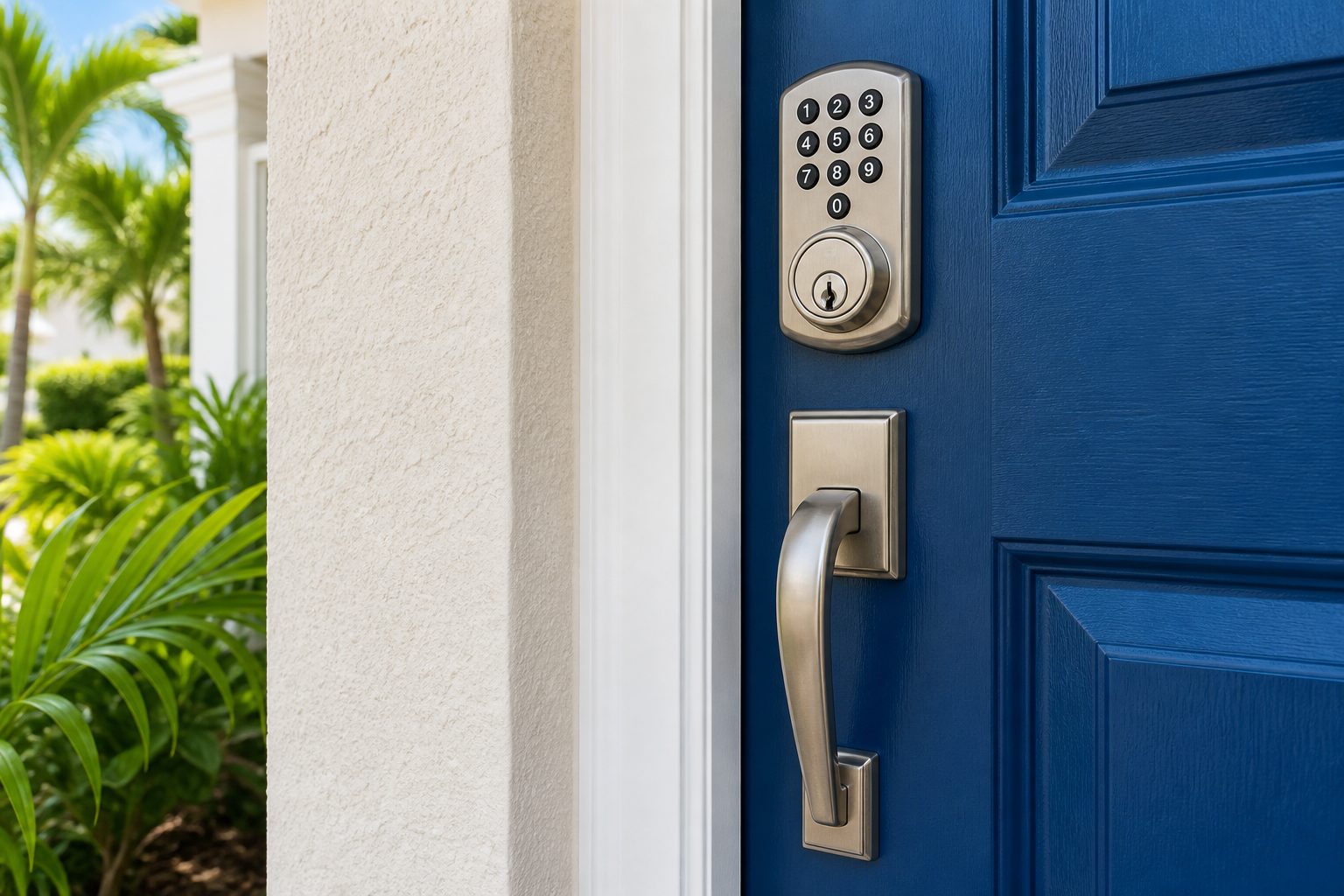
A deadbolt has three main parts. The cylinder reads the key. The bolt, a solid metal bar, slides out of the door edge into a hole in the frame. Between them sits a mechanism that turns the rotation of the key into the straight-line motion of the bolt. In most residential deadbolts, a small bar called a tailpiece connects the cylinder to a cam, and the cam pushes or pulls the bolt. A thumb turn on the inside does the same job.
For this to work smoothly, the bolt must line up with the hole in the strike, which is the metal plate on the door frame. The bolt must slide without scraping on the door edge, the faceplate or the strike. The cylinder must be seated straight and the door must close fully so that bolt and strike meet cleanly. If any of these conditions fails, the bolt can feel stiff, stop partway or refuse to move.
Because there are several places for trouble, a stuck deadbolt is a good example of a problem that benefits from a methodical look. The same symptom can come from a door that has sagged, a bolt that is bent, a tailpiece that has worn, a cam that has slipped or a cylinder that has seized. Telling them apart is the real work of fixing it.
The first symptom is a bolt that will not retract, meaning it stays extended when you turn the key or thumb turn. This can leave you unable to open the door. The second is a bolt that will not extend, meaning it will not slide out to lock the door. This leaves the door unsecured, which is a security problem even if you can still get through it.
A bolt that will not retract is often under pressure. The door may be pressing against the strike, so the bolt is gripped like a stick in a vise. Lifting or pushing the door while turning can relieve that pressure. A bolt that will not retract may also be held by a broken or bent internal part, in which case the key turns but the bolt does not follow, or the key does not turn at all.
A bolt that will not extend usually has an obstruction or a mechanical fault. The door may not be closed fully, so the bolt hits the frame instead of the hole. A paint buildup or swelling may have narrowed the hole. Or the lock mechanism may have failed, so the cylinder turns without driving the bolt. A quick test with the door open tells you which: if the bolt extends and retracts smoothly with the door open, the lock is mechanically sound and the problem is alignment.
Misalignment is the most frequent cause. Doors move. Hinge screws loosen, wood swells and shrinks, houses settle, and weather leaves its mark. In Central Florida, the cycle of humid summers and drier winters, plus sandy soil that shifts with rain, makes small movements common. A door that has dropped by even a few millimeters can push the bolt against the edge of the strike hole.
You can recognize the signs. Look at the strike plate and the area around the bolt hole. A shiny scrape on the lower or upper edge shows where the bolt has been rubbing. Look at the bolt itself for scuffs. Watch the bolt as it enters the strike, if you can. It should enter dead center with a little room around it. If it catches on one edge, the door and frame are out of line.
A simple first step is to tighten the hinge screws, particularly the top hinge, since a loose top hinge lets the latch side sag. If a screw spins without holding, the hole is stripped, and a longer screw or a wood filler is needed. If the door still binds after that, the strike may need to be adjusted. The page on door will not latch covers strike alignment, and strike plate reinforcement explains how a stronger plate can be installed at the same time.
Inside the lock are small parts that wear. The tailpiece is a flat bar that extends from the back of the cylinder through the lock body. When a key turns, the tailpiece rotates a cam, which moves the bolt. Over time the tailpiece can bend, wear or round off its tip, particularly if the door has been forced or the key was turned with too much force. A worn tailpiece may turn without fully engaging the cam, so the key seems to turn but the bolt barely moves.
Cams can also wear. The edges that push the bolt may become rounded, so the cam slips. Springs that return the bolt or hold parts in place can weaken or break. In lower-cost deadbolts, some parts are made of softer metal or even plastic, and these wear more quickly. A deadbolt that has been used for many seasons in humid conditions may have corroded parts that stick.
These are internal faults. You cannot always see them from the outside. A technician can remove the lock and inspect each part. If a part is worn, it can sometimes be replaced, though often replacing the whole lock is more sensible, particularly for an inexpensive model. The page on deadbolt install and repair describes this, and deadbolt grades explains why sturdier models last longer.
Begin with the door open. Turn the key or thumb turn and watch the bolt. It should move smoothly all the way out and back. If it does, the lock is working. If it sticks, drags or stops, the problem is inside the lock or the bolt is bent, and you should not force it.
Now close the door and test again. If the bolt now sticks, the problem is alignment. Gently lift the door by the handle while turning, or push the door toward the hinge side. If that helps, the door is binding. Look for a gap along the latch side. A noticeably uneven gap suggests the door has dropped.
Check the screws. Tighten the hinge screws and the screws holding the deadbolt faceplate and the strike plate. Loose screws let parts move out of position. Apply a small amount of dry lock lubricant to the bolt edge and the keyway. Work the bolt slowly several times. Never use wet oil or large amounts of spray. If it improves but not fully, you may be near the point where the lock needs service or replacement. If it does not improve, stop and call.
Do not force the key or thumb turn. A deadbolt that resists is telling you something is wrong, and more force can bend the tailpiece, snap the key or break the cam. A snapped key in the cylinder is a bigger problem than a stuck bolt. See broken key extraction if that has already happened.
Do not hit the door or the lock with a hammer, and do not pry at the frame. These can crack the door, split the jamb or damage the bolt. Do not file the strike hole larger without a plan, since it weakens the entry point. Do not drill the lock yourself. Drilling destroys the cylinder and is hard to reverse.
Do not leave the door unsecured if the bolt will not extend. If you cannot lock the door, arrange a temporary measure, such as staying home, asking a trusted person to keep watch or using a secondary lock, and call promptly. Also, do not remove the door from its hinges as a shortcut unless you are experienced, since doors are heavy and the frame can be damaged. If someone is trapped inside and in danger, call 911 first.
Electronic deadbolts add a motor, a battery and a circuit board to the mix. When the bolt will not move, the cause may be a weak battery, a misaligned door or a jammed motor. A common sign of low battery is a slow, groaning motor or a lock that works sometimes and not others. Replace batteries with fresh ones of the correct type, and try again.
Alignment matters even more with motorized locks, since the motor has limited power. A door that binds slightly can stall the motor, producing an error beep or flashing light. Try the key override if the lock has one. If the key works and the motor does not, the electronic parts are the likely cause. See smart lock troubleshooting for a step-by-step look, and keypad deadbolt installation for what a proper install involves.
Do not pour any liquid into an electronic lock or spray it. Moisture can destroy the electronics. Humidity in Central Florida is hard on them, particularly on patio and garage entries exposed to rain. If an electronic deadbolt becomes unreliable after a storm, power it down by removing the batteries and let it dry before testing.
A few patterns turn up again and again. In the first, a homeowner returns from a trip in the rainy season and finds the front deadbolt hard to throw. The door has swollen over weeks of humid air with the house closed up, and the bolt is dragging on the lower edge of the strike hole. Running the air conditioning for a day or two often eases the swelling, and a small adjustment to the strike finishes the job.
In the second, an apartment tenant finds that the deadbolt turns without resistance but nothing moves. The key rotates fully, the thumb turn spins and the bolt stays where it is. That is the signature of a broken tailpiece or a cam that has slipped off, and no amount of adjusting the door will help. The lock needs to be opened and repaired or replaced, and the tenant should tell the property manager before any work begins.
In the third, a business owner discovers that the back-door deadbolt extends only when the door is held tight against the stop. Staff have been leaning on the door to lock it, and that pressure has worn a groove into the strike. A new reinforced strike, a tightened top hinge and a trimmed latch edge bring everything back into line. The common thread in all three is that the symptom looks the same while the cause is different, which is why a careful look matters more than a quick swap.
A technician begins by asking about the symptoms and watching the lock in action. They test the bolt with the door open and closed, check the key, examine the strike and look at the hinges. They test for alignment using simple tools and note any rubbing marks. They check whether the cylinder turns smoothly and whether the tailpiece engages the cam.
If the problem is alignment, they tighten and, if needed, shim or replace hinges, adjust or reposition the strike and, where wood is swollen, trim and seal the edge. If the mechanism is worn, they replace the lock or the failing part. If the cylinder is damaged, they replace or rekey it. They may recommend a longer strike plate screw or a reinforced strike while the lock is apart.
If the bolt is stuck in the extended position and you cannot get in, the technician uses techniques designed to open the door with the least damage, then repairs it. Quotes are given by phone, complicated jobs need an on-site look, and the service call charge is explained before anyone is dispatched. No one can promise an arrival time in advance, but you will be told what is realistic when you call.
If the deadbolt needs replacing, take the opportunity to improve it. A good deadbolt has a solid steel bolt with at least an inch of throw, a hardened insert that resists sawing and a cylinder that resists drilling and picking. A reinforced strike with long screws that reach the framing adds security. A technician can show options and explain differences without pressure.
Keep the door healthy. Check hinge screws each season. Seal the door edges against moisture, including top and bottom. Keep the strike hole clear of paint. If you repaint, mask the hardware. Replace worn keys. Apply a dry lubricant sparingly twice a year. The page on lock lubrication and maintenance explains what to use.
Finally, notice early warnings. A deadbolt that needs a push or a lift to work is not far from failing. Fix it before you are locked out. When you are ready, call. Describe the symptom, whether it sticks open or closed, and what you have tried. A phone conversation can tell you whether it is likely an adjustment or a replacement, and the call charge is explained before anyone is sent.
Most often the bolt is rubbing against the strike hole because the door has shifted. Loose hinges, a sagging door or seasonal swelling are the usual causes. If the bolt moves smoothly with the door open, the lock itself is likely fine. Tighten the hinge screws and have the strike adjusted if it persists.
No. Forcing can bend the tailpiece, break the cam or snap the key in the cylinder. A lock that resists is signaling a problem. Use gentle pressure, lift the door slightly while turning, and stop if it does not move. Calling a technician early usually costs less than repairing damage caused by force.
If the bolt does not extend, the door is not secured by the deadbolt, even if it looks closed. Arrange a temporary measure, such as staying home or asking someone to watch the property, and call soon. The cause may be as simple as alignment or paint in the strike hole, or it may be a failed mechanism.
On a smart or keypad deadbolt, yes. A weak battery can make the motor slow or stall and may cause error beeps. Replace the batteries with fresh ones of the correct type and try again. If the key override works but the motor does not, the electronic parts may need service, and a technician can test them.
It depends. Alignment problems are fixed at the door and strike, not in the lock. A worn tailpiece or cam can sometimes be replaced, but for a lower-cost lock a new one may make more sense. A technician will inspect the lock and explain which route fits, so you are not pushed into a replacement you do not need.
Quotes are given only by phone. Describe the door, the lock, whether the bolt sticks in or out and what you have tried. Simple jobs can be quoted from that description. Complicated jobs need an on-site look, and a service call charge applies, which is explained on the phone before any technician is dispatched.
Describe the situation by phone and we will tell you what the job involves. Quotes are given by phone. Jobs that cannot be quoted without seeing them need a technician on site, and the service call charge is explained on the phone before anyone is dispatched.