Owners of older Orlando homes often face a quiet dilemma. The original knobs, plates and keyholes are part of what gives the house its character, yet they were designed for a different era. This guide shows how to improve security while respecting the hardware and the door it lives in.
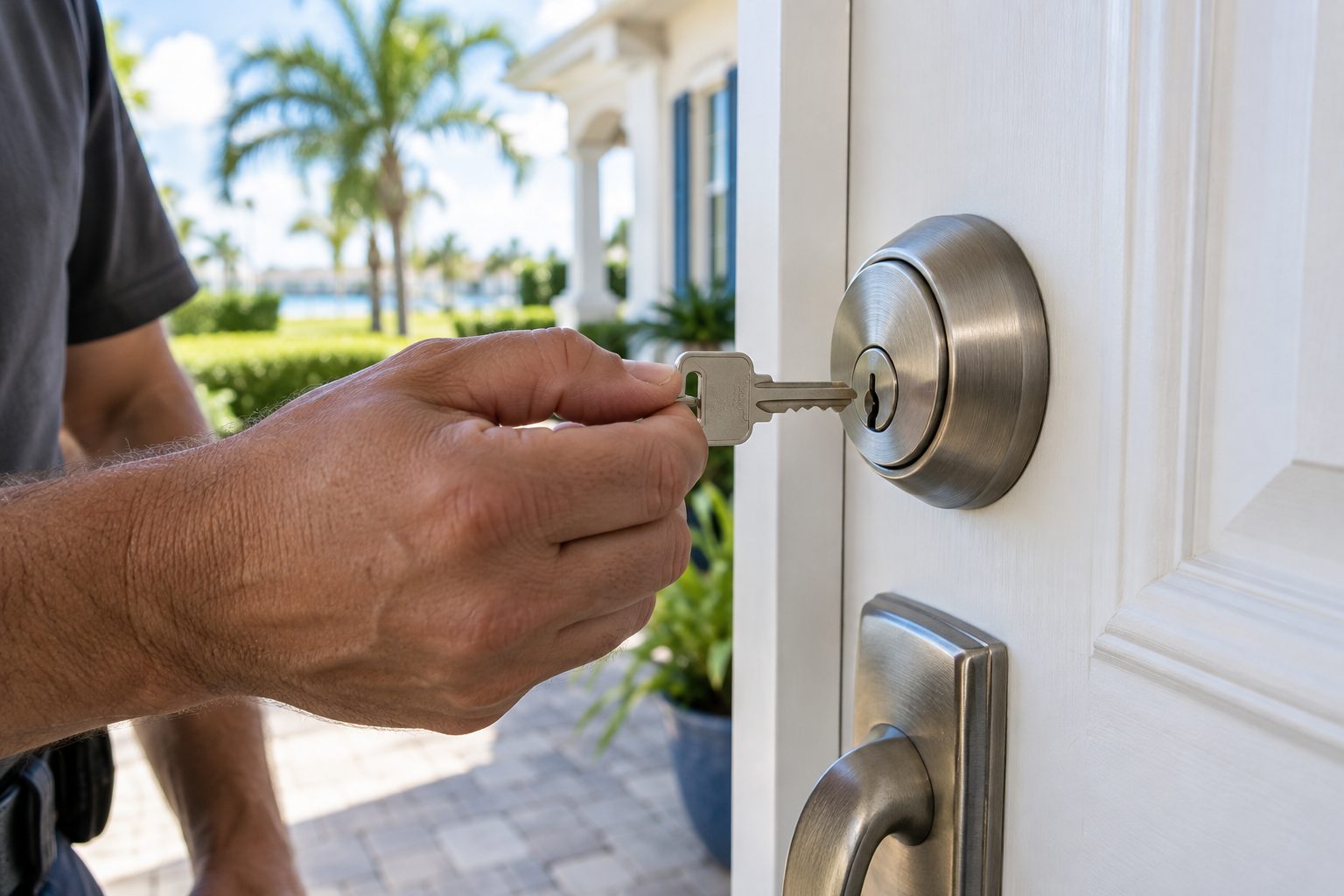
Older homes tend to carry a few recognizable lock types. Mortise locks sit in a deep pocket cut into the edge of the door and combine the latch and the bolt in a single steel box. Rim locks are mounted on the surface of the door, visible on the inside. Knob sets with a keyhole in the center are common in mid-century houses, and many doors have a later deadbolt added by a previous owner.
Other period features include glass or porcelain knobs, decorative escutcheon plates around the keyhole, transoms above doors and wooden sash windows with a simple latch. A few homes still have keys of the old, long barrel style. Some of this hardware is genuinely handsome and worth keeping. Some of it is worn out, mismatched or already weakened by years of repairs.
Before deciding anything, it helps to know what you actually have. Walk around the house and note each exterior door, what type of lock it carries, whether a key turns smoothly and whether the door closes with a firm latch. That list is the foundation of any plan, and it is the best thing to describe when you call for a quote.
It is tempting to think you must choose between a house that looks right and a house that is secure. In practice, most owners can do both. Security depends less on the visible knob than on a handful of hidden details: the strength of the strike plate, the length of the screws that hold it, the condition of the door frame and the quality of the deadbolt.
A typical solution keeps the original handle set for its looks and adds a good deadbolt above it, with a strike plate installed using long screws that reach the structural framing. From the street, the door looks the way it always did. From the point of view of someone pushing against it, it is a different door.
Where the original lock is a working mortise lock in good condition, it can sometimes be serviced and rekeyed instead of being replaced, which keeps the hardware in place and the key system current. A technician can examine the lock and tell you honestly whether it is worth keeping. Our page on mortise lock service covers what that involves.
In an older home the weak point is frequently the wood, not the metal. A door frame that has dried, cracked or been repaired many times may not hold a screw. A strike plate fixed with short screws into a thin jamb will give way under pressure no matter how fine the lock is.
Check the frame around the strike for splits, soft spots and old repair patches. Look at the hinges as well: loose hinge screws, sagging doors and gaps that change from season to season are all signs that the door is no longer sitting true. A door that rubs and has to be forced shut puts stress on the lock and wears it out faster.
Reinforcing a frame can be as simple as longer screws and a metal reinforcing plate, or it can involve repairing the wood itself. Sometimes the repair belongs to a carpenter, and a locksmith will say so. If the frame is part of a protected property, check whether any rules apply to changes before cutting or replacing anything. Our door frame and hinge security guide goes into more depth.
A home that has stood for a long time has been through many hands. Previous owners, tenants, contractors, relatives and neighbors may all have copies of keys that still work. The usual remedy is to rekey the locks, which changes the internal pins so that old keys stop working and new ones are cut. The lock itself stays on the door.
Rekeying is especially attractive in an older house because the hardware is not touched. The look is unchanged, the screw holes stay where they are and the original plates remain. It is often a smaller job than replacing hardware, and it solves the real problem, which is not the lock but who holds a key to it.
Not every old cylinder can be rekeyed, and some are worn to the point that a new cylinder is a better choice. A technician can tell by inspection. Read our lock rekeying page for the general process, and call to describe what you have so that the right tools come with the visit.
Decades of use leave their mark. A key that must be wiggled to turn, a cylinder that feels gritty, a deadbolt that sticks in humid weather or a key that has worn smooth and no longer lifts the pins cleanly are all signs of age. Copies of copies degrade further, and a key that is itself worn can damage the lock it is used in.
Do not force a stiff key. If it will not turn, stop, because the next step may be a broken key in the lock, which is a harder problem. Our page on broken key extraction explains what happens then, but prevention is better than repair.
A technician may suggest cleaning and lubricating the lock with a suitable product, cutting a fresh key from a good original, or replacing the cylinder while keeping the case and the outer hardware. The right option depends on how worn the parts are. Describe the symptoms and let the technician examine the lock before deciding.
Front doors get all the attention, but older homes have many other places to enter. Original wood windows often have a small sash latch that offers little resistance. Transoms above doors may open or have been painted shut. A side door to a porch, a screen door with a hook and eye, a back door with a simple knob lock and a door from the kitchen to a yard are all worth a look.
Window security in an older home needs a light touch because the sashes are part of the building's character. Options include secondary latches or pins that can be installed without damaging the wood, and in some cases small locks on the inside that are barely noticeable. A technician can suggest what fits your windows. Our window lock repair page covers common solutions.
Do not forget a basement or crawlspace access, a shed with tools and a garage that connects to the house. Intruders tend to look for the easiest way in, and a weak secondary door or window can undo the work on the front door.
Wood moves with the weather. In Orlando's humid months, a door can swell enough that the bolt no longer lines up with the strike, and in drier months it may shrink and rattle. Older homes without modern sealing feel this more. A deadbolt that works in winter and binds in summer is usually telling you about the door, not the lock.
Resist the urge to force the bolt or to file the strike without understanding the cause. Sometimes a small adjustment of the strike plate or the hinges solves it. Other times the door needs planing or the frame needs attention, and that is carpentry work. A technician can tell you whether the issue is in the lock or in the door.
Keep exterior hardware clean and lightly lubricated with a product suited to locks, and keep paint out of the mechanism. Paint built up over years is a surprisingly common reason for stiff latches and bolts in older homes. Our humidity and lock longevity guide offers more suggestions.
Some older homes sit in designated historic areas, where changes to the exterior may be reviewed by a local preservation office or an association. Rules vary, and they often focus on visible features such as doors, windows and hardware finishes. If your home is in such an area, ask before replacing a front door, changing visible hardware or altering windows.
In many cases, work done on the interior face of a door, or hardware that is hidden or like-for-like, is acceptable, but it is the owner's responsibility to check. A locksmith cannot give a legal opinion on your situation, though an experienced technician can suggest solutions that are discreet and reversible.
A good rule is to prefer reversible changes where you can. Adding a deadbolt above an existing handle set, or reinforcing a strike with longer screws, leaves the original material in place. Keep any original hardware you remove, labeled and stored, because a future owner or a restoration project may want it.
Many owners of older homes wonder whether a keypad or smart lock suits their door. Sometimes it does, and sometimes it does not. Older doors may be thinner or have different bore sizes than modern hardware expects, and a mortise pocket cannot take a standard deadbolt without modification. Look at our smart lock buying guide before you choose.
A practical compromise is to leave the front door in period style and add modern features elsewhere, such as at a back door or a side entrance that is less visible. Another is to choose a smart deadbolt that mounts only on the inside, so that the outside keeps its original look.
Whatever you choose, have a backup. Batteries die, electronics fail and keys get lost. A lock that offers both a key and a keypad, with a plan for what happens when one fails, is more useful than a lock that is clever but fragile.
Older homes tend to need several kinds of help. A locksmith handles locks, keys, rekeying, deadbolts and strike plates. A carpenter or restoration contractor handles damaged frames, sagging doors and wood repair. A window contractor handles sashes. A good locksmith will tell you when a problem is outside the locksmith's work instead of selling you hardware that will not fix it.
When you call us, describe the door as best you can: the lock type, the age of the hardware if you know it, what the key does and whether the door sticks. Quotes are given by phone only, because the right answer depends on the door itself. Complicated work, such as hardware in a damaged frame, may need an on-site visit, and there is a service call charge explained on the phone before dispatch.
Our phone quote guide explains why. It helps to be patient with an old house. A technician who takes time to look at the door, the frame and the hardware will usually find a solution that keeps the best of what you have.
A visit to an older home is more like an inspection than a swap. The technician will usually start by closing the door slowly and watching how the bolt meets the strike. They will check the gap around the door, the hinge screws, the strike plate and the condition of the wood. They will try each key and see how the cylinder feels, then look at how the hardware is mounted and whether it matches the door.
Expect questions about the history of the lock. Has it been rekeyed? Are there keys you do not recognize? Does it stick more at certain times of year? Has the door been painted often? The answers help separate wear from damage and shape the advice.
A responsible technician will also tell you what not to do. Replacing a perfectly good mortise case because a new deadbolt is easier to sell is not good advice. Neither is drilling a large hole into a thin door where it may split. If the best answer is a modest repair, you should hear it. Ask for the options in plain words and decide at your own pace.
Start by listing every exterior door and window and what protects it. Mark the ones that stick, the ones with loose hardware and the ones with locks that are worn. Decide which items are for repair, which are for upgrade and which are fine as they are.
Next, address keys. If you do not know who has copies, rekey. Then reinforce strikes and hinges with longer screws, and add a deadbolt to any door that lacks a good one. Handle secondary entrances and windows after the front door. Keep notes of what was done and when.
Finally, build habits: lock up, close windows and keep spare keys somewhere other than under a mat or a flowerpot. When you are ready to start, call and describe your house. We will help you work out what is worth keeping, what is worth changing and what to leave to someone else.
Usually yes. The strike plate, screw length, frame condition and deadbolt quality matter more than the visible knob. A common approach keeps the original handle set and adds a good deadbolt with a reinforced strike. A technician can inspect your door and tell you what to keep, what to repair and what to replace.
Often, but not always. Many old cylinders can be rekeyed, which makes old keys stop working without changing the visible hardware. Some are too worn, and a new cylinder is the better choice. A technician can tell by inspecting the lock. Call and describe what you have so the right tools come to the visit.
Humidity can swell a wooden door so the bolt no longer lines up with the strike. It is often a door or frame problem rather than a lock problem. A small strike adjustment, a hinge fix or carpentry may solve it. Avoid forcing the bolt, and have a technician look at the door and lock.
It depends on where the home is and whether it sits in a protected area or an association. Rules often focus on visible exterior features. Check with the relevant preservation office or association before replacing doors or visible hardware. Reversible changes, like adding a deadbolt, are usually easier to approve.
Sometimes. Older doors may be thinner or have different bore sizes, and mortise pockets do not take standard deadbolts without changes. An interior-mounted smart deadbolt can keep the outside looking original. Always keep a key backup. Describe your door on the phone and a technician can advise whether it fits.
Quotes are given by phone only, because the right answer depends on your door, lock and frame. Describe what you have and what is wrong, hear the service call charge and the likely cost of the work, and decide. Jobs involving damaged frames may need an on-site visit first. Call to talk it through.
Describe the situation by phone and we will tell you what the job involves. Quotes are given by phone. Jobs that cannot be quoted without seeing them need a technician on site, and the service call charge is explained on the phone before anyone is dispatched.