Every job we take starts with a conversation, not a posted price list. A locksmith cannot know what is wrong with a lock, a car or a door from a web page, so the quote comes by phone, after you describe the situation. This guide explains how that call works and why.
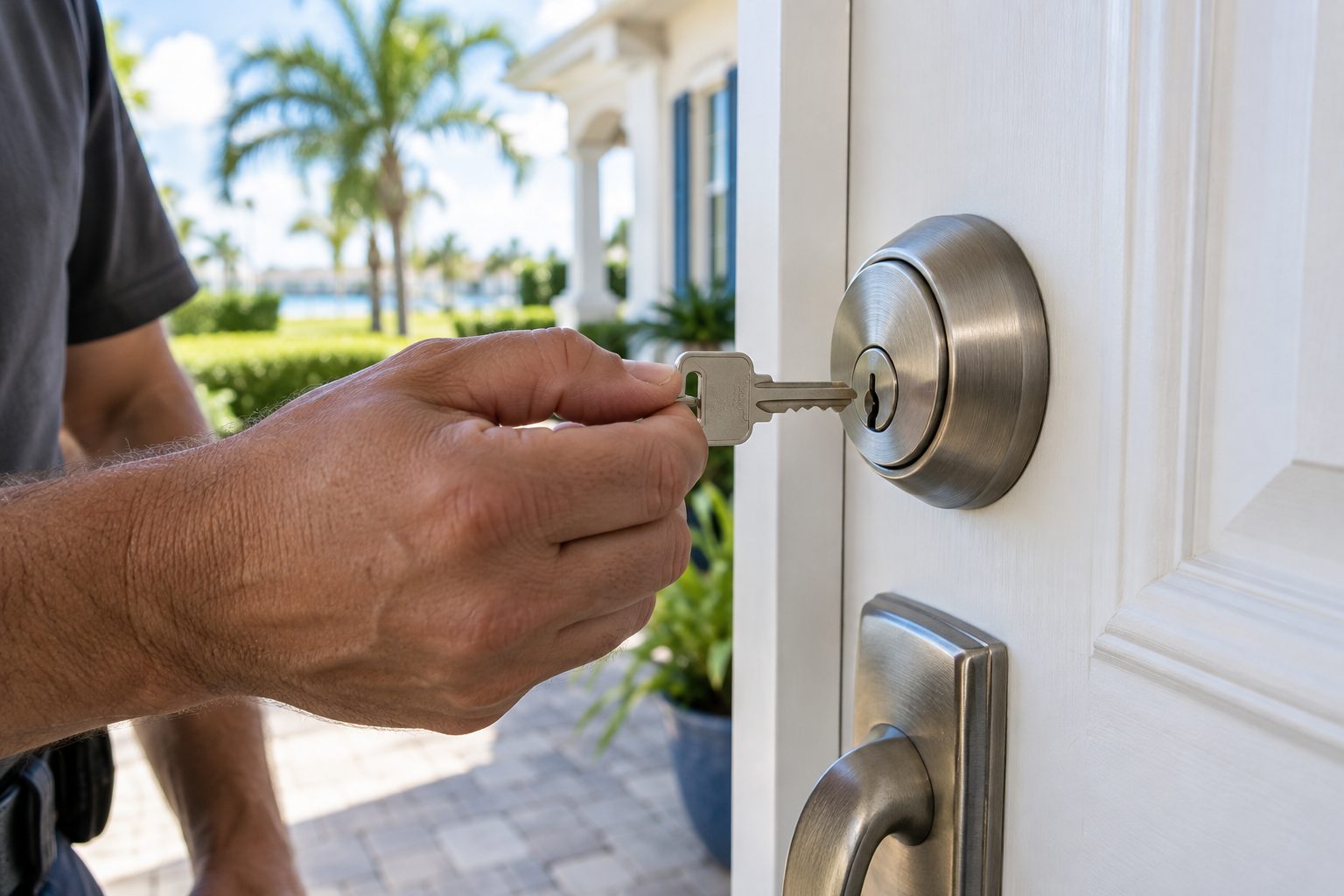
Two lockouts that sound identical can be completely different jobs. One front door has a simple latch that slipped. Another has a deadbolt, a decorative handle set, a security bar and a damaged frame. A car that will not start might need a battery, a key cut, or a transponder programmed to the vehicle computer. A number printed on a web page would be a guess dressed up as a fact, and either you or the technician would end up on the wrong side of that guess.
That is why quotes on this site are given only by phone. When you call, a person asks you questions, listens to the answers, and tells you how the job is likely to go, what the service call charge is, and whether the work can be settled on the spot or needs a closer look first. You hear all of it before anyone is dispatched, and you can say no.
This approach also protects you from a common trap in the locksmith trade, where an extremely low advertised figure turns into something much larger once a technician is standing at your door. Our guide to spotting locksmith scams covers that pattern in more detail. A real quote is specific to your lock, your vehicle and your address, and it is spoken to you before any work begins.
The call is a short interview. The person on the line wants to understand the problem well enough to tell you honestly what is involved. Expect questions about where you are, what is locked or broken, and what you can see or hear. None of the questions are meant to be a hurdle. They are the information a technician needs to bring the right tools and parts.
If you are standing outside a locked car, you will be asked about the vehicle, because the make, model and approximate age change the method and the equipment. If you are locked out of a home, you will be asked about the type of door and whether anyone, including a child or a pet, is inside. If anyone is in danger, hang up and call 911 first. Emergency services come before a locksmith, always.
After the questions, you are told how the service call charge works, what the likely work involves, and what the quote for that work is when it can be given over the phone. If the job needs a closer look, the call tells you so plainly. You then decide whether to book a visit. Nothing is decided for you.
A service call charge covers the cost of sending a mobile technician and a stocked vehicle to your location. It pays for the trip, the technician's time on arrival, and the diagnosis of what is going on. It is separate from the cost of the work itself, which is quoted based on the specific job. The charge is explained on the phone before dispatch, so it is never a surprise at the door.
Mobile service means the shop comes to you. The vehicle carries key blanks, cylinders, programming equipment and hand tools, which is a real investment that a storefront does not have to make. The service call charge is the part of the bill that reflects that arrangement, and it applies whether the job turns out to be a ten minute fix or something longer.
We do not publish an amount on this site. The reason is the same as for the quote itself: the right charge depends on where you are and what is needed, and the only responsible place to say it is on the phone, where you can ask questions about it. If any part of it is unclear, ask. A reputable locksmith is glad to explain.
Many jobs are well defined enough that a good description produces a reliable quote. A standard house lockout on a common door, a car door unlocked for a vehicle where the method is known, a rekey of a set number of standard cylinders, or a copy of a key that you can describe clearly are examples. In these cases the call can settle both the service call charge and the cost of the work, and the technician arrives knowing the plan.
Even with a quote in hand, a technician may confirm the details when they arrive. If the door turns out to be different from what was described, the technician stops, explains the difference and offers an updated quote before touching anything further. You are never asked to approve work you have not heard about, and you can decline at that point without any pressure.
The more precisely you describe the situation, the tighter the phone quote tends to be. A photograph is not required, but knowing the brand stamped on the lock, the number of locks involved and the type of vehicle is useful. Our guide on what to expect on a locksmith call gives a fuller picture of the whole visit from first ring to finished job.
Some work cannot be honestly priced from a description. A commercial building with a mix of old and new hardware, a master key system that has grown over many years, a door that will not close because the frame has shifted, an access control installation, or a set of locks of unknown make: these need someone to look at them. Guessing would be unfair to you.
For these jobs, the service call is how the quote is produced. A technician visits, examines the doors, hardware and frame, asks about how the space is used, and then gives you a written or spoken quote for the full scope. The service call charge, explained on the phone beforehand, covers that visit and assessment. You can then decide on the work, take the quote away to compare, or decline.
Complicated residential jobs are treated the same way. If a front door needs more than a lock swap because the strike area is split, the hinges are loose or the door has been forced, the honest answer is that the scope will be clear only once it is seen. The phone call will tell you this up front, rather than offering a number that has to be rewritten later.
Vehicle work is where phone details count most. A basic metal key for an older car, a transponder key that must be programmed, a remote head key, a push-button smart key and a key for a vehicle with a security system that requires a particular procedure are all different jobs. Ford, Toyota, Honda, Chevrolet and others each have their own systems, and even within one make the approach changes with the model year.
When you call about a car key, have the vehicle details ready: make, model, approximate year, and whether you still have any working key. Whether you have a spare changes the job considerably. A key copy from an existing key is a different task from creating a first key for a vehicle when every key has been lost, a situation covered on our all keys lost page.
You will also be asked to confirm that you own the vehicle or are authorized to have a key made. That is a normal safeguard, the same one a manufacturer service center would apply. The technician will ask to see identification and proof of ownership at the vehicle. Having these ready speeds the visit and keeps the process legitimate for everyone involved.
It is reasonable to call more than one locksmith, especially when the situation is not an emergency. The trick is to compare like with like. Ask each company the same questions in the same order, and write down the answers. A quote that omits the service call charge, or that changes depending on how the conversation goes, is not comparable to one that includes it.
Useful questions include whether the number you are hearing includes the trip, the labor and the parts; whether a quote can change on arrival and under what conditions; and what the company name is that will arrive, so that the vehicle and the technician can be matched to it. A company that answers clearly and calmly is usually one that expects to be held to its word.
Be cautious of any promise that sounds too good, including figures that seem far below what others say. Our guide to choosing a locksmith walks through verification steps. Take your time when you can. When you cannot, because you are stranded or locked out at night, at least insist on hearing the service call charge and the work quote before agreeing to dispatch.
A professional arrival should match what you were told on the phone. The vehicle and the technician should be identifiable as the company you called, and the technician should confirm the job and the quote before starting. For a lockout, expect a request to verify that the property or vehicle is yours, usually with identification and something that connects you to the address or the car.
Before work begins, the technician reviews the plan with you and confirms that nothing has changed from the call. If something is different, such as a second lock that was not mentioned, the job is paused and the new scope and quote are explained. Work does not proceed on assumptions. This is the moment to ask anything you are unsure about.
When the job is done, test it. Try the key in the lock a few times, check that the door closes and latches, and for a car, start the engine and test every function you paid for. Ask for a receipt that shows the work done. If anything is not working to your satisfaction, say so before the technician leaves, while the problem is easy to look at together.
The form of payment is part of the call. Ask which payment methods are accepted before the visit so you are not scrambling at the door. A receipt should list the company name, the work performed and the amount paid, and it is worth keeping with your home or vehicle records. If you are a landlord, property manager or business owner, the receipt is also a useful record for your files.
Keep the receipt if you ordered keys for a vehicle or a rekey for a rental. It documents when the locks were changed and by whom, which can matter later in a dispute with a tenant, an insurer or a previous owner. For cars, keep a note of how many keys were made and who holds each one.
If you are paying for a business, say so on the call. Companies often need a particular type of invoice, and arranging that in advance avoids delays. A good locksmith treats paperwork as part of the service, not an afterthought.
Imagine a homeowner who comes back from an evening out and finds that the key goes into the front deadbolt but will not turn. They call and describe it. The person on the line asks whether the key has ever stuck before, whether the door is damaged, and whether they have tried a spare. The answers suggest a worn cylinder rather than a broken door, so the call explains the service call charge and the likely work, and gives a quote for it by phone.
The technician arrives, confirms the details and examines the lock. If it is as described, the work goes ahead as quoted. If the technician finds that the door has also shifted so that the bolt binds against the frame, the technician explains that this is a second problem, offers an updated quote for fixing it and lets the homeowner choose. Nothing extra is done without agreement.
Now compare that with a business owner who wants to replace the locks on several doors and organize keys by department. That cannot be priced honestly from a phone description, so the call arranges a visit, the technician examines the doors and the existing keys, and a written quote follows. The two jobs follow the same principle: the quote is given by phone when it can be, and after a visit when it cannot, and in both cases you decide before the work.
Many callers worry that a phone call commits them to something. It does not. You can ask questions, hear the service call charge and the work quote, and then decide. A responsible company respects that and does not push. If you feel pressured at any point in the conversation, that is useful information about the company.
Others worry that explaining the problem on the phone will be embarrassing or complicated. It will not. The people answering have heard it all: keys locked in cars at the theme parks, doors that swelled shut in humid weather, keys snapped off in a deadbolt. Describe what you see in plain words. If you do not know a technical term, say what happened instead.
If you are not sure whether your situation needs a locksmith at all, call and ask. Sometimes the best answer is to try a spare key, check with a family member who holds one, or contact the property manager. The goal is to get you the right help, not to book the most work. When you are ready, call and talk it through with a person who will give you a straight answer.
The right price depends on the lock, the vehicle, the location and what is wrong, and none of that can be known from a web page. Quotes are given by phone after you describe the job, so the figure you hear applies to your situation. You hear the service call charge and the work quote before anyone is dispatched, and you can decline.
It covers sending a mobile technician and a stocked vehicle to your location, plus the time spent arriving and diagnosing the problem. It is separate from the cost of the work itself. The charge is explained on the phone before dispatch, so you know it ahead of time. Ask for the details if any part is unclear.
It can only change if the situation is different from what was described, for example an extra lock or a damaged frame. In that case the technician stops, explains the difference and offers an updated quote before doing more work. You can decline at that point. Giving accurate details on the call keeps surprises to a minimum.
Jobs where the scope cannot be known from a description: commercial buildings with mixed hardware, master key systems, access control, doors with frame damage, and locks of unknown make. A technician examines the doors and then gives a full quote. The service call charge for that visit is explained on the phone before dispatch.
Your address or location, a description of the problem, and a phone number. For car keys, the make, model and approximate year, plus identification and proof of ownership for the visit. For doors, the type of lock if you can see a brand name. If anyone inside is in danger, call 911 before anything else.
Yes, when the situation is not urgent. Ask each company the same questions and write down the answers, including whether the figure covers the trip, labor and parts, and whether it can change on arrival. Be careful with figures that sound far lower than the rest, and when ready to decide, call and confirm details.
Describe the situation by phone and we will tell you what the job involves. Quotes are given by phone. Jobs that cannot be quoted without seeing them need a technician on site, and the service call charge is explained on the phone before anyone is dispatched.