Keyed-alike locks let a single key open several different locks. They cut down on key rings and fumbling at the door, and they are easy to set up through rekeying. They also concentrate risk in one key. This guide explains how they work, when they make sense and where separate keys are wiser.
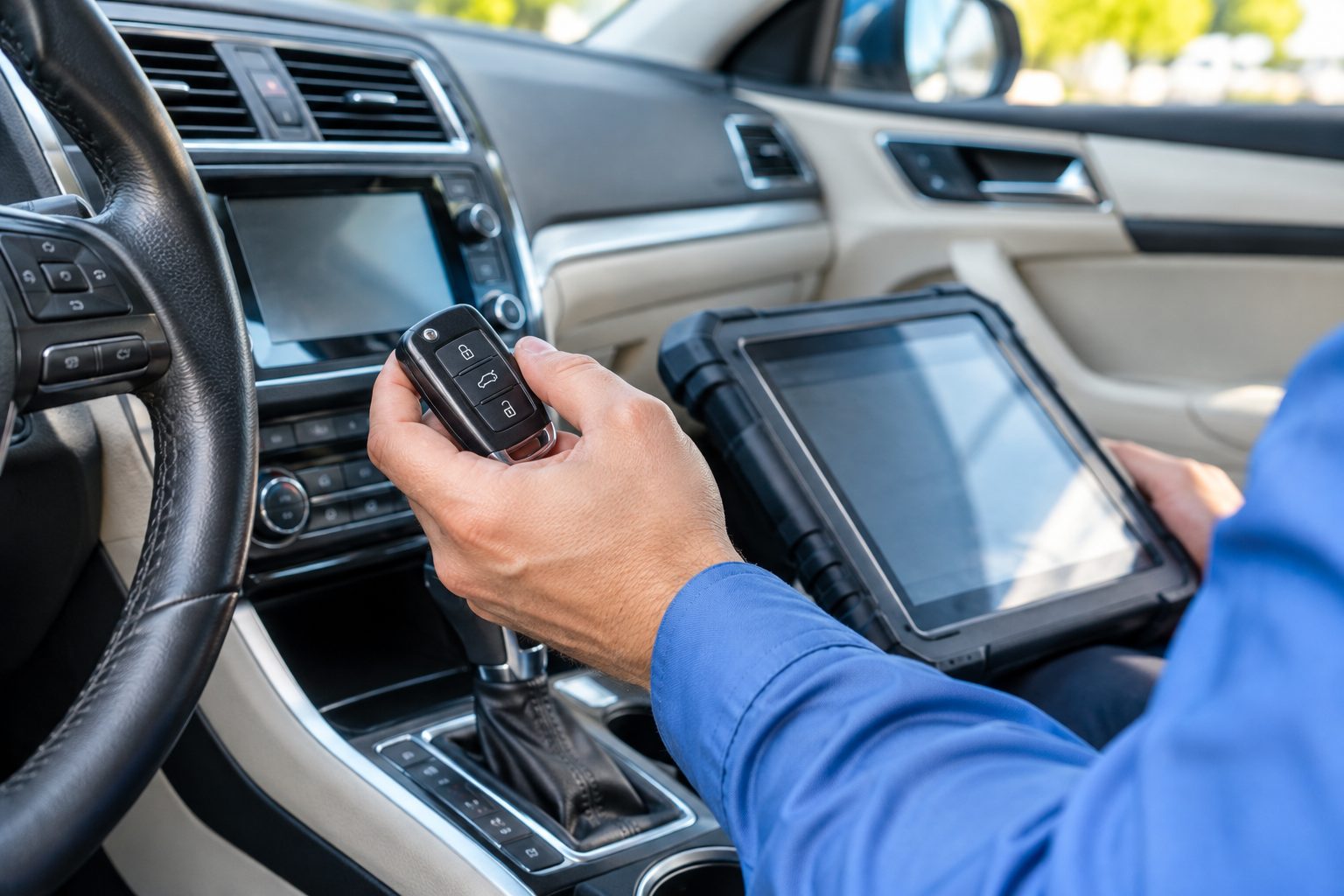
A keyed-alike set is a group of locks that are configured to work with the same key. Each lock still has its own cylinder, its own bolt and its own hardware. What they share is the internal pin arrangement, so that one key lifts each set of pins to the right height. The result is that the same key opens the front door, back door, garage entry and any other lock included in the set.
It is different from a master key system. In a keyed-alike arrangement, every lock responds to the same key and no lock has a special higher level of access. In a master key system, different keys open different subsets of locks, and a master key opens all of them. If you are a business with several people who need different access, keyed-alike is not enough. See our guide on master key planning for small businesses if that sounds like your case.
Keyed-alike should also not be confused with keyed-different. Locks that are keyed different each take their own unique key. Most single locks bought off a shelf are keyed different, and when you buy several of the same model, the keys will not match unless you request keyed-alike versions or have them rekeyed. The choice is made at the cylinder level, not at the door.
Most residential locks are pin tumbler locks. Inside the cylinder is a row of small spring loaded pin stacks. Each stack holds a bottom pin that touches the key and a top pin above it. When the correct key is inserted, its cuts raise each stack so the gap between the bottom and top pins lines up with the edge of the cylinder, called the shear line. Then the cylinder can turn and open the lock.
To make two locks keyed alike, a locksmith chooses bottom pins of matching lengths in both cylinders, so the same cut key lines up the shear line in both. They do not change the doors or the bolts. The work happens at the cylinder, using a pin kit and a set of tools, often in a few minutes per lock. This is the same procedure used when you rekey a lock, which is why keyed-alike and rekeying often go together.
Because the setup is just a particular choice of pins, keyed-alike can be added to existing locks if they are of compatible brands or keyways. A keyway is the shape of the slot where the key goes in. Locks from different brands often use different keyways, so you cannot always mix and match without replacing a cylinder. A technician can check the brand and keyway of each lock and tell you if a set is practical.
Keyed-alike is a natural fit for homes. Most households do not want separate keys for the front door, the back door and the garage entry. Carrying one key reduces the chance of fumbling in the dark and the likelihood of leaving a key behind. For anyone with limited mobility or small children, simplicity reduces frustration. After a move, a single new set of keys across all exterior doors can be a welcome fresh start.
It also suits small business spaces with a few doors and a limited number of people. A shop with a front entry, a rear entry and a back office can have all three open with one key, assuming the same people should reach all three. Property managers sometimes use keyed-alike for common area doors, such as maintenance rooms and mailrooms, so a single key opens them all.
Anywhere the doors share the same level of trust, keyed-alike is reasonable. If the person who needs the garage entry also needs the back door and the main entry, one key makes sense. If you rent out part of the property, run a business from a portion of it or let contractors in occasionally, you may want separate keys so access can be limited and tracked.
The main drawback of keyed-alike is that one lost or copied key opens every lock in the set. In a home, that could be every exterior door. If a spare is lost at a beach, a theme park or a hotel, the risk covers the whole property. Rekeying the entire set then becomes the sensible response, which is more work than replacing a single lock.
Separate keys, or a master key system, are better when different people should have different levels of access. A landlord with several units should not use keyed-alike across tenants. A business with an office, a warehouse and a cash room should not let every employee open every door. In those cases, controlling who holds which key is more important than carrying fewer keys.
Also think about the doors that deserve higher security. An interior closet with valuables or a safe room might be better with its own key, even if exterior doors are keyed alike. Mixed designs are common: exterior doors share a key, while sensitive doors take unique ones. See key control policies for businesses for a framework.
There are two common routes. One is to buy new locks that are factory keyed-alike. These come as sets, and every cylinder in the package matches. This is simple, but you are limited to the models offered and the finishes available. The other is to rekey locks you already own, so that they all accept the same new key. This preserves your hardware and lets you choose from compatible locks.
A mobile locksmith can come to the property, remove the cylinders, install new pins and cut keys that match. In many cases the whole process takes a short time per door. You should be home or have the doors accessible, and it helps to tell the locksmith how many locks, which brands and which doors are involved. Our pages on lock rekeying and residential locksmith services describe the work.
Not every lock can join the set. Some high security locks use restricted keys and special cylinders that cannot be altered by ordinary pinning. Some electronic locks have no key cylinder, or have one that is separate from the main function. Smart locks with a key cylinder as backup can often be keyed to match, but a technician should check. Quotes are given by phone, and more complicated jobs may need an on site visit with a service call charge explained before dispatch.
Keyed-alike does not reduce the physical strength of any lock. A deadbolt keyed alike with another deadbolt is just as strong as before. What changes is the consequence of losing or copying a key. With separate keys, a lost key compromises one door. With keyed-alike, it compromises every lock in the set until you change them.
That is not a reason to avoid it, only a reason to be thoughtful. Keep track of the keys. Mark or log spares and avoid labeling them with your address. Consider keeping a key with someone you trust rather than hidden outdoors. Use a key that is stamped as do not duplicate only if your lock system truly restricts copying. Otherwise the stamp is just a request, and a copy shop can still make one.
Also consider that the locks themselves matter more than the keying. A well made deadbolt with a solid strike plate and reinforced frame is much more resistant to forced entry than a weak lock, whether keyed alike or not. Our guide on deadbolt grades explained and the page on door frame and hinge security explain how to strengthen the basics.
Consider a family in a single story home with a front door, a back patio door and a garage entry. They have three different keys and a habit of carrying the wrong one. Rekeying all three locks to the same key lets everyone use one key and keeps spare copies manageable. If the family adds a keypad deadbolt later, it can still be keyed to match for backup use.
Consider a small shop with a front entry, a stockroom and an office. The owner and one trusted employee need all three. A keyed-alike set works well, with a separate key for a cash drawer or safe. If the staff grows and there are part time workers who should reach only the sales floor, the owner may outgrow the keyed-alike setup and move to a master key arrangement.
Consider a landlord with a duplex. Each unit should be keyed differently, but the shared laundry and storage doors might be keyed alike for the maintenance person. Unit doors should not open with the common area key unless the landlord holds a master. Florida lease rules and local requirements also affect lock changes, so read landlord lock responsibilities in Florida and check your agreement.
Before rekeying a set of doors, ask who will carry the key and how often it leaves the property. A key that travels to work, school, the gym and the beach has more chances to be lost than one that mostly stays in a drawer. If several people carry copies, the number of exposure points multiplies, and the value of tracking each copy goes up with it.
Ask also whether every door really deserves the same trust. A side gate, a shed and a front door may each be used by different people. Putting a shed key on the same ring as the front door is convenient, but it also means a landscaper who needs the shed can open the house if they are handed the wrong key. Splitting those into separate keys costs a little convenience and buys a lot of control.
Finally, ask what you will do the day a key goes missing. If the answer is rekey everything, make sure you know who to call and that the locks are of a type that can be rekeyed easily. If the answer is nothing, a keyed-alike set may not suit your household yet. Thinking this through now makes the choice calmer and the result safer.
Once you have a keyed-alike set, maintenance is about habits. Keep a written record of how many keys exist and who has them, even for a household. If you give a key to a house sitter or a contractor, note the date and ask for it back. If a key is lost and you cannot be sure it is safe, rekey the set promptly rather than hoping for the best.
Be careful about copying. Copying a key is easy, and each copy is one more key to track. Make only the copies you need. Wear on duplicates can cause a key to stick in one lock, because each copy is slightly less precise than the original. If a key begins to stick or turn roughly, replace it with a fresh cut from the original or from the code information the locksmith holds.
If you move, sell or take on a new tenant, the simplest way to reset trust is to rekey the whole set. This leaves the hardware in place and makes every old key useless. When you are ready to plan a keyed-alike setup or have questions about your doors, call and describe what you have. A technician can suggest a practical arrangement and explain the steps.
Often yes, if the locks use compatible cylinders and keyways. A locksmith can rekey them to match using new pins. Some brands, high security cylinders and electronic locks may not be compatible, so call and describe the locks. The technician will tell you what is practical.
No. In keyed-alike, one key opens every lock in the set, and nobody has a higher level. A master key system uses different keys for different locks plus a master key that opens all of them. Choose based on whether everyone should have the same access.
A lost key may open every lock in the set. If you cannot be confident it is safe, the usual response is to rekey the locks so the old key no longer works, then cut new keys. Doing this promptly is wiser than waiting.
The strength of each lock stays the same. The difference is that one key is enough to open all the locks in the set, so losing it affects more doors. Good key tracking and prompt rekeying after any loss keep the risk reasonable.
Many smart locks with a backup key cylinder can be keyed to match your other locks, which is handy for a single backup key. Fully keyless models have no cylinder to match. A technician can check the model and advise on the best approach.
Rekeying is usually quick per lock, but the total depends on how many locks there are and their condition. Worn or damaged cylinders may need replacement. Describe your doors when you call, and the details and quote will be explained by phone before anyone is dispatched.
Describe the situation by phone and we will tell you what the job involves. Quotes are given by phone. Jobs that cannot be quoted without seeing them need a technician on site, and the service call charge is explained on the phone before anyone is dispatched.