Tenants and landlords often disagree about who must fix a lock, change it after a move-out or pay for a lost key. This guide offers general public information about how those questions are usually approached in Florida, what to document and where to check official sources. It is not legal advice.
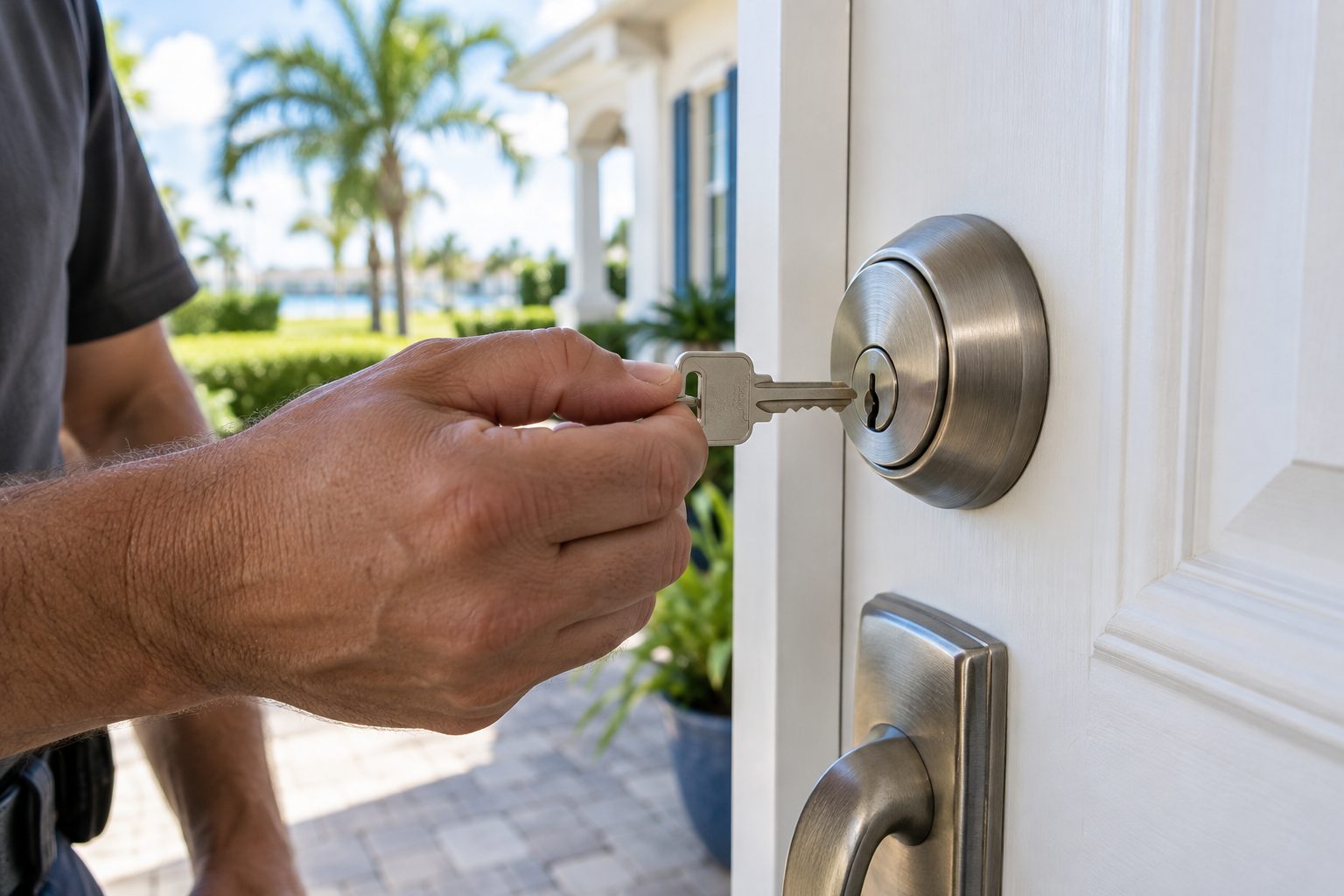
Locks and keys sit at the point where safety, property rights and money meet, so it is no surprise that tenants and landlords have disagreements about them. A tenant wants a secure home and wants repairs done promptly. A landlord wants to protect the property, keep access for maintenance and avoid costs that should fall on someone else.
This guide is written by a locksmith information site, not a law firm. It describes the general landscape in plain language and points you to official sources. Laws change, individual leases differ, and facts matter. If you have a real dispute, a deadline or a safety concern, check the current text of the law and speak with a qualified professional, such as an attorney, a local tenant organization, a legal aid office or a relevant government agency.
What a locksmith can reliably tell you is the practical side: what the hardware is, what condition it is in, what a repair or rekey involves and what to write down. That practical knowledge helps you describe a problem clearly to a landlord, to a property manager or to an advisor. The rest of this page is organized around that.
Residential tenancies in Florida are governed in large part by Chapter 83 of the Florida Statutes, often called the Florida Residential Landlord and Tenant Act. It sets out duties that apply to landlords and tenants, such as maintaining premises, giving notices and handling deposits. Local ordinances and housing standards may add requirements, and cities and counties differ.
The statute and local rules sit above your lease. A lease can add terms, but it generally cannot remove protections that the law gives tenants. Likewise, a lease can place responsibilities on a tenant, such as paying for a lost key, as long as those terms are reasonable and lawful. How those rules apply to a particular lock or key problem depends on the building type, the wording of your lease and the facts.
Provisions on locks and keys can differ depending on the kind of dwelling, for example a single-family home compared with a unit in a larger building. Because the specifics matter and can be amended, this guide does not quote them. Read the current statute on the official Florida Legislature website or ask a qualified adviser, and treat any summary, including this one, as a starting point only.
Most lock disputes fall into a few patterns. A lock stops working and the tenant asks for a repair. A tenant moves in and wants to know whether previous tenants still have keys. A tenant loses a key and is unsure who pays. A tenant wants to add a deadbolt or a keypad. A landlord needs to enter and wants a key. Each has a typical route.
In general, a lock that is part of the building and has stopped working is something a tenant reports to the landlord, in writing, with a clear description. A tenant who wants a change that alters the hardware, such as a new lock, typically needs permission under the lease. A lost key is often charged to the tenant under the lease, though terms vary. A landlord's right to enter is limited by law and by notice requirements that are set out in the statute, so check the current rules.
The table gives a simplified overview of how these situations are often handled. It is general information only. Always check your own lease and current law.
| Situation | Typical first step | Often relevant |
|---|---|---|
| Lock stops working | Report in writing with details and photos | Lease repair clause and statute on maintenance |
| Concern about old keys | Ask in writing whether locks were rekeyed | Lease, move-in checklist, statute |
| Lost key | Tell the landlord promptly and ask about the process | Lease terms on keys and charges |
| Wanting a new or different lock | Ask permission in writing before any change | Lease alteration clause |
| Landlord needs entry | Check notice requirements in the statute and lease | Statute on access to premises |
| Damage after a break-in | Report to police and landlord, document damage | Police report, lease, insurance |
One of the most common questions is whether locks should be changed when a new tenant arrives. From a practical security standpoint, rekeying between tenants is a sensible habit, since previous tenants, their friends and their contractors may hold copies. Many landlords and property managers do it routinely, and some do not. Whether it is required in a specific case is a legal question that depends on the facts and the current law.
As a tenant, you can ask. A polite, written question before or on move-in is reasonable: were the locks rekeyed or replaced since the last tenant, and if not, would the landlord be willing to do so? Keep the reply. If the answer is no, you can still take sensible steps, such as using the deadbolt, being careful about who has keys and asking whether you may arrange a rekey at your own cost with permission.
From a landlord's side, rekeying between tenants is a way to control access and reduce disputes. It is a short job for a locksmith, and it can be done for several doors at once. See the page on lock rekeying and the guide on rekeying versus replacing locks to understand what the work involves, and the page on property manager lock service for how managers often arrange it.
Whatever the issue, the single most useful habit is to describe it in writing and keep a copy. A phone call can be forgotten or disputed. A message or email with a date, a clear description and a request is evidence of what was said and when. Include the unit address, which lock or door is affected and what the problem is. Say whether it affects safety, for example a front door that does not lock.
Add photos or a short video if you can. Show the lock, the door, the strike plate and any damage. If there is a symptom, describe it as you see it: the key turns but the bolt does not move, the lock is loose, the handle came off, the door does not latch. You do not need to diagnose the cause. A clear description is enough, and a technician can find the cause on site.
Keep a simple log of dates: when you noticed the problem, when you reported it, when you got a response and when it was fixed. If the problem is serious or time-sensitive, say so in your message. If you do not get a reply, follow up in writing. The record helps you and, if it ever matters, helps anyone who is asked to review the situation.
Not every lock problem is equal. A loose interior knob is an annoyance. A front door that will not lock, a broken sliding door latch on a ground-floor unit or a lock that was damaged in a break-in is a safety problem. Say so when you report it, and ask for a prompt response. Describe the specific risk, such as a door that cannot be secured at night.
If you are in immediate danger, call 911. If there has been a break-in, report it to the police and get a report number, then tell the landlord. A police report helps document the event and may be needed for insurance. Your own renter's insurance, if you have it, may cover your belongings but usually does not cover the building.
While you wait for a repair, take reasonable temporary steps. Use any working lock, place a bar in a sliding door track, move valuables and let a trusted person know. Do not make permanent changes to the door or lock without permission. The page on lock changes after a break-in and the guide on after a burglary lock safety explain what a technician checks after a forced entry.
Many tenants want to improve security with a better lock, a keypad or a smart lock. Whether you may do so depends on your lease and your landlord. Most leases require written permission to alter locks or install hardware, and many require that the landlord keep a key or access method. Ask first, describe what you want to install and offer to restore the original hardware when you leave if that is acceptable.
Some landlords are happy to approve a change that improves security and does not damage the door. Others have a standard hardware setup or a master key system and will say no. If so, ask whether the landlord will upgrade the lock themselves. A strike plate reinforcement or a longer screw is often a small change that a landlord will accept.
Smart locks are a different case, since they depend on accounts and batteries and may affect the landlord's access. Some properties already install them and manage codes centrally. If you are moving into such a unit, ask who controls the system and how access is managed. The guide on smart lock buying guide explains the technical side, and the page on smart locks and keyless entry describes installation.
Landlords and property managers usually need access for repairs, inspections and emergencies. They typically hold a key or an access method for that reason. The statute sets out rules on when and how a landlord may enter, including notice, and exceptions for emergencies. Because those rules are specific, read the current text rather than rely on a summary.
From a security point of view, ask how many copies of your key exist and who holds them. A property manager may keep keys in a lockbox or a key cabinet. Ask whether there is a log of who takes a key, and how contractors are given access. A landlord who has a clear process for this is easier to work with.
If a landlord enters in a way that concerns you, write down the date and time and what happened, and raise it in writing. Do not change the locks to keep a landlord out, since that can breach the lease and may create a bigger problem. If you believe your rights have been violated, seek advice from a qualified source.
In a condominium or a community with an association, the rules on locks may come from more than one place. The unit owner may control the door of the unit, while the association controls entry gates, mailboxes, shared doors and sometimes the exterior appearance of hardware. A tenant in a condo answers to the owner and may also be bound by association rules.
Associations often require approval for exterior changes, may require that a key be on file and may restrict which vendors may work on common elements. Ask the owner or manager for the rules and follow the process. The page on HOA and community lock service and the guide on condo and high-rise lock guide describe the usual arrangements.
If you are a tenant in a managed building, report issues with shared doors and gates to the property manager, not the individual owner, and keep a copy. If a fob or gate card is lost, report it at once so access can be cancelled. See also apartment lock service for how locksmith visits to multi-unit buildings usually work.
A locksmith works for whoever hires and authorizes them. For a lock in a rental, that is usually the owner or the property manager, though a tenant may call in a lockout. A responsible technician will ask for proof that you live there and, for a lock change, will want to know that the landlord has authorized it. This protects you, the landlord and the technician.
A locksmith can inspect a lock, describe its condition and explain what it needs. That description can support a repair request. They can rekey or replace locks when authorized, reinforce a door and install new hardware. They cannot tell you your legal rights, and they cannot decide who must pay under your lease.
If you are a landlord or a property manager, a locksmith can set up a routine, such as rekeying at each turnover and keeping a record of keys. If you are a tenant, a technician can help you explain a problem in clear terms. Quotes are given by phone, and a service call charge applies for dispatch and is explained before anyone is sent.
For the text of the law, use the official Florida Legislature website and read the current version of the residential landlord and tenant chapter, since older copies and summaries may be out of date. Your city or county may publish housing and property maintenance rules. Many local governments have a housing or property standards enforcement office that can explain what applies.
For help with a dispute, options include legal aid organizations, tenant and housing nonprofits, local bar association referral services and private attorneys. Some courts publish self-help information. These sources can tell you about your rights and options in a way that a locksmith site cannot.
When you are ready to handle the practical side, such as a lock that does not work, a rekey after a move-out or a door that needs reinforcing, call and describe the situation, including whether you are the tenant, the owner or a manager. The dispatcher will explain what is needed, including any authorization, and give a quote by phone where the job is straightforward.
This site cannot say what the law requires in your case, since it depends on the building type, your lease and current statutes. In practice, many landlords rekey between tenants as a security step. You can ask in writing, and read the current Chapter 83 text or seek qualified advice if the answer matters.
Usually only with the landlord's written permission, since most leases restrict alterations and require the landlord to have access. Ask first and explain what you want to do. If you are worried about a specific key, ask the landlord to rekey the unit and request confirmation in writing.
Many leases make the tenant responsible for lost keys and any rekeying that follows, but terms vary. Tell the landlord promptly, ask what the process and charges are and keep receipts. Check your lease wording, and seek qualified advice if you think a charge is unfair.
Report it to the landlord or property manager in writing right away and say it is a security issue, with photos. Use any working lock in the meantime and move valuables if needed. If you are in danger, call 911. Do not make permanent changes without permission.
Florida law sets rules on when and how a landlord may enter, including notice, with exceptions for emergencies. The details are specific, so read the current statute and your lease or ask a qualified adviser. If you have concerns about entry, record dates and times and raise them in writing.
A locksmith can inspect a lock and describe its condition, which may help you explain a problem clearly. They cannot give legal advice or decide who must pay. For legal questions, use official sources, a legal aid office, a tenant organization or an attorney. The practical lock work can be arranged by phone.
Describe the situation by phone and we will tell you what the job involves. Quotes are given by phone. Jobs that cannot be quoted without seeing them need a technician on site, and the service call charge is explained on the phone before anyone is dispatched.