Conway sits in southeast Orlando, with lake-adjacent homes, quiet residential streets and busy routes toward the airport and State Road 436. That mix brings its own lock calls, from lakeside gates and sheds to travelers with a car key problem. This page explains how mobile service works here and what to prepare.
Conway is known for its chain of lakes and the homes that sit near them, along with neighborhoods of established single-family houses set back from the larger roads. Within a short drive are major routes, including State Road 436, and the area around Orlando International Airport. It is a place of two characters: calm side streets and a constant flow of traffic nearby.
That combination shapes lock work. Homes near the water have outdoor features that older inland houses may lack, such as dock access, boat storage, gates and sheds. The proximity to the airport brings travelers who park, rent cars, leave early or return late, and who sometimes find that a key has gone astray at the worst moment.
A mobile locksmith comes to the address, whether that is a driveway, a lakeside gate or a parking lot near a major road. The technician brings key blanks, cylinders, programming equipment and tools. Quotes are given only by phone after you describe the situation, and work that needs a closer look begins with a visit whose charge is explained beforehand.
A home near a lake often has more outdoor locks than a typical house: a gate to the water, a shed for equipment, a boathouse, a storage box for water toys and perhaps a pool enclosure. Each one is exposed to sun, rain and moisture, and each is a point where hardware wears faster than inside the house.
Padlocks left outside are particularly vulnerable. Corrosion builds up inside the shackle and keyway, keys begin to grind, and eventually the lock seizes. If a padlock has started to stick, do not wait for it to fail. Use a lubricant made for locks, sparingly, or replace the padlock with a weather-rated model. Our boat and marine locks page explains hardware made for wet conditions.
Gates deserve the same thought. A gate latch that sags or does not catch, a hinge that has pulled away from a post or a lock that no longer lines up are all signs that the gate is not doing its job. Our gate lock and latch repair page describes what a technician can fix on site.
Moisture is a fact of life near water, and doors show it. Wooden doors swell, metal hardware corrodes and cylinders pick up dust and damp. A door that closes smoothly in the dry season may stick in summer, and a deadbolt that once turned smoothly may begin to bind.
Do not force a stiff lock. Forcing can snap a key or damage the mechanism. First check whether the door itself has moved: is the latch lining up with its strike, are the hinges tight, is the weatherstripping rubbing? Sometimes the lock is fine and the door needs adjustment. A technician can tell the difference.
A light, suitable lubricant applied sparingly helps most locks. Avoid heavy household oils that attract dust and turn gummy. Our humidity and lock longevity guide offers more advice. If a lock has already begun to seize, call and describe the symptoms before it breaks.
Many Conway homes have been through several owners. A house that has changed hands, been rented out, been renovated or hosted house sitters has probably accumulated keys that nobody can account for. The front door key may be in the hands of a previous owner, a former tenant or a contractor who worked on the house years ago.
Rekeying is the simplest way to reset this. It changes the pins inside each cylinder so the old keys no longer work, and new keys are cut. In most cases the hardware stays on the door, which is quicker than replacing it. Our lock rekeying page describes the process.
Doors of an older house may need a look at the same time. A strike plate held by short screws, a frame that has shifted or a worn cylinder are common findings. If you plan to rekey, mention any problems you have noticed so the technician can bring the right parts.
With so much happening outdoors, lockouts often occur around the yard. A resident steps out to the dock, to the shed or to the water's edge, and the back door latches behind them. Sliding glass doors that lock with a light push make this easy to do.
Before calling, check for a spare key held by a neighbor or family member and look for any door that is unlocked and safe to use. Do not break glass or force the door. Do not climb in through an upper window. If anyone inside is in danger, especially a child, call 911 first.
When you call, describe the door, the lock and where you are, including the nearest cross street or a landmark. A technician will ask for identification that ties you to the address before opening. Our house lockout page explains the process. We do not promise an arrival time, but you will hear the service call charge and the quote before dispatch.
Conway's position close to the airport and the roads leading to it means many car calls involve people who are traveling. A traveler returns from a flight to find the key fob dead after days in a parking area, a key lost on a trip or a rental car locked with the keys inside. Time pressure makes each of these feel worse than it is.
For a lockout, be ready to say where the car is, the make, model and approximate year, and whether the keys are inside. If a child or pet is inside a closed car, call 911 first. For a rental, contact the rental company, since the vehicle is theirs and they may have their own procedures. A locksmith needs proof of ownership or authorization before opening any car.
If your own key has failed after a long trip, a weak fob battery is a frequent and easy fix, and the manufacturer's instructions will say how to replace it. If that does not help, a technician can check whether the key needs programming or replacement. Our key fob replacement page and guide to rental car key lockouts explain the options.
Vehicle work depends on the car. Older vehicles may use a simple metal key, while many newer ones use a transponder chip, a remote head key or a push-button smart key. Each needs different equipment and procedures, and the same make can vary from one model year to another.
When you call, have ready the make, model and year, whether you have any working key, and where the car is. Be prepared to show identification and proof that the vehicle is yours. If you have a spare key, copying it is generally simpler than creating a key when none exists, a situation covered on our all keys lost page.
Quotes for car work are given by phone once the vehicle details are known. The technician confirms them on arrival, and if something differs from what was described, explains the difference and offers an updated quote before doing more. You can decline at that point.
The roads that carry travelers also carry commerce: offices, service businesses, shops, restaurants and lodging. Their doors, like those of any business, face daily wear and staff turnover. Common calls include a door that will not latch at closing, a back door lock that has stiffened and keys that left with a former employee.
Rekeying exterior doors when staff change is the standard way to cut off old keys. Businesses with several doors may benefit from a master key system, which lets a manager open every door with one key while each employee carries only the keys they need. Designing one requires a visit. Our master key systems page explains how it works.
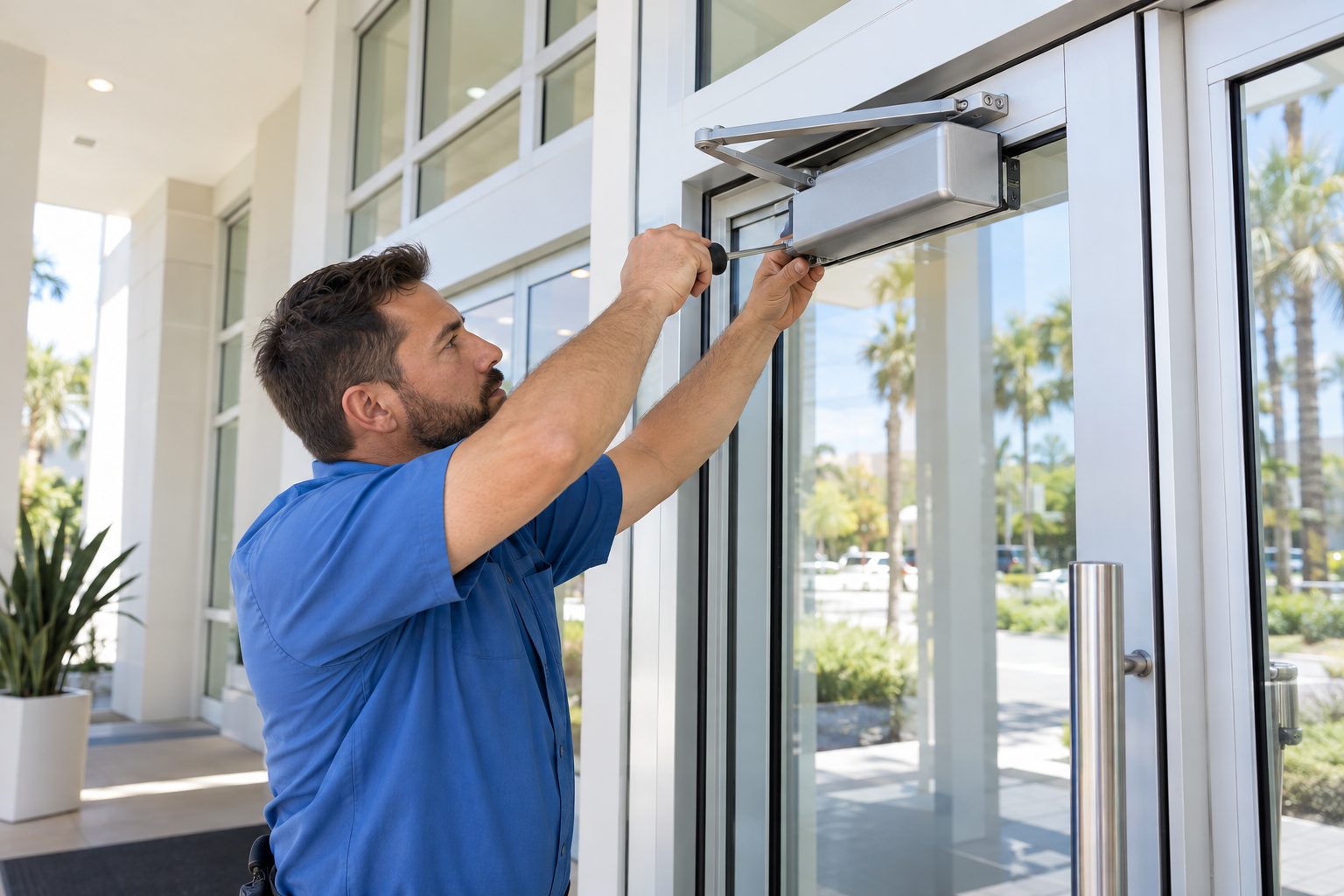
For jobs involving several doors, door closers, exit hardware or access control, a technician needs to see the doors before a full quote can be given. The service call charge for that visit is explained on the phone before dispatch.
Hurricane season is a regular part of the year across Central Florida, and Conway is no exception. Heavy rain and strong winds test doors, frames and latches. A door that holds on an ordinary day may flex when the wind pushes against it if the strike is weak or the screws are short.
Look at every exterior door before the season begins. Does the deadbolt extend fully? Are the hinge screws tight? Is there a gap along the edge? Sliding doors need working latches and clear tracks. Gates and sheds near the water need hardware that can survive a wet season. Our hurricane season door and lock prep guide has a fuller list.
After a storm, test your locks again, since swollen frames and shifted hinges are common. If something sticks, do not force it. Describe the symptoms and a technician can advise. If a door has been damaged and will not secure the house, ask about temporary measures on the phone.
Many Florida homes near water have a screened lanai or pool area at the back, reached by a sliding glass door and closed in by a screen door or enclosure door. These spaces are where family life happens, and they often have the weakest locks on the property.
The screen enclosure door typically has a small latch that keeps it closed but offers little resistance. It is a convenience, not a barrier. The sliding glass door behind it is the real boundary, and its latch deserves checking. A bar or pin in the track and a working secondary lock add protection. Our sliding glass door guide goes through the options.
If you have a pool, you may also be responsible for keeping children away from it. A self-closing, self-latching gate or door is part of that, and the local rules set out what is required. A lock is one part of the picture and it is separate from security against intruders. Our pool gate lock service page describes the hardware.
Some homes in lake areas are second homes, seasonal residences or properties used for short stays, and they sit empty for stretches. An empty house with a poor lock and a visible spare key is an invitation. Even a short absence calls for a plan about who has access.
Before leaving a house for a long period, decide who will check on it and give that person a key you can account for. Rekey if previous keys are unaccounted for. Put exterior lights on timers, secure the sliding door and the garage entry and make sure sheds and gates are locked. Our vacation lockup checklist and snowbird home lock checklist give longer lists.
For rentals, a keypad lock that lets you change the entry number between guests is a practical option, subject to any community rules. Keep a written record of who has access and when it was reset. If a guest leaves with a physical key, rekey.
A relaxed lakeside lifestyle invites relaxed habits, such as leaving the back door open while you are on the dock, or leaving a boat key in a visible spot. Small lapses add up. A short routine helps: lock the house when you step outside for more than a moment, keep gates latched and put away anything that identifies where a spare key is hidden.
Think about the keys that live outdoors. A shed key hung on a nail beside the shed is not a lock at all. A boat or equipment key left in plain sight defeats the purpose of the lock. Keep these in a single secure place indoors and store a spare away from the property.
If a lock begins to stick or a latch no longer catches, take care of it early. Corrosion progresses, and what starts as a stiff key can end with a seized lock and a call at an awkward hour. A short call to describe the symptom is often enough to know whether a repair is needed.
Call, describe the problem and give your address or the nearest cross street. If you are at a parking area or a gate, describe it. You hear the service call charge and, when the job can be quoted by phone, the cost of the work. Jobs that need a closer look begin with a visit. You can decline before work starts.
Have identification ready and, for car work, proof of ownership or authorization. For outdoor locks, tell us the brand and type if you can see it. For doors, say whether more than one lock is involved.
Our pages for the Orlando airport area and Belle Isle cover nearby areas, and our phone quote guide explains the process. When you are ready, call and tell us what is happening.
Yes, mobile service covers Conway and nearby parts of southeast Orlando. Call, describe the problem and give your address or the nearest cross street. We do not promise an arrival time, because traffic and other calls vary, but you will hear the service call charge and the quote before anyone is dispatched.
Often yes. Moisture corrodes padlocks and gate hardware, and keys begin to grind before the lock seizes. Do not force it. Describe the lock and its condition on the phone. A weather-rated replacement may be the better choice, and a technician can advise on hardware made for wet conditions.
A weak battery is a common and easy cause, so check the manufacturer's instructions for replacing it. If a fresh battery does not help, the key may need programming or replacement. Call with the make, model and year of the car, and be ready to show identification and proof of ownership.
Contact the rental company first, since the car is theirs and they may have their own procedure. A locksmith needs proof of ownership or authorization before opening any vehicle. If a child or pet is inside a closed car, call 911 first, because that is an emergency.
It is a sensible step. Previous owners, tenants and workers may still hold keys. Rekeying makes old keys stop working without replacing the hardware in most cases. Call and describe your doors so a quote can be given by phone.
Quotes are given only by phone, because the right answer depends on the door, lock or vehicle. You hear the service call charge and the likely cost of the work before dispatch, and complicated jobs may need an on-site visit first. You can decline before work begins.
Describe the situation by phone and we will tell you what the job involves. Quotes are given by phone. Jobs that cannot be quoted without seeing them need a technician on site, and the service call charge is explained on the phone before anyone is dispatched.