A gate that will not latch, a lock that will not turn, or a latch that drops out of place leaves a yard open and a family uneasy. This page explains why residential gate hardware fails, how alignment and weather play a part, and what a technician checks when you call for repair or replacement.
A gate is one of the most demanding places for a lock. It swings thousands of times a year, is struck by the weight of its own frame, and sits outside in sun, rain, and humidity. The lock or latch must line up with a post that may have shifted. Soil moves, posts lean, and wood swells and shrinks. A latch that fit perfectly on installation day may be a quarter inch off a year later, and that is enough to stop it from catching.
Materials matter. Wooden gates swell in the wet season and shrink in the dry, changing the gap at the latch. Vinyl gates can warp in summer heat. Aluminum and wrought iron gates hold their shape better but can sag at the hinge, which tilts the latch side out of line. Chain link gates have their own hardware and a looser structure that moves with wind and use.
The hardware itself is also under attack. Humidity and rain corrode steel parts, and dirt works into moving surfaces. Low quality latches that look fine in a store may use thin metal and plain steel springs that fail in a season or two. A better latch is built from heavy gauge, corrosion resistant material and mounted with proper fasteners. Understanding the stresses helps you see why a repair may involve more than a single part.
The simplest gate hardware is a gravity latch, a small bar that drops into a catch as the gate closes. It relies on alignment and weight, and it can be lifted by anyone on the other side. Slightly more secure is a thumb latch, where a lever raises the bar from the outside through a hole in the gate. A spring loaded latch adds a spring so it snaps into place.
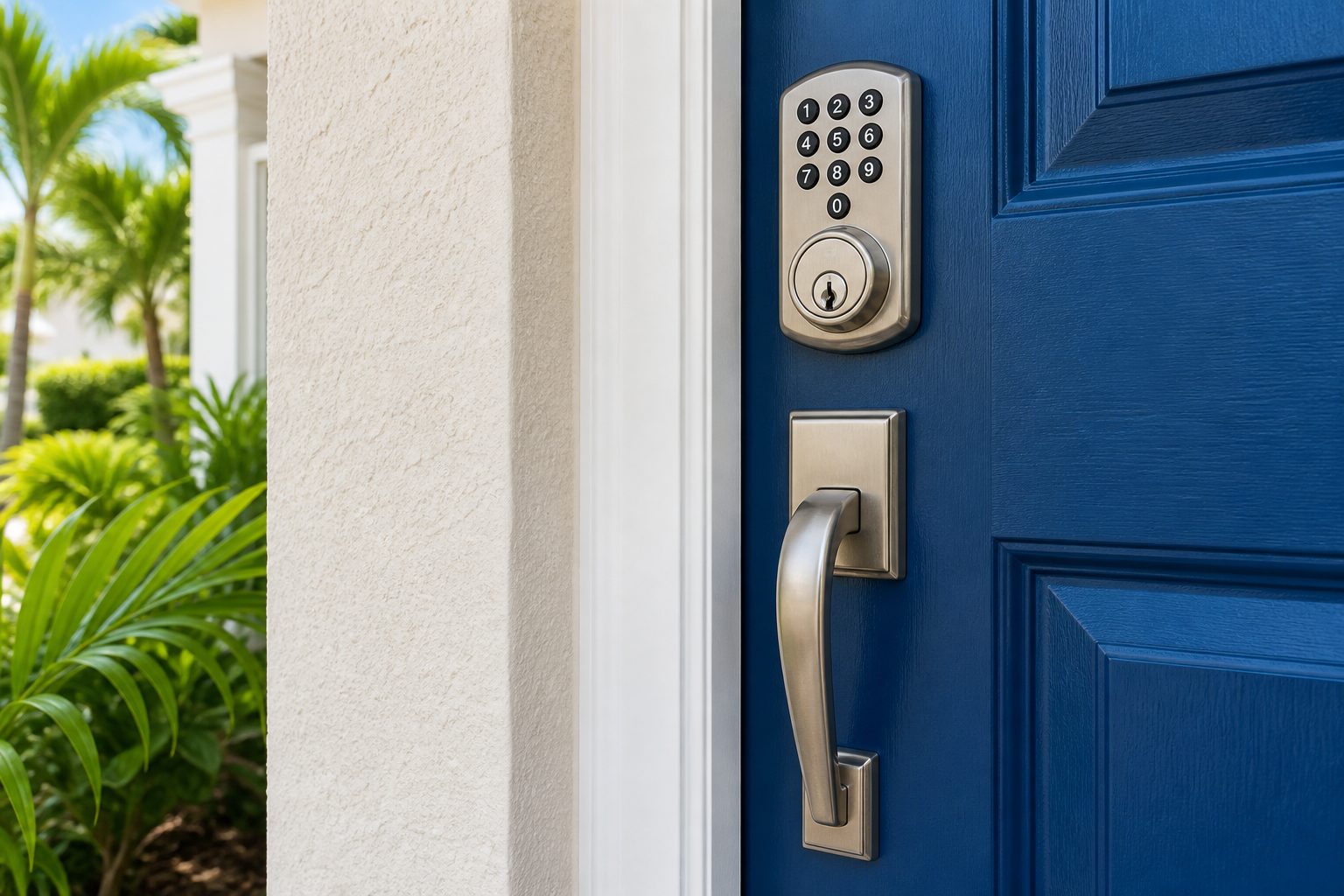
Keyed gate hardware ranges from a simple padlock and hasp to a purpose-built keyed latch. A keyed latch has a cylinder built into the body, so you lock it with a key from the outside and operate it with a handle from the inside. Many are designed for use on wood, vinyl, or metal gates and have adjustable bodies to cope with minor changes in gap. For higher security, some owners use a deadbolt style latch or a keypad lock designed for outdoor use.
There are also locks made for driveway gates and sliding gates, which are a different category with their own hardware. A residential walk gate or side gate is the usual case on this page. Pool gates have distinct requirements for self-closing and self-latching, which we cover on our page about pool gate lock service.
The most common reason is alignment. When a gate sags on its hinges, the latch side drops, and the bar no longer meets the catch. The cause may be a loose hinge screw, a worn hinge pin, a leaning post, or simply the weight of the gate over time. Correcting the sag is often the first step, since a new latch on a drooping gate will fail the same way.
Another common reason is a shifted post. Posts set in soil can lean after storms or from soft ground. Sandy Florida soil, saturated by summer rain, does not hold posts as firmly as stiff clay. If the post has moved, the catch moves with it. A technician can adjust the catch, move it, or suggest resetting the post.
Debris and corrosion make the rest. A latch bar that is stiff with rust will not drop, and a spring that has corroded may not push. Dirt in the catch can prevent the bar from seating. Spider webs, wasp nests, and leaf litter can be surprisingly effective at jamming a latch. A good cleaning and lubrication sometimes brings a latch back, and sometimes it is a sign that replacement is due.
If the key turns but the gate remains stuck, the latch bolt may be binding against the catch. The gate may be pressing against the latch because of sag, so the bolt cannot retract. A gentle lift on the gate while turning the key can relieve the pressure, and this is a common trick. If you have to lift to make it work, the gate needs adjustment.
If the key will not turn at all, the lock may be corroded, dirty, or worn. Gate locks sit outside and take rain, dust, and pollen. A cylinder may have internal parts that are sticky. Lubricate with a lock lubricant made for the purpose, work the key several times, and try again. If it still will not turn, do not force it, because a broken key in a gate lock is a bigger job.
Sometimes the key is worn rather than the lock. A copy of a copy, bent from use, can lose the shape that lifts the pins. In that case, a fresh key from the lock may fix the problem. Our page on keys that work only sometimes explains the signs. If the lock is old, a technician may recommend replacing it with a more durable model.
A technician will inspect the whole system, not just the lock. The first look is at the gate itself: does it hang level, do the hinges move smoothly, is the frame solid. Then the post and the catch, then the latch and the lock. Many problems are solved by adjusting or tightening, and a technician will say so rather than recommend a new latch you do not need.
Replacement makes sense when parts are bent, corroded through, or poorly made. A latch that has lost its spring or whose body is cracked is not worth repairing. Replacement is also worth considering if you want to improve security or convenience, such as a keyed latch that locks from both sides or a model that is better suited to your gate material.
When replacing, the technician will match the hardware to the gate. A wide wood gate needs a different latch than a narrow aluminum one. The thickness of the frame, the gap between gate and post, and the direction of swing all matter. Stainless or coated hardware is the better choice for most Florida installations, and fasteners should be corrosion resistant. We prefer to use hardware that will last through several summers rather than one that needs attention every few months.
Several adjustments solve most latch problems without new hardware. Tightening hinge screws and replacing stripped screws with longer ones, anchored in solid wood or metal, can lift a drooping gate. A diagonal brace or a tension cable across a wooden gate can pull it back to square. On a metal gate, a hinge may be adjustable with a bolt or a shim.
At the latch side, the catch can be moved or the latch body adjusted. Many gate latches have slotted holes so the position can be changed by a fraction of an inch. A technician will mark the correct position with the gate closed and mounted at the proper height, then refit the hardware. If the post is leaning, a small adjustment may be all it takes, or the post may need to be reset.
The gate stop is another key detail. A stop strip along the post keeps the gate from swinging past the catch. Without it, a gate can bounce past and fail to engage. Adding or adjusting a stop is a small job that makes the latch work reliably. For a thorough view of how door and gate hardware wear, our page on door hardware repair is a useful companion.
A side gate is the most overlooked entry to a home. It is often out of sight of the street, sometimes hidden by landscaping, and a thief who gets through it can work on a back door or window with less chance of being seen. A strong latch and a lock make a difference, but so does the gate itself. A flimsy gate with a sturdy lock is only as strong as its frame.
Consider a lock that is difficult to reach from the outside. A latch with a handle on the inside and a keyhole outside, mounted at a height that makes it hard to reach over the top, is better than a thumb latch that can be lifted through a gap. If the gate has a gap at the top or between boards, an outside reach-over may be possible, and the answer may be to change the latch position or add a cover.
Lighting and visibility also matter. A motion light near a side gate discourages visitors. Keeping bushes trimmed so the gate is visible from a neighbor's window helps. For guidance on the whole property, see our home security checklist for Florida. Locks are one layer of security, and a good setup combines hardware, habits, and good neighbors.
Gates do more than keep strangers out. They keep dogs in, and they keep small children away from the street or a pool. A latch that is easy for a child to open may defeat the purpose. Look at latches designed with a child-resistant mechanism, such as a lever that must be pulled and lifted at the same time, or one mounted out of reach. If your gate protects a pool, there are stricter standards, and we cover them on a separate page.
Pets are clever at testing gates. A dog that has learned to lift a thumb latch with its nose will do it again. A latch with a keyed lock or a mechanism that needs two motions can solve it. A gate that bangs shut in the wind may not latch, and a spring or a self-closing hinge may help.
Deliveries and service visits are another consideration. A keypad lock lets you grant access to a service provider and change the combination after. A key left under a mat for a delivery is a weak point. For homes that use several service providers, a keypad is often more manageable than a ring of keys. Our smart lock buying guide explains what to look for in keypad and digital hardware, and how to manage shared access safely. Whatever system you choose, remove access from anyone who no longer needs it, and review who holds a key or a keypad entry a few times each year.
A short routine, done a few times a year, keeps gate hardware working. Open and close the gate, and watch how it swings. Look for sag, rubbing, and hinges that have loosened. Check that the latch drops into the catch smoothly, and that the key turns without effort. Wipe away dirt, cobwebs, and insects from the latch and catch.
Lubricate moving parts with a product made for locks and hinges. Avoid heavy grease on key cylinders, since it attracts dirt. A small amount on the latch bar, spring, and hinge pins is enough. After heavy rains, check the post and the footing. In the summer months, when storms are frequent, a quick look after a big blow can catch a leaning post before it causes trouble.
Replace weathered hardware before it fails. Rust stains running from a latch are a sign that it is on its way out. Make spare keys while you still have a working one, and keep them away from the gate. Our page on lock lubrication and maintenance offers more detailed guidance.
When you call, describe the gate: material, width, whether it is a single gate or a double, and what is wrong. Say whether the latch is keyed, whether you have keys, and whether the gate protects a pool or serves a business. If you can send a description of the post and any visible damage, that helps. The dispatcher will ask a few questions, explain the service call charge, and quote the job by phone.
Some jobs can be quoted without a visit. Others, particularly those involving a leaning post, a damaged gate frame, or a complex lock, need an on-site look. You will hear that on the call. We do not give arrival windows, but the dispatcher will explain what to expect as the job is arranged.
On arrival, the technician inspects the gate, explains what is needed, and carries out the work. They test the latch and lock several times before they leave. If your gate is part of a community or a rental, an authorized person must approve the work. When you are ready, call and describe your gate, and we will explain the next step.
The most common cause is sag or a shifted post, which moves the latch out of line. Loose hinges, swelling wood, or a leaning post can all be factors. A technician checks the gate, hinges, post, and latch together, and often adjusts or tightens rather than replaces. Fixing the cause keeps a new latch from failing the same way.
Yes. Depending on the lock, a technician may cut a new key from the lock itself, rekey the cylinder, or replace the lock. The choice depends on the condition of the hardware. Ownership or authority to make changes may be confirmed, which is standard. Describe the lock when you call and the dispatcher can explain the likely options.
Heavy gauge hardware made from stainless steel, coated steel, or solid brass tends to last the longest, along with corrosion resistant fasteners. Thin plated latches rust quickly in humidity and rain. A technician can recommend a latch suited to your gate material, width, and use, and mount it so it stays aligned.
The latch bolt may be binding on the catch because the gate has sagged and presses against it. Lifting the gate slightly while turning the key often releases it. If you need to do that regularly, the gate needs adjustment. A technician can fix the hinge or catch so the gate opens without lifting.
A lock on a side gate adds a layer of protection to an often hidden entry. A strong latch and a sturdy gate frame matter as much as the lock. Think about who needs access and whether a keypad would be easier to manage than keys. A technician can suggest options that fit your gate and your household.
Quotes are given by phone after you describe the gate and the problem. There is a service call charge, explained before a technician is dispatched. Some jobs need an on-site visit so the technician can see the gate, post, and latch first. You can ask questions on the call before agreeing to the visit.
Describe the situation by phone and we will tell you what the job involves. Quotes are given by phone. Jobs that cannot be quoted without seeing them need a technician on site, and the service call charge is explained on the phone before anyone is dispatched.