Staring at your keys through a locked car window is a uniquely frustrating experience, whether it happens in your driveway or in a theme-park-area parking garage. Orlando Mobile Locksmith opens vehicles without damage using professional entry tools, and we do it wherever the car is parked. Doors, trunks, hatches, locked is locked, and our vans cover metro Orlando seven days a week. One call to us starts the process.
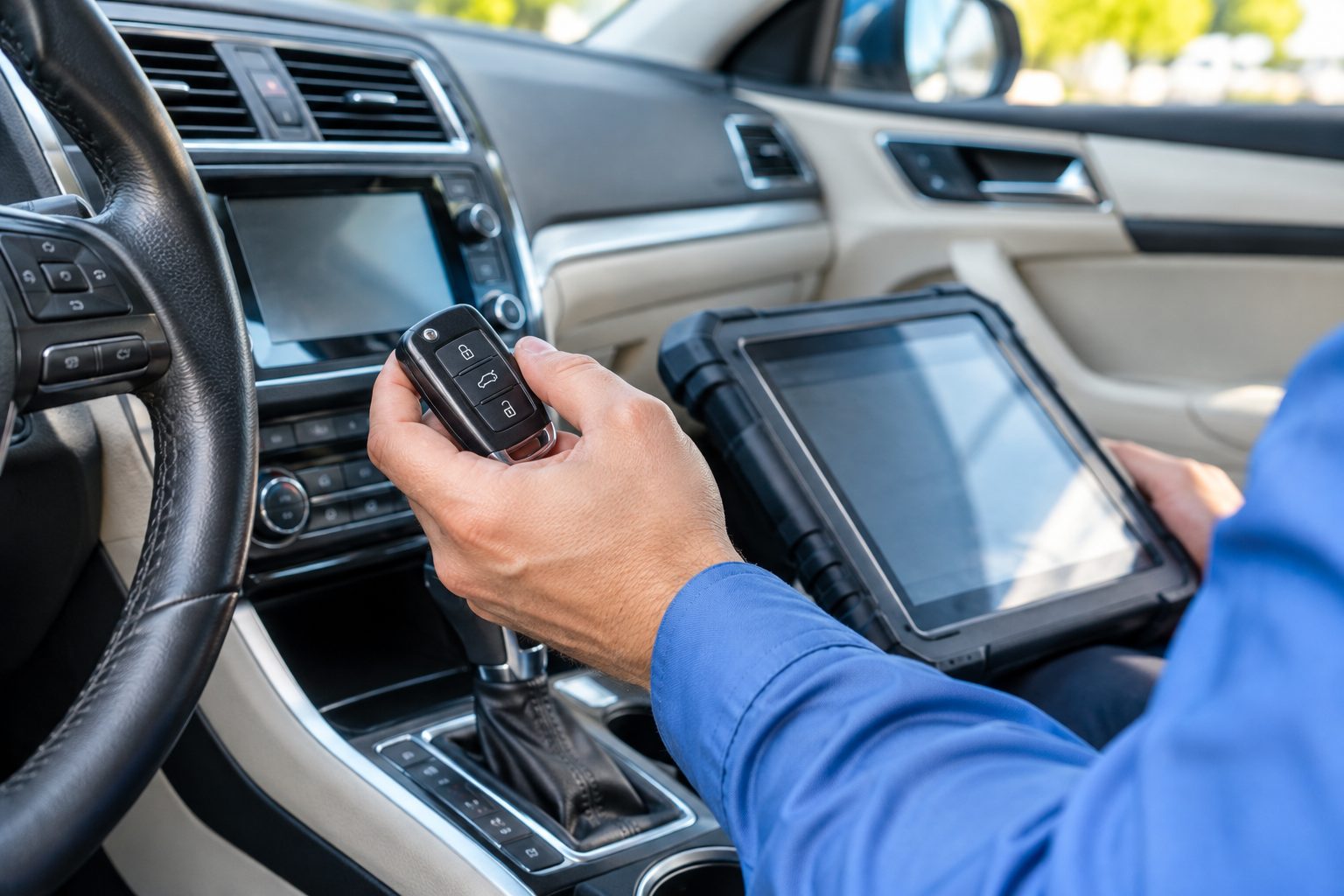
There is a big difference between getting into a car and getting into a car properly. Coat hangers scratch paint, gouge weatherstripping, and can snag airbag wiring inside the door. Prying a door frame with a screwdriver bends metal that never sits flush again. Our technicians use purpose-built entry tools, inflatable wedges that create a gap without stressing the frame, long-reach tools with protected tips, and lock picks and decoders matched to specific manufacturers. The goal on every job is to leave the vehicle exactly as we found it, minus the lockout. On many models the cleanest route is picking the door lock cylinder itself, which touches nothing inside the cabin at all. On others, a wedge-and-reach approach on the unlock button or interior handle is the gentler option. The technician evaluates the specific vehicle and chooses the method least likely to leave a trace. Modern cars are full of sensors, wiring, and side-curtain airbags in places people do not expect, and knowing where not to put a tool matters as much as knowing where to put one. That judgment is what you are calling for.
It happens the same few ways over and over. You set the keys on the seat while loading groceries and a hip bumps the lock button. A toddler plays with the fob and hits lock from the inside. An auto-lock feature triggers while the engine is running and the fob is sitting in the cupholder. However it happened, the fix is the same: we come to the car and open it without damage, and you are back inside with your keys in hand. If a child or a pet is shut inside a hot vehicle, treat it as an emergency, Central Florida cabin temperatures climb dangerously fast, so call 911 first, then call us; we will head your way regardless. For routine lockouts, stay near the vehicle if it is safe to do so, since the technician will need to verify that you belong with the car before opening it. Expect to show identification and, once the door is open, something connecting you to the vehicle. That check takes a moment and it is not negotiable, because an entry service without verification is a burglary tool, and we are not that.
Trunks create their own category of lockout. Plenty of drivers pop the trunk, set the keys down next to the luggage, close the lid out of habit, and hear the latch click with a sinking feeling. On many vehicles this is straightforward: opening the driver door restores access to a trunk release lever or button, and the problem is solved in one step. But some cars complicate things. Valet modes and trunk lockout switches disable the interior release. Certain models with the fob detected inside the trunk behave unpredictably. Older vehicles sometimes have separate trunk cylinders keyed differently from the doors. Fold-down rear seats help on some sedans and are bolted solid on others. Our technicians know which vehicles fall into which category and carry the picks and decoders to work a trunk cylinder directly when that is the only path in. Hatchbacks, SUVs with power liftgates, and pickup tonneau and cap locks are all part of the same service. Whatever is between you and your cargo area, the approach is identical to a door lockout: open it cleanly, hand back your keys, leave no evidence we were there.
A huge share of Orlando car lockouts happen to people who are not from Orlando. Visitors juggling park tickets, sunscreen, and tired kids lock keys in rental cars on International Drive, in resort parking structures near the theme parks, and outside vacation homes in Kissimmee and Davenport. Rental vehicles are fine, we open them for the authorized renter, using your rental agreement and ID for verification. Locals keep us just as busy: commuters in downtown garages, parents in school pickup lines, shoppers at Millenia and Waterford Lakes, students around UCF, and homeowners who locked the fob in the car inside their own Lake Nona garage. Summer adds its own twist, because an afternoon thunderstorm turns a minor lockout into a soaking-wet problem, and we would rather you wait somewhere dry than stand over the car. Give us the exact location, garage level and row if you are in a deck, resort and lot section if you are near the parks, and a phone number that reaches you. The vans navigate the corridor traffic every day and know the back ways into most of the major properties.
The process is deliberately simple. When you call us, tell us three things: where the car is, what the car is, and what got locked, keys in the cabin, keys in the trunk, or a fob that stopped working. We confirm a van is available and headed to you, and we ask for a callback number in case the technician needs to find you in a large lot. On arrival, the technician checks your ID, assesses the vehicle, and selects the entry method that fits that specific make and model. Once the door is open, we ask you to show something tying you to the vehicle, registration in the glovebox, insurance card, or a rental agreement. If the lockout turns out to be something else in disguise, we handle that too: a fob with a dead battery gets a fresh cell, a key that snapped in the door lock gets extracted, and a lost-key situation converts on the spot into key replacement service from the same van. No second company, no second appointment. Service runs seven days a week across metro Orlando, because lockouts do not check the calendar first.
Will opening the car damage my door or lock?
No, non-destructive entry is the entire point of calling a professional instead of improvising. Our technicians use inflatable wedges, protected long-reach tools, and lock picks designed for specific manufacturers, and they choose the method least likely to leave any mark. The car should look exactly as it did before the lockout, just unlocked.
Can you unlock a rental car?
Yes. Rental lockouts are extremely common in a tourist market like Orlando. We open the vehicle for the authorized renter after checking your photo ID against the rental agreement. If the agreement is locked inside the car, we verify what we can up front and complete the check once the door is open.
A child or pet is locked in the car, what should I do?
Call 911 immediately. Central Florida heat makes a closed cabin dangerous within minutes, and first responders are equipped to act the moment they arrive. Call us right after, we will start toward you as well, but never wait on a locksmith alone when a child or animal is inside a hot vehicle.
My keys are locked in the trunk. Is that harder than a door lockout?
Sometimes, but it is still routine work. On many cars, opening the driver door gives access to an interior trunk release and the job is done. When valet lockouts, disabled releases, or separately keyed trunk cylinders complicate things, the technician can work the trunk lock directly. Tell us the make and model when you call so we arrive prepared.
How do you know the car is actually mine?
We check. Expect to show photo identification, and once the vehicle is open, a registration, insurance card, or rental agreement connecting you to it. If your wallet is locked inside with the keys, the technician verifies your ID immediately after opening the door. This step exists to protect vehicle owners, and we do not skip it.
Which areas around Orlando do you cover for lockouts?
Metro Orlando and the surrounding Central Florida communities, the International Drive corridor, resort areas near the theme parks, Kissimmee, Davenport, Lake Nona, Winter Garden, Winter Park, the UCF area, and downtown. If you are unsure whether your location qualifies, call with the address and we will give you a straight answer.
A surprising number of car lockouts can be solved in a few minutes without a locksmith, and we would rather you try the quick options first. Run through this list while you are standing next to the car:
If none of those work, or the wait on your roadside plan is longer than you can manage, that is when we come in.
People often insist they did not lock the car, and they are frequently right. Modern vehicles have several features that can lock the doors without anyone pressing a button:
Most of these settings can be changed in the vehicle menu or by the dealer. If your car has locked you out more than once, it is worth looking at the settings in the owner's manual and turning off the ones that cause trouble.
Sometimes the problem is not a lockout at all. If you hear the lock click but the door will not open, or one door unlocks and another does not, the likely culprit is a failing door lock actuator. That is the small motor inside the door that moves the lock. When it weakens, it may work on some days and not others, and heat seems to make it worse. Opening the door with the key blade in the driver door cylinder usually still works. The actuator itself is a repair for an auto repair shop, since it sits inside the door panel.
If nothing responds at all, no lights, no clicks, no chirp, the car's battery may be dead. Without power, central locking and the remote do nothing. The mechanical key blade in the driver door is the way in. Once the door is open, the car still needs a jump start or a new battery, and the alarm may sound when the door opens, so be ready for that.
Electric and hybrid vehicles
Electric vehicles and many hybrids still rely on a small 12-volt battery to run the door locks, the electronics and the door handles, separate from the large battery that drives the car. If that small battery goes flat, the doors can refuse to open even though the main battery is charged. Many of these vehicles have a hidden mechanical key, a manual release, or a way to supply power to the 12-volt system from outside, all described in the owner's manual. We can open many of these vehicles, but we will also tell you the car still needs its 12-volt system looked at before it will be reliable.
Stuck in a parking lot in the heat, people get creative. Some of the ideas cause more expense than the lockout itself:
This happens more in Florida than almost anywhere else, because people leave the engine running for the air conditioning while they step out for a moment. The car locks, and now it is idling with nobody inside. It is not an immediate danger in an open parking lot, but it does burn fuel and leave the car running unattended. Keep an eye on it from a safe distance, and never do this in a closed garage, since exhaust builds up quickly. When you call, tell us the engine is running. It does not change the method, but it helps us understand the situation.
Summer afternoons in Orlando bring thunderstorms that roll in fast and often bring lightning. If you are locked out as a storm arrives, get under cover and wait. Standing next to a car in an open parking lot during lightning is not safe, and the technician will wait out the worst of it too before working on the door. Entry work in heavy rain can also let water into the cabin, so a short pause is better for the car as well as for you.
Lockouts are not limited to the cabin. Truck bed toolboxes, camper shells, locking tonneau covers, glove boxes and center console locks all trap keys, wallets and phones. Most of these use simple wafer locks that can be opened without damage, and many can have a replacement key cut from the lock itself if the original key is gone. If you have a work truck with a crossbody toolbox full of tools, tell us so we come prepared for that lock as well as the doors.
When the technician arrives, the fastest lockouts are the ones where the details are already sorted out. Have your ID in hand if it is not locked inside. Know where your registration or insurance card is in the car, so it can be shown right after the door opens. Tell the technician if there is anything fragile or valuable on the seat by the door. And if the keys are not visible inside, say so. A lockout with no keys in sight may turn into a key replacement, and knowing that early lets us plan for it.
Searching locksmith near me in Orlando for a car lockout? We are mobile across metro Orlando and quote the price before we come out. Call us.
ZIP codes we cover in Orlando: 32801, 32803, 32804, 32805, 32806, 32807, 32808, 32809, 32810, 32811, 32812, 32814, 32817, 32818, 32819, 32820, 32821, 32822, 32824, 32825. City services: Orlando Official Website.
Describe the situation by phone and we will tell you what the job involves. Quotes are given by phone. Jobs that cannot be quoted without seeing them need a technician on site, and the service call charge is explained on the phone before anyone is dispatched.