When you lose a car key, the first surprise is often that a locksmith asks to see paperwork before making a new one. That request is not an obstacle, it is protection. This guide explains the documents commonly requested, why the vehicle identification number matters, and how to handle unusual cases such as rentals, leased cars and borrowed vehicles.
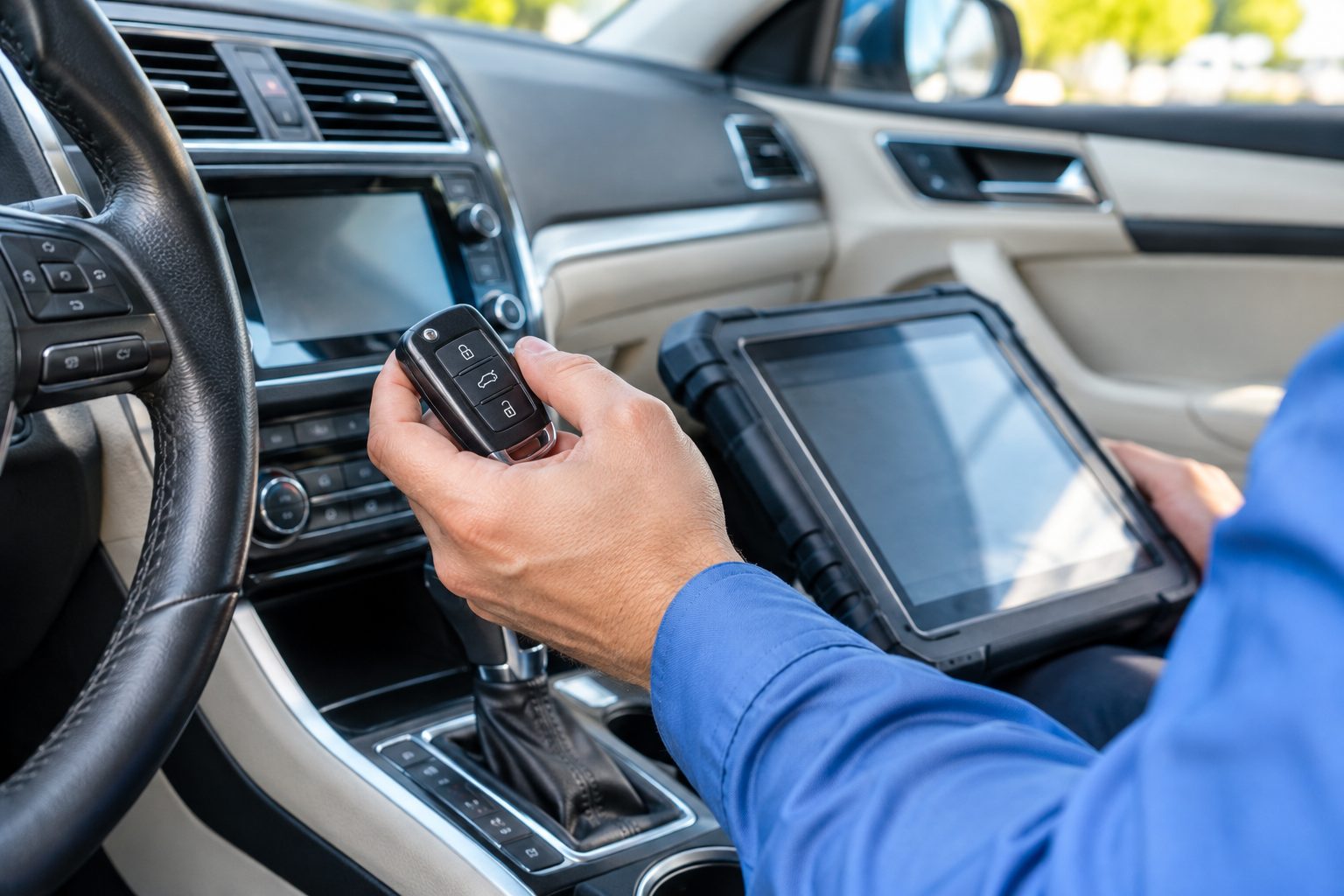
A car key is not just a piece of metal. A modern key, programmed to your vehicle, gives access to the car, the ignition, and everything inside. If a locksmith made keys for anyone who asked, vehicle theft would be easy. Careful professionals therefore want to confirm that the person asking for a key is entitled to have one.
This is similar to the way a bank asks for identification before releasing funds. The inconvenience is small, and it protects every vehicle owner, including you. If someone you do not know stood beside your car and asked a locksmith for a key, you would want the locksmith to ask questions. The same standard applies when you are the one asking.
Documentation also helps the locksmith get the job right. The vehicle identification number, for example, identifies the exact make, model, year and sometimes the specific key type. Having the right information allows the technician to bring the correct blank key, chip and programming equipment, which reduces the chance of a second visit.
Although practices vary slightly, most professionals ask for two things: proof of who you are, and proof that the vehicle is yours or that you are authorized to handle it. The identification is typically a government-issued photo card. The proof of ownership is usually a registration or a title.
Registration is the document most people have, since it is commonly kept in the vehicle or on a phone. It shows the vehicle details and the registered owner. A title is stronger proof of ownership, though many people keep it in a safe place at home rather than in the car. An insurance card may also help to confirm the vehicle and your connection to it, though it is typically supporting evidence rather than the main proof.
Technicians will compare the name on the identification with the name on the ownership document. If they match, the process is simple. If they differ, for example because you recently married, moved or bought the car, you may need additional paperwork to bridge the gap, such as a bill of sale or a letter. It helps to mention any difference on the phone so the technician knows what to expect.
The vehicle identification number, usually shortened to VIN, is a seventeen-character identifier assigned to every modern vehicle. It tells the technician the manufacturer, the model, the year of manufacture, the plant and the unique sequence of that vehicle. For key purposes, the VIN allows the technician to look up the key type, the chip type and, in some cases, the key cutting information.
You can find the VIN in several places. The most visible is on the dashboard, in the corner nearest the windshield on the driver side, readable from outside the car. It is also commonly printed on a label on the driver door jamb, and it appears on the registration, the title and the insurance documents. If you cannot get into the car, the registration or insurance card is the easiest source.
The VIN also helps the technician confirm that the vehicle matches your paperwork. If the VIN visible on the car matches the VIN on your registration, it is strong evidence that you are dealing with the right vehicle and the right owner. A technician who skips this step is skipping an important safeguard.
Losing every key is the most demanding situation because there is no existing key to copy and often no programming information to work from. The technician has to create a key from the vehicle itself, using the vehicle identification information, and then program it to the car. For this reason, documentation matters even more.
In an all-keys-lost situation, expect the technician to verify your identity and ownership before beginning work. They may also verify the VIN directly on the vehicle. If the car is parked somewhere you cannot easily access the paperwork, such as at an airport or at a theme park lot, prepare ahead by taking a photo of your registration or locating it in an email or a phone application where it may be stored.
This is also a good moment to think about the future. Once new keys exist, consider having a spare made so that you are not in the same position again. Having a spare programmed while a working key is available is generally simpler than replacing a lost one, so it is worth doing at the same visit if you can.
Not every vehicle is owned outright by the person driving it. A leased vehicle belongs to the leasing company, and a financed vehicle may have a lender listed on the title. In these cases, the registration often lists you as the registered driver, while the title lists the lender. A locksmith will look at the registration, your identification and sometimes the lease or finance agreement.
Company vehicles add another layer. If the vehicle belongs to your employer, the locksmith will typically need authorization from the company. That might be a letter, a work order, or a phone call from someone with authority. Drivers who are sent to arrange a key replacement should ask their employer for written authorization in advance, so the process does not stall at the curb.
If you are not sure what to bring, mention your situation on the phone. The dispatcher can tell you what is usually accepted and what the technician will want to see. It is much easier to sort this out before the technician drives to you than to discover a missing document on arrival.
Rental cars are a common concern in Orlando because of the number of visitors. If you are driving a rental and lose or lock the key inside, the vehicle belongs to the rental company, not to you. The first step is almost always to contact the rental company, since they may have their own roadside assistance or require specific procedures and may not allow a third party to make a key at all.
If the rental company authorizes a locksmith, expect to be asked for the rental agreement, identification, and sometimes written or verbal authorization from the company. The locksmith will want to confirm that the rental company has approved the work, since they are the owner. Having the rental agreement ready on your phone helps.
Borrowed vehicles follow a similar principle. If a friend or relative lent you the car, the owner is the one who can authorize a new key. The technician may ask to speak to the owner, or to see a document that connects the owner to the vehicle. If the owner is out of town, ask them to send a copy of the registration and a brief message authorizing the work.
| Vehicle situation | Who authorizes the key | Documents commonly requested |
|---|---|---|
| Owned outright | The registered owner | Photo identification, registration, title if available |
| Financed | The registered owner, with the lender listed on the title | Photo identification, registration, finance information if available |
| Leased | The leasing company and the registered driver | Photo identification, registration, lease agreement |
| Rental | The rental company | Rental agreement, photo identification, company authorization |
| Company vehicle | The employer | Photo identification, work authorization, registration |
| Borrowed from a friend | The vehicle owner | Owner authorization and a copy of the registration |
It is common to lose a key and discover that the paperwork was in the car. That does not necessarily end the process. Start by checking what is on your phone. Many people have insurance cards in an app, registration in an email or a photograph of the VIN. Your insurance company can often send a digital copy quickly, and your state motor vehicle office has procedures for replacing registration documents.
Photo identification remains essential. If your identification is also locked in the car, mention it on the phone, because options may be limited. Some locksmiths can verify identity through alternative documents, while others will require that you retrieve proper identification first. It is better to know in advance than to be turned away on site.
If you cannot produce documents at all, a responsible locksmith may decline to make a key. That can feel frustrating, but it reflects the same standard that would protect your car from someone else. Ask the technician what alternatives exist, for example contacting the dealership with your proof of ownership, or retrieving paperwork from home and arranging a second visit.
Documents contain personal details, and it makes sense to be sensible about how you share them. Show your identification and registration to the technician in person, and do not send images of your documents to unknown numbers or unfamiliar messaging contacts. If a document needs to be photographed for a record, ask what will be kept and how it will be stored.
Be wary of anyone who asks for information that has nothing to do with the vehicle, such as banking details or passwords. A locksmith needs to confirm identity and ownership, not to learn your finances. If a request seems unrelated, ask why, and do not hesitate to say no.
At the end of the job, take your documents back and put them away. It sounds simple, but in the relief of getting a working key, people sometimes leave a registration on the roof of the car or in the technician hands. A quick check prevents a new problem.
The easiest time to get ready is before you lose a key. Take a photograph of your registration, insurance card and the VIN, and store them somewhere you can reach without the car, such as a secure note or a cloud folder. Keep a paper copy of the title in a safe place at home, not in the glove compartment.
Make a spare key while you still have a working one, and keep it in a safe place away from the vehicle. If you have a smart key or a key fob, check whether you have one or two, since vehicles are often sold with two and people lose one without noticing. Knowing where your keys are is part of knowing what you would do if one went missing.
If you are planning a trip, especially to a place where help may be hard to find, think through what you would need if a key were lost. Keep a note of a trusted locksmith number. When you are ready to talk through a replacement, call and describe your vehicle and situation, and we will explain which documents to have ready and how the quote works before anyone is sent.
Registration shows the vehicle details and the registered owner, which lets the technician confirm that the car and the person asking for the key are connected. It also provides the vehicle identification number needed to prepare the correct key. This is a safeguard that protects every vehicle owner from unauthorized key requests.
The VIN is usually visible on the dashboard near the base of the windshield on the driver side, and on a label inside the driver door jamb. It also appears on your registration, title and insurance documents. Taking a photo of it and keeping it on your phone makes future key work much easier.
Registration is the document most people have and is commonly accepted along with photo identification. The title is stronger proof of ownership and may be requested in some situations, for example when names do not match. Mention your situation on the phone so you know what the technician will expect to see.
Contact the rental company first, since they own the vehicle and may have their own procedures or roadside service. If they authorize a locksmith, be ready with the rental agreement, your identification and any authorization they provide. The locksmith will want to confirm that the owner approves the work.
It depends on what can be verified. Check your phone for digital copies of registration or insurance, and ask your insurer or the motor vehicle office for replacements. Photo identification remains essential. A responsible locksmith may decline without proper verification, and can explain what alternatives exist.
Ideally yes, since a match makes verification simple. If they differ because of a recent move, marriage or purchase, bring supporting paperwork such as a bill of sale or an updated record, and mention the difference on the phone so the technician knows what to expect.
Describe the situation by phone and we will tell you what the job involves. Quotes are given by phone. Jobs that cannot be quoted without seeing them need a technician on site, and the service call charge is explained on the phone before anyone is dispatched.
The simplest way to make a future key replacement painless is to build a small folder, paper or digital, that holds everything a technician may ask to see. Start with a clear photo of your registration and your insurance card, then add a note listing the vehicle make, model, year and color. Keep a photo of your driver license in the same place so you know exactly what name and address are printed on it. Store the folder somewhere you can reach from your phone, such as a locked notes app, and avoid leaving the only copy inside the vehicle itself.
Think about which papers live in the glove box and which live at home. Registration and insurance cards are often stored in the car, which becomes a problem when the car is the thing you cannot get into or start. Moving one set of copies to a drawer at home, or snapping photos that sync to your phone, solves that without much effort. Also write down where the title is kept, since a financed vehicle may have its title held elsewhere. A five minute review once a year, perhaps when the registration renews, keeps every item current and spares you a scramble on a stressful day.
When you call, having the folder ready makes the conversation shorter and clearer. You can read out the vehicle details, confirm the name on the registration matches your identification, and explain who owns the car if it is shared or company property. The technician explains the scope of the work and any quote before starting, and you can answer questions with confidence instead of guessing. If something in the folder looks outdated, such as a moved address or a renamed owner, mention it early. A mismatch is easier to sort out in advance than at the curb with a car that will not start.