A key code is a short string of characters that describes how a key is cut. People often hear that they need one and are unsure what it is or where to look. This guide explains the different kinds of codes, where they are usually found, and the many situations in which a locksmith can work without one.
A mechanical key works because its blade has a series of cuts at different depths. Each depth is one of a small number of standard measurements. A key code is simply a shorthand list of those depths, written as numbers or letters, so that someone with the right equipment can cut a matching key without needing the original in hand.
Because the code describes the cuts, it is useful for making a new key from nothing. It is not the same as a password, and it does not unlock anything by itself. It is information, similar to a recipe, that a trained person can use to produce a working key. For that reason, it is treated with some care, and a responsible locksmith wants to know that you are the owner of the lock or vehicle before using it.
Not every key needs a code. If you have a working key, a locksmith can usually copy it directly. Codes matter mostly when no working key exists, or when the key is a type that must be cut to precise factory specifications. Understanding this distinction saves many people a search for a number they never needed.
Some keys carry a code stamped right on the head or the shoulder of the blade. Typically it is a short combination of letters and numbers, sometimes only a few characters. Locks themselves, particularly padlocks, mailbox locks, filing cabinet locks and some older cylinder locks, may have a similar stamp on the face or the side of the cylinder that you can see once the lock is removed or in some cases from the outside.
These stamped codes can be extremely helpful. If you have a mailbox key with a number on it and you lose the only key, the number can let a professional with the correct tools produce a replacement. Similarly, a file cabinet lock with a series stamped on the face tells the technician the key series without having to open the lock.
If you find a stamped number on a key, do not assume it is a secret. Often it is just a manufacturer identification. But it is worth keeping, since combined with other information it can speed up a replacement. If a copy is needed, you can bring the original, which is simpler, but you should avoid posting images of keys or codes publicly, because the same information can be used by others.
For cars, trucks and motorcycles, key information is typically connected to the vehicle identification number. Manufacturers keep records that link a VIN to the cuts used on that vehicle's original keys, and authorized sources can retrieve that information when the owner has been verified. This is why a technician asks for your VIN, registration and identification before beginning key work.
Some manufacturers also assign a separate key code that is not printed anywhere on the vehicle. It may be provided in the original owner paperwork, on a card that came with the car, or in the dealership record. If you bought a car new and kept the original documents, you may have a key tag or card that lists the code. Used vehicles may have lost this paperwork long ago.
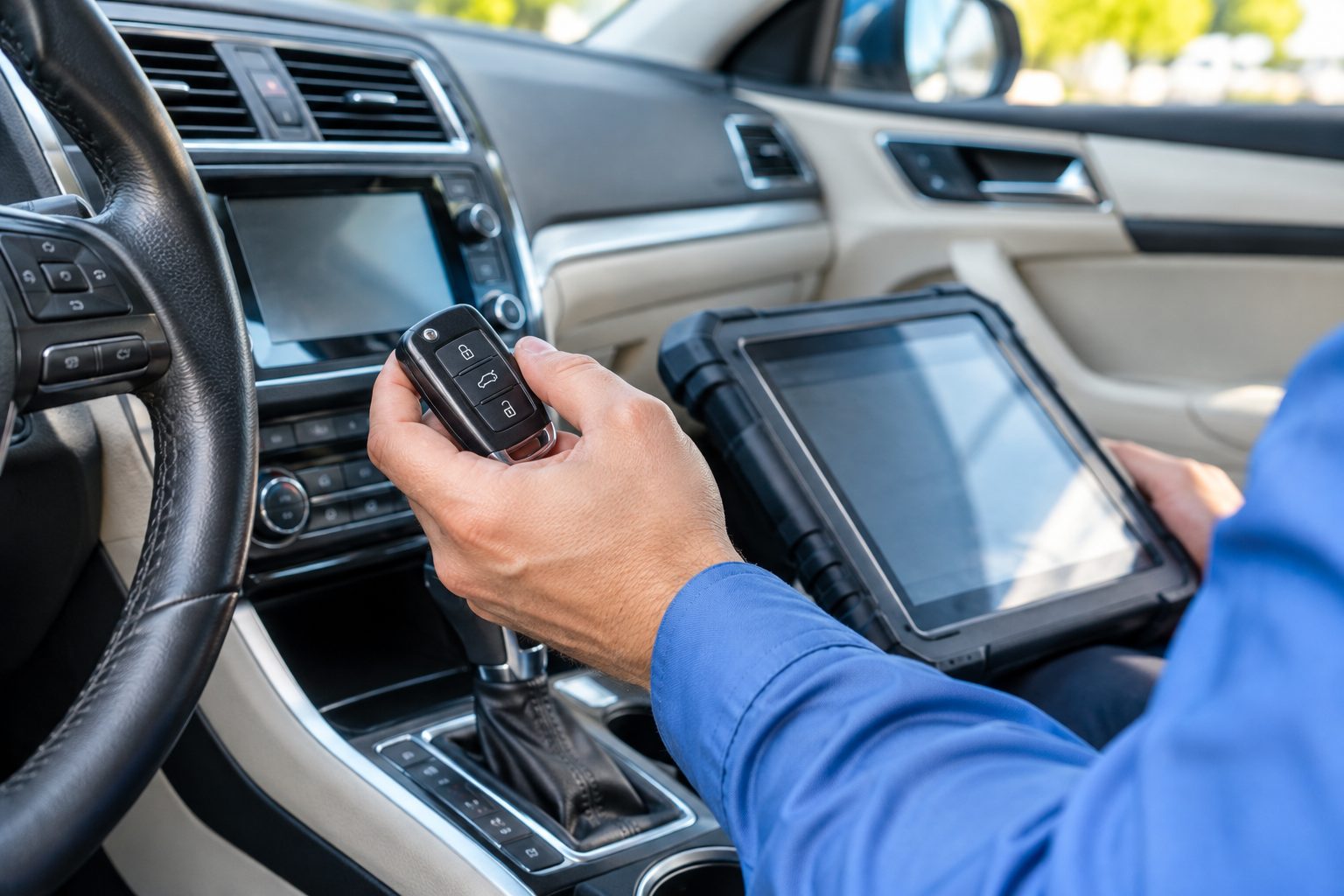
Importantly, a VIN-based key code is only part of the picture. Modern vehicles also require electronic programming for the transponder chip or smart key, which is a separate step from cutting the blade. Even with a perfect code, the key needs to be programmed to the vehicle. A locksmith with the right equipment handles both parts, and many modern keys require both.
Since the late 1990s, most vehicles have used keys with a small electronic chip that communicates with the car. The car will not start unless it recognizes the chip. A key that is cut correctly but not programmed will turn in the ignition but will not start the engine. Smart keys, which allow push-button starting, use a more advanced form of the same idea.
The electronic information is not a key code in the traditional sense. It is a digital identity that must be added to the vehicle's memory using diagnostic equipment. The cut code tells the technician how to shape the blade; the programming step teaches the car to accept the key. Both are needed for a working replacement.
This means that finding a mechanical code on its own does not always solve the problem. If you lost every key to a modern vehicle, the work involves identifying the right key blank and chip, obtaining or generating the cut information, cutting the key, and programming it to the car. Understanding this helps you ask the right questions on the phone.
| Key type | What the code controls | Other steps often needed |
|---|---|---|
| Simple metal key for a house or padlock | The depths of the cuts | Usually none beyond cutting |
| Older vehicle key without a chip | The depths of the cuts | Cutting to the vehicle series |
| Transponder key | The depths of the cuts on the blade | Chip selection and programming to the vehicle |
| Remote head key | The blade cuts | Chip and remote programming |
| Smart key or proximity fob | Often an emergency blade only | Electronic programming of the fob |
Many people spend time hunting for a code that the locksmith does not need. If you have a working key, copying it is usually the simplest approach, and no code is involved. Even if you have no working key, a locksmith can often work from the lock itself. For a house lock, for example, a technician can take the lock apart and read the pin positions to cut a matching key. For a vehicle door or ignition, a technician can sometimes decode the lock using specialized tools.
Another common option is to replace or rekey the lock. If you have lost the only key to a door and cannot find the code, rekeying the cylinder produces a new key that works with that lock, and it also means that the old, lost key no longer works. This is a sensible path when you are not sure who might have found the original.
For many cars, the VIN is all that is needed to look up the key information through legitimate channels. If you can supply the VIN and the proper proof of ownership, you do not need to find a separate code. The locksmith will take care of that step. Therefore, if you are unsure, call and describe the situation instead of searching for a number you may not need.
If a code is needed, start with the places where it is most likely to appear. The owner manual and the original paperwork that came with the vehicle sometimes include a key tag, a card or a note listing the key code. Dealerships often keep a record and can provide information to a verified owner, though they may have their own requirements and processes.
Look through your records for anything that mentions a key number. Older keys from a previous owner, or spare keys given at purchase, may have a number stamped on them. Some fleet or company vehicles have records kept by the employer. If you bought the car used, ask whether the previous owner kept any original paperwork.
Remember that the VIN may be all that is needed. Instead of searching for obscure documents, take a photograph of the VIN and bring your identification and registration. A professional can often retrieve the information from the VIN or work without a code, which saves time.
For doors, the situation is a little different. Home locks usually come from a handful of common manufacturers, each with its own keyway shape and key series. The cuts on your key are determined by the pin arrangement inside the cylinder. A technician who can read the pins can cut a matching key. The key code, if known, simply shortens that process.
Commercial buildings often use master key systems, where one key opens many locks and individual keys open only some. In these systems, the cut information is part of a plan or chart kept by the building manager or the original installer. If you manage a property, locating that chart is valuable, because it contains the logic of the whole system. If the chart is lost, a locksmith can often reconstruct it, but the process takes more time.
For restricted keyways, some manufacturers control who can obtain additional keys. These systems are designed to prevent unauthorized duplication, and obtaining a key requires proof of authorization, usually through a registered account. If you have such a system, locate the card or documentation provided at the time of purchase, and keep it in a secure place.
A key code is sensitive in the same way that a spare key is sensitive. Anyone who has it and the right equipment could cut a working key. For that reason, avoid writing the code on the key itself, avoid storing it in the glove compartment or on a note taped to a lock, and avoid sharing it in public posts or with unknown contacts.
If you receive a code from a dealership, a manufacturer or a locksmith, store it as you would a spare key: in a secure place, such as a locked cabinet at home or in a password-protected note. Share it only with people you trust and only when you need to. If you ever believe the code has been exposed, consider rekeying the lock, since that changes the cuts and makes the old code useless.
For businesses, keep a record of who has which keys and where codes are stored, and limit access to those records. Employee changes are a good moment to review them. A small investment in organization prevents a larger problem later.
If you are in the middle of a problem, avoid hunting indefinitely. First, decide what you actually need: a copy of a working key, a new key with no working key, or a new lock. Each has a different path and a different level of involvement from codes.
Next, gather basic information. For a vehicle, that is the VIN, registration, identification, and the make, model and year. For a house or business, it is a description of the lock and door, and any stamps you can see on the key. Then call and explain what you have. The technician can tell you whether a code is needed and, if so, how to get it, or whether another route is simpler.
When you are ready, call and describe your key, lock or vehicle. We will explain how the quote works and what the service call charge covers before anyone is sent, and whether your job needs an on-site look.
A key code is a short list of numbers or letters that describes the depth of each cut on a key. A trained person with the right equipment can use it to produce a matching key without the original. It is information about cuts, not a password, and it is treated with care because it can be used to make working keys.
Not necessarily. If you have a working key, it can often be copied. If you do not, a locksmith can often use the VIN with proof of ownership, or decode the lock. Modern keys also need electronic programming, which is separate from any cut code, so a code alone rarely solves the whole job.
Vehicles generally do not display a key code. It may appear on a tag or card from the original purchase, in owner paperwork, or in a dealer record. More often the VIN is used to look up the information through legitimate channels. Take a photo of the VIN and bring identification and registration.
For a door or lock, yes. Rekeying changes the internal pins so a new key works and the old one no longer does. It is a sensible choice if you have lost the key and do not know who may have found it, and it avoids needing the original code at all.
Treat it like a spare key. Anyone with the code and the right equipment can make a working key. Share it only with people you trust and when necessary, store it securely, and avoid posting it publicly. If it may have been exposed, consider rekeying the lock.
The blade may be cut correctly but the electronic chip has not been programmed to your vehicle. Modern cars require the key to be recognized electronically before the engine will start. A technician with the right programming equipment can add the key to the vehicle's memory so it starts the car.
Describe the situation by phone and we will tell you what the job involves. Quotes are given by phone. Jobs that cannot be quoted without seeing them need a technician on site, and the service call charge is explained on the phone before anyone is dispatched.