Silverado is the truck we get called about most, but Chevrolet's real footprint in Central Florida is wider than that, older Impalas, Malibus, and Tahoes still running strong decades after they were sold, alongside a steady stream of newer Equinox and Silverado models. That spread means a Chevy key call can go a few very different directions depending on the vehicle's age.
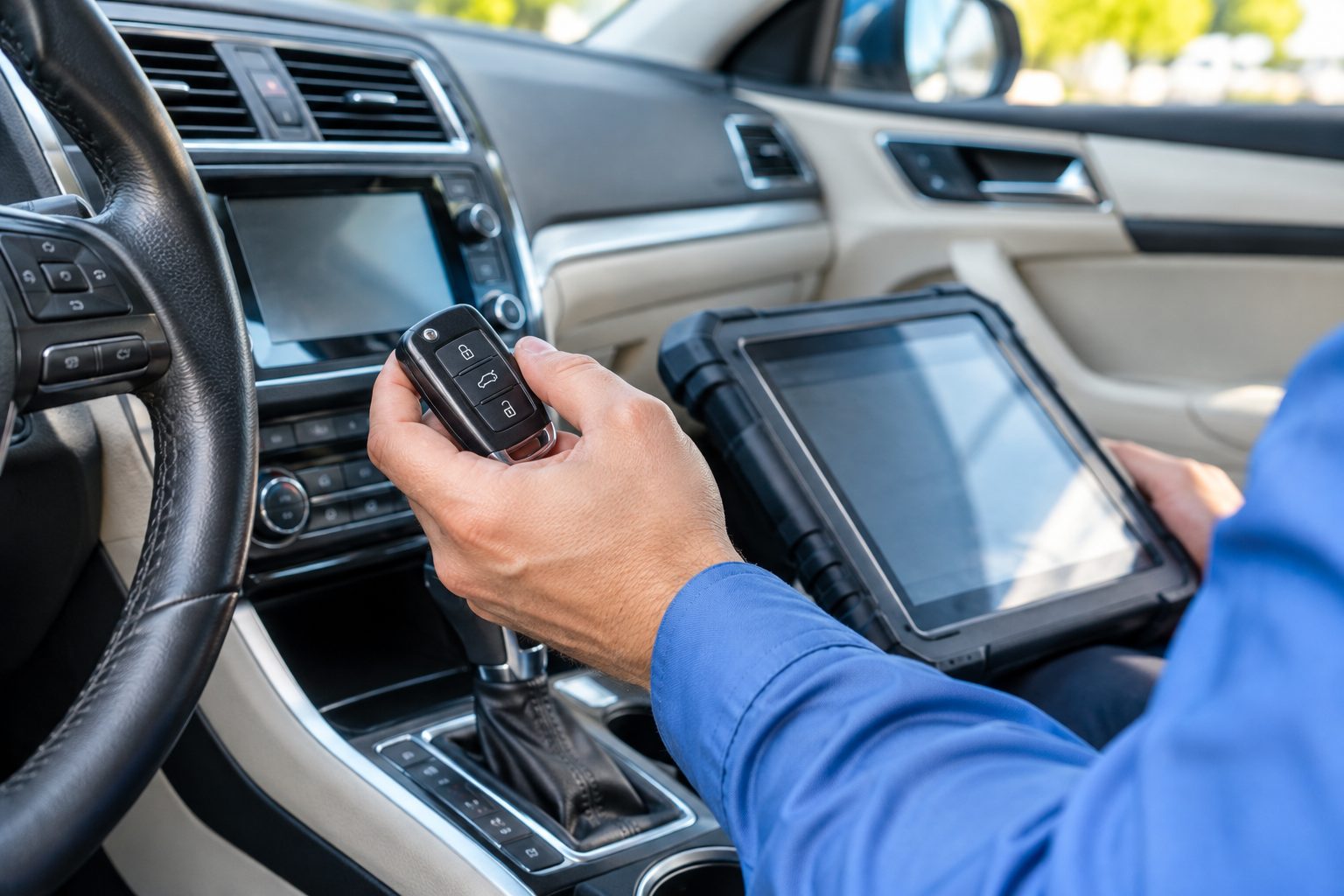
One of those directions genuinely surprises people, and it's worth explaining up front before we get into it.
On a number of older GM vehicles, well before today's trucks and SUVs, the key wasn't a simple metal blade with an electronic chip added on top. Instead, a small resistor pellet was built directly into the key itself, and the ignition system checked the electrical resistance of that pellet before allowing the engine to start. It's a different concept from the transponder chips that came later, and most owners who grew up on newer vehicles have never heard of it. When someone brings us an older Chevy sedan and asks why the key looks like it has something embedded near the tip, this is usually why.
As Chevrolet's lineup moved forward, the resistor pellet approach gave way to transponder chips similar to what most other manufacturers were using by then, a chip in the key head that the vehicle's computer checks for electronically, separate entirely from the mechanical cutting of the blade. This is the setup you'll find on a wide swath of Chevrolet sedans, crossovers, and earlier Silverado generations still on the road around Orlando.
On more recent Silverado and Equinox trims, the fob-and-push-button setup takes over. The fob doesn't need to touch anything, it just needs to be nearby, and the engine starts with a button rather than a turn of the wrist. As with most proximity systems, there's typically a small backup blade hidden in the fob for situations where the battery in the fob or the truck itself is the actual problem rather than the key.
If a working key still exists somewhere, we can generally use it to authorize a new one, which keeps the job more contained. If every key for the vehicle has gone missing, dropped at a lake, left in a rental return, simply lost, we have to originate a credential the vehicle has never accepted before, and that process takes longer by its nature, regardless of whether the vehicle uses an older resistor-pellet key, a transponder, or a proximity fob.
We also get plenty of calls after someone buys a used Impala, Malibu, or older Silverado privately and the deal only included a single key. That's common enough with private-party sales, but it leaves the new owner with no backup, and no way to know what generation of key technology they're actually dealing with until someone looks at it. Whether it turns out to be an old resistor-pellet setup, a transponder key, or a proximity fob usually depends entirely on the model year, and it's worth having a second key cut and programmed before the original one wears out or goes missing.
Ownership verification isn't a suggestion on our end, we ask for a valid photo ID and either the vehicle's registration or its title showing your name before any cutting or programming begins. This applies the same way to a decades-old Impala as it does to a brand-new Silverado.
We verify the vehicle is yours: photo ID plus a registration or title that matches it. Every reputable locksmith does this, and we will not skip it.
From a resistor-pellet key on an older sedan to a proximity fob on a new Silverado, Chevrolet has covered a lot of ground over the years, and we've worked across most of it. Call us and let us know what you're driving.
Why does my old Chevy key have something odd embedded near the tip?
Some older GM vehicles used a resistor pellet built into the key that the ignition checked electrically before starting. It predates the transponder chips used on later models.
Do you handle both old Chevy sedans and newer trucks?
Yes. We work across the range, from older Malibu and Impala models to current Silverado and Equinox.
What do I need to have ready when you arrive?
A photo ID and your registration or title in your name for that vehicle. We check this before touching any lock or starting programming.
Do you need to tow my Chevy anywhere?
No. We come to the vehicle wherever it's parked and do the cutting and programming there.
Between the resistor pellet era and full transponder keys, some GM vehicles used a system known as Passlock. With Passlock, the key itself is an ordinary metal blade with no pellet and no chip. The anti theft check happens inside the ignition lock cylinder, where a sensor reports to the vehicle's computer that the cylinder was turned properly rather than forced. Several Chevrolet cars and trucks from roughly the late 1990s and 2000s used versions of this setup.
That has two practical effects. First, a replacement key for a Passlock vehicle can often be cut without any programming at all, because the key carries no electronics. Second, when something goes wrong, the problem is usually in the ignition cylinder or its wiring rather than the key. Owners report a security light on the dash, a no start, or a car that cranks and then shuts off. On many of these vehicles a timed relearn procedure, where the key is left in the on position for a set period with the security light on, resets the system. If the sensor in the cylinder has failed, relearning will not help, and the cylinder or sensor needs attention.
With GM changing systems over the years and some models overlapping, it is not always obvious which type of key you have. A few clues:
The quickest way to know for sure is to give us the year, model and VIN when you call. That lets us confirm the key type and bring the right blank or fob.
High mileage Silverados, Tahoes and Suburbans from earlier generations often show ignition wear before anything else fails. Symptoms include a key that turns with no resistance, a key that gets stuck in the ignition, a key that has to be jiggled to reach the start position, or a cylinder that turns without a key at all. Those trucks were built to work hard, and many around Central Florida have spent years going to job sites and pulling boats, so the ignition sees a lot of cycles.
Replacing the key alone will not fix a worn cylinder, and a brand new key can even feel worse in a badly worn ignition. The real fix is repairing or replacing the ignition cylinder and matching it to your key, or cutting new keys to match a new cylinder. On Passlock trucks, the cylinder replacement also has to be done in a way that keeps the security system happy. Our ignition repair page covers that job.
Large Chevrolet SUVs are a popular choice for families visiting the Orlando area, whether they drove down from another state or are locals heading out for the day. That means a fair number of our Chevy calls come from theme park parking lots, resort garages and vacation rental driveways. If you lose the fob for a big family SUV while visiting, a few tips help:
If shipping is not practical, we can often cut and program a new key on site once ownership is verified.
Chevrolet Express vans and Silverado work trucks are common with contractors, delivery services and small businesses around Central Florida. Fleet vehicles tend to have keys passed between several drivers, which means more lost keys and more worn blades. For a business, it helps to keep two keys per vehicle, label spares by vehicle number, and replace worn keys before they fail on a job site. When a driver leaves with a key, programming out the missing key where the vehicle supports it keeps the truck secure. We can often service several vehicles at your shop or yard in one visit.
Enthusiast Chevrolets have their own key considerations. Older Camaros and Corvettes may use the resistor pellet system, and owners restoring these cars sometimes need a key cut for original locks that have not been used in years. Newer models use proximity fobs. Collectors should keep at least two working keys and store the spare somewhere safe, since some parts for older cars are harder to source. If you have an original key that is badly worn, having a fresh key cut to code while the old one still works is much better than waiting until it breaks.
Chevrolet proximity fobs, like all fobs, run on a small coin battery, and heat shortens its life. A fob left in a hot truck cab or on the dashboard in a Florida parking lot will lose charge faster than one kept indoors. Signs of a weak battery include reduced range, needing to press buttons more than once, and a message on the dash that the key was not detected. Many GM vehicles with push button start have a backup spot where you can place the fob, often in a console pocket or cup holder area described in the owner's manual, so the vehicle can read it even with a weak battery. Try that before assuming the fob is dead.
Many Chevrolets offer factory remote start through the key fob, a feature Florida drivers appreciate for cooling the cabin before getting in. Replacement fobs need to match the original features. A fob without the remote start button may still start and unlock the vehicle but will not run the remote start. When you call, mention whether your original fob had remote start, a tailgate or liftgate button, or a panic button, so we can match it.
Newer Chevrolets may show a message related to the theft deterrent system, or a security light may stay on. Sometimes this points to a key that has lost its programming, a weak fob battery, or a key that was never programmed to that vehicle. Other times it points to a problem in the vehicle itself. We can check whether the key is communicating properly and reprogram it if needed. If the issue is in the vehicle's modules rather than the key, we will tell you so you can take it to the right repair shop.
Chevrolet flip keys are convenient, but the hinge that snaps the blade out takes a beating. Common failures include a blade that will not lock in the open position, a blade that flops loose, a broken spring, or a cracked shell that lets the circuit board fall out. In many cases the electronics are fine and only the housing or blade is damaged. If so, the board and transponder can often be moved into a new shell and a new blade cut to your key code, which keeps the existing programming. If the board itself is damaged, for example from being run through the wash or dropped in a pool, a new remote key will need to be programmed to the vehicle. Bring the broken key to the appointment even if it is in pieces, since the parts may still be usable and the blade can help confirm the cut.
Chevy trucks spend a lot of time outdoors, and the door lock cylinders and tailgate locks are often the first mechanical parts to suffer. Many owners use the remote for years and never touch the driver door keyhole, so when the fob finally dies, the door lock is seized from disuse. A little lock lubricant once or twice a year, and actually turning the key in the door now and then, keeps the backup working. If a door or tailgate lock has seized or been damaged in a break in attempt, it can often be repaired or replaced and keyed to match your existing key. Aftermarket truck bed tool boxes and tonneau covers usually have their own separate keys, which can also be replaced or rekeyed.
Sometimes a used Chevy arrives with a key that starts the vehicle but does not open the doors, or opens the driver door but not the passenger side. That usually means an ignition or door lock was replaced at some point and never keyed to match. The fix is to rekey the odd cylinder to match the rest, or cut a second key for it, so one key works everywhere. It is a good thing to sort out soon after buying, before a dead fob leaves you depending on a key that does not fit the door.
For a vehicle with no working key at all, the all keys lost page explains the process in more detail, and our sister make page for GMC covers the closely related GM trucks and SUVs.
Searching locksmith near me in Orlando for a house lockout? We are mobile across metro Orlando and quote the price before we come out. Call us.
ZIP codes we cover in Orlando: 32801, 32803, 32804, 32805, 32806, 32807, 32808, 32809, 32810, 32811, 32812, 32814, 32817, 32818, 32819, 32820, 32821, 32822, 32824, 32825. City services: Orlando Official Website.
Describe the situation by phone and we will tell you what the job involves. Quotes are given by phone. Jobs that cannot be quoted without seeing them need a technician on site, and the service call charge is explained on the phone before anyone is dispatched.