When the key turns smoothly and the engine still refuses to start, the key may be fine and the car may be refusing it. Immobilizer faults, worn keys, weak batteries and fuel or starter problems can all look alike. Here is how to tell them apart.
The most useful clue is what happens, or does not happen, when you turn the key. Different symptoms point to different systems, and describing them accurately will save time on the phone, whether you call a locksmith, a mechanic or roadside assistance.
If nothing happens at all, with no dash lights and no sound, the car battery is the most likely suspect. If the dashboard lights come on but the engine makes no sound, the starter circuit or a safety interlock may be involved. If you hear a rapid clicking, the battery is weak or the connections are corroded. If the engine cranks normally but never fires, the problem lies in fuel, spark or the immobilizer, which can allow the starter to turn but withhold fuel or ignition.
A security light is another clue. Most vehicles show a small key or padlock symbol on the dash. When the car recognizes your key, the light turns off after a moment. If the light flashes steadily, stays on or blinks in a pattern when you try to start, the immobilizer is telling you it does not recognize the key. That is the situation where a locksmith is most likely to help, and it is the situation this page focuses on.
Most vehicles built since the late 1990s have an immobilizer. A tiny transponder chip inside the key head holds a unique identifier. When you put the key in the ignition, or hold a smart fob near the start button, an antenna ring around the ignition reads the chip and sends the result to the car's computer. If the identifier matches a stored one, the computer allows fuel and spark. If it does not, the engine may crank but will not run, or it may refuse to crank at all.
This system exists to stop thieves from starting a car with a copied mechanical key alone. It also explains why a key that looks perfect and turns the ignition may still fail to start the car. The metal blade can be right while the chip is wrong, damaged or missing. Our guide on what an immobilizer is covers the technology in plain terms.
Several things can upset the system. A chip can crack when a key is dropped. A blind copy that has a cut blade but no programmed chip will turn the ignition but not start the car. A fob with a weak battery may not power the chip properly. Water or heat can damage the chip. And a fault in the antenna ring, the wiring or the computer can leave a perfectly good key unrecognized.
A key that has been used for years wears down. The ridges and grooves that lift the wafers inside the ignition become rounded, and the key may turn but not quite reach the right position, so the electrical contacts inside the switch do not close. The result can be an ignition that turns but does not power the dash, or one that turns but does not send the start signal.
A second mechanical problem is a worn ignition switch. Behind the cylinder sits an electrical switch that passes power to the starter, the fuel pump and the dash. These switches have contacts that wear and burn. A worn switch can make the car start only when you jiggle the key, or not at all. This can feel like a key problem, but the fix is a switch or cylinder repair. Our page on ignition repair describes how a technician diagnoses it.
If your key is old and well worn, try the spare. A spare that is less worn may work where the main key fails. If the spare works, the main key is the issue and a fresh copy cut from the spare can restore normal operation. If neither key works, the car or the ignition is more likely at fault. A technician can check the key's cut against the vehicle's specification and tell you whether the key is worn beyond use.
There are several low-risk steps before you call anyone. Start with the basics. Make sure the car is in park or neutral, the steering wheel is not binding, and, for push button models, your foot is firmly on the brake or clutch. Many cars will not start unless the brake is pressed.
Try the spare key or fob. Take note of what the dash does with each. If the spare starts the car, the first key is the problem. If the security light behaves the same way with both keys, the fault is more likely on the car side.
Look at the dash for warnings. A battery light, a check engine light or a security light all offer clues. Take a photo if you can. Try the headlights: if they are dim or die when you turn the key, the battery is weak.
If your car has a push button start and the fob battery is weak, hold the fob against the start button or in the spot your manual shows, then press the button. This lets the car read the chip without battery power. Do not attempt to bypass the immobilizer, and do not disconnect wires or computers. Doing so can cause damage and may disable other systems.
A great many no-start calls turn out to be unrelated to the key. A weak battery is the most common cause, especially in Central Florida's heat, which shortens battery life. Corroded terminals, a failing alternator, a bad starter or a clogged fuel filter can all produce the same experience: you turn the key and nothing useful happens.
Fuel is another culprit. A car that is out of fuel, or one with a failing fuel pump, will crank but not start. In older cars a clogged filter or a failed relay can behave the same way. A flooded engine is less common now but still possible after repeated failed starts.
A locksmith can tell you honestly whether the problem looks like a key or immobilizer issue, or whether it points elsewhere. If the security light behaves normally and the engine cranks, the cause is probably mechanical, and a mechanic or tow is a better call. If the security light flashes and the engine will not run, it is more likely a key recognition problem, and a locksmith with programming equipment can help. Our page on automotive locksmith services describes what we handle.
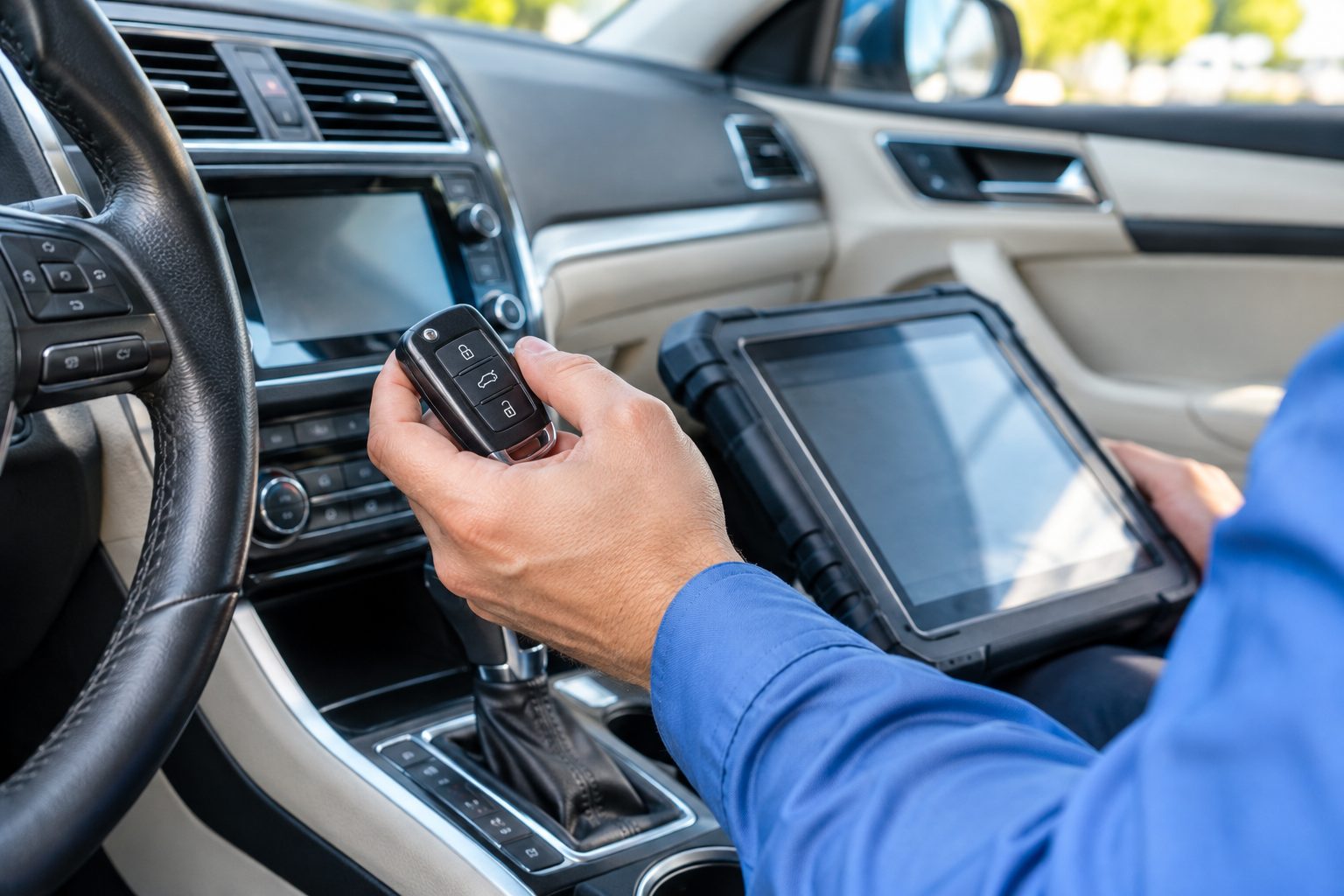
A mobile technician can test the key's transponder, read the immobilizer status through the car's data port and compare the key to the vehicle's stored data. If the key's chip is damaged, they can cut and program a new key on the spot. If the key was never programmed, as with a blind copy, they can program it properly. If the car's immobilizer needs to learn a key again, they can do that too, with the right tool for your vehicle.
The work typically requires proof of ownership and identification, and the vehicle identification number. This protects you and prevents someone else from making a key to a car that is not theirs. Our guide on documents needed for car key replacement lists what to have ready.
If the ignition cylinder itself is worn or damaged, the technician can replace or repair it, and re-key it to match your key. If the immobilizer antenna or the vehicle computer is the cause, the job may belong with a repair shop, and a good technician will tell you so rather than guess. Our page on transponder key programming explains the programming step.
Consider a driver who returns to a lot near a shopping center after a long afternoon. The key turns, the dash lights come up, the security light flashes and the engine cranks but will not start. The key is a copy that worked for a few months by luck, or the chip has finally failed. A mobile technician tests the key, finds the chip is not recognized and programs a new key to the car.
Consider a commuter heading out of a neighborhood early in the morning. The key turns and nothing happens, no lights, no sound. It looks like a key problem, but the battery terminals are corroded from humidity. A quick clean and a tighten restores power. The locksmith's value there is a sound diagnosis, not a new key.
Consider a family at a hotel with a rental car. The fob works for the doors but the car will not start. The fob battery is weak, and holding the fob in the backup position starts the car. A new battery solves it. Our guide on rental car key lockouts explains how rental fobs add confusion.
In each case, careful observation of the symptoms led to the right fix. A technician who asks good questions can often narrow the cause before arriving.
When you call, say what the car does when you turn the key, what the dash shows, whether you have a spare, and where you are. Give the make, model and year, and the vehicle identification number if you can read it through the windshield at the dash corner or from your registration. Mention anything that happened just before the failure, such as a jump start, a battery change, a wash or a drop of the key in water.
Quotes are given by phone only, and no figure appears on this page. A service call charge applies and is explained on the phone before a technician is dispatched. If the situation looks complicated, an on-site visit may be needed first. Our guide on how a phone quote works explains why we work this way.
If you are in a hot parking lot, move to shade if you safely can and keep any children or animals out of the car while you wait. When you are ready, call and describe the problem. We will help you sort out whether it is a key, an immobilizer fault or something else.
Common causes are an unrecognized transponder chip, a worn key or ignition, a weak car battery, a starter fault or a fuel issue. A flashing security light suggests the immobilizer is not recognizing the key. If the engine cranks but does not run, the cause may be fuel, spark or the immobilizer. Try your spare key first.
Yes. A copy that has the right cut but no programmed chip will turn the ignition but may not start the engine. Some copies also have weak or mismatched chips. A technician can test the key and, if needed, program a new one properly to your vehicle with proof of ownership and identification.
A flashing or steady security light when you try to start usually means the immobilizer does not recognize the key. It may be a damaged chip, a weak fob battery, a lost pairing or a fault in the antenna. Try your spare and then call. Do not try to bypass the system yourself, since that can cause further trouble.
If the cause is the key, the transponder, the ignition cylinder or the immobilizer pairing, yes. If the cause is the battery, starter, alternator or fuel system, a mechanic is the right call, and a good locksmith will tell you so. Describing the symptoms on the phone helps decide who is the best fit.
If the dash is dim, you hear clicking or the lights fade when you turn the key, the battery is likely weak and a jump start may help. If the dash lights are bright and the security light flashes, a jump will not fix a key recognition fault. Follow your owner's manual for safe jumping and watch for warnings.
Quotes are given only by phone. Share the vehicle's make, model and year, what the key and dash do, and whether you have a spare. A service call charge applies and is explained before dispatch. For complicated jobs, such as no working key at all, an on-site visit may be needed before a quote can be finalized.
Describe the situation by phone and we will tell you what the job involves. Quotes are given by phone. Jobs that cannot be quoted without seeing them need a technician on site, and the service call charge is explained on the phone before anyone is dispatched.
How the car behaves when you turn the key is useful information. A single click, a rapid clicking, a slow groaning crank and complete silence each suggest different problems. Rapid clicking often points to a weak battery that cannot supply enough power. A crank that sounds normal but never catches may suggest fuel or ignition issues, not a key problem. Total silence with a dark dashboard hints at battery connection or a main electrical fault. A key related issue usually shows up as a security or key light on the dashboard.
Watch the dashboard lights closely. A small icon of a car or a key that blinks steadily after you turn the key is the immobilizer light, and a rapid or persistent flash can mean the system does not recognize the key. Try noting whether the light behaves differently with a spare key. If the spare starts the car, the first key likely has a chip, battery or wear issue. If neither key triggers a normal response, the vehicle side deserves attention. Write down what you see so you can describe it clearly.
Avoid cranking repeatedly without pause. Long attempts can drain the battery further and, in some cars, overheat the starter. Wait a minute between tries and turn off accessories such as the air conditioning and radio. In Orlando summers, heat adds stress to batteries, so a car parked outdoors for days may simply be low on charge. When you describe the sounds and lights to us, we can discuss what a technician might look at. The scope and quote are explained before work begins, so you understand each step.
When a car will not start, deciding whom to call first saves time. If the symptoms point toward the key, such as a flashing security light, a key that feels loose in the ignition or a spare that behaves differently, a locksmith can often help at your location. If the signs point toward a dead battery, fuel or an engine fault, a roadside battery service or a mechanic may be the right call. Being honest about uncertainty is fine, and describing what you observe helps sort the case.
Prepare your location. Make sure the car is parked safely, with hazard lights on if it is in a lane or lot where others pass. Keep the keys you have in hand, including any spare you can reach. Gather the registration and identification, since a technician needs to confirm ownership before working on keys or ignition. If the vehicle is at a shopping center or apartment complex, note where exactly it sits so you can direct the technician without confusion. If something here does not match what you see, say so on the call, since your own observations matter more than any general rule.
Be ready to hear options. A technician may repair or replace a worn key, program a new one, address the ignition cylinder or advise that the issue lies elsewhere. Each path has different effects on time and cost, and the scope and any quote are explained before work begins. Ask what the plan covers and what it does not. Avoid agreeing to work you do not understand. A calm, informed conversation usually produces the best result, even when you are tired and anxious to leave. Take your time with this step, as rushing is the most common way a small issue turns into a larger one.