A remote start that worked before the new key and fails after it is usually a pairing problem, not a broken system. The module that talks to the car may not know the new key. Here is how these systems work and what is worth checking.
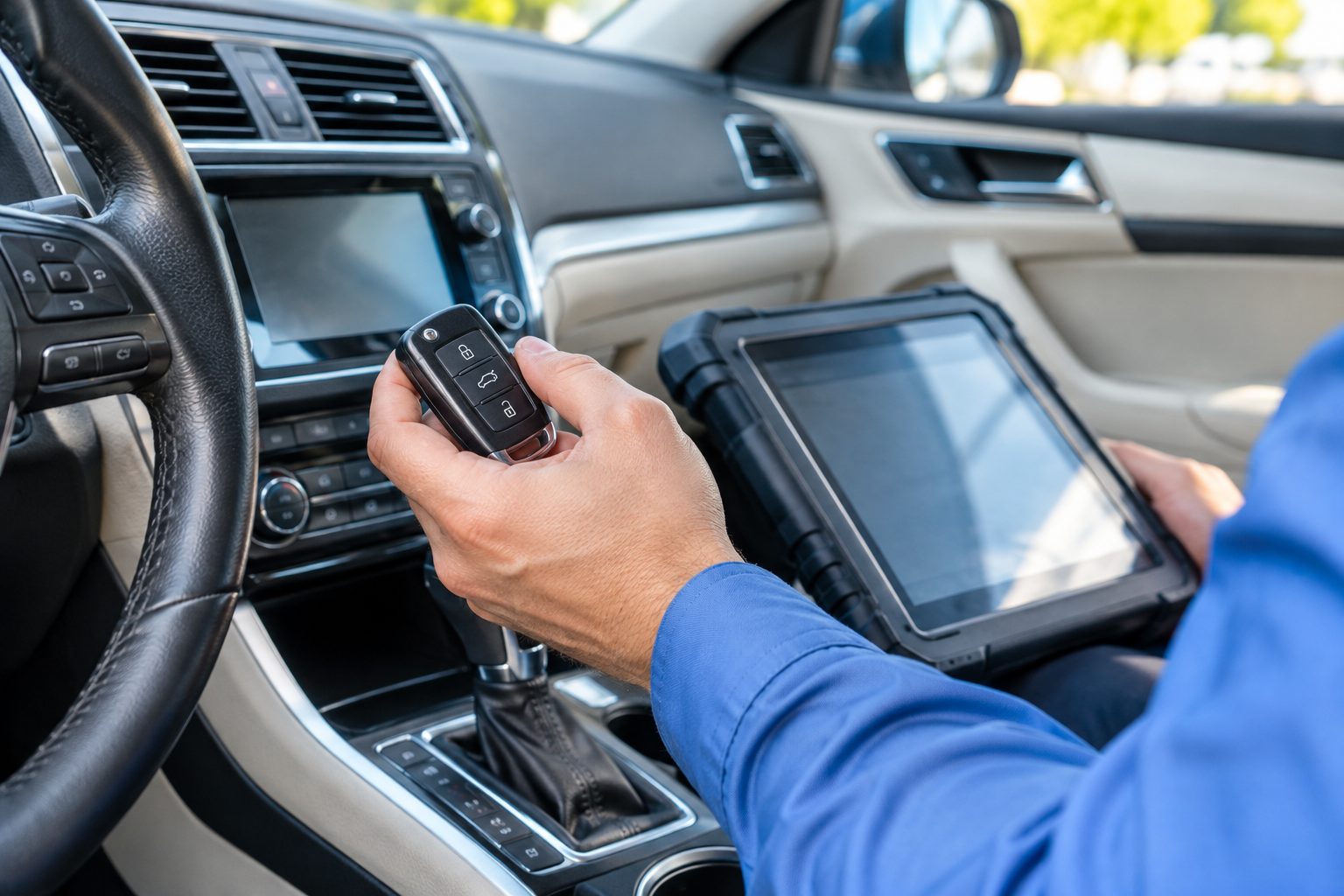
Most modern cars will not run without a recognized transponder key. The immobilizer expects the chip in the key to be present when the engine starts. A remote starter has a problem to solve, because when you start the car from a distance, no key is in the ignition. To get around that, remote start systems use a bypass module, a small electronic box installed behind the dash that stands in for the key during a remote start.
Some bypass modules store a copy of the key's identity, learned during installation. When you press the remote start button, the module presents that identity to the immobilizer, the car accepts it, and the engine starts. Other systems use a spare key physically placed in the module. Others rely on the factory fob and the car's own remote start feature.
This arrangement explains why a new or replacement key can upset things. The module learned the identity of the old key, or the car now expects a different set of keys. If the new key has a different identity, or if the key set was reprogrammed as part of the replacement, the module's stored identity may no longer match. The car then refuses the remote start, or the remote start fails at the last step.
There are several ways a replacement key interacts with a remote start. The simplest is a re-learn requirement. Some vehicles, when programmed with a new key, erase the old keys from the immobilizer's memory and require all keys to be present during programming. If the bypass module had learned the old key's data and the car's memory is now rewritten, the module's data may no longer be valid.
A second case is that the remote start system relies on a specific key being placed in or near the module. If that key was lost and replaced, the stand-in key may need to be re-cut and reprogrammed, or the module re-learned with the new key. Some systems cannot be re-learned without the right software and cable.
A third case is that the replacement key is not an exact match for the original. An aftermarket key or fob may carry a different type of transponder chip than the factory key, and the bypass module may not support it. Similarly, a key replaced after a lost key situation might use a different key type than the car originally shipped with, which can confuse a bypass that was set up for the earlier type.
A fourth case is unrelated to the key. The timing of the remote start failure and the key change may be coincidence. A weak car battery, a blown fuse or a damaged wire could cause both. Checking the basics keeps you from chasing the wrong cause.
Before calling anyone, a few checks are worth making. Confirm that the new key starts the car normally when used in the ignition or, for push button cars, when the fob is inside. If the new key does not start the car in the ordinary way, the problem is the key's programming and not the remote start. In that case, our page on a car that will not start when the key turns is the right starting point.
Next, check the remote start's own behavior. When you press the remote start button, do the parking lights flash? Does the engine crank and die? Does nothing happen at all? Each behavior suggests different things. Flashing lights followed by silence often means the module received the command but the immobilizer rejected it. Cranking and dying suggests the car started and then lost the key signal. No response suggests a power or signal issue.
Look for any dash messages when you attempt a remote start, and note them. Check that the vehicle is in the right state, since remote start usually requires the doors locked, the hood closed, the brake not pressed and the car in park. Read the system's manual or the installer's notes if you have them. Do not try to open the dash or disconnect the module yourself. Doing so can disturb other systems and may cause more trouble.
A bypass module often has a learn mode. In this mode, the module is placed in a state where it reads the immobilizer data of a key and stores it. The steps vary by brand and by vehicle. A typical procedure might involve turning the ignition on, pressing a button on the module in a certain sequence and waiting for indicator lights. Some require a computer connection and brand-specific software.
This is why a remote start problem after a key replacement is best handled with the installer's guidance or by a technician who has the necessary tools. The wrong sequence can leave the module in an uncertain state, and some systems lock out further attempts after repeated failures. A professional can check the module's firmware, confirm which vehicle profile it is running and relearn the new key.
Some systems cannot be fixed by relearning alone. If the module's firmware does not support the new key type, an update or a replacement module may be needed. If the original installer is available, they may know the system best. A locksmith who programs transponder keys can handle the key side, and cooperation between a locksmith and the installer often resolves the problem. Our page on key programming describes the key side.
Some vehicles come with factory remote start, built into the car and the original fob. These systems work with the car's own immobilizer, and they usually survive a key replacement as long as the new fob is programmed correctly and includes the remote start button and function. If a replacement fob lacks that function, or is a lower-spec model without the remote start button, the feature will not work no matter what is programmed. The correct fob for your trim matters.
Aftermarket systems are installed after purchase and rely on bypass modules. They can be good systems, but they depend on installation details, vehicle compatibility and the module's firmware. A key replacement can disrupt them, as described above.
Knowing which type you have helps. If your car shipped with a fob that has a remote start button, you probably have a factory system. If you added a separate remote and the original fob does not control remote start, you probably have an aftermarket system. Tell the technician which one you have. Our page on key fob replacement explains how fobs are matched to a vehicle's trim and features.
Not every key or fob works with every remote start system. Several points of compatibility matter. The transponder chip type in the key must be one the bypass module supports. The key's frequency and protocol, in the case of a smart key, must match what the car and module expect. The number of keys programmed into the car can matter, since some vehicles limit how many keys they hold, and a bypass module may take up one slot.
Some manufacturers have introduced security features that make aftermarket remote start more demanding, such as encrypted communication between the key and the car or a security gateway that restricts access to the data port. On such vehicles, programming a key and relearning a module may need additional steps or access tools. A technician will tell you honestly if your vehicle is one of those.
In Orlando, remote start is popular for cooling the cabin before you get in on a hot day, so a failed system is more than a minor annoyance. If the system is a convenience, a delay in fixing it is tolerable. If it was part of a plan for a child or a pet's comfort, remember that safety does not depend on remote start, and never leave a child or animal in a parked car. Our page on a child locked inside a car explains why.
A mobile locksmith with automotive equipment can test the new key, confirm it is programmed to the car and verify that the immobilizer recognizes it. If the key is the problem, they can fix it. They can also work with the bypass module's learn procedure on many systems, if they have the brand's tool or the procedure is manual.
There are limits. A remote start system's wiring, installation quality and module firmware belong to the installer. If the module needs a software update or replacement, or if the wiring has been damaged, the installer or an electrical shop is the right contact. A trustworthy technician will tell you where their work ends and what to ask the installer.
Bring the facts. Know the make, model and year, the brand of the remote start system, who installed it and when, and what key work was done recently and by whom. Proof of ownership and identification are required for any key work. Our guide on documents needed for car key replacement lists the items.
If you call, say that your remote start stopped working after a key replacement, describe what the car does when you try it, and mention whether the new key starts the car in the normal way. Say who made the replacement key, since a key cut and programmed by a different provider may have been set up differently. Give the vehicle details and the remote start brand.
Quotes are given by phone only, so no price appears here. A service call charge applies and is explained on the phone before a technician is dispatched. For involved jobs, an on-site visit may be needed first. Our guide on how a phone quote works explains why this approach is used.
A remote start problem after a key change is common and usually fixable. When you are ready, call and tell us what happened. We will help you work out whether the fix is a key reprogram, a module relearn or a conversation with the installer.
The bypass module or the car's immobilizer may no longer recognize the key identity the system learned earlier. Replacing or reprogramming keys can erase or change that data. The module may need to relearn the new key, or the new key may use a chip type the module does not support.
That is the first thing to check. If the new key starts the car in the ordinary way, the key is programmed and the problem is probably the remote start system. If it does not, the key needs programming. Telling the technician what the key does on its own helps decide where to begin.
If your original fob has a remote start button, it is probably a factory system. If you use a separate remote or app added after purchase, it is probably aftermarket. Factory systems need a replacement fob with the remote start function. Aftermarket systems often need the bypass module relearned after key changes.
A locksmith can handle the key side and, on many systems, the module's learn procedure. Wiring, installation faults and module firmware belong to the installer or an electrical shop. A good technician will say clearly which part they can handle and which part needs another professional.
It is best not to. Procedures differ by brand and vehicle, and the wrong sequence can leave the module in an uncertain state or lock out further attempts. If you have the installer's instructions, follow them exactly. Otherwise, have a technician or the installer handle it to avoid affecting the car's other systems.
Quotes are given only by phone. Describe your vehicle, the remote start brand, what the system does when you try it and what key work was recently done. A service call charge applies and is explained before dispatch. For complicated jobs, an on-site visit may be needed first.
Describe the situation by phone and we will tell you what the job involves. Quotes are given by phone. Jobs that cannot be quoted without seeing them need a technician on site, and the service call charge is explained on the phone before anyone is dispatched.
When a remote start stops working after a key replacement, the first job is to figure out which system is actually failing. The new key may start the engine perfectly well yet still fail to talk to the remote start module, or the module may be fine and the key itself may be the issue. A technician checks whether the key turns on the ignition normally, whether the immobilizer light behaves as expected, and whether the vehicle accepts the key as a valid programmed key. That sorting step prevents wasted effort, since each possibility needs a different fix and the symptoms can look nearly identical from the driver's seat.
The next step is looking at how the remote start was installed. Factory systems are tied closely to the vehicle's computer and usually follow the same rules as the original keys. Aftermarket systems rely on a separate module that either holds a copy of the key data or bypasses the immobilizer in some way. The technician asks who installed the system, whether it has ever worked with the replacement, and what the vehicle did in the moments before it stopped responding. Photos of any visible module or wiring, plus the make, model, and year, help narrow down which approach applies before the visit starts.
Expect an honest explanation of what can be done on site. Programming the key and relearning a bypass are different tasks, and some aftermarket modules need a specialist, a vendor reset, or a particular set of steps that only the installer knows. The technician will tell you plainly which parts of the job are within reach during the visit. Any quote is explained before work begins, and nothing is changed without your agreement. If the module itself needs service, you will know that early, instead of discovering it after several unsuccessful attempts that may have used up your time.
A short list of preparation steps can save a lot of back and forth. Locate every key the vehicle came with, including the original and any older spares, since a working key can sometimes be used to copy data or confirm settings. Note the exact year, make, model, and trim of the vehicle. If you remember which shop installed the remote start, find their paperwork or an installation sticker, which often sits near the fuse panel or under the dash. Having these details available helps the technician decide whether the system is factory or aftermarket and what tools will probably be needed for the job.
Describe the symptoms in as much detail as you can. Does the remote start do nothing at all, or does the engine crank and then shut off? Do the lights flash? Did the problem begin right after the new key was programmed, or some days later? Does the vehicle still start with the key itself? Those clues point toward either a relearn issue, a damaged module, or a mismatch between the key and the immobilizer. Write down what you observe and, if safe, record a short video of the behavior, which tells the technician more than a verbal summary sometimes can.
Also think about where the vehicle will be parked during the visit. A level spot with room to open the doors and access the driver's area is ideal, and a covered location helps during Central Florida's afternoon storms and summer heat. Make sure the battery is healthy, since weak batteries can cause remote start modules and key programming to behave unpredictably. If the vehicle has been sitting for a while, mention that. A technician can then test the battery first and rule out a simple power issue before deciding whether any programming or module work is truly needed.