A business lockout at night or on a weekend raises questions a home lockout does not: who is allowed to authorize entry, what happens to the alarm, and how to keep the premises secure once the door is open. This page explains how to approach it as an owner or manager.
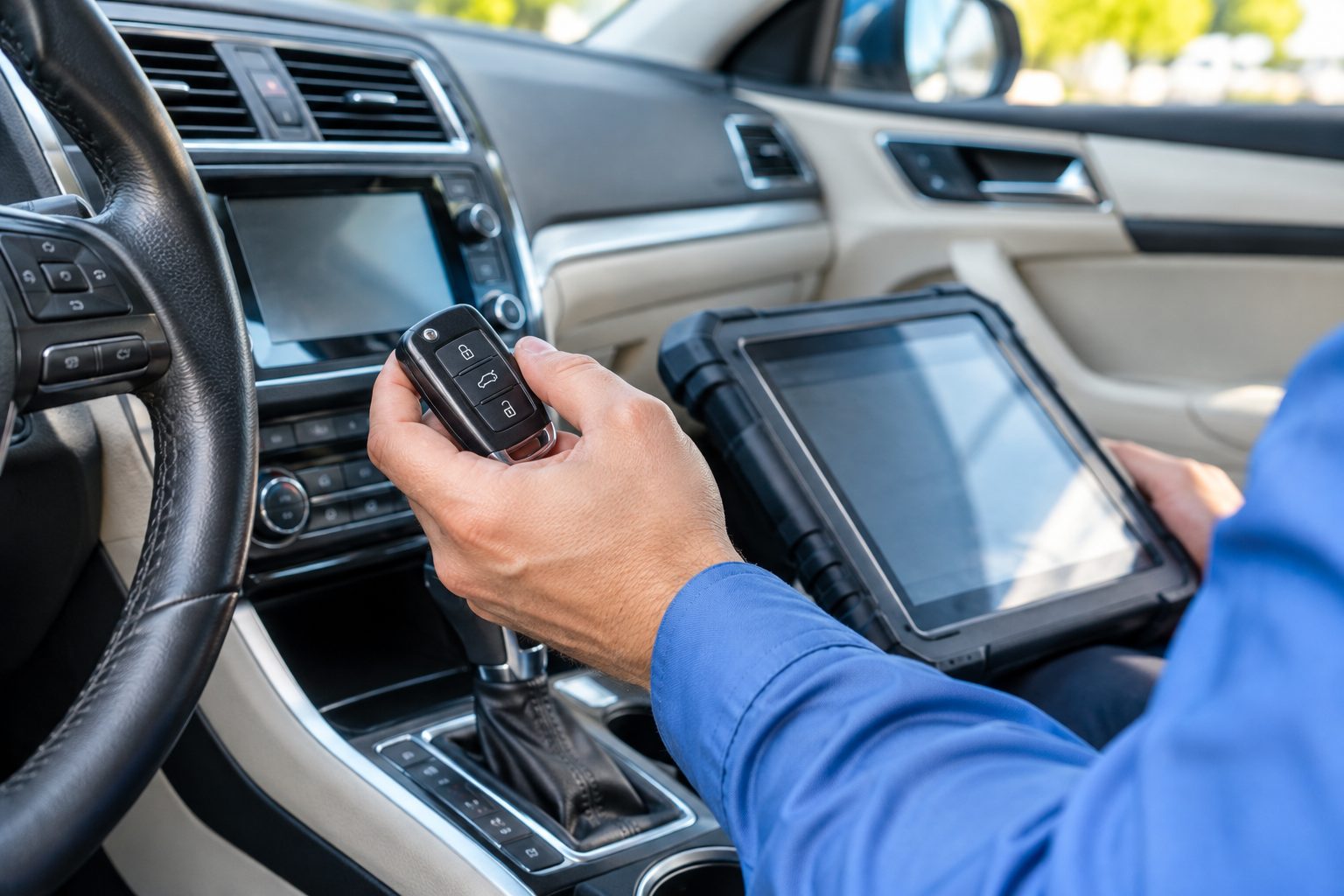
A house lockout is mainly about getting back in. A business lockout has more moving parts. The building may hold inventory, cash, records, equipment and sensitive information. It may have an alarm monitored by a security company, cameras, a time lock, a fire door, and a lease with a landlord who owns the building. The person asking for entry may be an owner, a manager, an employee on an early shift, or a person who simply says they work there. A locksmith has to be sure that the right person is authorizing the work, and a business owner has every reason to want that caution.
After-hours lockouts have their own patterns. A closing employee pulls the door shut with the key inside. An opening manager arrives to find a lock that will not turn. A cleaning crew finds a door that will not open from the outside. A broken key, a failed electronic lock or a changed lock can all leave a business owner standing on the sidewalk at an uncomfortable hour.
Central Florida businesses range from single-shop storefronts in older commercial strips, to restaurants and bars in the downtown and Mills corridors, to office suites in business parks, to medical offices, warehouse units and tourism-related shops and hotels. The doors, locks and alarm arrangements vary a lot. The approach in this page is general, and a dispatcher can tailor it once they hear the details.
Before you phone anyone, take a minute to review the situation. A clear picture of what has happened makes the call faster and keeps you from making a mistake that costs more later.
Ask whether anyone else is inside. If a coworker, a cleaner or a delivery person may still be in the building, you may be able to reach them by phone. If an alarm is sounding or you suspect a break-in, do not enter. Call 911 and wait at a safe distance. A lockout and a burglary look alike from the outside, and you should never assume the second is the first.
Check the door carefully, without forcing it. Look for signs that someone has tampered with the lock, such as scratches around the keyway, a bent door edge, a broken glass panel or a door that is slightly ajar. If anything looks wrong, treat it as a possible crime scene and contact the police. Our page on lock safety after a burglary explains the next steps in that case.
Think about who else may have a key. A co-owner, a landlord, a property manager, a trusted employee or a family member may be able to bring a key. This can be faster than calling a locksmith, and it avoids any question about authorization. If someone is on the way with a key, a short wait may be the best choice.
If no one can bring a key, or if the key is lost, broken or inside, a mobile locksmith is the sensible next step.
A business locksmith should verify that you have the authority to open the premises. This is not a hurdle. It is the same protection that keeps a stranger from walking into your store with a convincing story.
Expect to be asked for photo identification. You may also be asked for something that links you to the business: a business license or registration document that lists you, a lease in the business name, a utility bill, a tax or insurance letter, a payroll record, a company email that confirms your position, or a business card paired with identification. If you are an employee rather than an owner, the technician may want to speak to the owner or manager by phone before proceeding. A short call from the owner confirming your authority is often enough.
If you rent the space, the landlord or property manager may also have an interest. Some leases require the landlord to be told before locks are changed, and some commercial properties use a master key system that the landlord controls. A technician will usually open a door without changing the lock, which avoids disturbing the system. If a rekey or replacement is needed, check your lease and speak with the landlord.
Have the business name, the address and the lock type ready when you call. If the location is part of a multi-tenant building, name the suite and the building. Our page on business lockout service describes how this works in more detail.
If you are unable to provide any proof, say so honestly. The dispatcher can explain alternatives, such as waiting for the owner, having the property manager confirm your authority, or arranging a daytime visit.
Many businesses have an alarm system that arms when the last person leaves. If the alarm is armed and you open the door, it may sound, notify the monitoring company, and prompt a police response. That response can have its own cost or fine in some jurisdictions, so it is worth planning for.
Before the locksmith arrives, think about the alarm. Do you have the PIN to disarm it? Is the entry delay long enough to reach the keypad after the door opens? Do you know the passphrase for the monitoring company, so you can cancel a dispatch? If someone else set the alarm, try to reach them. If the system is armed and no one has the PIN, call the alarm company, explain the lockout and ask how they would like to handle it.
Let the locksmith know about the alarm. A technician who understands the situation can coordinate the timing of the opening with your call to the alarm company. They cannot disable an alarm for you, and you should not ask them to. The alarm is a separate system with its own owner and monitoring service.
If the lockout is caused by a power failure, a failed electronic lock or an access control fault, the alarm may behave unpredictably. For example, a magnetic lock may release when power fails, which leaves the door open rather than locked, and a battery backup may keep the alarm working while the door controller is dead. Describe any electrical problem or outage so the technician can plan.
Once you are inside, disarm the alarm promptly, and confirm with the monitoring company that no dispatch is on the way. If a response was triggered, stay on site to meet the officer and explain.
The way a locksmith restores entry depends on the door and lock. We do not explain methods here, because the safe approach is to leave that work to a trained technician, and detailed instructions could help the wrong person. What is useful for you to know is what kinds of doors exist and how they affect the job.
Glass storefront doors usually have a lock in the bottom rail or a lock at the center, often a narrow-stile or a rim lock that sits on the inside of the door. These are common in retail strips and offices. Our page on storefront door repair covers how these doors are built and how they wear.
Wood or metal back doors are often secured with a deadbolt and a knob lock, and sometimes with a security bar or a heavy drop bolt on the inside. If a back door is barred from the inside, it cannot be opened from outside, and a technician will look to the front door.
Doors with exit devices, such as push bars, may be locked from the outside with a key cylinder that releases the latch. These are commonly used in restaurants, medical offices and warehouses. Our page on panic bar and push bar service explains how they work.
Electric strikes, magnetic locks and card readers are controlled by a power supply and a controller. If a lockout results from a failed controller or a fault in the wiring, the fix may involve an electrician or an access control provider as well as the locksmith. Our page on electric strikes and maglocks describes the components.
A good technician will choose the approach that causes the least damage, and tell you in advance if any door or hardware has to be repaired or replaced as a result.
Getting back in is only half the job. A business that has just had a lockout, especially one involving a lost, broken or stolen key, needs to think about what happens next.
If the lockout was caused by a lost key, ask whether the key could be in the wrong hands. A key that disappears after closing, or one that belonged to a former employee, is a security risk. Rekeying the locks is the usual response, because it makes the missing key useless. Our page on business lock rekey explains how it is done.
If the lockout revealed a damaged lock, a door that does not close properly, a bent frame or a worn latch, do not leave it for later. A lock that barely holds is a risk to your stock and your insurance. Ask the technician what repairs are needed and whether the door can be secured overnight.
If you cannot fix a door at once, ask about a temporary measure that keeps the premises secure until a repair is possible, and consider whether someone should stay on site. Do not walk away from a door that is not locked.
Take a walk through the premises once you are inside. Check that nothing has been disturbed, that the cash drawer and safe are as you left them, and that no window or rear door is open. If anything seems wrong, call the police before touching it.
Finally, record what happened. Note the time, the technician's name, the work done and any damage. This is useful if you have to explain the event to your landlord, your insurer or your staff.
After-hours lockouts often reveal gaps in how a business manages its keys. Who has a key? How many copies exist? What happens when a key is lost? Does an employee who leaves hand theirs back? If you cannot answer those questions confidently, the lockout is a useful warning.
A simple key control policy can reduce problems. Keep a written list of who holds each key, with dates. Require a signature when a key is issued. Collect keys when someone leaves, and rekey if a key is not returned. Use stamped keys that say do not duplicate, understanding that this is a deterrent more than a lock. Consider restricted keyways, which prevent a copy being made without authorization.
Make sure there is a clear plan for after-hours problems. Decide who is the contact when an employee is locked out, and give staff that person's number. Post a card in the manager's office with the landlord, alarm company and locksmith details, so that no one has to search at midnight.
Our guide on key control policies for businesses explains these ideas in more detail, and our guide on master key planning for small businesses covers how to organize different levels of access.
For some businesses it makes sense to move away from physical keys altogether. Keypad or card access can be changed without making new keys, and it can record who entered. Our guide on access control vs traditional keys compares the two approaches.
Different kinds of businesses run into different problems, and knowing yours helps you prepare.
Restaurants and bars close late, and staff often leave at different times. A common problem is a door that is locked from the inside by the last person out, leaving the opening manager without a key. Kitchens also have back doors with heavy use and grease that wears on hardware.
Retail shops have glass doors with narrow-stile locks and gates. Keys get bent in the lock, and the bottom rail lock often fails after years of use. Mall and plaza shops may have rules about who can alter a lock.
Offices and medical practices often rely on card readers and keypads. Lockouts there are often caused by a dead card, a power failure or an expired credential. Medical offices have extra concerns about patient records and supplies, so secure entry matters even more.
Warehouses and industrial units have roll-up doors, steel doors and large padlocks. Lockouts may involve a cut or lost padlock key, a seized lock or a door damaged by a forklift. Our page on warehouse and industrial locks covers these.
Tourism businesses, such as small hotels, rental offices and tour operators, often have multiple users and shifting staff. That raises the importance of key control and a clear process for lockouts.
When you call, the dispatcher will ask for the business name, the address, the type of door and lock, what has happened, and whether there is an alarm. They will also ask whether you can prove you are authorized. Have your identification and a business document ready.
Quotes are given only by phone. We do not post prices on this website, because the cost depends on the lock and the work needed. Complicated jobs may need an on-site visit, and there is a service call charge, which is explained on the phone before dispatch. You will know the terms before a technician is sent.
We do not promise arrival windows. Traffic, distance and the number of calls in the area change from hour to hour, and a promise we cannot keep would not help you. We will tell you what we know when you call. The 24-hour in our name describes the service concept, and it does not promise a technician at every hour and place.
If you are standing at your door now, call and tell the dispatcher what you see, whether the alarm is armed, and who else may have authority. We will help you work out the safest and simplest route back inside, and then talk through what to do about the keys afterward.
Yes, and that is a good sign. Expect to show photo identification and something linking you to the business, such as a lease, a utility bill, a registration document or a confirmation from the owner. Employees may be asked to have the owner confirm their authority by phone. The check protects your premises from strangers.
If it is armed, it may sound and alert your monitoring company. Know your PIN and passphrase before the door opens, and call the alarm company to explain. A locksmith cannot disable your alarm and should not be asked to. If a response is triggered, stay on site to meet the officer.
Often yes, depending on the door and lock. Glass storefront doors, deadbolted back doors, exit devices and electric locks are each different. The technician will choose the approach that causes the least damage and tell you in advance if any hardware is likely to need repair or replacement.
Usually yes, if the missing key could be in the wrong hands. Rekeying makes the lost key useless without replacing all the hardware. If an employee has left without returning a key, the same advice applies. A technician can look at your doors and suggest a plan that matches your premises.
Do not enter. Signs of tampering, a broken pane, an open door or a sounding alarm mean you should step back, call 911 and wait for officers. Do not touch the lock or the door. After police have cleared the scene, a locksmith can secure the premises and assess the damage.
Quotes are given only by phone, because the cost depends on the door, the lock and what is needed. Complicated jobs may need an on-site visit. There is a service call charge, explained on the phone before dispatch. You will know the terms before agreeing to any work.
Describe the situation by phone and we will tell you what the job involves. Quotes are given by phone. Jobs that cannot be quoted without seeing them need a technician on site, and the service call charge is explained on the phone before anyone is dispatched.