Baldwin Park is a master-planned community around Lake Baldwin, with townhomes, houses, condos, parks and a village center that residents walk to. Newer construction and community rules shape lock work here. This page explains what mobile service looks like in Baldwin Park and what to prepare before you call.
Baldwin Park was developed on the site of a former naval training center, and it is laid out like a traditional neighborhood: sidewalks, parks, a lake, a village center with shops and restaurants, and homes built close together in a consistent style. Many residents walk or cycle for daily errands, and neighbors tend to know one another.
The housing includes single-family houses, townhomes, condos and apartments, mostly of fairly recent construction. That means the locks in most homes are modern, standard-size hardware, and the doors are usually in good condition. The problems that come up are less about worn-out hardware and more about keys, access and habits.
Typical calls include lockouts after a short walk, lost keys after a move, smart locks that stop responding, garage entries that nobody remembered to secure and rental turnover. Mobile service comes to the address with key blanks, cylinders, programming equipment and tools. Quotes are given only by phone, so the first step is always to call and describe what is going on.
A home built in a planned community usually comes with builder-supplied hardware. Often the front door has a standard entry set and a deadbolt, and the back door is a sliding glass door or a standard door with a handle set. The hardware is generally sound, but the keying is the part to think about.
If you bought a home from the builder or from a first owner, you may not know how many keys were cut and who holds them. Builders sometimes use construction keys during the building phase, and agents, inspectors, cleaners and contractors may have used keys during a sale. A rekey after purchase is a simple way to ensure that only your keys work. Our new construction lock checklist sets out the steps in order.
If you rent in Baldwin Park, speak with your landlord or property manager before changing any lock. Many leases require that locks remain in place or that any change be approved. A rekey is often the least intrusive option, since it changes the keys without replacing the hardware.
Many Baldwin Park homes have garages reached from an alley behind the house, with the front door facing a street or a park. This layout looks tidy and gives front yards a friendly feel, but it means the daily entrance is often at the back. The garage and the rear entry deserve as much thought as the front door.
Check that the interior door from the garage into the house has a proper deadbolt and a firmly mounted strike. Check that the garage door opener has been reset since the home was purchased, and that you know who has remotes and keypad entries. A door that is closed but not locked, or an opener left on a default setting, is a common weakness.
Alleys are quieter and less watched than streets, so a rear entry may be less visible to passers-by. Good lighting, a sturdy lock and a habit of closing the garage door each time are small things that matter. Our guide to securing garage doors and entry points has more detail.
Communities like Baldwin Park run on rules, and those rules often reach the front door. An association may have guidelines on exterior hardware finishes, door colors or the use of smart devices, and it may control access to pools, fitness rooms, clubhouses and shared mail areas. Before you change visible hardware, read your community documents or ask the manager.
The key point is the line between what you own and what the association owns. A locksmith can help with your own front door, garage entry and private locks. Shared amenity doors, community gates and common-area hardware belong to the association, and work on them needs its authority. A lost amenity fob is a matter for the management office.
If you are unsure whether a change is allowed, ask first, then call. A technician can work within the rules once you know them, and the result is something the community will not ask you to undo.
A resident in a planned community may carry a house key, a car key, a pool fob, a mailbox key, a gym card and perhaps a garage remote. When one goes missing, it helps to know which system it belongs to and who controls it.
A lost house key is a matter for rekeying, if there is a chance that it could be found by someone who knows the address. A lost car key is a matter for a replacement and programming, covered on our car key replacement page. A lost amenity fob is the association's job to deactivate and replace. A mailbox key is handled through the postal service or the manager, depending on the box.
A simple list kept at home, with each item and who to call about it, saves time at the moment when something goes missing. Keep the list separate from the keys themselves. If a key goes missing near an amenity area, consider rekeying your home as a precaution, since many homes in the community look alike.
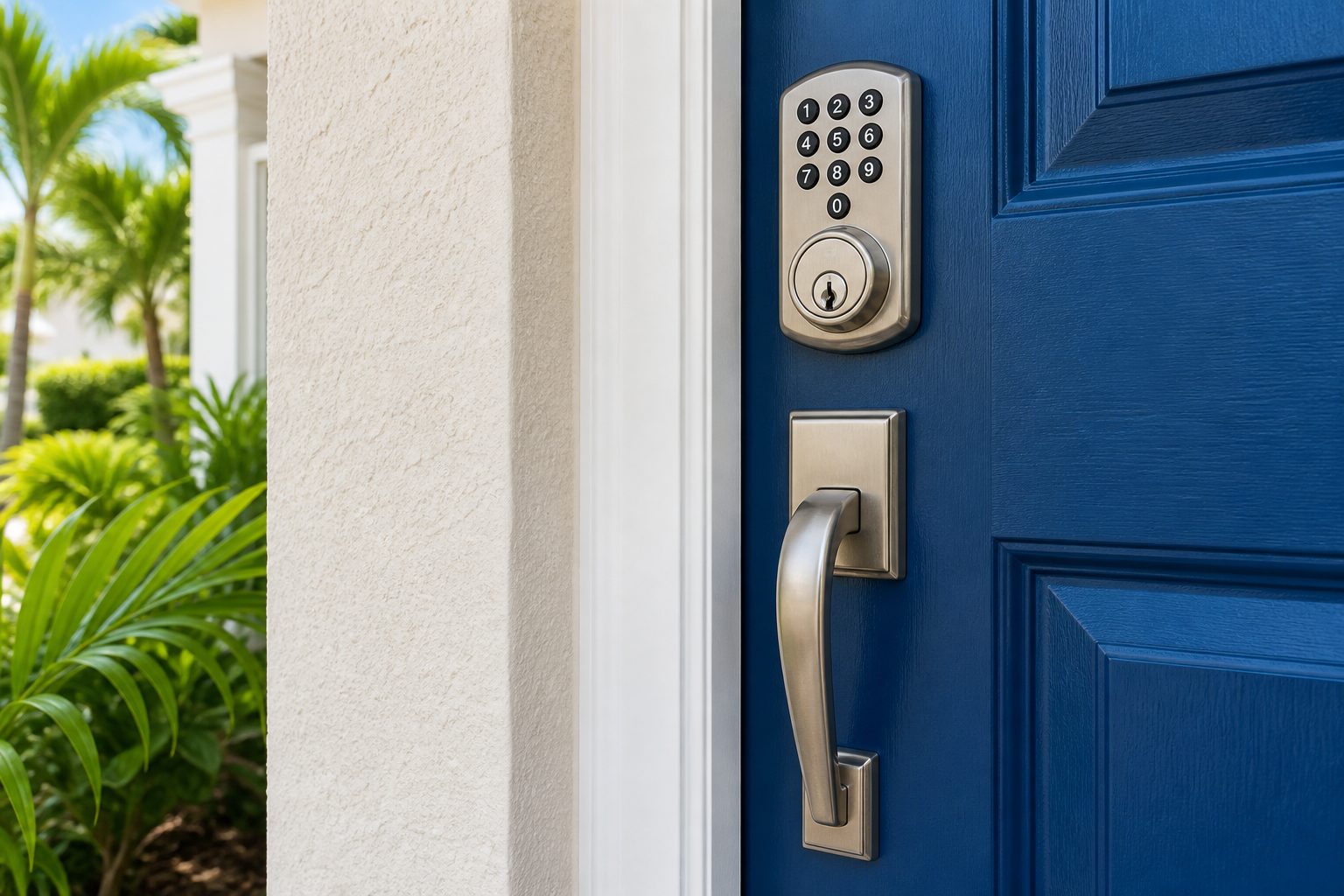
Newer homes are good candidates for smart locks and keypad deadbolts because the doors are standard and the hardware fits. Many Baldwin Park residents like the convenience of unlocking with a keypad or a phone, especially when walking with hands full or sharing access with family, a cleaner or a dog walker.
The common problems are predictable. Batteries run low and the lock stops responding. A phone app loses its connection and the lock cannot be controlled. Entry numbers are shared with people who no longer need them. Defaults are never changed. A physical key backup and a habit of replacing batteries before they run out solve most of these.
If your smart lock stops responding, check the batteries and the manufacturer's instructions first. If the bolt is jammed or the lock will not turn at all, stop and call. Our smart lock troubleshooting page describes what a technician can look at. Do not take the lock apart yourself.
Because Baldwin Park is made for walking, lockouts often happen away from the car. A resident goes around the lake, to the village center or to a neighbor's, and returns to find the door locked and the key inside. Modern doors with automatic latches make this easy.
If it happens to you, check for a spare key with a neighbor, a family member or a property manager, and see whether a door or window is already open and safe to use. Do not force a door or break glass. If anyone inside is in danger, call 911 first.
When you call, say where you are, describe the door and tell us whether it has a deadbolt, a keypad or a smart lock. Have identification ready that connects you to the address. A technician will verify it before opening. Our house lockout page explains the steps. We do not promise a specific arrival time, but you will hear the service call charge and the quote before dispatch.
Residents who walk a lot may use their cars less often, and that has a side effect: a fob battery goes flat, a car sits for weeks and a key is mislaid in the meantime. Cars parked in alley garages, driveways or street spaces are all susceptible to the same problems.
Vehicle work depends on make, model and year. A basic key is a simple cut, a transponder key must be programmed to the car and a smart key involves more equipment. Have the details ready when you call, and be prepared to show identification and proof of ownership. If you still have a working key, a copy is a simpler job than creating a first key when none exists.
A dead fob is not always a dead key. Try a fresh battery according to the manufacturer's instructions before assuming a replacement is needed, and use the hidden mechanical key in the fob if there is one. If the problem continues, call and describe the symptoms. Our key fob replacement page explains the options.
Living near a lake brings pleasant views and plenty of moisture in the air. Summer afternoons in Central Florida often bring heavy rain, and in storm season the wind can push hard against doors and windows. Hardware that is fine in dry spells can start to bind or rattle when everything is damp.
Look at your exterior doors after a wet spell. Do they close without a shove? Does the deadbolt slide in smoothly? Are weatherstrips intact? Sliding glass doors deserve extra care, because debris in the track and swollen frames can stop the latch from engaging fully. A door that does not truly lock is a risk even if it looks closed.
Before a named storm, check that hinges and strikes are tight, since a loose strike can give way under pressure. Our hurricane season door and lock prep guide has a fuller list. After a storm, test every lock again. If something sticks, do not force it. Describe the symptoms and a technician can advise.
Many homes in a community like this open onto a small patio, a courtyard or a lakeside terrace through a sliding glass door. These doors are comfortable and bright, and they are also among the easier entries to defeat when the latch is the only protection.
Check that the latch catches firmly and that the door cannot be lifted off its track. A bar or pin placed in the track stops it from sliding even if the latch is overcome. Some doors have a secondary lock that is easy to forget to use. Make it part of your leaving routine. Our sliding glass door guide explains the options, and the sliding patio door locks page describes what a technician can fit.
If you leave a patio door open for fresh air, use a limiter that allows a narrow opening while keeping the door secure. Close and lock it when you leave, even for a short walk to the village center.
Neighborhoods where people know each other can lull residents into leaving doors unlocked. The most common household weakness is not a poor lock but a lock that is not used. A deadbolt that is never thrown protects nothing.
A short routine helps: lock the front and back doors when you leave and when you go to bed, close the garage door, check the sliding door latch, and keep spare keys out of obvious places. Avoid sharing entry numbers widely, and change them when guests or workers no longer need them.
When a lock begins to misbehave, act early. A key that sticks, a bolt that drags or a latch that does not catch is a sign that a lockout or failure is coming. A short call to describe the symptom costs little time and can prevent a bad evening.
Some homes in the community are rented, either on long leases or for shorter stays. Turnover is where key control slips. A tenant who leaves with a key, a guest who forgets to return one or a cleaner whose arrangement has ended all represent open access that is easy to forget.
A rekey between tenants is a straightforward solution. For owners who rent often, a keypad lock that allows changing the entry number is a practical alternative, provided association rules allow it. Keep a written record of who has access and when it was last reset. Our property manager service page explains how we work with managers.
If you own a home and travel, think about who has a key while you are away: a neighbor, a house sitter, a pet carer. Keep the list short and review it. When someone no longer needs access, take the key back or rekey.
The process is simple. Call, describe the problem and give your address or the nearest street. You hear the service call charge and, where the job can be quoted by phone, the cost of the work. Jobs that need a closer look, such as hardware on several doors or a damaged frame, begin with a visit, and the charge for it is explained beforehand. You can decline before work begins.
Have identification ready, and proof of ownership for car work. If you are in a community with rules about hardware, mention them. If your lock is a smart lock, tell us the brand if you know it. Details help us bring the right parts.
Our pages for downtown Orlando and Thornton Park cover neighboring areas, and our phone quote guide explains the process. When you are ready, call and tell us what is happening.
Yes, mobile service covers Baldwin Park and nearby Orlando neighborhoods. Call, describe the problem and give your address. We do not promise an arrival time because traffic and other calls vary, but you will hear the service call charge and the quote before anyone is dispatched.
It is a sensible step. Builders, agents, inspectors and contractors may all have held keys, and you rarely know how many copies exist. Rekeying makes old keys stop working without replacing the hardware in most cases. Call and describe your doors to get a quote by phone.
Generally no. Amenity access belongs to the association, so a lost fob is a matter for the management office. A locksmith helps with your own home locks, garage entry, private gates and car keys. If you are unsure, check with your community manager before you call.
Check the batteries and the manufacturer's instructions first. If the bolt is jammed or the lock will not turn, stop and call, because forcing it can make things worse. A technician can look at both the electronics and the mechanical parts. Do not take the lock apart yourself.
Check for a spare key with a neighbor, family member or property manager, and avoid forcing the door or breaking glass. Then call, describe the door and say whether anyone is inside. If someone is in danger, call 911 first. A technician will verify identification linked to the address.
Quotes are given only by phone, because the right answer depends on your door, lock or vehicle. You hear the service call charge and the likely cost of the work before dispatch, and complicated jobs may need an on-site visit first. You can decline before work begins.
Describe the situation by phone and we will tell you what the job involves. Quotes are given by phone. Jobs that cannot be quoted without seeing them need a technician on site, and the service call charge is explained on the phone before anyone is dispatched.