For many Orlando households the garage is the front door in daily life. Groceries, children, bikes and cars all pass through it, and the door from the garage into the house is often the weakest lock on the property. This guide covers the habits and hardware that matter, and which jobs belong to a professional.
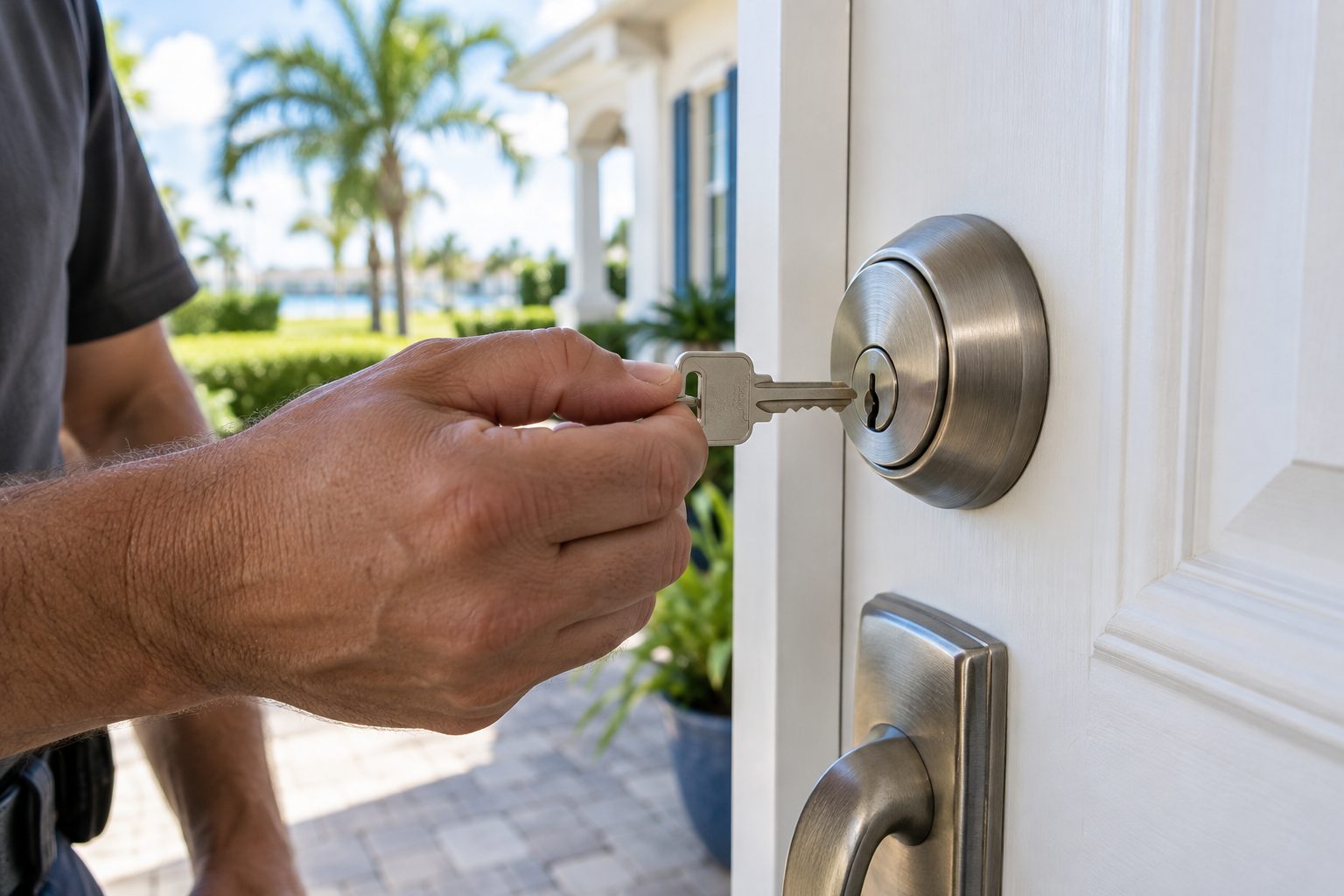
Most people think about the front door when they think about home security, yet the garage is where a lot of real-world risk sits. It is a large opening, it is usually out of sight of neighbors once the door is down, and it holds tools, ladders and sometimes a second set of keys that can help someone get further into the house. A garage that is left open for twenty minutes while you work in the yard, or one whose interior door is never locked, quietly undoes the work you put into your front entry.
In Central Florida the garage also plays a practical role that homes in other regions do not always share. Many Orlando houses and townhomes are slab-on-grade builds with an attached garage that is the main route in and out. Residents come home from theme park shifts, hospital shifts and long commutes, and they walk straight from the car to the kitchen through that one interior door. Convenience pushes people to leave that door unlocked all day, and that habit is the first thing worth changing.
A good garage security plan has three layers. First, the big overhead door and its opener. Second, any side or service door into the garage from the yard. Third, the interior door between the garage and the living space. If one layer fails, the next should still hold. Thinking in layers also helps you decide where to spend effort, because a strong lock on a weak door is a common mistake and a locked door that opens into an unlocked garage offers little comfort.
The overhead door is a heavy, spring-loaded assembly, and it is important to be clear about what an owner should and should not do. The springs and cables carry enough stored force to cause serious injury. Adjusting, loosening or replacing them is a job for a trained garage door technician with the right tools, never a weekend project. A locksmith can talk with you about the locking and access side of the entry, but the spring system is its own trade.
What you can control is how the opener is used. Close the door every time, including when you are home. A door left up while you are in the backyard is an open invitation. If your opener has a remote on the car visor, think about what happens when the car is broken into: that remote, together with a registration card or mail showing your address, can become a way into the house. Many owners take the remote with them when the car is parked in a public lot, or keep a smaller remote on the key ring rather than leaving a permanent one in the vehicle.
Check that the opener is working as intended. Modern openers use a changing signal so that a copied signal cannot be replayed, but older units may use a fixed signal. If your opener is quite old, ask the manufacturer or a garage door professional whether it uses rolling signals, and consider upgrading when it comes time to replace it. When you sell a house or move into a new one, reset or reprogram the opener so the previous owner's remotes no longer work.
Almost every automatic garage door has a red cord with a handle that disconnects the door from the opener so it can be lifted by hand. That is an important safety feature. If the power is out, if the opener fails, or if someone is trapped, the release is how the door gets moved. It must never be disabled or removed to improve security. A garage that cannot be opened in an emergency is a hazard, and during hurricane season, when outages are common, you will want to be able to open the door by hand.
The security concern is different. On some doors, the release cord hangs near the top of the door where it can be reached through a gap at the top of the panels. Some owners therefore worry that a person outside could pull the cord and lift the door. The answer is not to remove the cord. Instead, ask a garage door professional about protective shields or release covers designed for this purpose, and make sure the door is well fitted with minimal gaps at the top.
Teach everyone in the household what the cord is and what it does. Children should be told not to play with it, and adults should know that pulling it while the door is up can cause the door to fall. After you use the release, the door usually re-engages the opener on the next trip of the carriage, but follow the manufacturer's instructions for your model. If you are not sure how your release works, a garage door technician can explain it in a few minutes, and that small visit is worth it for the safety of everyone in the house.
Many Orlando garages have a side door that opens to the yard or a walkway. It is often an older, thinner door than the front entry, with a basic knob lock and a short strike plate screwed into soft wood. Because this door sits beside a fence or hedge, it is hidden from the street, which makes it an attractive entry point. It deserves the same attention as the front door.
Start with the hardware. A single-cylinder deadbolt with a solid bolt throw, a reinforced strike plate and longer screws that reach into the wall framing will make a clear difference. Details about reinforcing the strike area are covered on our page about strike plate reinforcement. Next, look at the door itself. A hollow door can be damaged more easily than a solid core or metal door, and a door with a large glass panel near the lock can be a weak point. If glass is part of the design, consider a deadbolt that needs a key on the inside as well, so that someone breaking the glass cannot simply reach in and turn a thumb-turn.
That last point has to be balanced with safety. A keyed deadbolt on the inside means that you need the key close at hand to leave in an emergency. For a garage side door that is usually acceptable because there are other exits from the house, but for bedrooms and primary exits a thumb-turn is the safer choice. If you are unsure which to pick, call and describe the door, and a locksmith can explain the trade-off for your layout. For hardware options see garage entry door locks.
This is the door that matters most. If someone reaches the inside of your garage, whether through a door left open, a copied remote, or a forced side door, the interior door is the last barrier. In many homes it is fitted with a simple passage knob or a latch with no deadbolt at all, because the builder assumed the garage was a safe space. It is not.
A solid core or metal door, a deadbolt with a one-inch throw or similar full engagement, a reinforced strike plate and sturdy hinges make a meaningful upgrade. Hinges matter because many interior-facing doors open inward from the garage side, meaning the hinge pins are on the garage side where an intruder could work on them. Security hinges or non-removable pins address that. We explain this in more depth on door frames and hinges.
There is also a fire safety point. Doors between an attached garage and the living area are normally fire-rated or solid and are designed to slow the spread of fire and fumes from the garage. If you replace this door, choose one that is appropriate for the purpose, and if you are unsure, check with your local permit office or a qualified contractor. A locksmith can fit hardware to a suitable door, but should not be asked to compromise its rating by cutting large holes or removing its closer or latch if it has one. Lock it every time you come home and every time you leave, even if you are only going to the mailbox.
Smart garage controllers let you open and close the door from a phone, see its status, and receive alerts if it stays open. For a household that frequently forgets to close the door, these are genuinely useful. They also introduce new questions: who has access to the account, what happens when the internet is down, and how is the door secured if the phone is lost.
Treat the account like any other important account. Use a long unique password, turn on any additional sign-in checks the maker offers, and remove access for people who no longer need it, such as former tenants, former house sitters or past contractors. Review the activity history now and then. If the system supports separate guest access with a time limit, use that instead of sharing your own login.
Exterior keypads mounted by the garage door let you enter a short passcode instead of carrying a remote. They are convenient for children and visitors, but the passcode should be changed from the factory setting and not tied to something easy to guess, such as a house number or a birth date. Our guide on digital lock passcode habits goes through rotation and guest passcodes in detail. Remember that any device that opens the garage should be treated as a key, and lost or stolen keypads, remotes or phones should be disabled as soon as you notice.
Hardware is only part of the picture. A well-lit garage entry, whether through motion-activated lights or a steady fixture on a timer or light sensor, changes how an intruder feels about spending time there. Dark corners behind hedges and vehicles are comfortable for someone who does not want to be seen, so removing those corners is worth the effort.
Florida landscaping grows quickly, and a hedge that was trimmed neatly in spring can screen a side garage door completely by summer. Keep plants near doors low, and avoid placing tall shrubs where they hide a person standing at a lock. Gravel or crushed rock paths make footsteps audible, which is an old but useful deterrent. Fences and gates add a layer, but make sure gates are latched and that the latch itself is not easy to reach over the top.
Windows in garage doors are a common feature on newer homes because they let in light. They are also a way for passers-by to see what is inside, such as bikes, golf clubs, tools and boxes, which can attract attention. If you do not need the light, consider frosted film or blinds. And if you keep valuable tools in the garage, store them out of view or in a locked cabinet rather than leaving them on open shelves near the door.
A surprising number of garage break-ins start with something the owner left within easy reach. The classic example is a spare house key hung on a nail in the garage, or a house key left in the glove box of a car parked in the driveway. Car break-ins in residential neighborhoods happen quietly, and if the car contains a garage remote and a registration with the home address, the thief has what they need.
Keep the house key off the car key ring when you use valet service or leave the car with a mechanic. If you must leave the car unlocked overnight in a driveway, do not leave a remote or any papers showing the address inside. For spare keys, a lockbox with a strong body and a changeable combination, mounted out of sight, is better than a fake rock or a mat. We discuss the full range of options in spare key storage ideas.
If a remote, keypad passcode or key is lost, take it seriously. For a garage remote, reprogram the opener so the lost remote is erased. For a house key lost with an address attached, consider rekeying. The process is explained on our rekeying page, and it often costs less in time and trouble than replacing all the hardware.
The garage door is often the largest opening on the house, and in a storm it is a structural concern as well as a security one. Wind pressure on a weak door can cause it to fail, which then lets wind and rain into the house. Garage doors rated for wind loads are available, and bracing kits exist for older doors. That is a conversation for a garage door professional and your insurer, not a lock topic, but it matters when you think about the whole entry.
Before a storm, make sure you know how to open the door by hand in case the power goes out, and keep any garage-stored valuables off the floor in case of water. After a storm, doors, frames and hardware may be bent or swollen. A door that sticks or a latch that no longer lines up can leave the house less secure than before, even if nothing looks broken. Check each lock and latch after any major weather event. You can read more in our guide on hurricane season door and lock preparation.
Humidity is the quiet issue in the Orlando area. Moist air and constant dampness can cause locks to stiffen and metal to corrode over time, especially in garages that are not air-conditioned. A lock that feels gritty or sticky is easier to damage than one that moves smoothly, and a lock that fails is a security gap. Regular attention to moving parts is worth a few minutes each season.
There is a clear split between what an owner can reasonably do and what should be done by someone trained. Closing the door, locking the interior door, changing the keypad passcode, trimming bushes and rearranging items are all owner jobs. Anything involving the door springs, cables, drums or the opener's mounted track belongs to a garage door technician. Anything involving lock hardware, rekeying, deadbolts, strike plates and access devices belongs to a locksmith.
When a locksmith visits to look at a garage entry, the visit usually covers the condition of the door and frame, the type and quality of the existing lock, the strike plate and screws, the hinges, and how the door closes and latches. They will also ask who has keys, whether any have gone missing, and whether the house changed hands recently. For a complicated job, an on-site visit is needed before a quote can be given, and there is a service call charge that is explained on the phone before anyone is dispatched. Quotes are always given by phone, never in an article like this one.
Have a few things ready before you call: the number and type of doors you want looked at, what the current locks are like, whether any door is hard to latch, and whether you want keyed-alike locks so one key works on several doors. If you are worried about security right now, or you think someone has been in your garage, call the police first if there is any danger, and then call a locksmith to secure the entry. When you are ready to talk it through, call and describe what you have.
No. The release is a safety feature that lets the door be moved by hand if the power fails or the opener stops working. Removing or disabling it can trap people or block an exit. If you are concerned about someone reaching it from outside, ask a garage door professional about a release shield or about improving the fit at the top of the door.
In most homes it is a sensible upgrade. If someone gets into the garage, this door is the last barrier. A solid door, a deadbolt with full engagement, a reinforced strike plate and sturdy hinges make a real difference. Keep in mind that this door may also be fire-rated, so choose hardware that respects its purpose.
Springs and cables hold a lot of stored force and should only be handled by a trained garage door technician. A locksmith helps with locks, keys, deadbolts and access devices on the entry doors around the garage. If your door is not moving properly, call a garage door specialist for the mechanical side.
It carries some risk. If the car is broken into, the remote together with papers showing your address can give someone a route into the house. Consider carrying a small remote on your key ring, removing it when parking in public lots, and never leaving the car unlocked overnight with a remote and address inside.
Erase or reset it on the opener so the lost device no longer works, and change the keypad passcode right away. If a house key was lost together with something showing your address, consider rekeying the locks. Call and describe what happened, and a locksmith can explain the options over the phone.
Quotes are given by phone only. Describe the doors, their current locks and any problems, such as a door that does not latch. For more involved work an on-site visit is needed, and a service call charge applies, which is explained on the phone before dispatch. Call whenever you are ready to talk it through.
Describe the situation by phone and we will tell you what the job involves. Quotes are given by phone. Jobs that cannot be quoted without seeing them need a technician on site, and the service call charge is explained on the phone before anyone is dispatched.