Every lock you did not rekey still answers to every key ever cut for it. Rekeying fixes that: the technician changes the pins inside your existing locks so old keys die and a fresh set works. Orlando Mobile Locksmith rekeys homes, rentals, and businesses across metro Orlando from fully stocked vans, seven days a week. It is quicker and low-cost than replacing hardware, and it happens at your door. Call
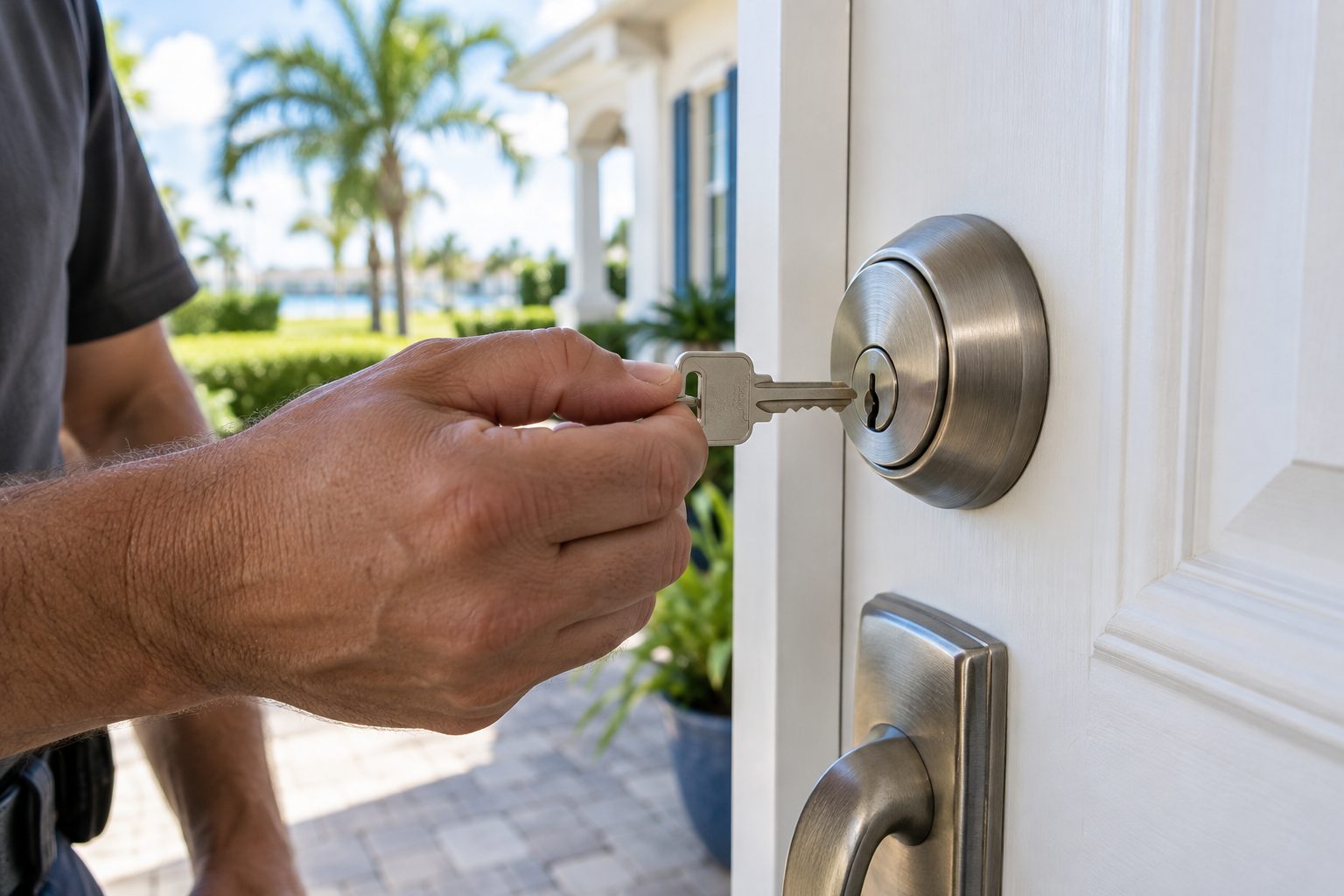
Inside every pin tumbler lock sits a row of small pins, and the pattern of those pins is what decides which key turns the cylinder. Rekeying swaps that pattern. The technician removes the cylinder, replaces the pins to match a newly cut key, and reinstalls everything, the lock on your door stays, but every key that used to open it becomes scrap metal. If your hardware is in good shape, rekeying gets you complete key control without paying for new locks, and your doors keep the finish and style they already have. Replacement earns its keep in different situations: hardware that is worn, corroded, sticking through Florida summers, or simply low quality worth upgrading; a desire for smart locks or keypads; or damage from a break-in attempt. Because the vans carry both pinning kits and new hardware, the technician can look at your actual doors and tell you honestly which route each lock deserves, and it is common for one house to need a mix, rekeying the solid deadbolts and replacing the one corroded knob on the garage entry. Either way, you end the visit holding keys nobody else on earth has a copy of.
Think about who has touched the keys to a home before you got there. The sellers, their relatives, the neighbor who watered plants, the dog walker, a cleaning service, contractors during the sale prep, and every agent who ever borrowed the lockbox key. In new-build communities around Lake Nona, Winter Garden, and Horizon West, add construction crews, subcontractors, and builder staff who carried keys for months before closing. None of those people are necessarily a threat, but you have no way to know how many copies exist, and rekeying is how you stop caring. A move-in rekey covers every exterior door in one visit: front entry, garage-to-house door, sliders with keyed locks, side doors, and anything on a detached shed or gate you want on the same key. We schedule around closings and moving trucks, and since the service is mobile, you do not have to disassemble anything or haul locks to a shop while your life sits in boxes. Plenty of buyers put it off and plenty regret it the first time a stranger's key story surfaces. Make it part of move-in day, next to the utilities and the internet.
If you own or manage rental property in Central Florida, key control is not a nicety, it is the backbone of your liability picture. Every tenant turnover should end with a rekey, because departing tenants return keys but not the copies they made for partners, friends, and roommates over the years. Around UCF, student housing turns over in a compressed window each summer, and we work those turnovers in volume: multiple units, multiple buildings, each unit rekeyed and its new keys labeled and handed to management the same day. Evictions bring their own urgency, and we coordinate with owners and property managers to rekey immediately once you have lawfully regained possession of the unit, with documentation confirming your authority over the property, which we require on every landlord job. Vacation-rental operators in Kissimmee and Davenport have a different rhythm, where guest turnover is handled by keypads but the mechanical backup cylinders quietly go years without a change; rotating those is low-cost insurance against every past guest, cleaner, and vendor who ever handled a backup key. Whatever your portfolio looks like, we can set a standard so every property follows the same key system and turnover routine.
Most households carry more keys than they need. One for the front door, a different one for the garage entry, a third for the side gate, and a mystery key nobody has identified in years. Keying alike solves this: the technician rekeys all compatible locks to a single key, so one cut opens everything you own. It is a small change that improves daily life immediately, one key to copy for family members, one key for the pet sitter, one key to find in the dark with your arms full. The main constraint is hardware compatibility. Locks from the same manufacturer with the same keyway can almost always be matched; locks from different brands often cannot, because the key blank physically will not enter a foreign keyway. When your doors wear a mix of brands, we lay out the options: rekey the compatible majority to one key, or swap the odd cylinders so the whole house matches. The van carries the parts for either path. Keying alike pairs naturally with a move-in rekey, since every cylinder is already open on the workbench, unifying them onto one key adds little to the job and a lot to the convenience.
Metro Orlando's homes span a century of hardware, and rekeying looks different across that range. Older Winter Park and College Park bungalows often carry vintage mortise locks and decades of mismatched replacements, some of that hardware can be rekeyed and preserved, which matters to owners who care about original doors, while some has worn past the point of holding a secure pinning and deserves retirement. We tell you which is which before any work starts. Newer construction has the opposite issue: builder-grade locks installed by the thousand, sometimes with whole streets sharing suspiciously similar keying, which makes a post-closing rekey in HOA communities like Lake Nona and Winter Garden more than a formality. The climate adds a maintenance angle, because humidity and afternoon storms corrode low-cost pins and springs faster than most owners expect, and a rekey visit doubles as a checkup, the technician cleans and lubricates each cylinder while it is apart and flags anything close to failing. Condos, townhomes, and HOA properties sometimes have rules about exterior hardware finishes, so if your association is particular, mention it and we will keep the visible parts of your locks compliant while changing everything inside.
What is the difference between rekeying and changing my locks?
Rekeying keeps your existing hardware and changes only the pins inside the cylinder, so old keys stop working and new ones take over. Changing locks means removing the hardware entirely and installing new. Rekeying is the economical choice when the lock itself is healthy; replacement makes sense for worn, damaged, or outdated hardware.
Should I rekey after buying a home if the sellers gave me all the keys?
Yes. The sellers gave you all the keys they had, which is not the same as all the keys that exist. Agents, contractors, house sitters, and previous occupants may hold copies nobody remembers. Rekeying erases that entire unknown history for less than the cost of new hardware, which is why we recommend it for every closing.
Can all my locks be made to work on one key?
Usually, with one condition: the locks must share a compatible keyway, which generally means the same brand family. Mixed-brand homes can either have the compatible majority keyed alike or the odd cylinders swapped so everything matches. The technician can tell you which locks will cooperate just by looking at the keyways.
Do you rekey smart locks and keypad deadbolts?
Most of them, yes. The majority of electronic deadbolts include a mechanical backup cylinder that rekeys like any other lock, and on rentals that backup is often the forgotten weak point after years of guests and vendors. Codes are separate from keys, so remember to update those yourself or ask the technician to walk you through it.
I am a landlord, what do you need from me for an eviction rekey?
Documentation showing your authority over the property, such as a deed, tax record, or management agreement, plus your photo ID, and the rekey happens only after you have lawfully regained possession under Florida's eviction process. Once that is in order, we rekey every exterior door and hand the only new keys directly to you or your manager.
How often should rental locks be rekeyed?
At every turnover, without exception, long-term tenants, student leases near UCF, and the backup cylinders on vacation rentals alike. Between tenants is when key control is low-cost to restore and when failing to restore it creates the most liability. Many of our property-management clients simply build the rekey into their standard turnover checklist.
A rekey visit follows the same basic pattern for each lock. The technician removes the lock from the door or pulls the cylinder, depending on the design. The plug, the part the key turns, is slid out of the housing with a follower tool so the top pins and springs stay in place and do not spill. The old bottom pins come out of the plug. A new key is cut, or an existing key you want to keep is chosen, and new bottom pins are selected so each one sits exactly at the shear line when that key is inserted. The plug goes back into the housing, the cylinder is tested several times with the new key, and the lock is reinstalled and checked on the door with the door open and closed.
That last step matters. A lock that works perfectly in the hand can still bind once it is back on the door if the bolt rubs the strike. Testing on the door, with the bolt thrown into the frame, catches that before the technician leaves.
People often assume a rekey requires the current working key. It helps, because the technician can use it to turn the plug and remove it quickly, but it is not required. If the key is lost, the lock can be picked or decoded to get the plug turned, and then rekeyed normally. On some locks, the cylinder can be removed from the inside of the door without the key. This is why a lost key is one of the best reasons to rekey, not an obstacle to it.
Some lock brands sell residential locks designed so the owner can rekey them with a particular tool and the current key, without taking the lock apart. These are convenient when you have the working key and want to change it yourself. They have limits. If you do not have the working key, the owner process does not work and the lock has to be handled like any other. The mechanism inside is different from a traditional pin tumbler, and some homeowners and landlords prefer standard pinned cylinders for that reason. If your house has owner-rekeyable locks and you want everything on one key, the technician can tell you which of your other locks can be matched to them.
Many basic residential cylinders come from the factory with plain pins that are relatively easy to pick. While a cylinder is apart for rekeying, some of those pins can be replaced with security pins, such as spool or serrated pins, which make the lock harder to manipulate. It is a modest upgrade and not a substitute for a high security cylinder, but because the lock is already open, it adds little time. Ask about it if you are rekeying a front door or a door that faces an alley or other low visibility area.
Moving in and tenant turnover are the obvious reasons. Several others come up just as often.
In situations involving personal safety, such as a relationship ending badly, a rekey is one step among several. Change garage door codes, re-pair or remove garage remotes, reset smart lock codes and remove old user accounts from any lock app. A rekey only covers mechanical keys.
A rekey does not touch the garage door. For many houses, the garage is the main way in, so after a move or any of the life changes above, the garage deserves the same attention. Most openers let you clear all paired remotes and re-add only the ones you have. Exterior keypads for garage doors have their own code, which should be changed. If the house has a smart lock or keypad deadbolt, delete old codes and check the app for user accounts you do not recognize. The technician can walk you through the lock side of this while on site.
Decide on the number of keys before the rekey, not after. A common setup is one key for each adult in the household, one spare kept in a secure place in the house, and one spare left with a trusted person outside the home. Resist the urge to cut extras "just in case." Every extra key is one more key that can wander. If you need to give a key to a service provider, track it and ask for it back when the service ends.
Do not label keys with your address. A key ring with an address tag is a gift to anyone who finds it. Use a color cap or a simple code only you understand.
Many padlocks from the same manufacturers as your door locks can be rekeyed to match your house key, which cuts down on the number of keys you carry for sheds, gates and storage. Mailbox locks and cluster box tenant locks are usually handled by replacing the lock rather than rekeying it, depending on the model. File cabinets, desk drawers and similar small locks often use wafer mechanisms that can be rekeyed or replaced with a matched core. Mention these when you call so the technician brings the right parts.
A fresh rekey gives a cylinder new bottom pins, which often makes an older lock feel smoother right away. To keep it that way in Florida's humidity, use a dry lubricant made for locks once or twice a year, and avoid heavy oils that collect dust. Keep the door aligned so the bolt slides freely into the strike. Use keys cut from the original, not from worn copies, and replace any key that bends or cracks. Following those habits, a rekeyed lock should keep working well for a long time.
Count the locks you want rekeyed, including garage entries, keyed sliders, gates and sheds. Gather any keys you have, even ones you cannot identify, since they help sort out which lock is which. Decide how many new keys you want. For rentals, have the documentation showing you manage or own the property. For a condo or townhome, check whether the association keeps a copy of unit keys, and plan to provide a new one after the rekey.
Searching locksmith near me in Orlando for lock rekeying? We are mobile across metro Orlando and quote the price before we come out. Call us.
ZIP codes we cover in Orlando: 32801, 32803, 32804, 32805, 32806, 32807, 32808, 32809, 32810, 32811, 32812, 32814, 32817, 32818, 32819, 32820, 32821, 32822, 32824, 32825. City services: Orlando Official Website.
Describe the situation by phone and we will tell you what the job involves. Quotes are given by phone. Jobs that cannot be quoted without seeing them need a technician on site, and the service call charge is explained on the phone before anyone is dispatched.