Apartment locks involve more than one party: the tenant who lives there, the manager who controls keys and the owner of the building. A good lock service respects all three. This page explains turnover rekeys, tenant requests, key control and who can authorize what.
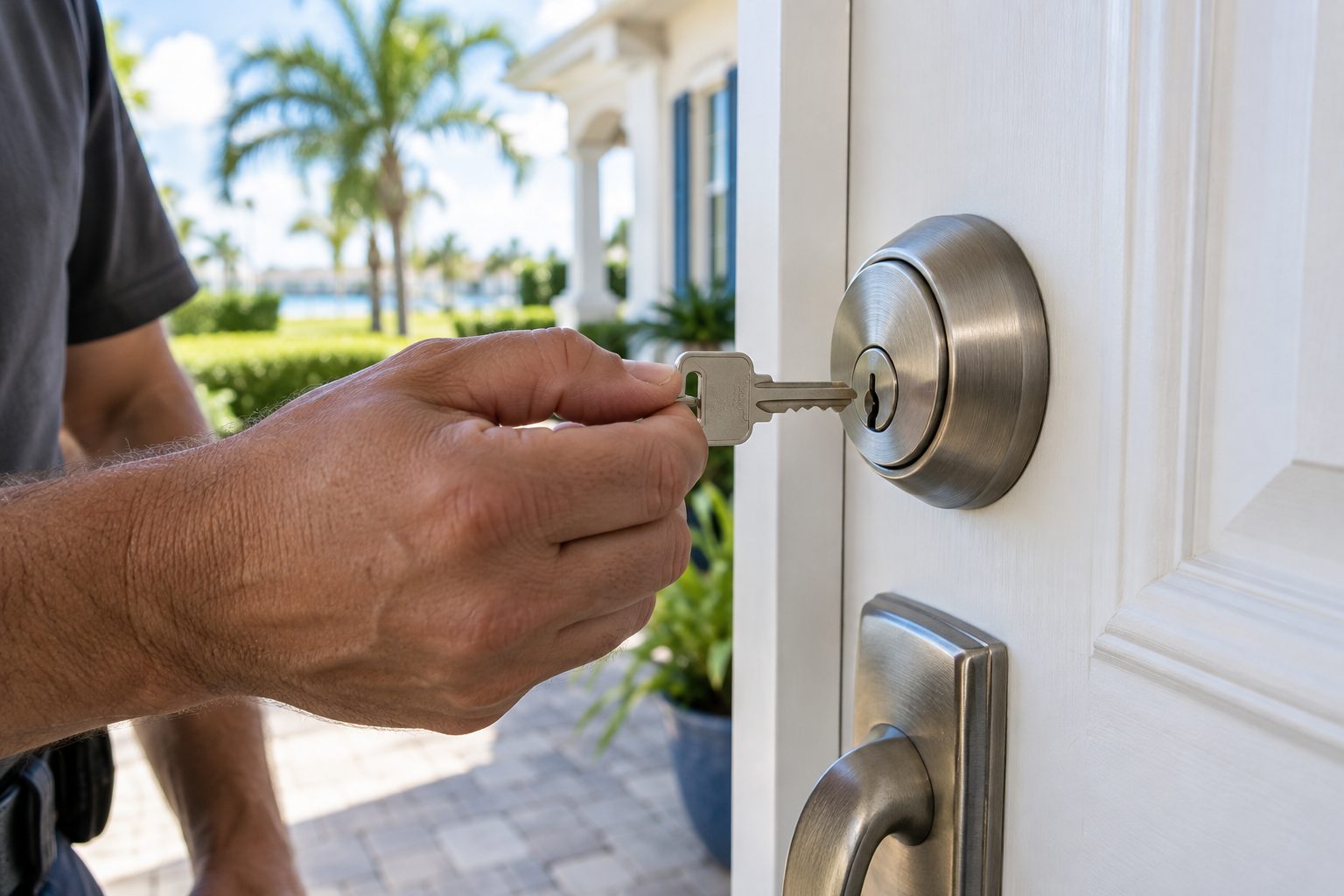
A house has one owner or one household, and the person who calls the locksmith is usually the person who decides. An apartment is different. The tenant lives behind the door, but the landlord or management company owns the building and typically owns the lock. The lease usually says who may change locks, how many keys the tenant gets and what must be returned at move out.
A building also has a key system. Management may need access for emergencies, maintenance and inspections, and often uses a master key or a key box. That arrangement means one set of locks is tied to a larger plan. Changing a lock without considering that plan can create problems for the tenant, the manager or both.
Orlando has many types of apartment housing, from garden style communities along the I-4 corridor and near the universities to older small buildings, converted houses, mid rise residential blocks and downtown condominium towers. The locks vary, and so do the rules. A technician starts by asking who you are in relation to the unit, since that decides what can be done and who must approve it.
When a tenant moves out, the previous occupant and anyone they gave a key to may still hold working keys. A turnover rekey changes the internal pattern of the lock cylinders, so old keys stop working and new keys are issued to the incoming tenant. It is the standard way for a property manager to protect each new resident.
Rekeying is usually faster than replacing the locks, and it keeps the existing hardware. A technician takes the cylinder apart, replaces the pins with a new combination and tests the lock with a fresh key. Because the lock body stays in the door, the work is neat and does not change the look of the unit. The difference between the two approaches is explained on the rekey versus replace locks guide, and the process itself is described on the lock rekeying page.
For a manager with many units, scheduling matters. Rekeys are often done in batches between move out and move in, and a technician can plan visits around a turnover calendar. Keep a record of which keys belong to which unit and when the lock was last changed. That record helps resolve later disputes about who had access.
Tenants often want to change their locks, especially after a breakup, a roommate leaving, a lost key or a feeling that someone else has a copy. The rules depend on the lease and Florida law, and a locksmith is not a lawyer. In general, a tenant should not change or add a lock without the landlord's knowledge, because management may need access in an emergency, and an unauthorized change can violate the lease.
The cleanest route is to ask the manager to rekey the lock, or to ask for written permission to have a locksmith do it, with a key provided to management. In situations involving safety, such as an abusive former partner who has a key, speak with management, and consider local resources and legal advice. If you are in immediate danger, call 911. The ex partner has keys to the home page explains how these situations are commonly handled.
A technician will ask for proof that you live at the unit, such as a lease or an identification with the address, and may ask for management's approval. That is not an obstacle. It is a sign the locksmith is acting responsibly, and it protects you from someone else claiming your home.
Florida law places duties on landlords concerning security and access, and the details are the business of an attorney or the relevant state agency. As a general practice, landlords keep locks in working order, provide a secure lock on entry doors and maintain a record of who has keys. Many apartment communities rekey between tenants as standard policy.
A landlord who wants to improve security can do so in a few practical ways: rekey regularly, keep a clear key log, use higher security cylinders and make sure deadbolts and strikes are in good condition. The landlord lock responsibilities in Florida guide outlines the general picture in plain language and points out that readers should confirm current rules with a qualified source.
Managers should also consider how emergency access is handled. A secure key box, a master key kept by a limited number of staff and a policy on entry notices all contribute to a system that protects tenants and the business.
Key control is the discipline of knowing who has keys, limiting copies and removing access when it is no longer needed. In a building with dozens or hundreds of units, a weak key policy becomes a long term risk. Old keys remain in circulation, maintenance staff leave with copies, and a master key can open the whole building.
Restricted keyways help. A restricted key system uses blanks that cannot be copied at a hardware store without authorization, so only the managing party can order duplicates. Combined with a master key plan, it lets a property control who can enter which areas. These are explained in the master key systems page.
Even without a high security system, simple habits help. Keep spare keys in a locked, labeled cabinet. Use a sign out sheet for maintenance and vendors. Collect keys when staff leave, and rekey if a key is missing. Replace cylinders that have been in service for many years and have been duplicated many times. Over time, worn keys and worn cylinders let more people open more doors than anyone intended.
Apartment lockouts are among the most common calls. A tenant steps out and the door locks behind them, and the first call may be to the manager, who may have a key. If the office is closed, a locksmith can help, with proof that you live at the unit. The locked out of apartment page goes through what to have ready.
A technician aims to open the door without damaging the lock, and that is usually possible. Some apartments have a lock on the door and a separate lock on a security chain or an additional deadbolt, and each adds to the work. In a few buildings, management policy requires that the manager or a representative be present or informed.
After a lockout, think about why it happened. If you are repeatedly locking yourself out, consider a keypad lock or a spare key kept with a trusted friend or neighbor. Keep in mind that a keypad lock still needs permission in a rental. If you suspect someone else has a key, ask the manager about rekeying instead of a repeated lockout.
Many managers now use keypad or smart locks, particularly in vacation rental style and short term units. They make turnover simple, because a PIN can be changed without issuing new keys. They also need battery checks and attention. If a lock is part of a managed system, an unauthorized change can break the connection.
A tenant who wants a smart lock should ask the landlord first. Some leases allow it, provided the tenant keeps the original hardware and restores it at move out, or the landlord approves a model. A technician can install and later remove the lock while keeping the original, and can reinstall it at move out. For more on options, see the smart locks and keyless entry page.
Property managers considering a change across a building should weigh cost, training and failure modes. A mixed approach, with a keyed backup and an electronic lock, is common and prevents lockouts when a battery fails.
Orlando has a large student population and many shared apartments. Roommates come and go, and keys go with them. In a shared apartment, the lease usually covers all residents, and a lock change should involve everyone listed on the lease and management. The student housing lock safety guide offers practical tips for shared living.
When one roommate leaves, rekeying the entry lock is the sensible step, and each remaining resident gets a new key. Do not simply ask the departing roommate to return the key and assume that is enough. A copy may exist. In an apartment with individual bedroom locks, those locks may also need rekeying, and the rules differ by building.
Seasonal and short term residents, including people working in the tourism industry on temporary contracts, often move frequently. A key log and prompt rekey after each departure helps maintain security in a building with high turnover.
An apartment door is rarely the only lock tied to a unit. Many communities issue separate keys or fobs for the mailbox, a storage closet, a laundry room, the pool gate and a fitness room. When a tenant leaves, all of these remain potential weak points, and they are easy to forget when the entry door is rekeyed.
Cluster mailboxes in particular have their own locks and their own key control, and the mailbox and cluster box locks page explains how those are handled. Mail theft is a real concern, so a lost mailbox key should be reported to the manager rather than ignored.
A tidy way to handle the full set is to keep one checklist per unit: entry lock, deadbolt, mailbox, storage, gate fob and any garage remote. At each turnover, go down the list and confirm each item is rekeyed, reprogrammed or collected. It takes a few extra minutes and prevents the situation where a former tenant can still reach a storage room or a pool area months after leaving.
Pricing is given by phone only. A single apartment rekey or lock change can often be estimated after you describe the doors and the number of cylinders. Multiple units, master key systems or unusual hardware may require an on site visit. A service call charge applies and is explained before anyone is dispatched. A property manager with many units can ask about scheduling and batch work during the call.
Have your lease or identification showing the address ready, and tell the dispatcher whether you are the tenant, the manager or the owner. If management approval is needed, get it first. Note the number of locks on the door and any other keys involved, such as a mailbox or storage unit.
Make sure someone authorized is present when the technician arrives. When you are ready to secure an apartment, whether for a new tenant, after a lost key or after a change in the household, call and describe the situation. A clear description helps the technician arrive prepared and the work go smoothly.
Generally no. Most leases require the landlord's knowledge and permission, since management may need emergency access. Ask the manager to rekey the lock, or get written approval for a locksmith and give management a key. A technician will ask for proof you live there and may ask for approval from management.
A turnover rekey changes the internal pattern of the cylinders between tenants, so old keys stop working and new keys work. It keeps the existing hardware and is usually faster than replacing locks. Managers use it to protect each new resident and keep a record of keys issued.
Rekeying is usually quicker and keeps existing hardware, so it suits most turnovers. Replacement is better when locks are worn, damaged or outdated. A technician can check the condition of the hardware and recommend which approach suits each unit.
Contact the property manager about rekeying right away, since management controls the locks and needs a new key. If you are in danger, call 911. Local victim resources and legal advice can help with your rights. A technician can rekey once management or the proper authority approves.
Yes, with proof that you live there, such as a lease or an identification with the address. Some buildings require management to be informed or present. The technician aims to open the door without damaging the lock, and can rekey if you suspect a key has been lost.
Quotes are given by phone only. A single unit can often be estimated after you describe the doors and locks. Many units, a master key system or unusual hardware may need an on site visit. A service call charge applies and is explained before dispatch.
Describe the situation by phone and we will tell you what the job involves. Quotes are given by phone. Jobs that cannot be quoted without seeing them need a technician on site, and the service call charge is explained on the phone before anyone is dispatched.
Changing or rekeying a lock in an apartment brings details that a standalone house rarely has. The entry door often sits in a shared hallway, so noise and traffic matter, and the door itself may be a metal or fire rated slab with a specific hardware preparation. A technician checks the door thickness, the bore size, and the backset before choosing hardware, because forcing the wrong lock into a rated door can cause trouble later. Many buildings also have rules about which lock brands or key systems are allowed. Confirming those with management first avoids the frustration of a finished job that has to be redone.
Another difference is the building's access system. Some communities run a master key arrangement so maintenance and emergency staff can enter, and changing a lock without respecting it can lock out people who are supposed to have access. Others have electronic fobs for outer doors, with a traditional keyed deadbolt on the unit itself. The technician asks what the building expects, then works within it. Residents should bring their lease or written approval from management where required, so the visit follows the property's rules. If you are unsure what is allowed, call the office first and have their answer on hand.
During the visit, the technician works in a way that respects neighbors and shared spaces. That means keeping hallways clear, avoiding unnecessary noise, and cleaning up metal shavings and packaging before leaving. Each lock is tested several times from both sides, and the door is checked to confirm it latches fully without needing a shove. You will receive new keys that are marked or counted so you know exactly how many exist. Explain any special request upfront, such as matching a bedroom lock to the entry key. The scope and any quote are explained before work begins.
Timing is a practical part of any apartment lock job. If you are moving in, the best moment to have the lock rekeyed is before your belongings arrive, when the door can be worked on without anything in the way. If a roommate is leaving or a relationship has changed, the rekey should be scheduled so the old keys stop working at a clear time and everyone knows when that happens. Tell the technician the reason for the change in general terms. It does not affect the work, but it helps decide how many keys to cut and whether additional locks should be included.
Think through who needs access afterward. Family members, a dog walker, a cleaner, or a caregiver may all need a key, and each one adds a copy that has to be tracked. Some residents prefer a keypad deadbolt where permitted, since individual codes can be added and removed without cutting new keys. That choice has tradeoffs, including battery upkeep and the need for building approval, and the technician can describe them honestly. Whichever route you take, keep a short list of who holds a key or a code, so changes later are quick and organized instead of guesswork.
Finally, confirm what to do with the old hardware. Some leases require the original lock to be left in place or returned to the landlord, and a rekey rather than replacement may keep you within those terms. Ask the technician to keep any removed parts separate and label them if the property wants them back. The scope and any quote are explained before work begins, and you can ask questions at any point. After the work, test every key in both the deadbolt and the handle set, and store the spare key somewhere that is not outside the door.