After a breakup, an old key can feel like an open door you never agreed to leave open. Rekeying your locks is a practical step that takes control back quickly. This page explains how it works, what else to secure, and where to turn if you feel unsafe.
If you believe you are in immediate danger, call 911. If someone has entered your home without permission, threatened you or is outside now, do not wait to arrange a lock change. Get to a safe place and call emergency services first. A locksmith is a good next step, but your safety comes before any repair.
If you are in a relationship that has become abusive or controlling, confidential help is available through the National Domestic Violence Hotline, which you can reach by phone or online chat. Local advocates in Central Florida can help with safety planning, shelter, legal protection and the practical steps that follow. Many people find that talking to an advocate before making changes helps them think through timing and risks.
Timing matters in some situations. For some people, changing locks without warning can escalate a volatile situation, and an advocate can help you decide when and how to act. Only you can judge your own circumstances, and there is no right answer that fits everyone. The rest of this page assumes that you are ready to change your locks and want to know how the process works.
A key does not expire when a relationship does. Unless the lock is changed, anyone who holds a working key can still enter, whether or not they were told not to. That is true even when the other person means no harm today. People change their minds, get upset and make choices they regret, and a key makes poor decisions easy.
A key that was copied is harder to track. A partner may have made extra copies years ago, given one to a friend or relative, or left one in a car, a gym bag or an office drawer. You might not know how many exist. The only way to be certain that none of them work is to change what the lock accepts.
There is also peace of mind. Even when there is no threat, many people say they sleep poorly while an ex or former roommate holds a key. Rekeying is a fast and definitive way to put that worry to rest. It does not need an argument or a confrontation, and it does not require you to ask for a key back.
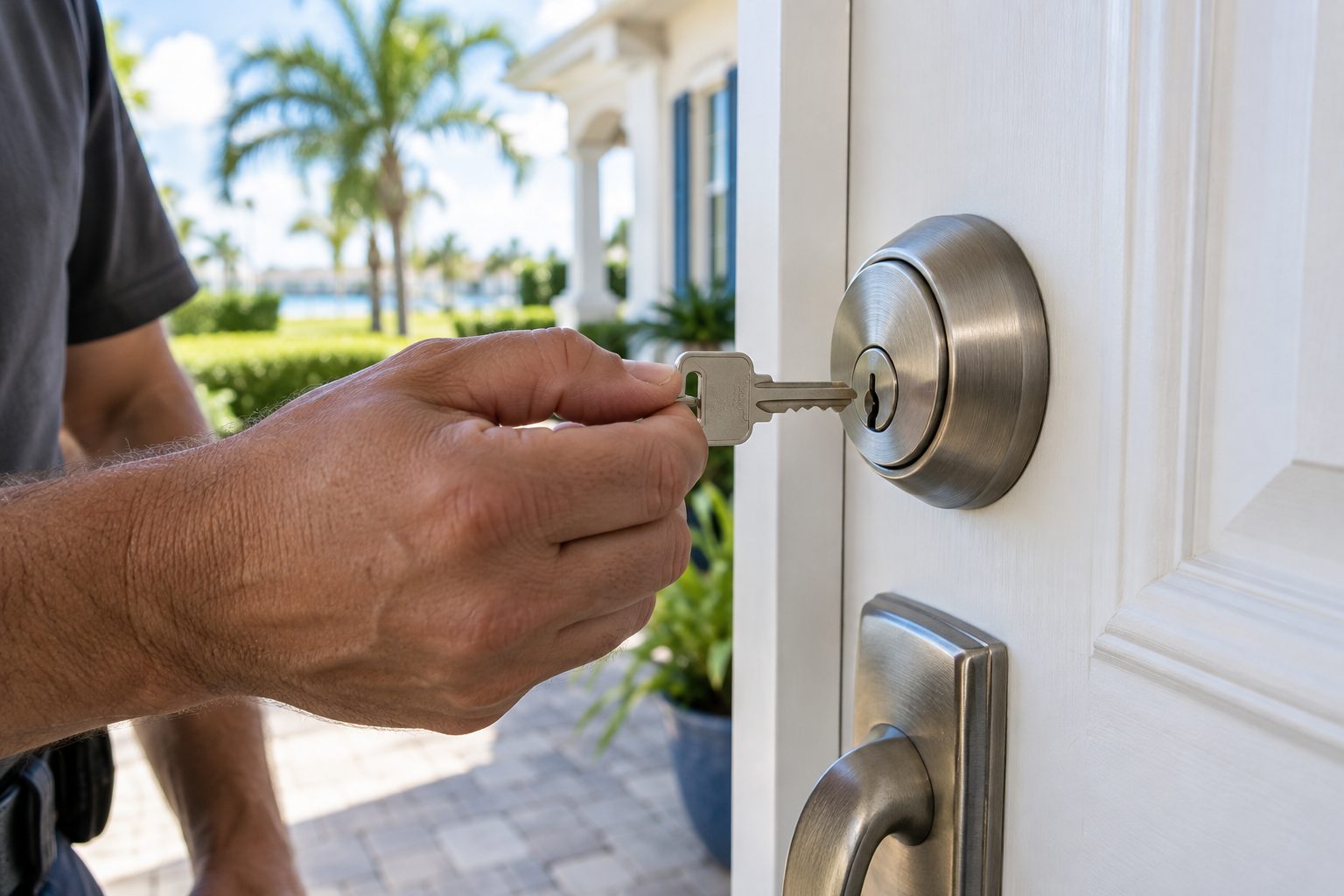
Rekeying changes the internal pins of your existing lock so that old keys no longer work. The lock itself stays on the door and looks the same, but it now responds only to new keys. A technician can usually rekey a standard residential lock on site in a short visit, and cut new keys for you before leaving.
Because the hardware stays, rekeying is often the quickest and most practical option. It works for deadbolts, knob and lever locks, and most common cylinders. You can ask for all your exterior locks to be keyed to the same new key, so you carry one key instead of several. Our lock rekeying page explains the process in more detail.
Replacement is a different path. If a lock is old, damaged or low quality, or if you want a stronger deadbolt, a keypad or a smart lock, replacing the hardware may be the better choice. A new lock also removes any worry about older internal parts. The rekey vs replace guide helps you decide. For most people leaving a relationship, rekeying is the first step, and upgrades can follow.
A thorough job looks at all access points. The front door is the obvious one, but the back door, a sliding glass door lock, a garage entry door, a side gate, a pool gate and a storage shed can all be reached with keys that an ex-partner may hold. A garage door opener remote and a keypad number are also forms of access, and they are easy to forget.
Think through every item that grants entry. House keys, car keys, mailbox keys, an apartment building fob or gate card, a lockbox combination, a smart lock PIN, a garage keypad number and a spare key hidden outside all count. A hidden spare under a mat or in a flowerpot may be known to more people than you realize. Move it or remove it.
Electronic access needs attention too. If your door has a keypad or smart lock, delete old users and change the PIN. If the lock connects to an app, change the account password, review who has access and remove old devices. A shared home account with a streaming, security camera or smart home platform is another quiet way that a former partner can retain visibility. Our digital lock PIN best practices guide covers sensible habits.
If you share a vehicle or if a former partner has a key to yours, consider that too. A car key with a transponder chip can be reprogrammed so that old keys no longer start the engine, and the process depends on the vehicle. A locksmith can often delete lost or unwanted keys from the car's memory, and program new ones. See key programming for how that works.
In an apartment or condominium, you may control only your own door. Building entrances, gates, mailbox keys and amenity access are usually run by the management or association. Contact them and explain that you need a fob or key deactivated. They may ask for some proof of residence, but they are used to the request. If you rent, review your lease and ask your landlord about rekeying before you change any hardware yourself, since some leases require permission.
For a home that you own, the process is simpler. You can choose hardware, schedule a time and control every lock. The condo and highrise lock guide explains what is usually yours to change and what belongs to the building.
Once the keys are handled, think about whether the door itself is as secure as it should be. A deadbolt is only as strong as the frame it throws into. A short strike plate screwed into thin trim can fail with a firm kick, and a loose hinge side can allow the door to be forced. Reinforcing the strike plate with long screws that reach the wall framing is one of the most effective upgrades.
Consider adding a deadbolt where there is none, or upgrading to a higher grade if yours is basic. Doors with glass nearby, such as sidelights, narrow panes or sliding doors, deserve extra attention, because a reachable thumb turn can be a weakness. A keyed deadbolt on the inside is sometimes a better choice in that case, though it is a decision to weigh against fire exit needs. Our deadbolt installation and repair page explains the options.
Lighting, a doorbell camera and trimmed shrubs near windows add layers that discourage unwanted visits. None of these replace good locks, but together they make a home harder to approach unnoticed. The home security checklist for Florida offers a broader list.
Write down which locks you want changed and who currently holds keys, so you can brief the locksmith clearly. Keep your phone charged and let a trusted friend or relative know when the visit is scheduled. If you prefer, ask someone to be present during the appointment. A locksmith is a stranger entering your home, and having a friend there can help you feel at ease.
Be ready to show that you live at the address, such as with an ID, a lease, a utility bill or a mail item. This is a normal part of responsible service, and it protects you, since it prevents someone else from posing as a resident to have locks changed. If you rent, expect questions about whether your landlord has agreed.
Keep records. Note the date of the lock change and keep the invoice. If you later need to show a court, an advocate or the police that you took steps to secure your home, those records help. If a protective order is in place or being sought, tell your advocate or lawyer about the lock change. They may suggest additional steps. Our locksmiths cannot give legal advice, but we can document the work done.
If you receive messages or visits that worry you after the change, keep them and share them with the police or an advocate. Do not respond if you feel unsafe.
When you call, you can say plainly what you need: your ex-partner has keys and you want your locks changed. You do not need to explain more than you want to. We will ask for the address, the number of exterior doors, the lock types if you know them and whether any locks are damaged. We will also ask what else, such as a keypad or a gate, you want included.
On arrival, the technician confirms who they are speaking with, checks the locks and explains the plan. Rekeying standard locks is typically a short job. The technician tests the new keys, hands them over and can advise on any weaknesses they notice in the door or frame. You decide what to add.
Quotes are given by phone. Simple rekeys can be described over the phone, while damaged hardware or complicated systems may need a visit first. A service call charge applies for dispatch, and we explain it on the phone before anyone is sent. The phone quote guide explains more.
If you are ready to take back control of your home, call and tell us what you need. We will listen, explain your options and help you secure your doors.
After the locks are changed, a few habits help the new setup stay secure. Keep the new keys on a ring you control, and avoid handing out copies casually. If a friend, family member or neighbor needs access, make a deliberate choice about who gets a key and note it down. For a keypad lock, give each person their own PIN instead of sharing one, so you can remove a single person later without changing everything.
Check the small things that quietly keep old access alive. Look for an old spare key in a drawer, a car glove box or a hide-a-key outside, and retire it. Update the passwords on any shared accounts tied to your home, such as a smart lock app, camera system, garage app or home hub. If a mail forwarding or delivery arrangement used the old household, update it as well.
Notice how you feel in the days after. Many people experience relief, and some feel uneasy for a while. Both are normal. If the unease continues, or if the other person contacts you in ways that worry you, talk to an advocate or the police, and keep a record of what happens. A lock is one layer in a wider plan, and the other layers are people who support you.
Rekeying makes all old keys useless, so a key held by an ex-partner or anyone else will no longer open those locks. It does not stop forced entry, so a strong door, frame and deadbolt matter too. If you feel unsafe, contact the police or a domestic violence advocate.
Rekeying is usually quickest and keeps the existing hardware. Replace locks that are worn or damaged, or when you want a keypad, a smart lock or a stronger deadbolt. A technician can look at your locks and explain which is better for your door.
That depends on your situation, any shared lease or ownership, and any legal orders in place. If you are unsure, talk to an advocate or a lawyer. If you rent, check your lease and speak with your landlord before changing hardware.
They are access points too. Garage keypad numbers can be changed, fobs can be deactivated by the property manager, and car keys can often be reprogrammed so old keys no longer start the engine. A locksmith can advise on the car and the locks.
Yes, and many people find it reassuring. The locksmith will check identity and proof that you live at the address, then explain the work. You can have someone with you while the locks are changed and the new keys are tested.
Call 911 in an emergency. For confidential support, the National Domestic Violence Hotline is available at any hour by phone and online chat, and local advocates can help with safety planning. A lock change is one step, not a replacement for safety planning.
Describe the situation by phone and we will tell you what the job involves. Quotes are given by phone. Jobs that cannot be quoted without seeing them need a technician on site, and the service call charge is explained on the phone before anyone is dispatched.
The first day after a relationship ends can be emotional, and practical steps help keep you steady. If you feel unsafe, contact emergency services or a local support organization before anything else. Once you are safe, make a short list of every place the other person could enter: the front and back doors, garage, gates, windows with locks, storage areas, mailbox and any vehicle they used. Writing the list helps ensure nothing is missed when you arrange a lock change, and it makes the conversation with us clearer.
Think about who else has access. Family members, neighbors, friends and a cleaner may all hold keys that the ex-partner could ask for or borrow. Decide who truly needs a key going forward, and plan to receive new ones in a controlled way. Avoid sending photos of new keys or codes in group messages. If you share the home with others, agree in advance on how the new keys will be distributed so that the change does not create fresh confusion about who is allowed in. Keep any old keys, receipts or notes together in one place so the next decision is easier to make.
Gather what you can without confrontation. Collect any spare keys you find, check where you keep the extras and note any codes that were shared, like garage keypads or smart lock codes. Do not rush into an argument over keys or property if it could escalate. A calm, documented approach protects you. When you call us, explain the situation in plain terms. The scope and quote are explained before work begins, and our focus is on making your home secure again in a practical, respectful manner. Ask questions whenever a term or a recommendation is unclear, and expect a plain answer in return.
After the locks are changed, the aim is to keep control without constant worry. Keep a simple record of every key and code that exists, who holds it and when it was issued. If you use a keypad or smart lock, change codes regularly and remove any that are no longer needed. Avoid reusing codes tied to birthdays or addresses that someone close to you could guess. Treat the system as something you maintain, not something you set once and forget. Local weather and daily use both play a part, so think about how your own routine affects the hardware involved.
Consider the broader picture of your home. Good exterior lighting, a solid strike plate, secured sliding doors and trimmed shrubs near windows all reduce opportunity. These measures do not replace new locks, but they work alongside them. Check that your garage door opener code has been changed and that any vehicle keys the other person used are accounted for. If a car is shared or financed jointly, discuss its keys separately, since ownership questions can complicate that. It helps to share this information with everyone in the household or workplace who might be affected by the outcome.
Allow yourself to revisit the plan. If circumstances change, such as a new roommate, a returning family member or a decision to sell, review who has access again. Call us if anything feels uncertain, and describe what you need. We explain the scope and quote before work begins so you never have to guess. Over time, a clear record and a few steady habits make it easier to feel at ease in your own home. Write down what you notice as you go, because small details are easy to forget once the situation is resolved.