Good home security is mostly a matter of covering the basics consistently. This checklist walks through the doors, windows, sliding glass, garage, lighting and daily habits that matter most for Florida homes, with notes on humidity, storms and the way many of us live with doors open.
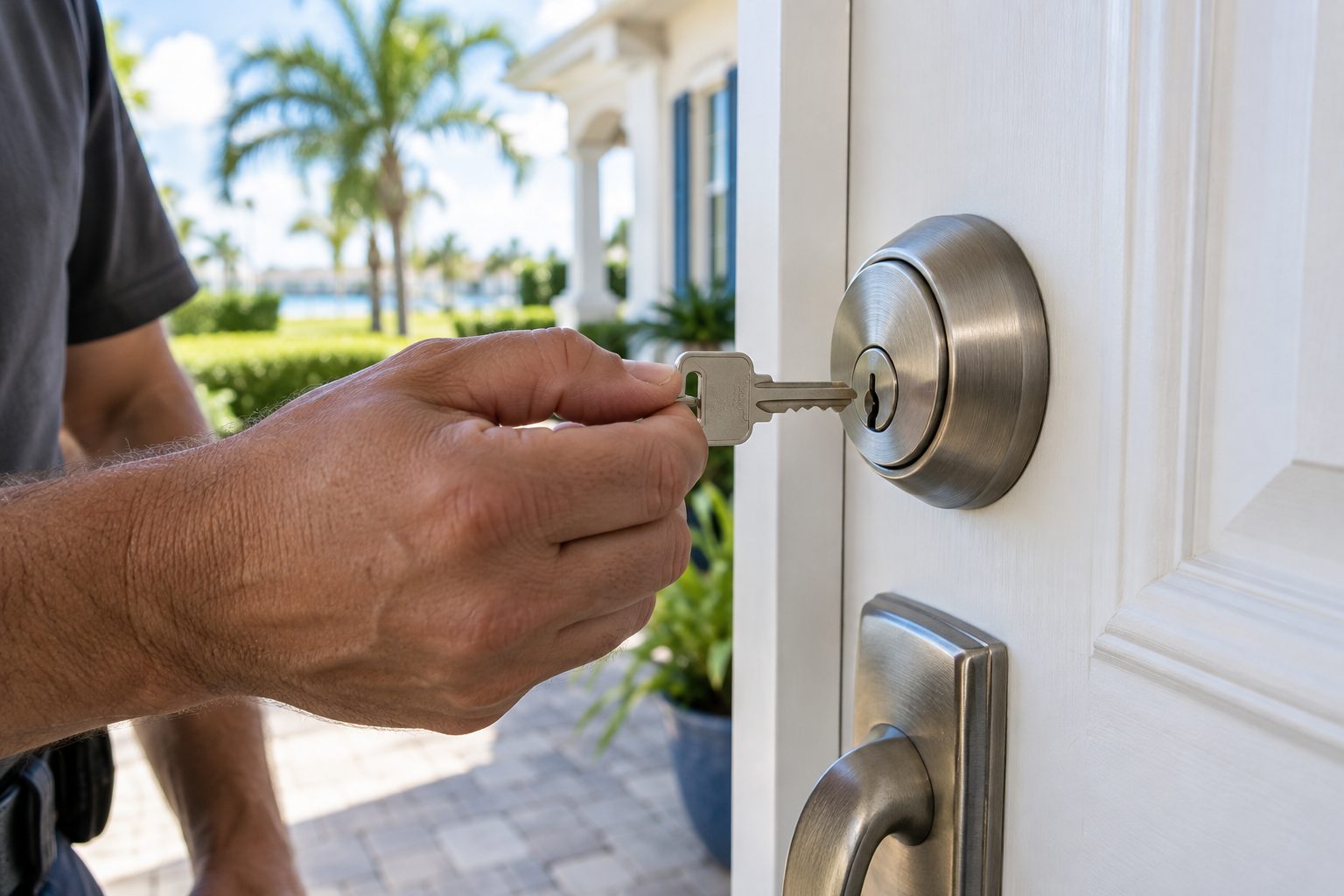
Walk through your home with a notepad or your phone and treat each item as a question. Do not worry about fixing everything at once. The purpose is to find the weakest points, since those are where a small investment of time or money does the most good. Mark each item as fine, needs attention or not applicable.
A useful way to work is from the outside in. Start with the approach to the house, then the doors, windows, garage and finally the interior routines. This mirrors how an opportunistic intruder would look at a property: what is visible, what is easy, and what is unobserved.
Florida homes have particular characteristics. Many have sliding glass doors, large windows, screened lanais, attached garages and doors that see heavy humidity and sun. Homes also change hands and tenants frequently, and many residents travel or spend part of the year elsewhere. The checklist below reflects those realities without assuming any particular neighborhood.
Start at the street. Can neighbors and passersby see your front door and the sides of the house? Visibility is a simple deterrent. Overgrown shrubs near windows and doors can hide activity, so keep bushes trimmed below window height and branches lifted away from the roofline and upper windows.
Lighting matters too. Exterior lights at the front, back and side entrances help you see and be seen. Motion-activated lights are useful at side yards and rear doors, while a steady porch light at the front is welcoming and visible. Check that fixtures are working and bulbs are replaced, since a burned-out bulb is an easy item to miss.
Look at what is visible from outside. Packages left on the porch, a full mailbox, newspapers piling up or valuables visible through windows signal that no one is paying attention. A simple routine of collecting deliveries and keeping valuables out of sight removes easy cues.
Every exterior door deserves the same attention, including the back door and the door from the garage into the house, which people often overlook. Check that each door is solid core or metal, fits snugly in its frame and has no rot, splits or gaps. Humidity and rain can cause wood doors and frames to swell, warp or soften, which affects both fit and strength.
Look at the lock. A quality deadbolt, installed correctly, is the baseline for exterior doors. It should extend fully into the frame, turn smoothly and be paired with a latching knob or lever. If the bolt drags or the key sticks, the cause may be a misaligned door or a worn lock, and it deserves attention.
Reinforce the connection to the frame. Replace the short screws in the strike plate and hinges with longer ones that reach the wall stud, and consider a reinforced strike plate. Check hinge pins on outward-opening doors. Test the door by pushing it firmly while locked, and look for flex or movement that suggests a weak frame.
Sliding glass doors are extremely common in Florida and are often the weakest entry point in a home. The factory latch is typically a small hook that can loosen over time, and the door can sometimes be lifted from its track if not secured. Many are also left unlocked because the latch is awkward.
Add a secondary measure. A bar or rod in the track prevents the door from sliding open even if the latch fails. A pin or secondary lock that holds the door to the frame adds another layer. Check that the door rides smoothly on its track, since a door that is difficult to close tends to be left unlocked. Clean and lubricate the track regularly, especially in humid or dusty conditions.
Consider the glass itself. Laminated glass or protective film increases resistance and also helps in storms. Make sure that curtains or blinds do not give a perfect view of valuables inside. For lanai or screened enclosures, remember that screens are not a security barrier, and that the door inside the screen should be secured as an exterior door.
Walk around the house and test every accessible window. Latches should engage fully and hold the sashes tightly. In humid climates, hardware can corrode or stick, and window frames can swell. A latch that is hard to use tends to be left open, so repair or replace stiff hardware.
Screens are not security devices, but they matter for comfort, and a cut screen is a sign of attempted entry. Consider additional protection for ground-floor windows, particularly those hidden from the street. Stops that limit how far a window can open let you have ventilation without full access, which is useful in a warm climate where many people like to keep windows ajar.
Storm preparation overlaps with security. Impact-rated windows, shutters or panels protect against wind and debris and also add a layer against intrusion. If you use shutters, check that they operate and that the hardware is in good condition well before hurricane season. Our guide on door and lock preparation for hurricane season goes into this in more detail.
In many Florida homes, the garage is the most-used entrance and the least-secured. Check the interior door that connects the garage to the house. It should be solid, have a deadbolt and be locked when you are not actively using it. A weak interior door undermines the whole system, since someone who gets into the garage can work on it unobserved.
Examine the garage door itself and its opener. Keep the remote out of parked cars when possible, since a car broken into can yield access to the garage. Consider changing the opener code if you have bought a home with an older system or lost a remote. Many modern openers use rolling codes, which make this easier, but check the manufacturer instructions.
Do not leave the door up while you are out in the yard, and do not leave garage doors open overnight. Lock side doors and windows in the garage. Do not store ladders and tools where they can help someone reach upper windows. Be careful when working on garage doors: springs are under high tension and repairs should be left to professionals.
Think about how many keys exist to your home and who holds them. The most common weaknesses are simple: a spare key hidden under a mat, in a planter or in a fake rock, a key left with a contractor for too long, or a smart lock code that nobody ever changes. Intruders know the usual hiding places.
Give a spare to a trusted person instead of hiding one outside. If you use a keypad or smart lock, change codes when workers, guests or tenants leave, and avoid obvious combinations. If you moved into a home, consider rekeying all exterior locks so that former owners, builders and agents no longer have working keys.
Keep a simple record of who has keys. For rental or shared homes, rekeying between occupants keeps control clear. If a key is lost, treat it seriously, especially if it has an identifying tag or address. Our guides on spare key storage and digital lock codes provide more details.
| Item | Better practice | Common weakness |
|---|---|---|
| Spare key | Held by a trusted person | Hidden under a mat or in a planter |
| Keypad or smart lock codes | Changed when access ends, not obvious | Never changed, birthdays used |
| Contractor keys | Returned or rekeyed after the job | Left in circulation |
| After a move | Rekey exterior locks | Assume the old keys are accounted for |
| Lost key | Consider rekeying | Hope it is never found |
Cameras, doorbell cameras and alarm systems can help, but they work best on top of a solid physical base. A camera that records a break-in does not stop a weak door from being forced. Think of technology as a deterrent and an aid to response, not a replacement for good locks.
If you add cameras, place them at entrances with a clear view and make sure they are secure and not easy to reach. Check that recordings are stored safely and that passwords are strong and not shared. For alarms, test them regularly, make sure everyone in the household knows how to use them, and keep contact details updated.
Be careful with claims. No system guarantees protection, and no product can replace attentive habits. Choose what suits your home and budget, and be skeptical of anyone selling fear. A modest setup that you use consistently is more valuable than an elaborate one that you ignore.
The simplest security improvement is a habit. Lock doors when you leave and when you go to bed, even if you are only stepping out for a moment. Many incidents involve unlocked doors and open garage doors. Make locking automatic and give everyone in the household the same routine.
Be careful with information. Avoid announcing travel plans publicly in advance. Do not leave notes on the door saying you are out. When you travel, ask a neighbor to collect mail and packages, use timers on a few lights, and consider a house-sitter or trusted visitor. If you spend part of the year elsewhere, arrange regular checks on the property.
Know your neighbors. Being familiar with the people around you makes it easier to notice what is unusual and to look out for each other. If you see something that looks wrong, such as someone tampering with doors or windows, contact the appropriate authorities and avoid confrontation. If anyone is in immediate danger, call 911.
Hurricane season changes priorities. Before storms, secure outdoor items, check shutters, and make sure doors close and latch properly, since a door that fails in wind can lead to damage and exposure. After a storm, inspect doors, locks and frames for damage, since swollen wood or shifted frames can leave locks that no longer line up.
Humidity and heat affect hardware year-round. Check locks and hinges for corrosion, and lubricate moving parts sparingly. Watch for doors that stick in summer and gape in winter, as seasonal movement can affect strike alignment. If a lock begins to feel rough, address it before it fails.
For seasonal residents, set up a routine for leaving and returning. Our snowbird checklist covers this in detail. Make sure someone has a way to enter in an emergency, that locks are in good order before you go, and that you know who to call if something goes wrong while you are away.
After your walk-through, group the items into three lists: things you can fix today, things to do this month and things that need a professional. Today items might include trimming shrubs, replacing bulbs, installing a track bar on a sliding door and building a locking routine. This month items might include rekeying, adding longer strike plate screws or replacing a stiff window latch.
Professional items might include replacing worn deadbolts, reinforcing frames, installing a keypad or smart lock, or addressing a garage entry door. A locksmith can look at your doors, test locks and advise on what is worth doing and in what order. Remember that we do not give quotes on web pages. Quotes are given by phone after you describe your needs, and complicated jobs may need an on-site visit, with the service call charge explained before dispatch.
Revisit the checklist each year, or after any change such as a move, a new tenant, a key loss or a storm. When you are ready to talk through your doors, call and describe what you have and what concerns you most, and we will explain what your options and the next steps would be.
Securing all exterior doors consistently, including the back door, the garage entry and sliding glass doors. That means solid doors, sound frames, quality deadbolts with long screws in the strike plate, and a habit of locking up. These basics address the most common routes of entry.
Add a secondary measure to the factory latch, such as a bar or rod in the track and a pin or secondary lock. Keep the track clean so the door slides smoothly and gets locked. Consider laminated glass or protective film. A locksmith can recommend hardware that suits your door.
It is a good practice, since you cannot know how many keys exist from past owners, builders, agents and contractors. Rekeying exterior locks gives you a clean start and often lets you use one key for several doors. If any lock is worn, replacement may be a better choice for that door.
They help as a deterrent and for response, but they work best on top of strong doors, frames and locks. A camera that records an entry does not stop a weak door from being forced. Choose technology that suits your home and use it consistently, and keep passwords secure.
Moisture can corrode hardware, swell wood doors and frames and cause stiffness or misalignment. A lock that sticks or a door that no longer lines up with its strike deserves attention. Light, suitable lubrication and periodic inspection help. A locksmith can inspect worn hardware and advise on repair or replacement.
Lock all doors and windows, secure the garage, and arrange for mail and packages to be collected. Use timers on a few lights, avoid announcing plans publicly, and give a trusted person a way to enter. Check that locks and hardware are in good order before you leave.
Describe the situation by phone and we will tell you what the job involves. Quotes are given by phone. Jobs that cannot be quoted without seeing them need a technician on site, and the service call charge is explained on the phone before anyone is dispatched.