A break-in leaves a house feeling unsafe and a door that may not close properly. The order of events matters: make sure everyone is safe, report it to the police, document the damage, and only then repair and rekey. This page walks through those steps and what a locksmith does.
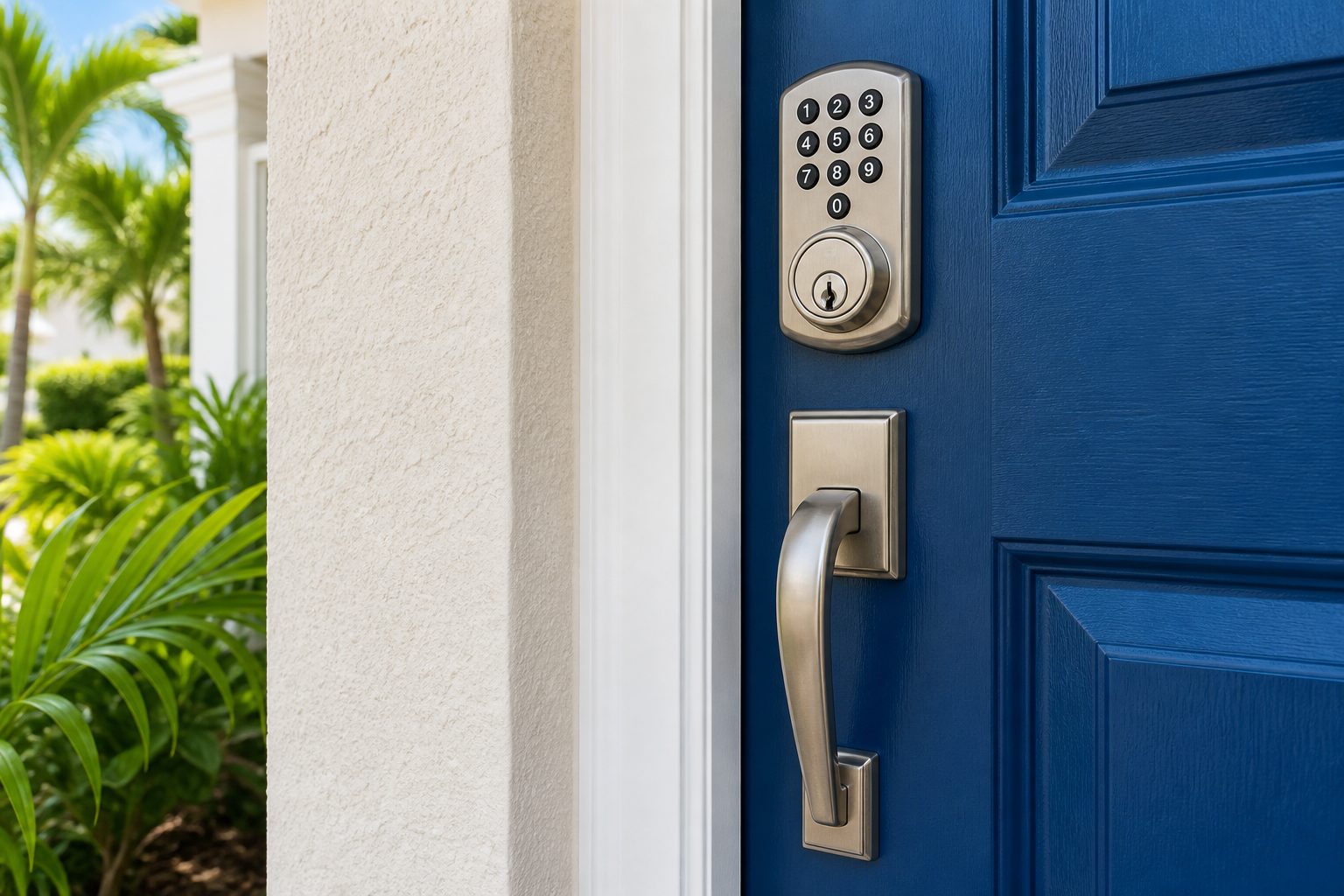
If you arrive home and find signs of forced entry, such as a broken door, a smashed window, a door standing open or items scattered, do not go inside. Someone could still be in the building. Move to a safe place, such as a neighbor's home or your car, and call 911. Let officers clear the property before you enter. Nothing inside is worth the risk of confronting an intruder.
If you were home and heard or saw something, the same applies. Get to a safe room, lock the door if you can, and call 911 quietly. Give the dispatcher your address and describe what you know. Stay on the line if you can. A locksmith can wait; the people in your home cannot.
Once the police have cleared the property and taken a report, you can begin thinking about the doors. The report number matters for insurance and for any later investigation, so write it down. Ask the officer whether they need any evidence from the door or lock left untouched, such as pry marks, a broken pane or a dropped tool. If so, wait for their go-ahead before changing hardware.
The temptation after a break-in is to tidy up. Resist it for a little while. Surfaces that were touched, doors that were forced and tools that were left behind can matter to the investigation. Take photographs of the damage from several angles before anything is moved, including the lock, the strike plate, the frame, the glass and any marks on the door edge.
Do not repair or replace the damaged lock until you are sure the police are finished with the scene. If you need to secure the door urgently, tell the officer so, and ask what is acceptable. In many cases they will say that it is fine to secure the opening once photographs are taken. A locksmith can often secure the door in a way that preserves the evidence, such as by installing new hardware around the damage rather than removing a broken part that the police want to keep.
Make a list of what was taken or disturbed, but do not search every room before the officers arrive. Keep receipts, serial numbers and photographs of high-value items where you can find them for the insurance claim. The car stolen with keys guide covers a related situation when the keys themselves were taken.
Understanding the common methods helps you decide what to fix. Many forced entries are not clever at all. A hard kick or shoulder against a door often defeats a weak strike plate, splits the door frame around the deadbolt and swings the door open. Short screws holding a strike plate to thin trim give way under a single heavy impact.
Others use leverage. A pry bar between the door and the frame can spring a latch, bend a bolt or crack the jamb. Glass near the lock is another weakness, since someone can break a pane, reach through and turn a thumb turn. Sliding glass doors can be lifted off their tracks or have a weak latch forced. Windows with simple catches are easy to open from outside.
Locks themselves can be attacked, but most break-ins exploit the door and frame instead. That means that replacing a damaged lock with the same weak setup may leave you where you started. Strengthening the strike plate, the frame and the door edge matters as much as the lock. Our door frame and hinge security guide explains the weak points, and strike plate reinforcement describes the repair.
After a forced entry, look at three layers. The lock itself may be bent, cracked or missing parts. The door may be split near the lock or have a damaged edge. The frame, including the jamb and the strike area, may be splintered. All three affect whether the door will close, latch and hold.
A locksmith will begin by checking how the door closes and what the latch and bolt do. They look at screw holes that have been torn out, a strike plate that has been bent or pulled away, and cracks that run along the grain of the wood. A door that appears to work may still be weakened, and a cracked frame may fail at the next impact.
Repair options depend on what is found. A modest split can be reinforced with a metal plate, a wrapped-around reinforcement kit or a patch with wood filler and new screws. A heavily damaged frame may need a section replaced, which can be a carpenter's work. If the door slab itself is cracked or the lock bore is torn out, replacement of the door may be the sensible route. The technician will explain what is within a locksmith's scope and when a carpenter or door company is the better call.
Sometimes a door cannot be fully repaired the same day, because parts must be ordered, a carpenter is needed or the police have not finished. In that case, a temporary measure keeps the opening closed and reasonably secure. A technician may fit a temporary hasp, a surface bolt, a security bar or a board across the opening, depending on the damage.
These are stopgaps and they should be treated that way. A temporary bolt on a split frame is better than an open door, but it is not a long-term answer. Ask what the technician recommends for the interim and when the permanent repair should be done. If you must leave the property, consider asking a trusted friend or neighbor to look in, and talk to the police about whether patrols can be requested.
If a window was broken, board it or fit a temporary panel the same day, since an open window is an invitation to return. Boarding is often handled by a glass company or a handyman, and a locksmith may be able to advise on locks for the repaired window. See window lock repair for what can be done with latches. A broken pane in a door near the lock needs extra care, because the opening can allow reaching through to the thumb turn.
If keys were stolen, or if there is any chance an intruder found, copied or photographed your keys, rekeying is the safest response. A burglar who takes a purse, a wallet, a bag or a key hook may leave with the means to return. Rekeying makes those keys useless without needing to replace every lock.
Even when no keys were taken, there is a case for rekeying. You may have lost track of old copies given to contractors, cleaners, relatives or past tenants. The break-in is a natural moment to reset the whole system and start fresh. Having one set of new keys that you control is a calm way to restore confidence. See lock change after a break-in for the service in detail.
Remember that car keys and garage openers can be at risk too. If car keys or a garage remote were taken, the car and the house are both exposed, because a garage remote and the registration in a vehicle can reveal where you live. Disable or reprogram stolen remotes, and have the car's keys changed if needed. Our key programming page explains how a vehicle can be set to ignore lost keys.
Once the immediate repair is done, think about improvements that make a repeat harder. A deadbolt with a solid bolt and a reinforced strike plate, fixed with long screws into the framing, stands up much better to force than a basic latch. A longer strike plate reaches deeper into the frame and spreads the load. Hinge-side screws that reach the wall studs help the door resist being pushed in at the hinges.
Consider the door itself. Hollow-core doors and thin entry doors are easier to damage than solid or reinforced ones. Sidelights and glass inserts near the lock can be fitted with laminated glass or a security film, or covered with a keyed deadbolt that cannot be reached by someone breaking the pane. Sliding doors benefit from a secondary lock and a track bar. The sliding patio door locks page explains the options.
Lighting and visibility also deter. Motion lighting near entries, trimmed bushes under windows, and cameras or doorbell cameras where they can be seen all contribute. None of these makes a home impossible to enter, but together they raise the effort and the risk for a would-be intruder. The home security checklist for Florida offers a fuller list.
Contact your insurance company promptly and ask what they need. Many insurers want a police report number, photographs of the damage, a list of missing items and receipts or proofs of ownership. They may also ask for invoices for emergency repairs. Keep every receipt, including the locksmith's invoice, and note the date and time of each step.
Ask your insurer whether they have requirements before repairs begin, and whether there are approved vendors. In most cases securing the property to prevent further loss is expected and permitted. Do not assume what your policy covers, since policies differ. A locksmith can document the work and the condition found, and can provide a clear invoice, but cannot decide coverage.
If you rent, notify your landlord or property manager right away. They may have their own procedure and their own insurance. The landlord lock responsibilities guide explains what is usually expected of a property owner. If you share a building, tell neighbors and management, since the same person may try other doors.
When you call, tell us what happened in plain terms: which door was forced, whether it closes, whether the police have been and whether keys were taken. We will ask about the damage, the lock type and whether the door can be secured right now. We do not promise arrival times, since availability varies, but we will tell you what is practical.
On arrival, the technician confirms the situation and inspects the door, lock, strike plate and frame. They explain what is damaged and what options exist, from a temporary securing to a rekey and reinforcement. They will tell you if a carpenter or door company would do better on part of the job. Once you agree on a plan, the work begins and the technician tests the finished door before leaving.
Quotes are given by phone. Complicated jobs may need an on-site visit first, and a service call charge applies, explained before dispatch. The phone quote guide covers the process.
After a burglary, you deserve a door that closes and locks reliably. Once the police have what they need, call, and we will help you get the opening secure and decide what to strengthen.
The weeks after a burglary can feel unsettled even once the door is fixed. Many people notice that they check locks repeatedly, hear every noise at night and feel uneasy returning to an empty house. That reaction is common and usually eases with time and with practical steps that restore a sense of control. Walk the property with someone you trust, look at each door and window and note anything that still worries you.
Tell your neighbors, if you are comfortable doing so. Neighbors who know about a break-in tend to notice unusual activity, and neighborhood groups can share information with the police. Vary your routines when you can, keep a light on a timer when you are out and avoid advertising an empty house on social media while you travel.
Revisit the list of weak points every few months. Check that strike plate screws are still tight, that the deadbolt throws fully, that sliding door bars are in place and that your security lights still work. A fresh look keeps small gaps from growing, and a call to a locksmith for a quick review of the entries is a sensible habit after any security scare.
The police first. If you suspect someone is inside, stay out, move to safety and call 911. Once officers have cleared the property and taken a report, you can arrange to secure the door. Ask them if any damaged hardware should be kept as evidence.
Wait until the police have finished and photographs are taken. Pry marks and broken parts can matter to an investigation. Ask the officer when it is fine to secure the door. A locksmith can often secure the opening in a way that preserves evidence.
It is not always required, but many people choose to. A break-in is a good moment to reset keys that may have been copied or given out over time. If keys were taken, rekeying is strongly advisable, since it makes those keys useless.
Modest damage can often be reinforced with metal plates and longer screws. A badly splintered frame may need carpentry. The technician will tell you what is within a locksmith's scope and when to involve a carpenter or door company.
A technician can fit a temporary bolt, hasp or bar to keep the opening closed until permanent repair. It is a stopgap, so ask when the full repair should happen. A broken window needs boarding too, since an open pane invites a return visit.
That depends on your policy, and a locksmith cannot decide it. Call your insurer promptly, ask what they require and keep the police report number, photographs and invoices. Securing the property to prevent further loss is generally expected.
Describe the situation by phone and we will tell you what the job involves. Quotes are given by phone. Jobs that cannot be quoted without seeing them need a technician on site, and the service call charge is explained on the phone before anyone is dispatched.
After a burglary, the first practical question is usually whether anyone still holds a way in. Keys may have been taken, a door may have been forced, or a lock may look fine but have been picked or tampered with. Please contact the police and your insurance company first, and avoid cleaning or touching the entry point until officers have looked at it. Once they have finished, call us and describe what happened. We ask which doors and windows were involved, whether keys, garage remotes or access cards went missing, and whether the home is currently being left unlocked or occupied.
On site, the work follows a plain order. A technician inspects every exterior door, the strike plates, the frames and any sliding or garage entrances, looking for splintered wood, bent latches and loose screws. Damaged hardware is replaced or reinforced, and any lock that may have been compromised is rekeyed or swapped so that old keys no longer work. If a frame is cracked, a temporary board or brace can hold the door closed until a carpenter repairs the wood. We explain each option, what it protects against, and its limits before anything is changed, so you stay in charge of the decisions.
Expect to feel unsettled for a few days, and use that energy on a short checklist. Gather every key, fob and remote that you still have so we can count what is missing. Take photos of the damage before repairs for your records. Think about who else has access, such as cleaners, relatives, tenants or contractors, and whether they should receive new keys. Ask us about adding a deadbolt with a longer throw bolt, a reinforced strike plate with long screws, or a lock for a vulnerable slider. Small changes made together often close the gaps that mattered most, and we can sort them by importance.