Finding an empty parking space is a shock. If your keys, garage remote or papers with your address were in the car, the problem is bigger than the vehicle. This guide gives the order to work in: report first, protect the house, then sort out replacement keys and the car's electronics.
Before anything else, rule out the ordinary explanations. Orlando has large parking garages, theme park lots, hotel lots and apartment complexes where it is easy to forget the level or the row. Cars are also towed from private lots, and a vehicle moved by a tow company is not stolen. Look around the area, check any signs about towing, and if you are in a private lot, call the property manager or the posted tow number to ask. A quick check can save a lot of worry.
If you are sure the car is gone, and especially if you saw someone take it, were threatened or are in an unsafe place, move to safety and call 911. Do not try to chase or confront anyone. A vehicle can be replaced, and you cannot. If you are in a quiet or dark place, go to a lit, busy spot such as a store before you make calls.
Take a breath and write things down as you go. In the next hour you will be asked for details by the police, by your insurer and possibly by a rental or ride company. A short written timeline, with the time you last saw the car, where it was parked, what was inside and who has keys, will make every call easier. Keep this as a note on your phone or on paper, and add to it as you learn more.
Report the theft to the police as soon as you are sure. Use the number your local department gives for non-emergency reports unless the theft is in progress or you are in danger, in which case use 911. Give the make, model, color, year, license plate number and the vehicle identification number if you have it. The identification number is on your registration, your insurance card and often in your insurer's app. If you do not have it with you, your insurer or the lender can supply it.
Describe anything distinctive: stickers, damage, aftermarket parts, a tracker or app that shows location. If your car has a connected service that can locate it, tell the officer, and follow their advice about what to do with that information. Do not go to a location yourself to recover the car. Let the police handle it.
Ask for a report number and keep it. Most insurers and lenders will want it. Also ask what happens if the car is found, and how you will be told. If you later learn something new, such as the car appearing on a street camera or a neighbor remembering something, pass it on and ask that it be added to the report. A police report is also often needed to cancel certain registrations or tolls, and to support later claims.
This is the step people tend to postpone, and it is the one a locksmith can help with. List everything that was inside the vehicle, particularly anything that connects to your home or other property. House keys on the same ring as the car key. A garage door remote clipped to the visor. A parking pass or gate remote for an apartment community. Mail, registration papers, insurance cards or a toll device showing your address. A spare key hidden in the glove box or console.
If any of these were in the car, assume that whoever has the car may know where you live and may have a way in. That is not a prediction that something will happen. It is a precaution. The key point is that the cost of acting is small compared with the cost of being wrong. Change what can be changed, today if possible.
Also consider digital items: a phone mount that left your phone in the car, a laptop bag, a smart home app that stays signed in on a tablet, a connected-car account. If a device was in the car, change passwords, sign out of accounts from another device and use the tracking features to lock or locate it. Ask your mobile provider or the maker about what to do. Do these in addition to the lock work, not instead of it.
If a house key was in the car, the safest move is to rekey the locks on every door that key fits. Rekeying changes the internal pins so that the stolen key no longer opens the lock, and you receive new keys that do. It is usually faster than replacing hardware, and leaves your locks and doors as they are. We explain the process on our rekeying page.
Do this soon. If the thief also has your address, the window of risk is the time between the theft and the day the locks are changed. Many people find they can arrange a visit quickly by phone, and that it is worth doing even if it is late in the evening and they are tired. If you cannot get a technician right away, there are short-term steps: lock every door, use a deadbolt, add a chair under the handle for the night if you feel uneasy, make sure windows are shut and tell a neighbor you trust. Do not stay somewhere you feel unsafe.
Consider the extent of the key ring. If the ring had keys to a business, a second home, a storage unit, a mailbox or a relative's house, each of those may need attention too. Notify the people responsible, and ask them to change or rekey as appropriate. For businesses, our pages on business lock rekeying and key control policies may help. And if a garage remote was in the car, reset the opener so the stolen remote no longer works. Read more in our guide on securing the garage entry.
Contact your insurance company as soon as you have the police report number. Theft coverage depends on your policy, and the insurer will explain what is covered, what documents they need, and how a rental car or other help works under your plan. Ask them to list what they need from you, and write it down. Be accurate and consistent about what was in the car and how the keys were handled.
If the car is financed or leased, tell the lender or leasing company as well. They have an interest in the vehicle and will want to know. Ask whether any of your payments or obligations change during the investigation.
Insurers often ask whether the keys were in the car, whether the car was locked, and how many keys you have. Answer honestly. If you have a spare key, be ready to show or hand it over, since insurers sometimes ask to see all keys that exist for the vehicle. Keep any receipts for rekeying and key replacement, because some policies cover part of those costs, and others do not. Ask rather than assume, and do not rely on anything we say about your particular coverage, because we do not know your policy.
If the car is recovered, or if you are replacing it, you will need to think about keys. If the stolen car had one or more of your keys inside, and the car is recovered, ask the dealer or an automotive locksmith whether those keys can be removed from the vehicle's memory so that they no longer start it, and whether the immobilizer needs to be reset. For many vehicles this is possible, but it depends on the make, model and year.
If the car is not recovered and you are buying another one, the keys from the stolen car are no longer useful for that car, but they still matter if they include a house key or other keys that were on the ring. Do not reuse a stolen ring. Start with new keys.
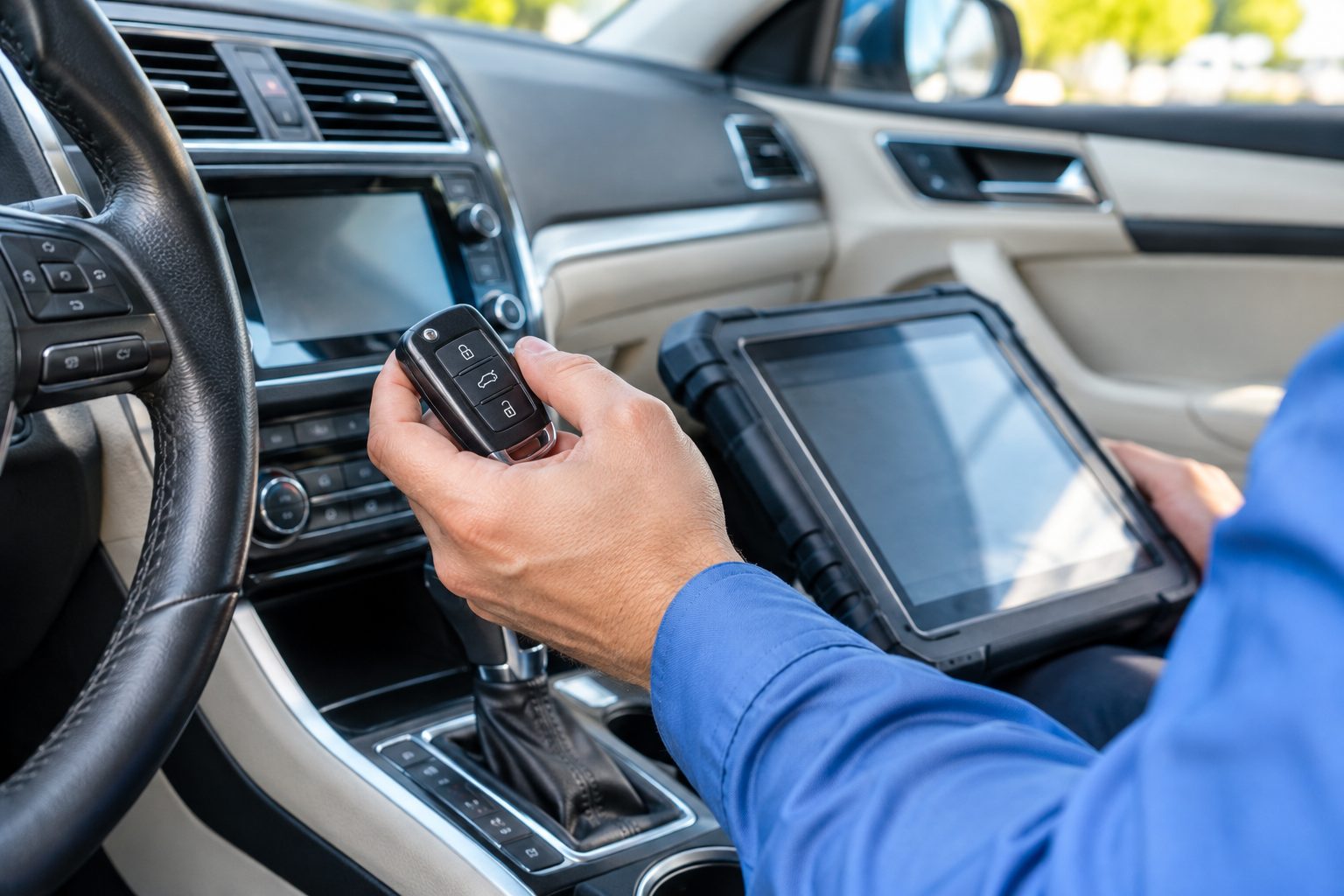
For a replacement car, ask the seller how many keys come with it and whether the previous owner's keys have been erased. Add a spare as soon as you can. Our pages on car key replacement, all keys lost and key programming explain what is involved. An automotive locksmith can come to you, and for many vehicles can cut and program keys on site, though availability depends on the vehicle and the key type.
Police sometimes recover stolen vehicles, and they will usually contact you. Before you touch the car, ask the officer what to do. The vehicle may be evidence, and it may need to be processed first. When it is released, take photographs of the car inside and out before you move it, noting damage and missing items.
A recovered car may have been damaged in ways that affect locks and ignition. The steering column, ignition cylinder, door locks and window glass are common places. If the ignition has been forced, it may need repair or replacement, and keys may need to be matched to the new part. Our page on ignition repair describes this work.
Do not drive a recovered vehicle that looks unsafe. If the steering feels odd, if warning lights are on, or if you are unsure of the car's condition, have it towed or inspected. Tell your insurer before you pay for repairs, since they may want to inspect it. And before you use the old keys again, consider whether they have been copied. The simplest approach is to have the car's keys re-registered or replaced if you can, so that a copy in the wrong hands stops working.
In the weeks after a theft, stay a little more alert. Watch your accounts for unusual activity, check that your mail is arriving as normal, and be careful about unexpected calls from people who seem to know details about you. If the car held papers with personal information, consider a fraud alert or credit monitoring, and ask your bank what they offer. Those are matters for your bank and the credit agencies, not for a locksmith, but they are part of the picture.
Be wary of anyone who contacts you out of the blue offering to recover the car, sell you a lock or fix a problem. Real police and insurers will not demand payment over the phone. If you are unsure whether a message is genuine, call the organization using a number you find yourself, not one provided in the message. Our guide to spotting locksmith scams covers the same habits.
Review your daily routines. Where do you park, and is it lit and watched? Do you keep keys, remotes and papers in the car? Can you add a steering lock, a tracker or a motion alert? Some of these are inexpensive and worth considering. See keeping car keys safe from relay theft for related habits.
A mobile locksmith can come to your home or another safe place to rekey locks, replace deadbolts, reset or replace access devices, and cut and program new car keys for your replacement vehicle. They can also advise on keypad locks if you would rather not carry keys, and on how to simplify your key ring so that fewer keys can be lost together.
On the call, explain what happened in plain terms: the car was stolen, house keys were on the ring, and you want the locks changed. Say how many doors and what types of locks, if you know. Mention anything that was also on the ring, such as business keys. If you are staying elsewhere tonight, say so, so the visit can be planned around that. If you feel unsafe at home, tell us, and we will talk through short-term steps.
Quotes are given by phone only. For work that depends on seeing the locks, an on-site visit is needed, and there is a service call charge that is explained on the phone before dispatch. We do not promise arrival windows, but we will tell you what we can do and when we can speak with you. When you are ready, call and we can go through it step by step.
Make sure it was not towed, then report the theft to the police and get a report number. If you feel unsafe or the theft is in progress, call 911 and move to a safe place. Then work through what was inside the car, secure your house if keys or papers were in it, and call your insurer.
It is strongly advisable if a house key was on the ring, and especially if papers with your address were in the car. Rekeying makes the stolen key stop working while keeping the existing locks. Do it as soon as you can, and reset any garage remote that was in the vehicle.
That depends on your policy, and we cannot say what yours covers. Ask your insurer directly when you report the theft, and keep receipts for any work. Some policies cover part of the cost of securing the home after a theft, while others do not.
Possibly, if it has not been erased. For many vehicles a dealer or automotive locksmith can remove lost keys from the car's memory, or reset the immobilizer, so older keys stop working. It depends on the make, model and year, so call and describe the vehicle.
Reset the opener or erase the lost remote from its memory so it no longer works, following the maker's instructions. If you are unsure how, a garage door technician can help. Also change any keypad passcode that the thief might have seen or known.
Quotes are given by phone only. Tell us how many doors and what locks you have, and what was on the key ring. If the work depends on seeing the locks, an on-site visit is needed, and a service call charge applies that is explained before dispatch. Call when you are ready.
Describe the situation by phone and we will tell you what the job involves. Quotes are given by phone. Jobs that cannot be quoted without seeing them need a technician on site, and the service call charge is explained on the phone before anyone is dispatched.