Many modern cars unlock and start when the key fob is nearby, without any button press. That convenience can be abused by thieves who capture and extend the fob signal. This guide explains the idea in plain terms, then covers practical habits, pouches and when to ask a professional about your key.
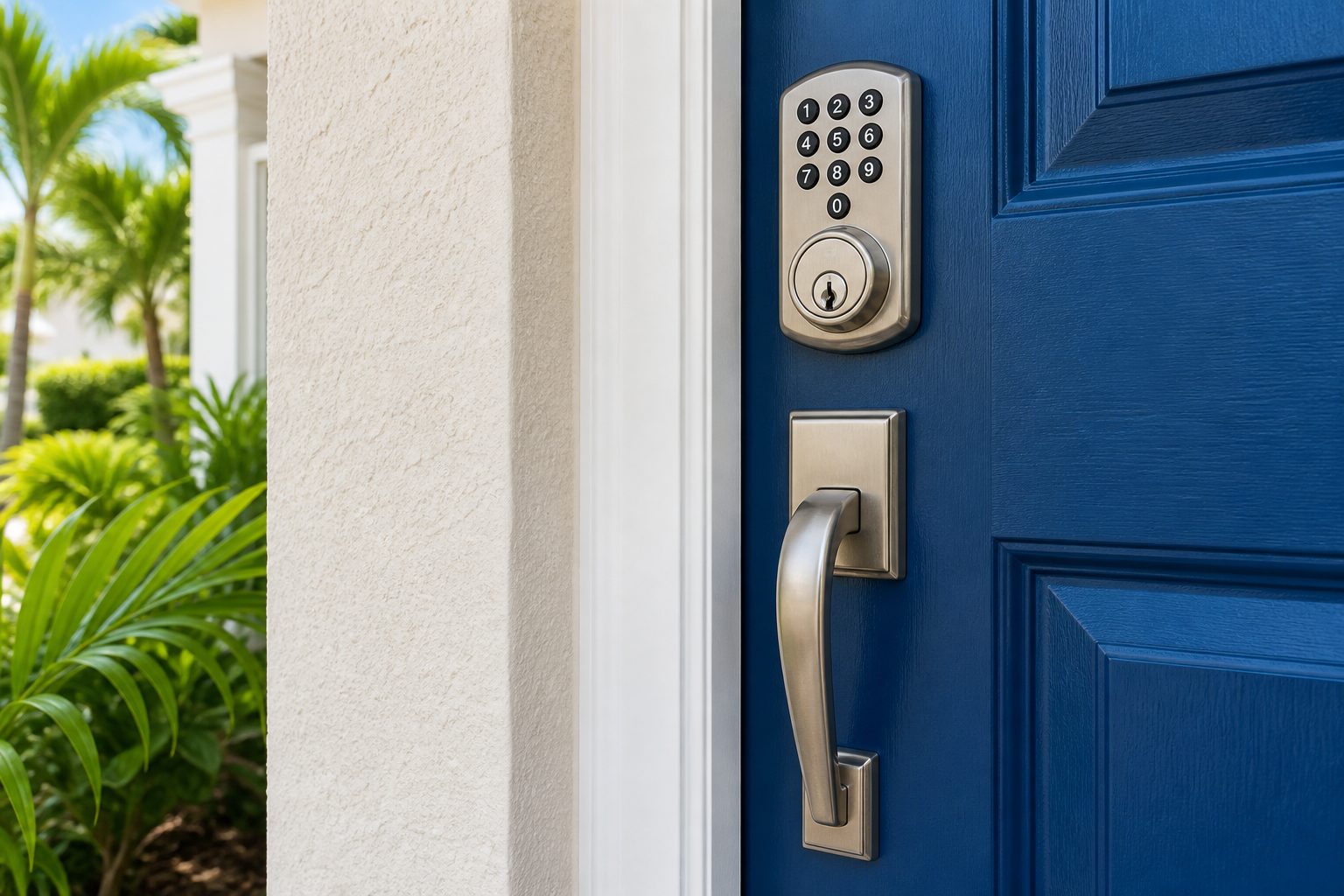
A keyless entry system, sometimes called passive entry, works by having the car and the key fob talk to each other over a short-range radio link. When the fob is close enough to the car, typically within a few feet, the car recognizes it, unlocks when you touch the door handle, and lets you start the engine with a button. You never take the fob out of your pocket or bag. It is convenient, and it has become standard on a large share of new and recent vehicles.
Relay theft takes advantage of that design. The car expects the fob to be nearby. If someone can extend the range of the signal between the car and a fob that is inside a house, the car may behave as though the fob is right beside it. The thief does not need to copy or crack the key. They need only to relay the conversation between the two devices across a gap, which is why this is sometimes called a relay attack. The equipment used is a pair of devices, one near the car and one near the fob.
How common this is, and how well a particular model resists it, varies. Makers have added protections in newer systems, and results differ between models and years. We will not give statistics here, because they change and because we cannot verify them. What we can say is that it is a widely discussed risk, that simple habits reduce your exposure, and that you can ask your dealer or the maker about your specific model. This page covers general awareness and does not describe how to carry out any attack.
The concern applies to vehicles with passive entry and push-button start, where the fob stays in a pocket or bag. Cars that require you to press a button on the fob to unlock, and to insert a key or place the fob in a slot to start, are generally not exposed to the same kind of relay. Many vehicles have a mix: a remote unlock button as well as passive entry. If you are unsure, check the owner's manual or ask the dealer whether your vehicle has passive entry and whether it can be turned off.
Some makers offer a setting that disables passive entry, so that the car only responds to a button press. Others have a fob that goes to sleep after it has not moved for a short period, which stops it transmitting while it sits on a table. Newer fobs sometimes include motion sensors for exactly this purpose. If your fob is older, a replacement may include such features, and a dealer or an automotive locksmith can tell you whether your model has an updated version. We cover replacements on our pages about key fob replacement and smart key replacement.
In the Orlando area, where many vehicles are parked in driveways, apartment lots, theme park garages and hotel lots, a lot of cars sit unattended for hours or overnight. That does not mean theft is likely, but it does mean that habits around where the fob sits at night are worth thinking about, particularly if the fob rests near a front door or window.
The simplest habit is to keep your fob away from the exterior walls, doors and windows of your home at night. A fob left in a bowl by the front door is as close to a car in the driveway as it can be while still being inside. Move it to a place deeper in the house, such as an interior room or a bedroom, away from the door and the driveway side. Distance helps, and walls and floors reduce signal strength.
Keep spare fobs with the same care. People often put the spare in a drawer near the entrance and forget it. Treat every fob the same way, because each one will unlock the car. If you have a fob you rarely use, consider removing its battery, or storing it in a metal tin, until it is needed, as long as the maker allows it and you know how to put the battery back.
When you are out, a fob in a bag or a back pocket is still within reach of the signal. In crowded places, a fob in the pocket nearest the street is more exposed than one deep inside a bag. For long stays at a hotel, a theme park or an event, consider the same storage ideas. These are low-effort habits and they take no money. They also make you less likely to lose the fob, which helps in its own right.
A signal-blocking pouch, sometimes called a Faraday pouch, is a small bag lined with metallic fabric that blocks radio signals. A fob placed inside and sealed cannot talk to the car or to a relay device. Signal-blocking boxes and tins work on the same principle and are used on a shelf or in a drawer at home. They are widely sold, and the concept is sound: if the radio signal cannot get out, it cannot be relayed.
Quality varies a lot. A pouch with a worn seam, a gap at the fold, or a damaged lining may leak. You can test your pouch simply: put the fob inside, seal it, and stand next to the car. Try to open the door using the handle. If the car still recognizes the fob, the pouch is not working. Test again from time to time, because the fabric wears. Also test boxes in the same way, with the lid closed.
Keep expectations realistic. A pouch protects the fob only while the fob is inside it, so it works best as a home habit, and many people find pouches inconvenient for daily carrying. It does not secure the car against other kinds of theft, such as breaking a window or stealing a key obtained another way. Think of it as one layer. If you already have a reliable routine of keeping the fob away from doors at night, a pouch adds a little more margin.
Because no single measure covers every risk, layers matter. A visible steering wheel lock is an old but effective deterrent. A thief looking for a fast, quiet theft is likely to prefer a car without one. A steering lock does not stop a determined person, but it adds time and noise, and it makes your car less attractive than the next.
Other layers include parking in a garage or a well-lit area, turning the wheels toward the curb, using any alarm or tracker the car supports, and removing valuables from view. Some owners fit an aftermarket immobilizer or tracking device. Ask your dealer or an automotive specialist about what suits your model, and keep records of your vehicle details such as the identification number in a safe place, separate from the car.
For those who park in apartment complexes and shared lots, ask your property manager about lighting and cameras. In theme park parking areas and hotel garages, choose spaces close to attendants or cameras where you can. None of this makes a car theft-proof, but a car that is harder to take, in a place that is watched, is a car that thieves tend to pass over.
If your vehicle lets you disable keyless entry, that is the most direct answer for owners who are worried. Check the owner's manual or the infotainment settings. Some vehicles let you disable the feature through a specific button sequence on the fob. Others provide a menu option. If your fob has a sleep mode, learn how it works.
Disabling passive entry means you will press a button on the fob to unlock, which many people find acceptable in exchange for lower exposure. Some owners disable it only when the car is parked at home overnight. Others turn it off for good. The choice is a balance between convenience and caution, and either is reasonable.
If your fob does not support these features and you want better protection, ask whether a newer fob is available for your vehicle that includes a motion sensor or other improvements. A dealer or an automotive locksmith can look at your model and tell you what exists. If you do replace a fob, an automotive technician will need to program it to your car, a process we describe on our key programming page. Note that availability depends on the vehicle.
Most smart fobs contain a small mechanical key blade, which is used to open the door if the fob battery dies. That blade is an ordinary key. Keep it safe in the same way you would a house key. Do not leave a fob with the blade in a place where it could be removed, copied and returned without you noticing, such as with a valet or a repair shop, unless you trust them.
When you hand over a car to a valet or a service center, they usually need only the fob. Remove your house key and any other keys from the ring if you can, so that the person holding the fob cannot copy your house key. Note that some house keys can be copied quickly at any kiosk, which is another reason to keep them separate.
Also think about the garage remote. If a garage remote, a parking pass or papers with your address stay in the car, a break-in to the car can lead to your house. Our guide on securing the garage entry describes that connection. And if you lose a fob, take it seriously: the dealer or an automotive locksmith can erase the lost fob from the car's memory so that it no longer works, which is often possible when you still have another working key.
If you find your car unlocked when you are sure you locked it, or you find items moved, treat it as a sign that someone may have had access. Check for missing items, including papers, a garage remote and anything with your address. If something is missing, change the garage opener's settings and consider rekeying the house, since a thief who learned your address and has a key or remote is in a position to use them.
Report the incident to the police, especially if anything was taken. Take photos of the car and any damage. If the car itself was stolen, see our guide on what to do if your car is stolen with the keys, which describes the steps in order.
If you lose a fob or all your keys, or if you want to add a spare, call and describe your vehicle. A technician can tell you what is possible for the make, model and year. Quotes are given by phone only. For work that needs the vehicle in front of us, an on-site visit is needed, and there is a service call charge that is explained on the phone before dispatch. Call when you are ready to talk it through.
It is easy to feel alarmed after reading about any kind of theft. A calm routine is better than worry. Keep the fob away from the door at night. Use a pouch if you like. Park in a place that is lit and watched when you can. Disable passive entry if your car allows and you do not mind pressing a button. Keep spare fobs and blades safe. Do not leave address papers or remotes in the car. That short list covers most of the practical ground.
Remember that the large majority of car problems drivers face are far more mundane: dead fob batteries, lost keys and lockouts. Our pages on car lockout and fob care in summer heat cover those. A little care with the fob helps with both.
If you have questions about your own vehicle, call and tell us the make, model and year. We will explain what we can do and what is best left to the dealer, and we will not guess at details we cannot confirm. When you are ready, call and we can talk through your options.
It is a way of fooling a car with passive entry into thinking the key fob is beside it, by passing the radio signal between the car and a fob that is actually inside a building. The thief does not copy the key. Keeping the fob away from doors and using a signal-blocking pouch reduces the exposure.
A good pouch blocks the radio signal while the fob is sealed inside, and the idea is sound. Quality varies and fabric wears out. Test yours by sealing the fob inside and trying the door handle beside the car. If the car still unlocks, the pouch is not working and should be replaced.
Many vehicles allow it through a menu setting or a button sequence on the fob. Some fobs also go to sleep when they are still. Check your owner's manual or ask your dealer about your model. Turning it off means you press a button to unlock, which many drivers accept for added caution.
Keep it away from exterior doors, windows and the driveway side of the house, ideally in an interior room, and treat spare fobs the same way. If you use a pouch or a metal tin, keep the fob inside it. Distance and walls reduce signal strength, and the habit costs nothing.
Have the lost fob removed from the car's memory if possible, so that it no longer works, and consider whether anything linking the fob to your address was lost with it. A dealer or an automotive locksmith can tell you what is possible for your vehicle. Call and describe the make, model and year.
Quotes are given by phone only. Tell us the make, model and year of the vehicle and what you need. If the job needs the car in front of a technician, an on-site visit is needed, and a service call charge applies that is explained before dispatch. Call when you are ready to talk it through.
Describe the situation by phone and we will tell you what the job involves. Quotes are given by phone. Jobs that cannot be quoted without seeing them need a technician on site, and the service call charge is explained on the phone before anyone is dispatched.