A jammed lock is one that will not move: the bolt will not slide, the knob will not turn, or the key meets a solid stop. In Orlando the cause is often humidity, heat or a door that has shifted, though worn hardware is just as common. The fix depends on telling those apart.
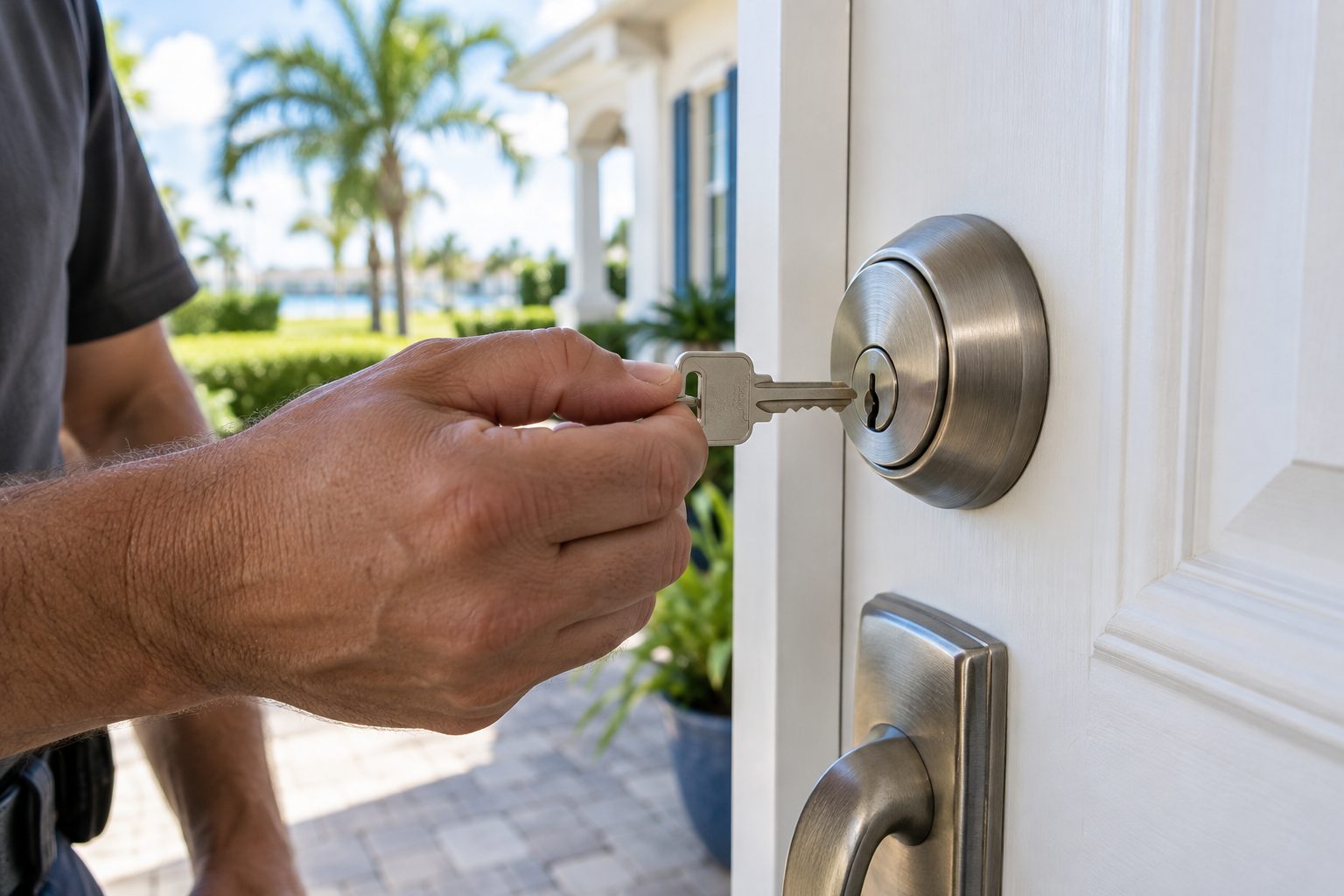
Jammed is a broad word. Some people mean the key will not turn. Others mean the deadbolt is stuck halfway, the latch will not retract or the handle spins without opening the door. Each points to a different part of the lock. A key that will not turn suggests the cylinder. A bolt that stops partway suggests binding against the strike or a worn mechanism. A handle that spins without resistance suggests a broken connection inside the lock.
The first step is to describe the symptom precisely, to yourself and to anyone you call. Does the key go in? Does it turn partway? Does the bolt move when the door is open? Does the problem happen on both sides of the door? Is the lock hot to the touch from sun? Does it vary by time of day? This kind of detail separates a quick adjustment from a hardware failure.
The word frozen is borrowed from colder places. In Central Florida, locks do not ice up in the way they do up north, but they seize for related reasons: swelling, corrosion, gummed lubricant, bent parts and heat expansion. The effect is the same, a lock that will not budge. The right response is also the same: do not force it.
Central Florida air is humid for much of the year, and wooden doors absorb that moisture. A door that fits comfortably in January can swell in August until it presses on the frame. The latch bolt and deadbolt, which were centered in the strike, now rub on its edges or fail to reach it. When you turn the key, the bolt scrapes and sticks. This is one of the most frequent causes of a jam in older neighborhoods where wooden doors are common.
Heat adds to it. Metal expands in the sun, and a dark door facing west can get very hot. A deadbolt that is loose in cool morning air can bind in the afternoon. Metal doors also expand and can warp slightly. The same door may work at night and jam by mid afternoon. If the pattern follows the weather, this is likely the cause.
Humidity also affects the lock itself. Moisture gets into the cylinder and mechanism, mixes with dust and old oil, and forms a sticky paste. In outdoor locks it causes corrosion. White powder or green tint on a lock is a clear sign. For more on how moisture damages locks, see humidity and lock longevity, and for rusted hardware see lock rusted from salt and humidity.
Many jams are not lock problems at all. They are door problems. Hinges loosen over time. The top hinge is the most common culprit: as screws work loose, the door drops at the latch side, and the bolt no longer lines up with the strike. A door that has dropped even a few millimeters can bind the bolt. Soil changes in Florida, from rainy seasons and dry spells, cause houses to shift subtly, which can alter frame alignment.
You can test for this. With the door open, turn the key or thumb turn. If the bolt moves smoothly, the lock itself is fine. Close the door and try again. If it sticks now, lift the door slightly by the handle or press it toward the hinges while turning. If that helps, alignment is the problem. Check the hinge screws and tighten any that are loose, starting with the top hinge.
Look at the strike plate. A shiny, scuffed area near the edge of the strike hole shows where the bolt has been rubbing. You may see wear on the bolt itself, too. Resist the urge to file the strike without a plan. Enlarging it changes how the door is secured, and doing it poorly can weaken the door's security. The page on door will not latch covers related alignment issues, and strike plate reinforcement explains how a strike can be strengthened.
Sometimes the lock is simply worn out. Inside a deadbolt or lockset are springs, cams, a tailpiece and a latch assembly. Springs weaken and break. Cams wear and slip. Tailpieces bend. Plastic parts in lower-cost locksets crack. When any of these fail, the lock can stop in the middle of its travel, or the key can turn without moving the bolt, or the bolt can move only partway.
A common pattern is a lock that has become gradually stiffer over weeks or months and then stops. A technician sees this often. It is the sign of a mechanism near the end of its life. Another pattern is a lock that works only when you push on the door or lift the handle. That is usually partial failure combined with alignment issues.
Replacing a failing lock is not a sign of failure. It is routine maintenance. If you have repeated problems, a newer lock may make everything easier. The page on lock replacement explains how repair, rekey and replacement are chosen, and lock installation describes what a new installation involves. A technician can also examine other hardware, such as hinges and the strike, so a new lock is not put into a door that will damage it.
Start gently. If the key will not turn, try the spare. Wiggle the key very slightly and use light pressure, the amount you would use to turn a page. Do not force it. If the bolt is binding, try lifting the door or pressing it toward the latch side while turning, to relieve pressure on the bolt.
A small puff of dry lock lubricant, applied to the keyway and the bolt edge, can help. Work the lock a few times, slowly. Graphite or dry polytetrafluoroethylene spray is better than oil. Wipe away any excess. If the door is swollen, running a dehumidifier in the room or air-conditioning the space may help the wood dry out a little over time, although this will not fix a door that is badly out of true.
Check hinge screws. Tighten any that are loose using a proper screwdriver. If a screw spins without gripping, the hole is stripped and needs a longer screw or a filler, which a technician can supply. Avoid taking the lock apart unless you know the model, since springs and small parts can be lost or can fly out. Do not attempt to bypass the lock. If gentle steps do not release it, stop and call.
Do not force the key or the thumb turn. Turning harder can snap the key, round the cylinder or break an internal part. A key that snaps in a jammed lock creates two problems at once. If you have already broken a key, see broken key extraction.
Do not spray large amounts of penetrating oil. It may seem helpful, but it washes out the factory lubricant, leaves a sticky film and attracts dust. It can also stain wood and paint. Do not hit the lock or the door with a hammer. The impact can bend parts or crack a latch. Do not drill the lock yourself. Once drilled, a lock is typically unrecoverable, and a mistake can damage the door.
Do not remove the door from its hinges as a quick fix unless you are experienced, since heavy doors can injure you or damage the frame. And do not leave the property unsecured if the lock jams in the open position. If the door cannot be locked, arrange a temporary solution, such as asking someone to stay or using a secondary lock, and call promptly. If the jam happens with someone trapped inside, call 911 first.
Front entry doors, usually steel, fiberglass or solid wood, tend to jam from alignment, wear or corrosion on the deadbolt. Back doors and patio doors are exposed to more water. Sliding glass doors have their own hook-style latches that can seize from dirt and dried lubricant. For sliders, see sliding patio door locks.
Garage entry doors, which connect the garage to the house, are often subject to temperature swings and sometimes fire-rated, which affects how they can be repaired. Gate latches, pool gates and fence locks fail quickly outdoors, and their hardware is lighter. If a pool gate latch sticks, treat it as a safety issue and fix it promptly.
Commercial doors, such as storefront glass doors with mortise locks, jam from heavy use, from weather on the exterior face and from closers that slam the door against the latch. A technician will test the closer, the latch and the strike as a set. Apartment doors in buildings near International Drive and Universal often have multiple locks, such as a deadbolt, a knob lock and a chain, and one can jam while the others work. Describe exactly which lock is failing when you call.
Consider a stucco house in a neighborhood like Azalea Park or Conway, with a wooden front door that has been painted several times. In August the owner notices the deadbolt takes a shoulder push to throw, and by mid-afternoon it will not move at all. In the evening, after the air conditioning has cooled the house and the sun has left the door, it works again with a little effort. The key is fine, the lock turns smoothly when the door is open, and nothing has been touched for months.
The pattern points to swelling. Paint has built up on the edge of the door and the strike, narrowing the gap, and afternoon humidity makes the wood expand until the bolt can no longer reach the hole cleanly. A technician finds a bright scuff on the lower edge of the strike, tightens the top hinge, which had dropped slightly, and adjusts the strike so the bolt lands in the center. If the door is rubbing the frame, a small amount of wood is trimmed from the latch edge and the raw wood sealed.
The lock was never the problem. Replacing it would have changed nothing, and the owner would have been back in a few weeks. That is why a careful diagnosis matters. A technician who starts with the door instead of the cylinder saves you from paying for a part you did not need. When you call, mention that the problem varies by time of day. That single detail helps point to swelling or heat rather than a failed mechanism.
A technician begins by asking about the symptoms and then tests the lock in a logical order. They try the key, observe how it feels and check whether the cylinder turns smoothly when the door is open. They examine the bolt and the latch, the strike and the door edge. They test the alignment, hinge tightness and clearance around the door.
If the cylinder is the cause, they may clean and lubricate it, rekey it or replace it. If the bolt is binding against the strike, they adjust or reposition the strike, tighten hinges and, if needed, plane a small amount from a swollen door. If the mechanism inside the lock is broken, they replace the lock, and match it to the door preparation. They will explain what they found, so you understand what was wrong.
If the lock is jammed in a way that blocks entry, the technician uses methods designed to open the door with the least damage, and then repairs or replaces the lock. They do not guess. Quotes are given by phone, complicated jobs need an on-site look, and the service call charge is explained before anyone is dispatched. No one can promise an arrival time in advance, but you will be told what is realistic when you call.
Prevention is easier than repair. Twice a year, in spring before the rains and in early fall before hurricane season peaks, check each exterior lock. Use a dry lubricant sparingly. Tighten hinge and strike screws. Look at the door edges for rubbing marks and the weatherstripping for swelling. If a door is sticking in humid months, ask a carpenter or technician to adjust it before it gets worse.
Seal exposed wood. A door that is unpainted or poorly sealed on the bottom edge and top edge absorbs moisture quickly. Paint or seal every edge, not only the face. In homes with window air conditioning units or humid rooms, consider a dehumidifier. In outdoor settings, protect locks with covers if they face direct spray from sprinklers, and adjust the sprinkler heads away from doors and gates.
Replace what is worn. A lock that has been sticky for a season is unlikely to improve by itself. A fresh cylinder or lockset is a modest investment compared with a lockout or an emergency call. When you are ready, call. Describe the symptoms, the weather pattern and what you have tried, and a technician can advise whether a quick adjustment, a cleaning or a replacement is the right next step.
Humidity swells wooden doors, and heat expands metal parts. Together they can push the bolt against the edge of the strike or tighten the latch in its pocket. Moisture inside the lock can also mix with dust and old lubricant into a sticky paste. If the problem follows the weather, alignment and humidity are likely causes.
A little may loosen something briefly, but it is not a good lasting fix. It washes away protective lubricant, leaves a film that attracts dust and can stain the door. A small amount of dry lock lubricant is a better first step. If the lock stays stiff, a worn or misaligned part is probably the cause.
Yes, very often. If the lock works smoothly with the door open but sticks when closed, the bolt is binding against the strike. Loose hinges, a sagging door or seasonal swelling can cause this. Tighten the hinge screws first, particularly the top one, and have a technician check the alignment if it persists.
Do not force the door or break a window. Check whether another entry is unlocked or a household member has a spare. If someone is trapped inside, or there is a danger, call 911. Otherwise, call a locksmith and describe what the lock is doing. A technician will open the door with the least damage and then address the lock.
Not necessarily. Cleaning, adjusting the strike or tightening hinges solves many jams. If the cylinder or internal mechanism is worn, corroded or broken, replacement is usually wiser. A technician will test the lock and the door and explain which option fits, so you are not pushed into a replacement that is not needed.
Quotes are given only by phone. Describe the type of door, the lock and the symptoms, and what you have tried. Simple jobs can be quoted from that description. Complicated jobs need an on-site look, and a service call charge applies, which is explained on the phone before any technician is dispatched.
Describe the situation by phone and we will tell you what the job involves. Quotes are given by phone. Jobs that cannot be quoted without seeing them need a technician on site, and the service call charge is explained on the phone before anyone is dispatched.