A door that bounces back open, rests ajar or needs a slam to catch is a security risk and a daily irritation. The cause is almost always one of three things: the strike is out of line, the door has sagged or something is pushing back against the closing door.
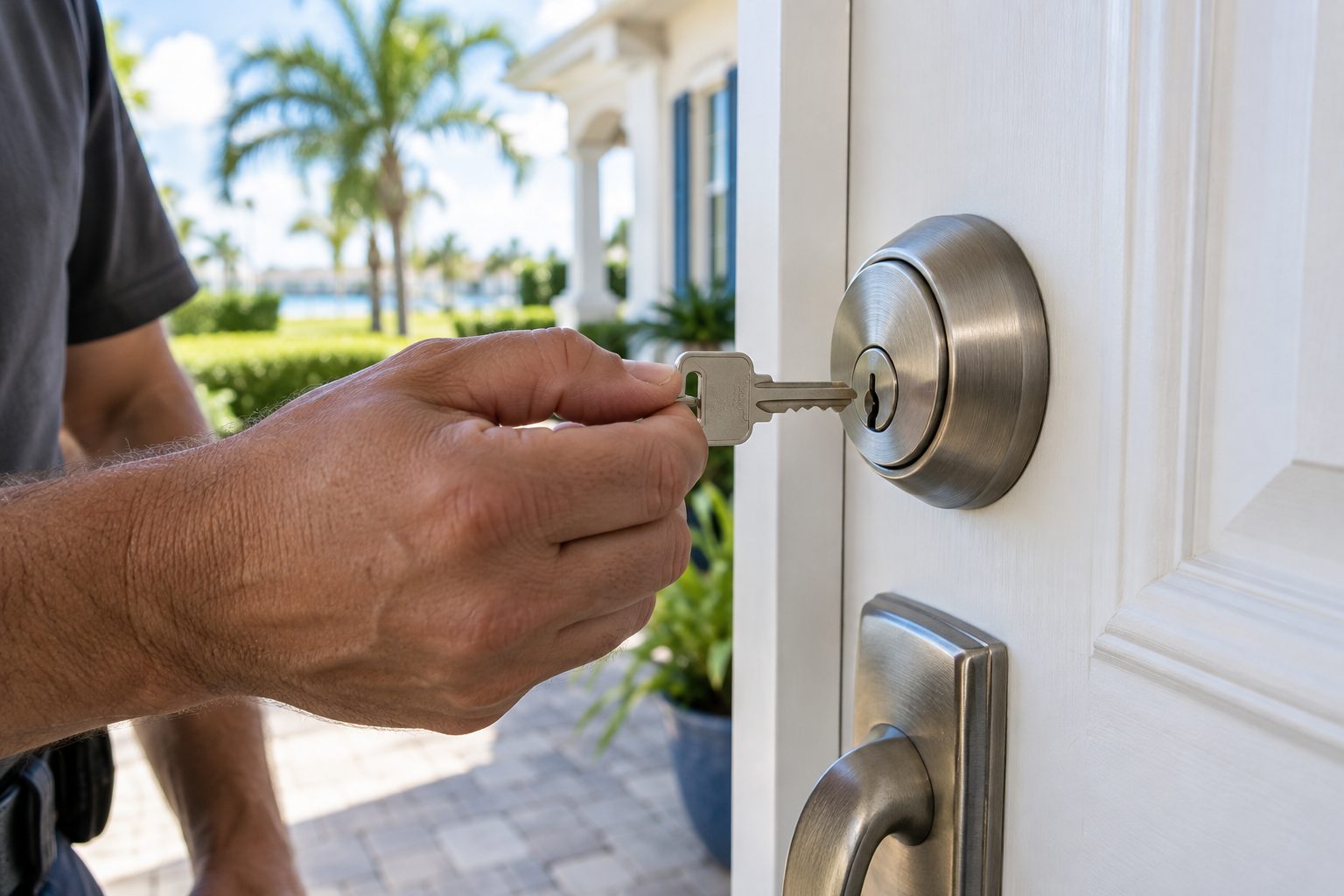
When you push a door shut, a spring-loaded latch bolt, the angled piece in the door edge, slides over the strike plate on the frame and snaps into the hole. The angled face of the bolt lets it ride over the plate, and the flat back keeps it in the hole once it is there. For this to work, three things have to line up: the height of the bolt, its position front to back and the depth of the hole.
If the bolt is a little too high or too low, it will hit the plate instead of entering the hole. If the door sits too far from the frame, the bolt will not reach the hole. If the door presses too hard against the stop, the bolt can be pinched and fail to spring out. If the latch itself is worn or sticky, it will not extend fully even when the door is aligned.
A door that does not latch is not only inconvenient. It is open to the wind, the humidity and anyone who walks by. In Orlando, an ajar door lets in damp air, insects and storm rain. It also makes the air conditioning work harder. Fixing a latch problem usually takes less effort than people expect, once the cause is found.
The strike plate is the metal plate on the frame with the hole for the latch. If it is even slightly out of place, the door will not catch. A quick test is to look at the plate when the door is closed. See where the latch bolt touches the plate. A small scuff or a bright mark shows where the bolt has been striking. If the mark is above or below the hole, the plate is out of line vertically. If it is to one side, the door and frame are out of line horizontally.
Another test is to apply lipstick, chalk or a dry marker to the end of the bolt and close the door. The mark transfers to the plate where the bolt touches. You can then see exactly how far off the alignment is. If the error is small, a technician can move the strike, enlarge the hole slightly or adjust the plate depth. If the error is larger, the door or hinges may need work.
It is tempting to file the strike hole bigger. That can work for a very small error, but it weakens the plate and the entry. The better fix is to move or reset the plate, or to correct the door position. A reinforced strike with long screws is a worthwhile upgrade at the same time. The page on strike plate reinforcement explains how it works.
Doors are heavy. Over time, the weight pulls on the hinges, and the top hinge screws work loose. The door drops on the latch side, and the bolt no longer lines up with the strike. You may notice the door rubbing at the top corner on the latch side or the bottom corner on the hinge side, or a gap that is wider at the top than at the bottom.
A simple check is to open the door and lift the handle. If the door moves up and down noticeably, the hinges are loose or worn. Tighten the screws, particularly on the top hinge. If a screw spins without gripping, the hole is stripped. A technician can fit a longer screw that reaches the wall stud, or fill the hole and redrill. This simple repair often brings the door back into line.
If the hinges themselves are worn, with play in the pins, they may need replacing. Heavy exterior doors, particularly solid wood, put a lot of load on three small hinges. A fourth hinge can add support. In Central Florida, humidity can also swell wooden doors and frames, making the door push against the stop and miss the strike. Seasonal changes are normal, but a door that no longer works for months may need adjusting. Related problems are described in door lock jammed and deadbolt will not retract.
Modern exterior doors are fitted with weatherstripping, which seals the gap against air, water and bugs. When the strip is new or compressed too much, it can push the door back out against the latch. You press it shut, the foam or rubber springs back and the bolt never has time to enter the hole. This is common after replacing weatherstripping, repainting or when the strip is the wrong thickness.
A simple test is to remove or loosen a section of the strip and see if the door closes more easily. If it does, the strip is the cause. Options include trimming it, repositioning it or replacing it with a thinner profile. Do not remove it entirely on an exterior door, since it keeps rain and insects out. Adjusting the door slightly, by moving the strike or hinge side, can also relieve the pressure.
Sweeps and thresholds can interfere as well. A bottom sweep that is too tight drags and slows the door. An uneven threshold can jam the bottom corner. In older homes, paint buildup on the edge and the stop can narrow the clearance. A technician can sand or plane the edge, repaint it and ensure the door closes smoothly. Another thing to watch is air pressure: in a well-sealed house with the air conditioner running, a door may be pushed slightly by pressure differences. Opening a window briefly can reveal whether that is the cause.
The latch itself can fail. The spring inside can weaken, so the bolt does not extend with enough force. The bolt can wear and become rounded, so it slides off the plate instead of catching. Dirt, old paint and dried lubricant can gum the mechanism so the bolt sticks halfway in. Plastic parts in lower-cost latches can crack.
To test, open the door and press the bolt with a finger. It should push in smoothly and spring out firmly. If it is slow, gritty or stays in, the latch is worn or dirty. A little dry lubricant may help, but a latch that has lost its spring will not recover. Replacing a latch is a quick job, and the new one should match the backset and faceplate of the old one.
If the latch is part of a lockset, the whole assembly may be worn. Knobs and levers that droop or feel loose put strain on the latch. Tighten the screws, and if the handle still sags, the internal spring may be weak. For a deeper look at replacing hardware, see door hardware repair and lever handle installation. For hardware choices, types of door locks compares the common options.
Start with the door open and look at the latch and strike. Press the latch bolt and watch it spring out. Check for paint or debris in the strike hole. Close the door slowly and watch where the bolt meets the plate. Note whether the door seems to fight you or simply sits slightly ajar.
Tighten all hinge screws with a proper screwdriver. Try the door again. If you have longer screws, replace the top hinge screws with ones that reach the framing. Check the screws holding the strike plate and tighten them. Wipe the latch and apply a very small amount of dry lubricant. If the door has weatherstripping, check that it is not folded or oversized.
Use the marker test on the latch to see where the bolt lands. If the error is small and you are comfortable, you may adjust the strike slightly. But if the door needs more than a minor tweak, or you are unsure, leave it to a technician. Never remove the latch and leave the door unsecured. Do not use tape to hold the latch back on a door you rely on for security, since it defeats the point. For a fire-rated door, never prop it, and see fire door and exit hardware.
Not every door that will not latch is an entry door. Bedroom and bathroom doors have their own issues. Interior doors are lighter and rely on simple spring latches. They often fail to latch because the house has settled, the humidity has swelled the wood or the strike is slightly out of place. Because there is no deadbolt, many people live with it for a long time, but a door that will not stay shut can matter for privacy and for keeping pets and children out of rooms.
Bathroom doors in humid homes swell more, since steam from showers adds moisture. A door that latches in winter may not in summer. Sanding the edge of the door lightly, then sealing the bare wood, can solve this. Closet doors and pantry doors have similar behavior, but they are lower stakes.
If a child lock or privacy lock fails, take it seriously. Privacy locks on bathrooms and bedrooms are meant to be opened in an emergency from the outside with a simple tool. A lock that jams can trap someone. If a privacy lock will not release, see lever handle installation and call. For homes with small children, lock safety for families with children discusses safer options.
The door between a garage and a house deserves extra attention. It is often heavy, sometimes fire-rated, and it sees heavy use by people carrying groceries. Many of these doors have a closer or spring hinges that are meant to pull them shut and latch automatically. If the spring is weak or the closer is out of adjustment, the door stops short. Because the garage is not air conditioned, humidity and heat also swell the door more quickly than an interior one.
Sliding patio doors have a hook-style latch on the frame, not a bolt in the door edge, and when that latch does not catch it is usually because the door has dropped on its rollers, the track is dirty or the latch hook is worn. A dirty or bent track is a very common cause in homes near pools and landscaped yards, where sand and leaves collect. Cleaning the track and adjusting the rollers often restores a firm latch. The page on sliding patio door locks covers these hardware types.
Gates, including pool gates, must latch every time without help. A gate that does not latch is a safety hazard, particularly around children. Gates sag as posts shift in soft soil, and hinges loosen under weight. If a gate latch needs lifting or pushing to catch, treat it as a priority repair. The page on pool gate lock service describes how a self-latching mechanism should behave.
A technician starts by observing the door as it closes. They check the gaps around it, look for rubbing marks and test the latch. They examine the strike, measure the offset and test hinge tightness. They check the weatherstripping, sweep and threshold. Often they find a combination of small issues, such as a slightly loose hinge, a strike that is a touch low and paint buildup in the hole.
They fix what they find. They tighten or replace hinge screws and, if needed, shim or replace hinges. They move or reset the strike, or cut a new mortise if needed. They trim or replace weatherstripping. They clean, lubricate or replace the latch. If the door is swollen, they plane or sand the edge and recommend sealing it. If the lock is worn, they may replace it, as discussed on lock replacement.
Then they test. They close the door repeatedly, from different distances and with different force, and check that the latch catches every time. They also test the lock and deadbolt and check that the door can be secured from the outside and opened from the inside. Quotes are given by phone, complicated jobs need an on-site look, and the service call charge is explained before anyone is dispatched. No one can promise an arrival time in advance.
A door that does not latch is an open door, in effect. If it is an exterior door, treat it as a priority. Anyone can push it open, and wind can swing it wide in a storm. If you cannot fix it at once, secure it temporarily with a device that can be released quickly from inside, such as a hook, a portable door lock designed for the purpose or a wedge placed from the inside. Do not use anything that could trap people in an emergency.
Prevent repeats by checking hinges and screws every season, sealing the door edges against moisture and keeping paint out of the strike and latch. When repainting, remove or mask the hardware. If the weatherstripping is old, replace it with the right thickness. Keep the threshold and sweep clean.
Watch for early signs: a door that needs a firmer push, a latch that sounds weak or a gap that has started to appear. Fixing these early costs little. If the door is part of a business or rental, a quick walk-through each season can save emergency calls. When you are ready, call. Describe the door, what it does when you close it and what you have tried, and a technician can tell you whether it is a quick adjustment or something more.
The latch bolt is probably missing the hole in the strike plate. That can happen when hinges loosen and the door sags, when swelling changes the fit or when the strike is slightly out of place. A mark on the plate shows where the bolt is landing. Tightening the hinge screws and adjusting the strike usually fixes it.
Yes. New, thick or compressed weatherstripping can push the door back and prevent the latch from reaching the hole. Loosen or trim a section to test. If the door then closes, the strip is the cause. Replace it with a thinner profile or adjust the door position, but keep a seal on exterior doors.
A very small error can sometimes be fixed that way, but it weakens the plate and the entry. A better approach is to move or reset the strike, or to correct the door alignment. A reinforced strike with long screws adds strength at the same time. A technician can judge which option fits your door.
Yes. Slamming wears the latch, the strike and the frame, and it can crack paint or loosen hinges. It also means the door is out of alignment or the latch is weak. Check the hinges, the strike and the weatherstripping. If the door still needs force, a technician can adjust the parts so it closes gently.
No. Taping the latch defeats the purpose and may leave the door unsecured. On a fire-rated door it is a safety violation. If you need a temporary measure, use something that can be released quickly from the inside. Fix the cause as soon as you can, since the door should latch every time.
Quotes are given only by phone. Describe the door, what the latch does, any rubbing or gaps you see and what you have tried. Simple jobs can be quoted from that description. Complicated jobs need an on-site look, and a service call charge applies, which is explained on the phone before any technician is dispatched.
Describe the situation by phone and we will tell you what the job involves. Quotes are given by phone. Jobs that cannot be quoted without seeing them need a technician on site, and the service call charge is explained on the phone before anyone is dispatched.