Walk down any street in Orlando and the front doors will use a surprising variety of hardware. Knobs, levers, deadbolts, mortise sets and keypads each solve a slightly different problem. This guide explains how the main types work, where each fits best, and how to think about combining them on a real door.
Every door hardware set does two separate jobs, and it helps to keep them apart. The first job is latching: holding the door closed against wind, pets, children and casual pushing, while letting people open it easily from the inside. The second job is locking: stopping unauthorized people from opening it from the outside. Many products combine the two jobs, and some products only do one.
A simple passage set, the kind used on a closet or hallway, latches the door but has no lock at all. A privacy set, used on bedrooms and bathrooms, has a small push or turn button that stops casual entry but is not meant for security. An entry set combines a latch with a keyed lock, and a deadbolt is a separate locking bolt that does not latch at all but resists being pushed back.
Once you separate those jobs, the many styles on the shelf make sense. Some are chosen for appearance, some for accessibility, some for security and some for convenience. Most exterior doors benefit from using more than one type together, since each has strengths that cover the weaknesses of the other.
The round doorknob is the most familiar design. A keyed knob lock has a cylinder in the knob that can be locked by key from outside and by a push button or turn button from inside. The knob turns to retract a spring latch, which is the angled piece that slides out of the door edge and into the frame.
Knob locks are inexpensive and common on older homes and apartments. Their limitation is that the latch is a spring-loaded piece with a limited resistance to force, and the knob itself can be a point of weakness because it sticks out from the door. They also require a firm grip and twisting motion, which can be difficult for people with arthritis or limited hand strength.
For these reasons, a knob lock alone is generally not considered a strong choice for an exterior door. It works acceptably on interior doors and may be combined with a separate deadbolt on an entry door, so the knob handles everyday latching and the deadbolt provides the real locking strength.
A lever handle replaces the round knob with a bar that you push down. Many people find levers easier to operate, particularly with wet hands, full arms or limited dexterity. For that reason, levers are common in commercial buildings and are often required in places that need to meet accessibility standards.
Functionally, a lever works like a knob. It retracts a latch when pushed down, and it can include a keyed lock or a push button. A good lever set is sturdy, but a poor one can sag over time because of the leverage on the handle. Checking that it returns to level and does not wobble is a simple test of quality.
Levers are available in many finishes and are popular for homes that want a modern look. They are also a good option for seniors and anyone who may have difficulty twisting a round knob. If you replace a knob with a lever, check that the door preparation matches, since the existing holes in the door are standard in most cases and replacement is typically simple.
A deadbolt is a solid metal bolt that slides into the door frame when the lock is turned. Unlike a spring latch, it does not retract when pushed. It only moves when the key or thumb turn is operated, which gives it much more resistance to being forced. The distance the bolt extends into the frame is known as the throw, and a longer throw generally offers more resistance.
Single cylinder deadbolts have a keyed cylinder outside and a thumb turn inside. Double cylinder models have a keyed cylinder on both sides. The double cylinder style can be useful where there is glass near the lock, but it also creates a safety concern, because in an emergency you would need a key to get out. Many fire codes and safety guidelines discourage them for homes, so think carefully before choosing one.
Deadbolts come in grades that reflect how they perform in standardized tests, and our guide on deadbolt grades explains those categories. Whatever the grade, a deadbolt is only as strong as the door and frame it is installed in. A good bolt held by short screws in a thin frame offers much less protection than it appears to.
A mortise lock is a lock body that is fitted into a pocket cut into the edge of the door, rather than into round holes drilled through the face. Mortise sets are common in older buildings, commercial storefronts, and in many historic homes. They combine the latch, the deadbolt and sometimes additional functions in a single sturdy body.
Their advantages are strength and longevity. A well-made mortise lock can last for decades and offers solid resistance. Their drawbacks are that they require specific door preparation, can be more difficult to replace if the door is cut for an older model, and may need a locksmith to service. Parts for old units may be hard to find, and fitting a modern lock into an old mortise pocket sometimes requires an adapter or a matching modern mortise body.
In Orlando, you may find mortise locks in older homes in neighborhoods like Thornton Park and College Park, and in commercial buildings downtown. If you have one, it is often worth maintaining and repairing instead of replacing, unless it is in poor condition. A technician who is familiar with mortise hardware can advise you on options.
Not all locks are installed inside the door. A rim lock is mounted on the surface of the door and engages a matching piece on the frame. They are often used on gates, sheds, older doors where drilling would damage the wood, and some security applications. A surface-mounted lock can be a useful add-on when you want extra protection without altering the existing hardware.
Padlocks are portable locks with a shackle that passes through a hasp or chain. They are widely used on gates, storage units, sheds, toolboxes and lockers. Their strength varies greatly with the construction, the hardness of the shackle and the quality of the hasp it attaches to. A strong padlock on a weak hasp is a weak system.
In Florida's humid and sometimes salty environment, outdoor padlocks and surface hardware need to withstand corrosion. Look for models designed for weather, and plan to lubricate and inspect them periodically. If a padlock key breaks or the lock seizes, a locksmith can often help without destroying the hardware.
| Lock type | Typical use | Main strength | Main limitation |
|---|---|---|---|
| Knob lock | Interior doors, older entries | Simple and familiar | Limited strength alone; hard for weak grips |
| Lever handle | Interior and commercial doors | Easy to operate | Quality varies; may sag if poorly made |
| Deadbolt | Exterior doors | Solid bolt resists force | Only as strong as door and frame |
| Mortise lock | Older homes, commercial doors | Durable combined body | Needs matching door preparation |
| Rim lock | Gates, sheds, surface add-ons | No door drilling required | Depends on the mounting |
| Padlock | Gates, storage, lockers | Portable and flexible | Depends on shackle and hasp strength |
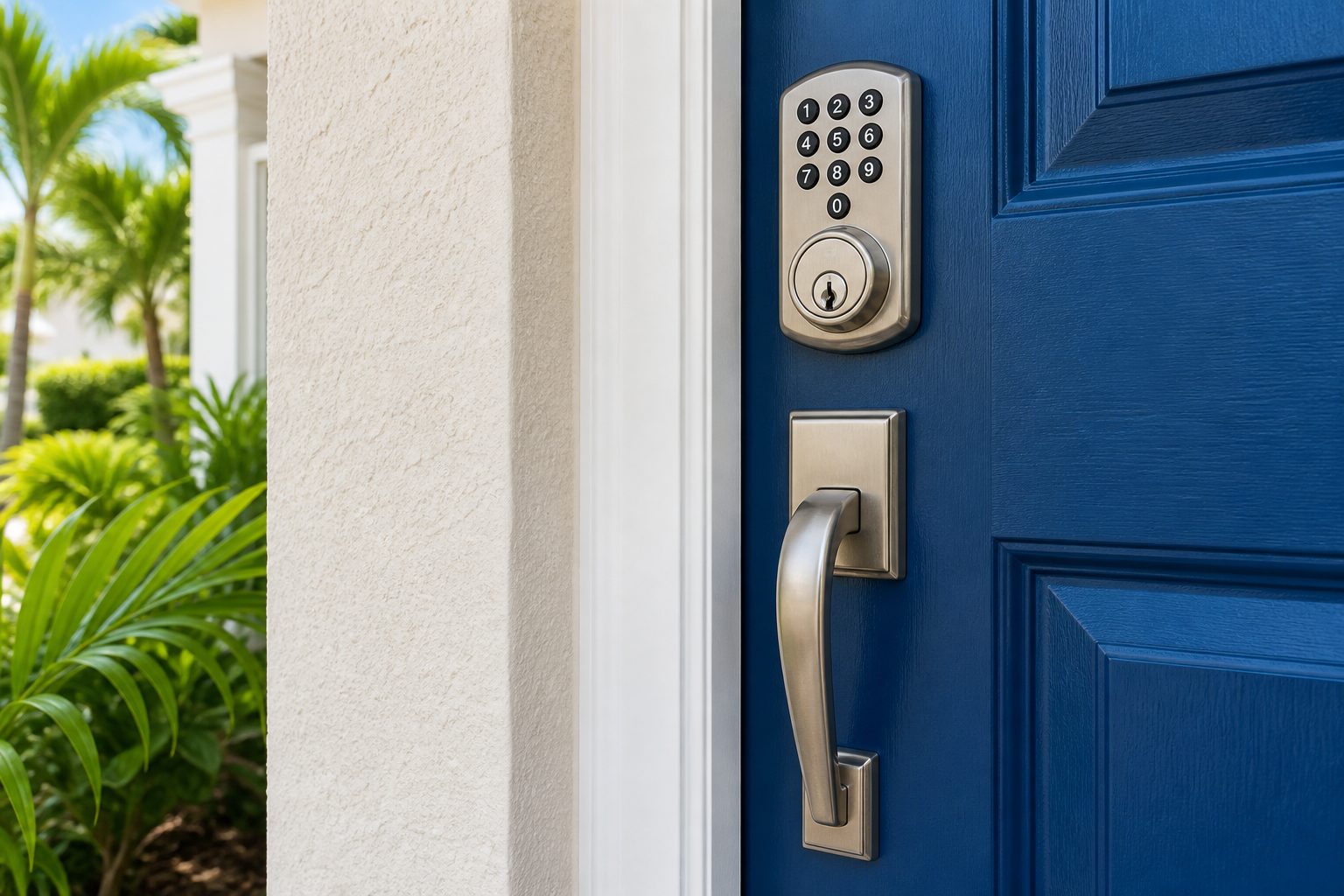
Electronic locks replace or supplement the key with a code, a card, a fingerprint, a phone or a combination of these. A keypad lock lets you enter a code on a pad. A smart lock connects to a phone or home system and may allow remote control, temporary access for guests and a log of entries. Many include a physical key as a backup.
The appeal is convenience. You no longer need to carry a key, you can give a temporary code to a visitor or service provider, and you can remove access later without changing the lock. This is useful for rental properties, families with children and anyone who has been locked out too often.
The tradeoffs are batteries, electronics and security habits. The lock needs power, and you should replace batteries before they run out. Weather and humidity can affect electronics, so choose models rated for exterior use. Access codes should be chosen sensibly and changed when someone no longer needs access. Our smart lock buying guide goes into this in more detail, and our guide on digital code habits describes good practice.
Inside many common locks is a pin tumbler cylinder. A set of small spring-loaded pins of different lengths must be lifted to exactly the right height by the key. When all pins line up, the cylinder can turn. The shape of the key blade, its profile, is called the keyway, and different manufacturers use different profiles.
Higher security cylinders add features such as security pins, restricted keyways and tighter tolerances to make unauthorized key duplication or manipulation more difficult. These details matter less for an interior door and more for an exterior door or business. A restricted keyway system also means that blank keys are not freely available, which helps control who can make copies.
You do not need to understand every detail to choose well. What helps is knowing that two locks that look the same from outside can differ greatly inside. When you replace or upgrade, ask what the cylinder offers, and whether it can be keyed to match other locks on your property.
Think about where the door is, who uses it and what it must handle. A front door facing the street benefits from a quality deadbolt plus a latching lever or knob. A back door that opens to a yard may deserve the same, along with a sturdy frame. A sliding glass door needs different hardware altogether, such as a secondary bar or pin lock.
Interior doors rarely need keyed locks. Privacy sets are fine for bedrooms and bathrooms, and passage sets for hallways. An exception might be a home office or a room that stores valuables, which could use a keyed or keypad lock. For doors used by children, think about whether they can lock themselves in, and make sure there is a way to open from outside in an emergency.
For a business, consider whether the door is an exit path. Many commercial doors need hardware that allows easy exit from the inside at all times, such as panic bars, and security is provided by the outside lock and access control. Fire and safety rules apply, so work with someone who knows the requirements for your building.
When you choose a lock, consider quality, fit and use. Check that it fits the door thickness and the existing holes. Look at the construction: heavier metal parts and solid cylinders typically last longer than lightweight components. Consider the finish, since Florida humidity can wear plated surfaces if the quality is low.
Installation matters as much as the lock. A well-installed lock on a straight, sound door performs better than an expensive one fitted badly. Make sure the strike plate is properly installed and the screws are long enough. If a door has dropped or the frame has shifted, fix the alignment first, since a lock that must be forced will wear out quickly.
Maintenance is simple but often forgotten. Wipe off dirt and keep moving parts clean. Use a suitable lubricant for locks sparingly, and avoid heavy oils that attract dust. Replace batteries on electronic locks on a schedule. When you are ready to discuss new locks, call and describe your doors, and we will explain how the quote works and what an on-site visit would cover before anyone is sent.
A latch is a spring-loaded piece with an angled face that holds a door closed and retracts when you turn the handle. A deadbolt is a solid bolt that only moves when you turn the key or thumb turn, so it cannot be pushed back. Latches are for everyday closing, and deadbolts provide the real locking strength.
For ease of use, often yes. Levers are easier to operate with wet hands, full arms or limited dexterity, which is why they are common in commercial and accessible settings. For security, neither is strong by itself, so exterior doors should also have a separate deadbolt. Quality varies, so choose a sturdy model.
Be cautious. A double cylinder needs a key to open from inside, which can be dangerous in a fire or other emergency. Many safety guidelines discourage them in homes. Consider other measures such as a stronger door glass or a secondary lock, and ask a locksmith about options that keep exit easy.
They can be, if you choose a reputable exterior-rated model and use good habits such as sensible codes, timely battery changes and removing access for people who no longer need it. They add convenience and control, but they are still hardware, so the door and frame matter just as much as with any lock.
Often yes. Mortise locks are sturdy and many are serviceable by a technician familiar with them. Parts for older models can be harder to find, and sometimes a matching modern body is available. If your lock is in good shape and fits the door, repair or rekeying is often better than replacement.
The keyway is the shape of the slot in the lock cylinder and the matching profile on the key blade. Different manufacturers use different shapes. Restricted keyways limit who can make copies, which adds control. Two locks that look the same from outside can have very different keyways inside.
Describe the situation by phone and we will tell you what the job involves. Quotes are given by phone. Jobs that cannot be quoted without seeing them need a technician on site, and the service call charge is explained on the phone before anyone is dispatched.