A mortise lock is a heavy, box shaped lock body set into a pocket cut in the door edge. It is common in older Orlando homes and many commercial doors. These locks last a long time, but parts, sizes and cylinder styles vary, so repair starts with identifying exactly what you have.
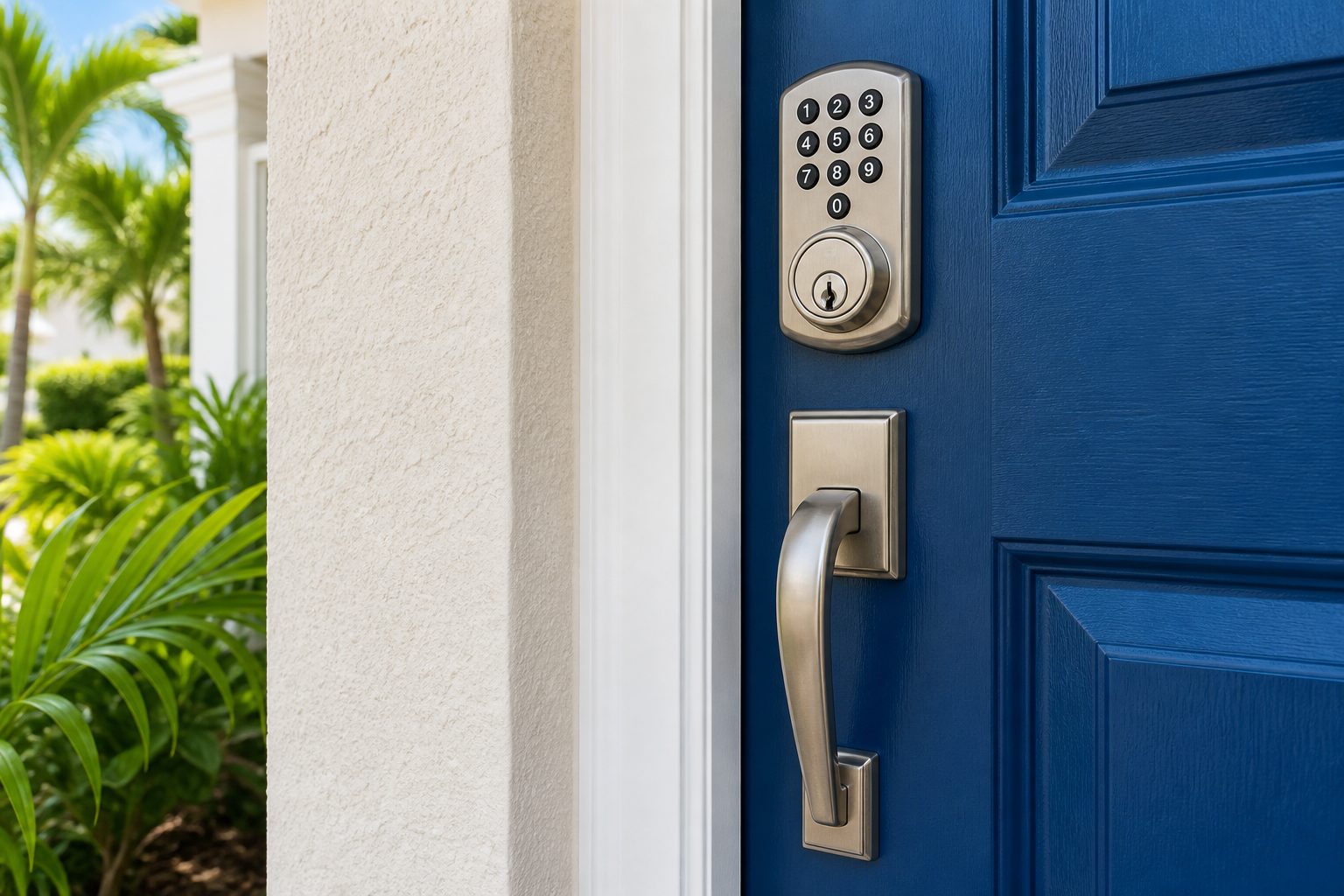
Most modern houses use a bored lock, where a round hole is drilled through the face of the door for the lockset and a smaller hole in the edge for the latch. A mortise lock is built differently. A rectangular pocket, the mortise, is cut into the door edge, and a self contained steel box holding the latch, the deadbolt and the mechanism slides into it. The handle, the cylinder and the trim attach to this body from either side.
This design is older than most people expect. It has been used for well over a century, and it persisted because it is strong. The lock body is a robust unit, the bolt is typically thick and the mechanism can combine a latch and a deadbolt in one case. In many mortise locks, turning the handle retracts both bolts at once, which is useful for fire exit and for quick escape.
The same design also makes mortise locks harder to service. The body must be removed from the edge of the door, the mechanism has many small springs and levers, and parts are specific to the manufacturer and model. Repair calls for a technician who knows these locks. If you have wondered why a locksmith asked about the brand stamped on the faceplate, that is why: it is the key to finding parts.
In the Orlando area, mortise locks turn up in historic neighborhoods with homes built in the early and middle twentieth century, such as parts of Thornton Park, College Park, Lake Eola Heights and Winter Park. They also appear in older bungalows, small apartment buildings and former commercial buildings that have been converted to homes or offices.
In commercial settings, storefront doors in older plazas and professional buildings often use mortise locks with a thumb latch or a lever. Many aluminum storefront doors use a narrow stile mortise lock designed for the thin metal frame. These are related to the older residential type but are different in size and parts, and they are covered more on the storefront door repair page.
If you live in a historic home and want to preserve its character, keeping and repairing the original mortise lock may be preferable to replacing it with a modern lockset. The historic home lock guide discusses how to balance authenticity and security, and whether a restored mortise lock can be brought up to current expectations.
Mortise locks are long lived, but the same age that proves their quality also causes trouble. Springs fatigue, internal levers wear, and decades of dust and old lubricant harden into a sticky layer. The usual symptoms are a handle that does not return, a latch that sticks, a key that turns stiffly or a deadbolt that does not fully throw.
The handle spindle and its set screws also work loose over time, so the handle spins or feels wobbly without moving the latch. If a handle has fallen off, the door handle fell off page explains how that happens. Another typical problem is a cylinder that has been replaced with the wrong length, so it does not engage the lock body properly.
Painting is a major source of mortise lock trouble. Faceplates and strike plates that have been painted over many times can stop the latch and bolt from moving freely. Careful cleaning and lubricating of the mechanism, rather than replacement, often brings these locks back to life. A technician will also check the door and frame, since a sagging door will make any lock feel faulty.
Most mortise lock repair begins with identification. The faceplate on the door edge often carries the manufacturer's name or a stamped model number. If the faceplate is painted over, a technician can gently clean a small area to read it. The case size, backset and the arrangement of the spindle and cylinder holes all help narrow the field.
Measurements that matter include the backset, the distance from the door edge to the center of the spindle, the height and width of the case, the thickness of the door and the cylinder hole position. Mortise locks are not interchangeable the way many modern locks are, and a body of the wrong size will not fit the existing pocket without cutting the door, which you generally want to avoid.
Photos help when you call. Take one of the faceplate, one of the handle and trim on both sides, and one of the cylinder. Do not take the lock apart to measure it. Dismantling a mortise lock without experience can leave you with a pile of springs and no way back, and the lock inside may be older and more fragile than it looks.
The keyed part of a mortise lock is a separate cylinder, usually screwed into the lock body from the outside. This is useful, because the cylinder can be changed without replacing the lock. Many mortise cylinders have a standard thread and a known length, which means a new cylinder can match your door and be keyed to your preferred key.
If you have moved into a home with a mortise lock, or lost a key, rekeying the cylinder is often the most direct path to security. A technician can rekey the existing cylinder or fit a new one. The details are covered on the rim and mortise cylinder rekey page, and the general difference between rekeying and replacing is explained in the rekey versus replace locks guide.
Upgrading is possible too. A higher security cylinder with pick resistant features can be fitted to many mortise bodies, and the right cylinder length matters for a clean fit. If you want keys that cannot be copied at a hardware store, a restricted key cylinder is an option, and the technician can explain how that works and what it means for spare keys.
Parts for many older mortise locks are still manufactured, especially for well known brands, and a technician may be able to replace springs, a latch bolt, a hub or trim. Parts for obscure or very old locks can be hard to find, and sometimes a part must be ordered or fabricated. A technician will tell you honestly whether repair is realistic or whether a replacement body is the better path.
When replacement makes sense, a new mortise lock body can often be fitted into the existing pocket if the size matches. Modern mortise locks are produced in sizes that fit many older doors, and some are made specifically to match historic styles. Another option is converting to a modern bored lockset, which requires drilling and filling the door and permanently changes it.
Conversion is a decision to consider carefully, particularly in a historic property. It removes original material from the door and cannot easily be undone. Many owners prefer to restore or replace the mortise body and keep the door intact. A technician can explain the consequences of each route without pressing you toward the more expensive one.
Because mortise locks often combine a latch and a deadbolt, a single motion on the inside can open the door. This is a safety feature. Be cautious about any modification that would require a key to open the door from the inside, such as a double cylinder, since that can trap occupants in a fire.
In commercial buildings, exits are governed by fire and building codes, and egress hardware must meet specific requirements. A locksmith can service mortise locks on exit doors, but should not change a door in a way that breaks code. The fire door and exit hardware page covers the basics. If your door is part of a rated assembly, the lock and any modifications must be compatible.
Finally, do not try to force a stuck mortise lock. The case is steel, but the internal levers are small and can bend or jam permanently. If a lock is stuck and you are inside, a calm call to a technician is better than a screwdriver. If anyone is in danger, call 911 first.
A mortise lock that has worked for decades will keep working with modest care. Operate the handle and the key smoothly, without slamming the door, since the latch bolt takes a hard blow every time a door is slammed. If a door is difficult to close, address the door rather than slamming it, because the damage is cumulative.
Lubrication should be light and infrequent. A small amount of dry graphite or a suitable lubricant on the bolt and key way once or twice a year is usually enough. Heavy oil or spray grease attracts the dust and grit that build up in humid climates and turn into a sticky paste inside the case. The page on lock lubrication and maintenance explains what to use and what to avoid.
Keep a spare key and, if you have a key with a stamped number, record it separately from the key. Mortise cylinders keyed to older systems can be difficult to match if all keys are lost, and having a working key to copy makes every future step easier. If you are unsure how many copies exist, a rekey brings the key count back under your control.
The technician starts by identifying the lock and testing how it behaves with the door open and closed. They check the door, the frame and the strike for alignment problems before removing anything. If the lock needs service, it is taken out of the door edge, cleaned, inspected and lubricated with the right product, and any worn parts are replaced.
Pricing is quoted by phone only. A simple cylinder rekey or adjustment can often be estimated from your description and photos. Identifying and sourcing parts for an older lock, or any door that needs more than lock work, may require an on site visit. A service call charge applies and is explained before a technician is dispatched.
Have photos ready, and if you can, find any keys that still work, since they help the technician understand the cylinder. Make sure someone with authority over the property is present. When you are ready to keep an older door working and secure, call and describe the lock in as much detail as you can. Even a rough description helps a technician arrive prepared.
Look at the edge of the door. A mortise lock has a rectangular faceplate with a latch and often a separate deadbolt coming from it, and the handle and cylinder attach through a thick lock body. A modern bored lockset has a round hole through the door face and a small latch on the edge. Photos of the faceplate help.
Often yes. Many mortise cylinders can be rekeyed, or the cylinder can be swapped for a new one keyed to your key. This avoids replacing the whole lock body. The technician checks the cylinder type and length first. Rekeying is a good step after moving into a home or losing a key.
For common brands, many parts are still made or can be sourced. Rare or very old locks may have limited parts, and a technician will tell you honestly if repair is practical. In some cases a replacement body can be fitted to the existing pocket, which keeps the door unchanged.
Not necessarily. Mortise locks are strong, and repair or restoration keeps the original door intact. Converting to a modern bored lockset requires drilling and changes the door permanently. A technician can explain the pros and cons so you can decide, particularly for a historic home.
The return spring inside the lock body or handle has likely weakened or broken, or the mechanism is gummed with old lubricant or paint. A technician can clean and lubricate the lock, replace worn parts or fit a new body. Forcing the handle will not help and can cause more damage.
Quotes are given only by phone. A simple rekey or adjustment can often be estimated after you describe the lock and send photos. Locks that need identification, parts sourcing or door work may require an on site visit. A service call charge applies and is explained before dispatch.
Describe the situation by phone and we will tell you what the job involves. Quotes are given by phone. Jobs that cannot be quoted without seeing them need a technician on site, and the service call charge is explained on the phone before anyone is dispatched.
Mortise locks sit in a deep pocket cut into the edge of the door, which means that any repair involves more than swapping a visible part. A technician first removes the trim and checks how the lock body is held, noting the screws, the faceplate, and any signs of earlier repairs. Older doors, especially those painted many times, may have fragile edges, so tools are used gently and in a considered order. The goal is to service or replace the lock while leaving the door intact, which is often the most valuable part of the entire installation and the most difficult to replace.
Once the lock body is out, the technician examines the internal parts. Springs, levers, and the latch assembly are checked for wear, breakage, or corrosion, which can be common in older buildings in a humid climate. They also look at the pocket itself to see whether it has been widened or cracked over the years. Sometimes a worn mortise lock can be cleaned and reassembled, and sometimes it needs a new body. The choice depends on parts availability and the condition of the door. Photos of the lock body and the faceplate help identify the brand and model before replacement is considered.
When the repaired or replacement lock goes back in, the technician takes time to fit it properly. The faceplate should sit flush, the throw should extend fully, and the strike should receive the bolt without pressure. Keys and thumb turns are tested many times from both sides. If the door has a character finish you want to keep, mention it at the start. The scope and any quote are explained before work begins. Ask about simple habits, like not forcing a stiff key and having small issues looked at early, which can keep a mortise lock serving for many more years.
Many owners of older buildings prefer to keep the original mortise hardware because it matches the character of the door and the building. That preference is reasonable, and a technician will respect it while explaining the practical limits. A worn lock can often be refreshed by cleaning, replacing a spring or a lever, and rekeying the cylinder. Decisions get harder when parts are no longer made or when the pocket has been damaged. In those cases, a modern mortise lock designed to fit the same pocket may preserve the door's look while giving reliable operation.
Think also about security and use. A lock that works but is badly worn may still be a weak point, especially if keys have been copied many times over the years. Rekeying the cylinder gives you fresh keys without changing the body, while replacing the cylinder lets you choose a different keyway. If the building is used by many people, such as an office or a small shop, a restricted keyway may be worth considering. The technician explains each route, along with the tradeoffs in appearance, effort, and long term reliability, so you can make a choice that fits your situation.
Before approving anything, ask what happens if the original lock cannot be saved. A good plan includes a fallback so you are not left with an open door pocket or an unusable entry. The technician should explain what they will do if the lock body proves too worn, and whether the replacement can be matched in finish. The scope and any quote are explained before work begins. Keep any removed parts if you value them, and ask for them to be labeled. A small record of the work done helps the next person who services the door.