Motorcycle and scooter keys are small, easy to lose, and often tied to several locks at once. This page covers how ignition, seat, helmet, and steering locks relate to each other, how a technician identifies the key type, and what you can do now to avoid a stranded ride.
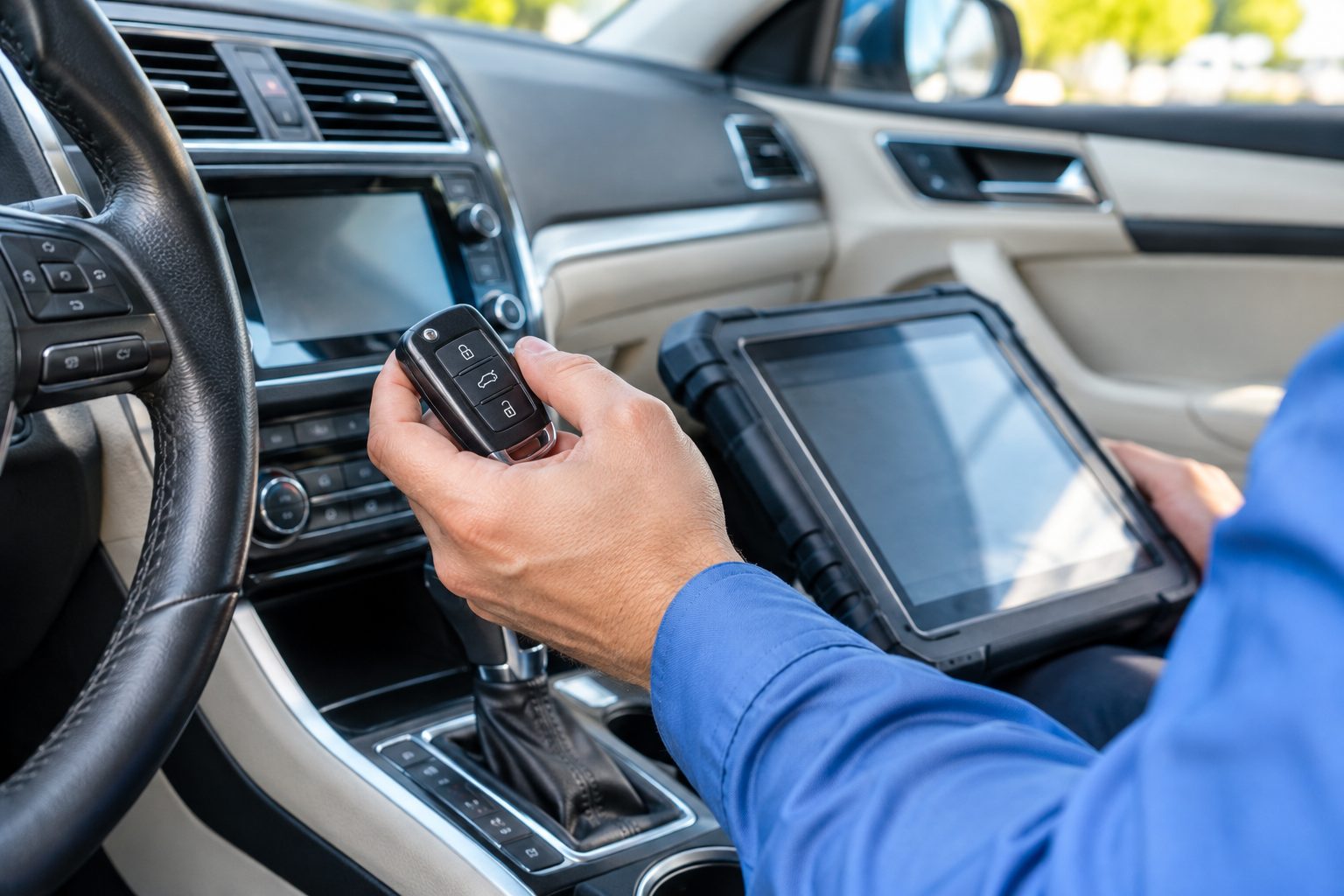
A car key is typically one key for the doors and the ignition, with a spare in a drawer. A motorcycle or scooter is more varied. A single bike may use one key for the ignition, steering lock, and seat, while a second key opens a rear trunk, a tank cap, or a side case. Some scooters use a key with a plastic head, a flip blade, and a chip. Older machines may use a plain metal key that looks much like a padlock key. The key types are less standardized across makes and years than car keys, so identifying the right one takes some care.
Another difference is exposure. A motorcycle spends its life outdoors or in a carport, in rain, sun, and humidity. The ignition switch is small and open to the air, and the key spends time in a pocket or on a ring that gets knocked and bent. Wear on the blade, corrosion in the switch, and loose wiring behind the switch are common causes of trouble. A key that will not turn is not always a key problem, and sometimes the switch itself needs attention.
Finally, the stakes feel different. A rider who loses a key may be miles from home, wearing gear, with a bike that cannot be left unattended for long. Quick and accurate help matters. Our approach is to tell you plainly what is needed, and to avoid any steps that could damage the machine.
The main lock is the ignition switch. It controls the electrical power to the bike. On many models, it also has positions for the steering lock and sometimes a position that opens the seat or fuel cap. Turning the key to the lock position while the handlebars are turned to one side engages a small bolt in the steering stem, which prevents the bike from being steered and so discourages theft.
The seat lock is a separate small cylinder or a release operated by the same key. On many scooters, the seat hides a storage compartment and the fuel filler, so a seat that will not open can also prevent refueling. Helmet locks, small cables or latches under the seat, may use the same key or a different one. Some touring motorcycles also have locks on the tank cap, side cases, and top case, and each may take a different key.
Understanding how many locks your machine has and which ones share a key helps when you call. A technician will ask which locks you need to open and which key types you already have. If one key has been lost and another still works, they can often identify the blade and the cuts from the one that remains.
Identification starts with what you know. The make, model, and year of the bike usually point toward the type of ignition and the key blank. Some keys are stamped with a number or a brand mark on the head, which helps narrow it down. If you have any key left, even a worn one, the technician can compare the blade profile and measure the cuts. Many motorcycle keys have a single sided blade and are cut on a dedicated machine that handles thin stock.
When no key remains, the identification is based on the bike and the lock. The ignition switch can sometimes be read directly, and some manufacturers use a key number stamped on the lock itself or on a tag that came with the bike. Do not hunt for such numbers using tools that could damage the machine. A technician will decide whether the lock must be accessed or whether another approach is better, and will explain what is involved before starting.
It also matters whether the key has a chip. Many newer motorcycles and scooters use an immobilizer, and the key contains a transponder that must be recognized by the bike. In this case, cutting is not enough and the chip must be programmed, much like a car key. Our page on transponder key programming explains how this works, and the same principles apply on two wheels with differences by brand.
As scooters and motorcycles have become more advanced, their key systems have followed cars. Many mid-size and large scooters now use proximity fobs with a knob or a button, and some premium motorcycles do the same. The fob stays in your pocket, the bike detects it, and you turn a switch or press a button. If the fob is lost, the bike needs a new one to be registered.
Flip keys on some scooters hide the blade within a fob with buttons. If the blade is bent, the fob will not work properly even if the electronics are healthy. Replacement may involve a new shell, a transfer of the electronics, or a full key. A technician will tell you which is possible based on the make.
If your bike has an alarm, a remote start, or an aftermarket anti-theft device, tell the technician. These systems are sometimes linked to the key and can complicate programming. A good technician will not guess about them and may ask to see the bike or the paperwork. We also have a broader page on key programming that covers how security systems are matched to keys.
The three common situations are a lost key, a broken key, and a key that is stuck. A lost key calls for identification and replacement, as described above. A broken key may leave part of the blade in the ignition. Do not try to dig it out with a pin or a knife, because the ignition switch on a bike is small and delicate, and forcing it can break the internal parts. Leave it to a technician who can extract the piece with the right tools. We cover this in more detail on our page about broken key extraction.
A key that is stuck or hard to turn often points to dirt, corrosion, or a worn switch. Florida humidity makes this worse. A little lock lubricant of the correct type can help in mild cases, but heavy oil or grease can attract dust and make the problem worse over time. If the key will not turn at all, avoid forcing it, because a twisted key is much harder to remove than a stuck one.
There is also the steering lock. If the handlebars have been turned and the lock is engaged, the key may resist turning in the ignition. A gentle shake of the handlebars while turning the key often releases it. If that does not work, stop and call rather than risk breaking the key. A broken key in the steering lock is a bigger problem than a stuck one.
Riders in Orlando face a mix of conditions that matter for keys. Summer storms can come quickly, and a key ring that is wet and then dried in the sun may corrode. Humid air encourages rust in small switches. Many riders park at apartment complexes, outdoor lots, and public garages, and the main security risk is theft of the whole machine, not just the key. A fork lock, a disc lock, or a chain is a sensible supplement.
Keep a spare key somewhere other than the bike. A key kept in a hidden compartment on the motorcycle is almost the same as no lock at all, because a thief who knows where to look can find it. Instead, keep one at home, and consider giving one to a trusted friend. A magnetic box stuck under the frame is also a poor choice, since it is a known hiding place.
Take a clear photo of your key and any key number stamped on it, and store the photo somewhere secure. It will not replace the key, but it helps a technician identify the type. Our guide on how to find your key information explains where numbers can be found without damaging the lock.
Because a motorcycle key gives a person full control of a valuable machine that is easy to roll away, a careful technician asks for proof of ownership before making or programming a key. Typically that means photo identification and a registration or title that matches the bike. If the bike is financed, a copy of the paperwork or a lender letter may be useful. If it belongs to a business, a work order or a letter from the owner helps. These requests are routine, and they protect you in the same way they protect every other rider.
Many riders keep the registration somewhere on the bike or in a bag, and it can be lost along with the key if the bike is stolen or the bag is taken. A better habit is to keep a photo of the registration, the vehicle identification number, and the key on your phone, plus a paper copy at home. The vehicle identification number is usually stamped on the frame near the steering head and also printed on the registration. Writing it down gives a technician a way to confirm the make, year, and model, and in some cases the exact key type.
If you bought the bike used, check that the paperwork is in your name before you need a replacement key. A bike with a title still in the seller name can cause delays when a locksmith asks for proof. It is also worth asking the seller how many keys exist and whether a registration card, a registered key tag, or an extra fob was ever issued. Even where a technician cannot use a number to cut a key, the information can help identify the correct blank. For more on gathering the right documents, see documents needed for car key replacement, which applies in much the same way to two-wheeled vehicles.
Finally, make a plan for where the spare will live. Keep one at home and tell someone you trust where it is. If you ride in a group or travel to events, a spare held by a friend can save a long day. A short list of these habits, kept in your phone notes, can turn a stressful loss into a routine fix.
Scooters and mopeds are common around Orlando, particularly among students, hospitality workers, and visitors who rent them. Their keys are often small and simple in appearance, but the locks can be tricky. Some use a key with a plastic head and a simple blade, while others use a small flip key or a proximity fob. A rented scooter may use a key that belongs to the rental company, and in that case the company is the first call.
Electric scooters and e-bikes add their own twist. Many have a key switch for power or battery lock, and the battery may be released with a separate key. Losing the battery key can leave you with a bike that cannot be charged or removed. A technician can often make a replacement for common types, and will tell you if the manufacturer must supply the key.
For low speed vehicles such as golf carts and utility carts, which are common in communities and resorts, keys are often simple and widely shared. We describe our general approach to these cases in the context of key duplication, which you can read about on our page on spare key duplication. If you manage a fleet of scooters or carts, key control becomes important, and the technician can help you set up a system.
When you call, describe the machine, the key situation, and where the bike is. The dispatcher will ask for the make, model, and year, whether you have any key left, and whether the bike has an immobilizer or a remote. Quotes are given by phone, and a service call charge applies, explained before any technician is dispatched. Some bike key jobs need an on-site visit so the technician can look at the ignition before deciding what is needed.
At the site, the technician will confirm your ownership with registration or title and photo identification. This step protects you and the bike. Then they will identify the key type, cut a key if possible, and test it in the ignition, seat lock, and any other lock involved. If the key has a chip, they will program it and check that the bike starts and that the alarm and remote work as expected.
If the lock needs repair or replacement, the technician will explain the options. Sometimes the ignition switch can be rekeyed to a new key. Sometimes a replacement switch is more reasonable. In either case, you should hear the facts and decide for yourself. Whether you ride a large touring motorcycle or a small scooter, give us a call and describe what you have, and we will explain the next step.
Often, yes, but the method depends on the make and the lock. A technician may identify the key type from the bike, or work from the lock itself. Some machines need a part or authorization from the manufacturer. Proof of ownership is required. Call with the make, model, and year, and the dispatcher can say what is likely.
If the bike has an immobilizer, the key may turn the switch without being recognized by the system. It can also be a battery or wiring problem that has nothing to do with the key. A technician can test whether the chip is the issue before replacing anything. Describe what the dashboard does when you turn the key.
On many motorcycles and scooters they do, but not on all. Some bikes use a second key for the seat, tank, or side cases. Tell the technician which locks you need to open and which keys you have. If one key works for some locks and not others, that is useful information for identification.
Do not try to pull the piece out with a pin or a knife, since the switch is small and easy to damage. Leave the bike where it is if it is safe, and call. A technician can remove the broken piece with the right tools and make a new key, often in the same visit if the key type is available.
If you rent the scooter, the rental company owns it, and they should be your first call. They may have their own replacement process. If you own the scooter, we can help with keys. Provide the make and model, and whether the key has a chip or remote, and the dispatcher can explain the options.
Park the bike somewhere reachable and safe. Have registration or title and photo identification ready. Bring any key that still works, even if it is damaged. Note the make, model, and year, and take a photo of the ignition area. Quotes are given by phone, and the service call charge is explained before dispatch.
Describe the situation by phone and we will tell you what the job involves. Quotes are given by phone. Jobs that cannot be quoted without seeing them need a technician on site, and the service call charge is explained on the phone before anyone is dispatched.