A spare key made while your original still works is the least stressful way to avoid a lockout. This page explains how duplication actually works, why copies of different key types behave differently, and how to decide which spares are worth making for your home, vehicle, or small business.
Most people think about spare keys only after something goes wrong. The original gets dropped in a lake, left in a rental car, locked inside a vehicle, or simply worn down until it no longer turns smoothly. At that point the job changes. Instead of copying a working key, a locksmith has to create a key from scratch using the lock itself, the vehicle identification number, or a key blank matched by observation. That is a longer and more involved job than duplicating a key you can hand over.
Duplication is the simplest version of key work. You hand the technician a working key, they select a blank that matches the keyway, and the cutting machine traces the original and cuts the same pattern into the new blank. The result is a second key that operates the same lock. For a plain brass house key, that is nearly the whole story. For a car key with a transponder chip, the cutting is only half the job, and the other half is making the car recognize the new key.
The practical lesson is that spare keys are easiest on effort and stress when made early. A working original gives the locksmith a reference, removes guesswork about wear, and lets you test the copy immediately while you are still standing at the door. If the copy sticks or turns badly, you find out on a calm afternoon instead of at night in a parking lot. That is why this page spends time on how to plan your spares, not only on how they are cut.
Understanding the process helps you judge the quality of any copy. First, the technician identifies the keyway, which is the profile of the groove running along the blade. Keyways differ by lock brand and series, and a blank that does not match the keyway will not even enter the lock. Common residential keyways are familiar to every locksmith, while some restricted keyways are only available to authorized sources.
Second, the technician clamps the original and a matching blank into a duplicating machine. A guide follows the cuts on the original while a cutter wheel removes metal from the blank in the same pattern. A careful operator keeps the original and the blank seated squarely against the same reference shoulder or tip stop. A key that is clamped slightly crooked will produce a copy whose cuts are shifted, and that copy may feel gritty or refuse to turn.
Third, the new key is deburred. Cutting leaves small metal burrs on the edges. If they are left in place, they scrape the inside of your lock, shed fine metal particles, and cause the lock to wear faster. Finally, the copy is tested in the lock it was made for, and preferably in the lock a second time after a few turns. A good duplication feels like the original. If it does not, it should be recut, because a poorly cut copy is a common reason people later believe their lock is failing when the lock is actually fine.
Every duplication introduces a small amount of error. The guide may sit a fraction off, the blank may flex slightly, or the cutter may have worn. One copy usually stays within tolerance. A copy made from that copy, then another copy made from that one, can drift until the cuts are far enough from the original that the lock hesitates or refuses to turn. This is the reason people sometimes say a key worked fine for years and then suddenly stopped working. Often what actually happened is that it was the third or fourth generation of copies.
If you have a key that is already a copy, and a worn one at that, it is better to start from the lock itself or from a clean original when possible. A locksmith can often cut by reading the lock itself, producing a key that is closer to the manufacturer specification than any copy of a worn key could be. This is also the sensible path when a copied key works only sometimes, a situation we cover on our page about copied keys that do not work.
A good habit is to keep one original that is never carried and never lent out, and to make spares from that original only. Label the original in a drawer or lockbox. Every working copy then stays one generation away from a clean source, which keeps your whole set reliable for years.
Not all keys duplicate the same way. A standard house key with an open keyway is the easiest. Higher security keys may have dimples drilled into the face of the blade rather than cuts along the edge, or may have a second set of cuts on the side. These need a different machine, and the blank must be correct for that lock series. Some of these keys carry a patent or a restricted blank program, which means that copying may require a proof of ownership or a registered cardholder. We discuss this on our high security locks page.
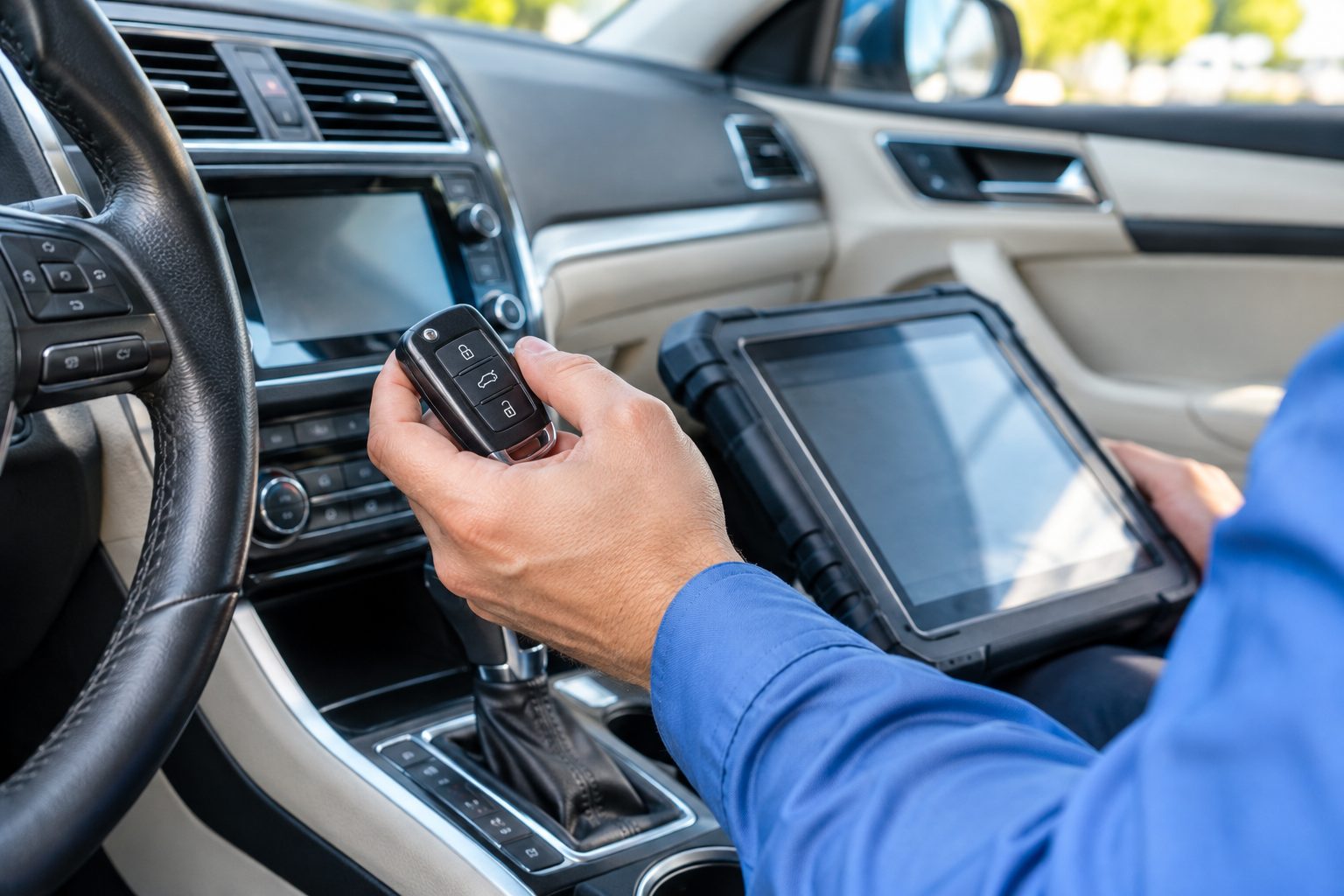
Car keys add another layer. An older car key may be only a cut metal blade with a plastic head, and duplication is much like a house key. A key made since the late 1990s in most makes contains a transponder chip that talks to the ignition system. Cutting the blade correctly is not enough, because the chip must be programmed to the car. If the car does not recognize the chip, it may turn over and then shut off, or it may refuse to crank at all. Our page on transponder key cutting and programming explains this in more detail.
Smart keys with push-button start are a third category. They do not have a blade you can simply duplicate in the usual sense, and the fob must be registered to the vehicle. A cut emergency blade may be tucked inside the fob, but the fob itself is the real key. You can read more under smart key replacement. The takeaway is that you should tell the technician the make, model, and year of the vehicle, not only that you want a copy.
There is no single correct number of spares, but a few questions help. Who needs regular access? A family with two adults and two teenagers has a different pattern than a single resident. Where would a lockout hurt the most? A vehicle at the theme parks or on the highway has a higher cost for a lockout than a house where a neighbor holds a key. Is there a second person who may need entry when you are away, such as a pet sitter, a relative, or a cleaning service? Each answer suggests a different spare, and not every spare needs to live in the same place.
A practical set for a typical household might include one spare for each adult kept at home in a safe place, one kept with a trusted person nearby, and one stored separately from the home in a protected location. For vehicles, a spare that is kept at home is useful even if you never carry it, because it lets you recover quickly when the main key is lost. The more expensive the key type, the stronger the case for making a spare before the original fails.
Avoid hiding keys in obvious places such as under a mat, on top of a door frame, or in a fake rock beside the door. These spots are the first places a stranger would check, and a hidden key can turn a minor inconvenience into a security problem. Our page on spare key storage ideas goes through safer options.
Bring the working key, the one you intend to copy, and bring it clean. A key caked with dirt or fine grit can mislead the machine and cause cutting errors. If you have a lock that uses more than one key, such as a deadbolt and a knob keyed differently, bring every key you need copied and tell the technician which lock each one operates. For vehicles, bring the vehicle itself when possible, since the technician may need to test the new key in the ignition and the doors.
Expect the technician to ask a few questions. They may ask whether the key is stamped with a do-not-duplicate marking. They may ask who owns the property, since some locksmiths will request a simple confirmation of ownership for restricted keys. They may ask whether you want the copy tested at the lock, which is a good idea. For car keys, they may ask for proof of ownership and identification before programming a new key to the vehicle, and that request is a sign of a responsible professional rather than an obstacle.
Do not be surprised if a technician declines to copy a key that is stamped with a do-not-duplicate notice and attached to a master key system. That stamp is a signal that the owner of the building controls access, and a responsible locksmith respects it. A property manager or the system owner can authorize copies directly.
A do-not-duplicate stamp on a key is a request, not a physical barrier. A key with such a stamp can still be copied by anyone willing to ignore it. That is why serious key control relies on restricted keyways and registered blanks, not on a stamped message. If you manage a business, an office, or a rental, consider whether your keys are only stamped or truly controlled. Our guide to key control policies for businesses covers how to move from a stamp to a real system.
For households, the stamp matters less. What matters is who has copies and whether you know where they are. A ring of old keys from a prior owner, a former roommate, or a contractor who worked on the house is a hidden risk. If you cannot account for the copies, rekeying the locks is usually a better answer than trying to retrieve every old copy. Our page on lock rekeying explains how a lock can be changed to work with a new key without replacing the hardware.
A mobile locksmith carries cutting equipment in a vehicle, and for many common keys the work can be done at your door, at your office, or beside your car. This is convenient when the key you need to copy is the only key you have, since handing it across a counter means you are temporarily without it. It is also useful when a vehicle will not start, when someone cannot leave their home, or when a business cannot close up while staff run an errand.
Some work is better done in a shop with a advanced machine, such as certain high security keys, laser-cut keys, or keys for older locks that require a custom blank. A good locksmith will tell you plainly which jobs fit on site and which do not. If a job needs a visit to a shop, you should hear that on the phone before anyone is dispatched. Our page on mobile key cutting explains how the on-site process works.
Whichever way you choose, the same standards apply. The copy should be cut accurately, deburred, and tested. The technician should tell you what kind of key you have and what the job involves. And you should hear the terms by phone before the work begins.
Central Florida is hard on keys and locks. Humidity encourages corrosion on brass and steel, and a house near a lake or a coastal drive can see faster tarnishing. Summer heat inside a parked car can warp plastic key heads and stress the soldered joints in remote fobs. Pool chemicals can reach keys that spend time in a swim bag. A key that has lived on a ring with a heavy bundle for years will show wear on its cuts, and that wear is what eventually stops it from lifting the pins in the lock correctly.
If a key already feels loose in the lock, sticks, or needs jiggling, it is a sign of wear on the key, the lock, or both. Duplicating a worn key tends to reproduce the wear. In those cases, a technician may suggest cutting a fresh key from the lock itself or checking the lock cylinder first. Our guide on humidity and lock longevity describes how moisture affects hardware over time, and routine lubrication can slow the process.
Plan your spares with the climate in mind. Keep the master original indoors in a cool, dry place. Replace any key that is visibly bent, cracked, or thin at the tip before it breaks in the lock. A broken key in a door is a harder problem than a worn one, and we discuss it on our broken key extraction page.
A short call goes faster when you have the basics ready. Know whether the key is for a door, a vehicle, a padlock, a mailbox, or something else. Know the make, model, and year if it is a vehicle key. Know how many copies you want and whether the original still turns smoothly. If you can read a brand name stamped on the key head or on the lock, mention it. Quotes are provided by phone, and the technician can usually tell you whether the job fits on site or needs a visit.
Ask what the call involves before you agree to anything. A reliable locksmith will explain the service call charge before dispatch, tell you whether the work is a simple copy or something more involved, and let you decide. If a job turns out to be more complicated than it first sounded, an on-site visit may be needed so the technician can look at the lock or vehicle directly, and that will be explained on the phone first. Our page on how a phone quote works walks through the process.
When you are ready, call and tell us what you have and what you need. We will help you work out which spares make sense, whether the job can be done where you are, and what the next step looks like. It is easier to make a good spare today than to rescue a lost key tomorrow, so give us a call whenever you are ready.
Most standard house keys and many older car keys can be copied on a duplicating machine. Some keys are not simple to copy, such as restricted keyway keys, registered high security keys, and keys stamped for a master system. Modern car keys with chips also need programming, not just cutting. Tell the technician what you have, and they can say whether the copy can be made on site.
A rough copy usually means the cuts are slightly off, the burrs were not removed, or the key was copied from a worn original. A good technician tests the copy in the lock and recuts it if needed. If the lock itself is worn or dirty, even a perfect key can feel gritty. Lubrication or a cylinder check can help, and a technician can tell which one applies.
If your working key is in good shape, a careful copy is usually enough. If the key is badly worn, already a copy of a copy, or the only one you have left, cutting a fresh key from the lock or from the lock can produce a cleaner result. A locksmith can look at the key and advise which path makes sense for that lock.
For ordinary house keys, many copies are made without questions. For car keys that must be programmed, restricted keys, or keys tied to a building system, a responsible locksmith may ask for identification and proof of ownership or authority. This protects you as well, because it makes it harder for someone else to obtain keys to your property.
There is no fixed number. A common approach is one spare per adult who needs regular access, plus one stored securely away from the lock it opens, with a trusted person or in a locked place. Vehicles with chip or smart keys deserve a spare sooner, because replacing a lost one is more involved than copying a working one.
For many common keys, yes. A mobile locksmith carries cutting equipment and can copy a house or car key where you are. Some advanced keys need a shop machine or a part that has to be ordered. Call and describe the key, and you will be told on the phone whether the job can be done at your location, and what the call charge involves.
Describe the situation by phone and we will tell you what the job involves. Quotes are given by phone. Jobs that cannot be quoted without seeing them need a technician on site, and the service call charge is explained on the phone before anyone is dispatched.