Everyone needs a spare key, and almost everyone stores it badly. The fake rock, the mat and the planter are the first places anyone checks. This guide compares trusted neighbors, lockboxes, keypad locks and other options so your spare gets you inside without letting anyone else in.
A spare key exists for one reason: to get you back inside when your main key is lost, locked in the house, or out of reach. To do that job it has to be somewhere you can reach when you are locked out, which means it has to be outside your locked door or with another person. That requirement creates the tension. The more reachable the spare is for you, the more reachable it is for anyone else who knows where to look.
Think of a spare key as having three qualities: accessible to you, hidden from everyone else, and reliable when needed. Most common hiding places score well on the first and poorly on the second. The key under the mat is accessible, but it is the first place a person with bad intentions will check, and the second place a delivery driver or visitor might look by accident. A key tucked on top of a door frame is almost as bad. These habits are so widespread that they are practically public knowledge.
The better approach is to separate the concerns. Choose a storage method that does not depend on secrecy alone, such as a lockbox with a combination or a trusted person who holds the key. Then make sure the method still works if the key is lost or someone sees where it is. In a place like Orlando, with a large number of rental homes, visitors, short-term stays and shared buildings, spare keys pass through many hands, so a plan that tolerates that reality is the most useful one.
Let us start with the places to avoid. Under the doormat is the oldest and most obvious. Under a flowerpot, in a fake rock, on top of the door frame, inside the mailbox, inside a light fixture, under a gnome or a flamingo statue, on a nail inside the garage, and in the grill cover are all well known. Magnetic key boxes stuck under the car or inside a wheel well are also obvious to anyone who searches vehicles. The common feature is that they depend on secrecy of location, and the location is not secret.
There are other risks too. A key hidden outdoors can be damaged by Florida weather. Heat, humidity and rain corrode the metal, warp plastic parts and can ruin a key fob or a transponder chip. A plastic fake rock cracks in the sun. A key left in a damp planter will rust and may stop turning a lock smoothly. By the time you need it, it may not work.
The worst version is a key labeled with an address. Some people tag a spare with their address, thinking it will help if it is lost. It tells a finder exactly which door it opens. Never label a key with an address or a name that identifies the property, and never leave a house key in a car parked outside, where a break-in of the car can lead straight to the house. If you currently use one of these hiding places, stop, and move the key today.
The classic solution, and still one of the best, is leaving a spare with a person you trust. They are available in a lockout, they cannot be tampered with like a hiding place, and they are part of the neighborhood watch that exists informally on every street. In many cases a neighbor can even look in on the house when you are traveling.
Choose carefully. The best holder lives close, is generally home or reachable, and is responsible. Avoid giving a spare to someone whose own home is often unoccupied or someone who might lend the key to others. Think about what the holder knows: if they have the key and the address, they have access. If you have fallen out with a neighbor, or your tenant relationship with them is complicated, do not rely on them.
Agree on how the key is kept. Ask the holder to keep it somewhere safe in their own home, not on a hook near their front door, and not labeled with your address. Agree on how you will contact them and how they will return it. If they move or if you move, take the key back. And if you ever feel the key may have been lost or copied, the easiest cure is to rekey the lock so that the old key no longer works. Our rekeying service page explains how that works.
A lockbox is a small metal box with a combination or a keypad that holds a key. It solves the secrecy problem differently: the box is visible, but opening it requires a combination, so it does not rely on hiding. Used correctly, it is one of the most practical options for households, short-term rentals, caregivers and contractors.
Quality varies a lot. Look for a box with a solid metal body, not a thin plastic shell, and a shackle or mounting plate made of hardened metal. A shackle that hangs on a door handle is convenient but can be cut or pried off more easily than a box bolted to a wall. For permanent use, a wall-mounted box fastened to masonry or solid framing with proper anchors is the stronger choice. Choose a combination you can change, and change it whenever someone who knew it no longer needs it.
Placement matters. Mount the box where it is out of casual view but within reach, such as on a side wall or behind a gate, not at eye level next to the front door. Avoid a spot visible from the street. Choose a combination that is not a birth date or a house number. Check it regularly: Florida humidity still gets into dials and buttons, and a box that sticks when you need it is little help. A small spray designed for locks, used sparingly and according to the maker's guidance, keeps the mechanism moving. We cover lockbox use for property agents on our real estate lockbox page.
One way to avoid the spare key problem is to reduce your reliance on keys. A keypad or smart lock lets you enter a passcode, use a fob or a phone to open the door, and in many cases to give temporary access to others. If you are locked out, you do not need a spare because the passcode works. This is why so many Orlando homeowners and short-term rental hosts have moved to these locks.
The trade-off is that you now manage digital access. Passcodes must be chosen well, shared carefully and changed when needed, and batteries must be kept fresh. Most keypad locks also include a physical key as a backup, which brings you back to the question of where to keep that key. Even so, the backup key is used rarely, so it can be stored more securely, for instance with a trusted person or in a lockbox, rather than in the hot, damp outdoors.
If you are considering this route, look at smart locks and keyless entry and our guide to digital lock passcode habits. A technician can explain which models suit your door, and can set up several user passcodes so each person has their own.
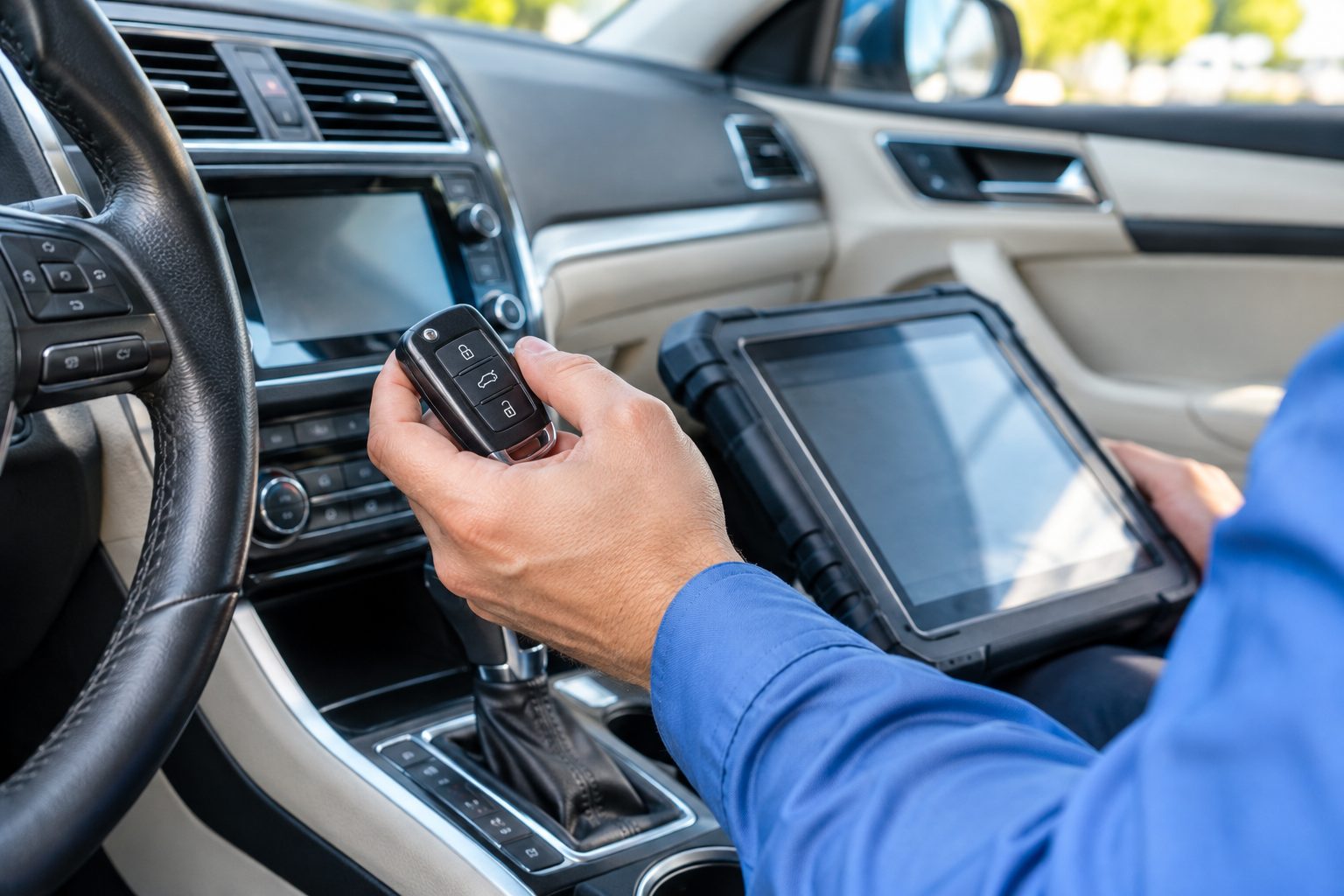
Car spare keys have their own concerns. Modern car keys often contain a chip, and many are smart fobs, which cost more to replace and need programming. Keeping a spare is more valuable now than in the past, because losing all keys can be a bigger problem. Our page on all keys lost describes what that situation involves.
Do not leave a spare key in or on the car. A magnetic box under the bumper is a favorite place for a thief to check, and a spare in the glove box defeats the purpose of locking the car. Store the spare at home, in a place that is dry, cool and out of the sun. Heat can damage the battery and electronics in a fob, which is a particular concern in a Florida summer, as covered in our guide to summer heat and key fob care.
Check your spare occasionally. A fob that has not been used for a long time may have a dead battery, or may have lost its programming link with the car. Try it every few months to confirm it still works. If you have only one working key for a vehicle, consider having a spare made before you need one, since making a spare when you still have a key is usually simpler than starting from nothing.
If you host guests, rent a property or use house sitters, you need a plan for temporary access. Handing out copies of a key is tempting, but copies are hard to track and easy to forget. Keys returned late, or never returned, mean that someone you no longer know may have a way in. Landlords and property managers face this problem constantly.
A lockbox with a changeable combination, or a keypad lock with unique guest passcodes, handles it much better. Change the combination or passcode between stays, and remove access for sitters when they finish. For landlords and managers, keep a log of who has which key and when it was issued. Our pages on vacation rental lock service and property manager lock service explain how locksmiths support these arrangements.
For house sitters and family, give them what they need for the time they need it. If a copy of a key has been made for them, ask them to return it, and think about whether to rekey after a long stay. Rekeying is a simple way to restore control. It leaves the locks in place and changes the internal pins so old keys no longer work, which is often the fastest way to be sure that no stray keys remain.
Whatever method you choose, write down how it works. Note where each key is, who has a copy, what the lockbox combination is, and who to call if you are locked out. Store that note somewhere safe but accessible, for instance in a password manager or with a trusted family member, not on the door or in the lockbox itself.
A good spare key plan survives surprises. What if the neighbor is away? What if the lockbox combination is forgotten? What if the battery in the keypad dies? If you can answer each of these questions with a backup, your plan is solid. If the answer to any is that you would be stuck, add a layer. Layering is the main idea in all security, and spare keys are no exception.
Review the plan once a year, or after any big change such as a move, a breakup, a change of tenant or a lost key. If you ever suspect a key is in the wrong hands, act on it rather than hoping. Our lockout prevention habits guide has routines that make the whole system less stressful.
There are times when moving the spare is not enough. If a key has been lost with your address attached, if a tenant or contractor kept a copy, if a relationship has ended, or if you have moved into a home and do not know who has keys, the safest step is to rekey the locks. Rekeying changes the internal pins so that every old key stops working, and you receive new keys. It is quicker than replacing hardware in most cases and leaves the locks and doors as they were.
A technician can rekey a cylinder on site, and can set several locks to the same key so one key opens the front door, the back door and the garage entry. That is called keyed-alike, and it reduces the number of keys to carry and store. You can read more in how keyed-alike locks work.
If you are unsure whether rekeying makes sense, call and describe what happened. A technician can say whether rekeying fits, or whether the situation calls for new hardware. Quotes are given by phone only. Jobs that depend on seeing the hardware need an on-site visit, and there is a service call charge that is explained on the phone before dispatch.
If you want a locksmith's help setting up or changing your spare key plan, have a few facts ready. How many doors have keys? What type of locks are they? Do you want the same key for several doors? Is there a lockbox, keypad or smart lock already? Who currently has copies, and do you know how many copies exist?
It also helps to know whether you want a physical solution, a digital one or a mix. A common choice is a keypad on the front door, a conventional deadbolt on the back door and a lockbox for a backup key. A technician can recommend a setup based on how you live and who needs access.
When you are ready, call and describe your situation. We will talk through the options, explain what a visit involves, and give a quote by phone. Related pages that may help include spare key duplication and residential locksmith services. Call whenever you want to talk it through.
It is not recommended. These places are the first ones anyone checks, and they depend entirely on secrecy. Florida heat and moisture can also damage a key left outdoors. A lockbox with a combination, a trusted neighbor or a keypad lock are all better options. Never label a key with your address.
Look for a solid metal body, a hardened shackle or a wall-mount plate, and a combination you can change. Mount it out of casual view on a solid surface, choose a combination that is not obvious, and change it when someone who knew it no longer needs access. Check that the dials or buttons still move smoothly.
It can work well if the person is responsible, lives close and is reachable. Ask them to store it safely at home, not on a hook by their door and not labeled with your address. Take it back when either of you moves, and rekey if you ever think it has been lost or copied.
A keypad removes the need for a spare for everyday use because the passcode opens the door. Most still include a backup key, and batteries need attention, so keep a backup somewhere secure. Choose passcodes carefully and change them when guests or workers no longer need access.
Rekey if a key has been lost with an address attached, if a tenant, contractor or former partner may have a copy, or if you have just moved in and do not know who holds keys. Rekeying makes all old keys stop working while leaving the hardware in place.
Quotes are given by phone only. Tell us how many locks, what type they are and how many keys you want. If the job depends on seeing the hardware, an on-site visit is needed, and there is a service call charge that is explained on the phone before dispatch. Call when you are ready.
Describe the situation by phone and we will tell you what the job involves. Quotes are given by phone. Jobs that cannot be quoted without seeing them need a technician on site, and the service call charge is explained on the phone before anyone is dispatched.