Most lockouts are not bad luck. They come from a small number of repeated moments: hands full, phone ringing, door swinging shut behind you. A few routines and one or two equipment choices remove most of the risk. This guide covers both, for homes, cars and businesses.
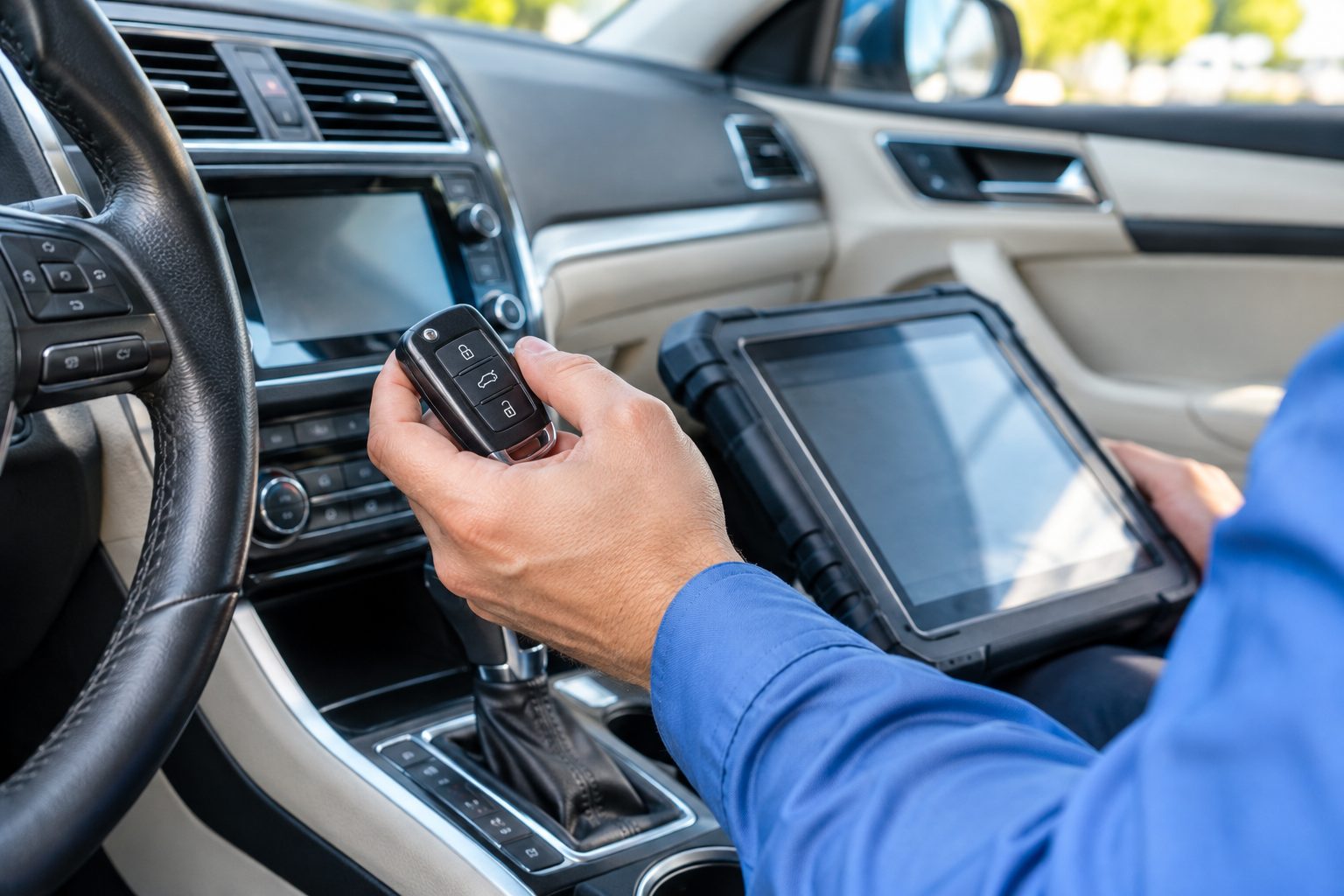
A lockout usually happens at a moment of distraction. You step out to take the trash to the curb, carry in groceries, answer a text, pick up a child or let the dog out. The door closes behind you, the latch catches, and the keys are on the kitchen counter. The same thing happens in cars when a fob is left in a bag on the seat and the doors lock automatically, or when a key is dropped into a trunk before it closes.
In Orlando these situations are common for particular reasons. Many residents live in apartments and condominiums where the front door locks automatically or has a spring latch. Many drive keyless cars whose doors lock when the fob walks away. Visitors in rental cars are unfamiliar with the fob, and busy theme park parking lots put people under time pressure. Short evening rainstorms make people rush. Each of these makes a lockout more likely and more stressful.
The good news is that lockouts are predictable, which means they can be prevented. The prevention plan has three parts. First, habits that stop you leaving without keys. Second, backups that let you in if you do. Third, equipment that changes the problem, such as keypad locks or door hardware that cannot lock itself behind you. This page covers each in turn, and it is organized so you can pick the pieces that suit your household.
The simplest habit is a quick check every time you step through a door that locks behind you. Many people use a short phrase in their head: phone, wallet, keys. Touching each pocket as you say it takes two seconds. Practice it until it is automatic, especially for doors that lock automatically or that you close from the outside without thinking.
Make a fixed home for keys. A hook, a bowl or a tray by the door, always in the same place, means you can see at a glance whether the keys are there. If keys live in different places on different days, you cannot tell. Use a bright key ring or a large tag so keys do not blend in with other items on a counter.
Build the same routine around the car. Many modern cars warn you if the fob is left inside when the door closes, but not all do. Get in the habit of holding the fob or key in your hand when you step out, not leaving it in a cup holder or bag. When you pull into a parking space, move the keys to your pocket before opening the door, and before closing the trunk, check that they are not inside. Small habits repeated daily are the strongest protection.
Some lockouts come from hardware behavior you may not have noticed. A spring latch on a door locks every time the door closes, without you turning anything. That is a security feature for some buildings, and a trap for others. If you can, prop the latch back with a small piece of tape before stepping out to the hallway or yard, or use the thumb-turn setting that holds the latch open, if your lock has one.
Auto-lock features on keypad and smart locks are similar. They lock the door after a set time to make sure it is never left open. That is useful, but it can lock you out if you step outside to talk to a neighbor. If your lock has an adjustable delay, set one that fits your routine, and teach everyone in the household how it behaves. See smart locks and keyless entry and keypad deadbolt installation for more.
Sliding glass doors can also lock behind you if the latch drops. If the door has a latch that engages when closed, be careful when stepping out to a pool deck or balcony. A broom handle in the track keeps the door from fully closing and gives a visual reminder, and some owners fit a stop that prevents the door from fully latching until it is turned. Check the page on sliding patio door locks for options. Never leave a door unlocked as a replacement for fixing the habit. An unlocked door is a different problem.
No habit is perfect, so every household needs a backup. The point of a spare key is that it can be reached when you are locked out. That means it must be somewhere you can get to without being inside, and somewhere safe from everyone else. Good options include a trusted neighbor, a family member nearby or a lockbox with a combination you can change. Poor options include the mat, the planter and the top of the door frame.
Test the backup. Make sure the spare key actually opens the lock, which people forget to check after a rekey or a lock change. Make sure the neighbor knows where it is and is reachable. Make sure the lockbox combination is remembered. A backup that fails when you need it is not a backup. Write down the plan in a place you can find from your phone, so you can recall it when stressed.
Our guide on spare key storage ideas goes through the options and the trade-offs. For car keys, keep a spare at home, away from the car, and check the battery and function of any spare fob now and then. If you have only one key for a vehicle, consider making a spare before you need one, since duplicating is easier than starting from nothing. Look at our spare key duplication page for details.
If keys are the problem, consider a lock that does not need one. A keypad deadbolt lets you enter a passcode instead of using a key. A smart lock can open with a phone or fob. Many have a mechanical key as a backup, but daily life does not depend on it. For households with children who come home alone, caregivers who visit, or a person who often misplaces keys, this can remove most lockouts.
Choose a passcode that is easy for you to remember and hard for others to guess, and use the longest length your lock allows. Share it carefully and change it when needed. Our guide on digital lock passcode habits explains how. Keep batteries fresh, because a dead battery is the main new way to get locked out with such a lock. Most locks warn you for weeks. Heed the warning.
Keyless is not the answer for everyone. Some people prefer the reliability of a plain mechanical lock, and some buildings restrict hardware changes. Condominium associations and landlords may require a particular lock. If that is your situation, talk to the manager before making changes. Where hardware changes are not allowed, focus on habits and backups. Where they are allowed, a keypad is often the most effective change you can make.
Cars lock in several ways. Some lock automatically when you drive off, some when you walk away with the fob, and some only when you press a button. Learn which ones your car uses. Look in the owner's manual or settings menu for options to change the behavior. Many cars let you turn off automatic locking or choose whether the doors lock when the fob is inside.
Never leave the fob in the car while you load the trunk, particularly in a car that locks when you close a door. Keep it in your hand or pocket. Never put the keys on the seat or in a bag you then put in the trunk. If your car has a trunk release inside, know where it is.
If you drive a rental car while visiting Orlando, spend a minute at the start learning how the fob works, which buttons lock and unlock, and whether the car locks itself. Theme park lots are crowded and hot, and being locked out there is stressful. See rental car key lockouts explained and theme park visitor car key tips for more. And when a child or pet is inside a locked car, call 911 first, not a locksmith.
In a household with several people, lockouts multiply. Children forget keys, teenagers lose them, and visitors do not know the habits. Agree on a household system. Each person who needs a key has one on a ring with a distinct tag. A spare lives in a defined place. Everyone knows what to do if locked out: call a parent, go to a named neighbor, or use a keypad passcode.
Teach children early how the front door works and what to do if they cannot get in. Practice it. Make sure they know to go to a safe place, not to look for a way to break in. If you give older children a passcode, remind them not to share it. Our guide on lock safety for families with children covers related points.
For roommates and shared homes, decide who holds keys and how new people receive them. When someone moves out, get the key back or rekey the locks. It is easy to forget, and the consequence is that old keys continue to work. Landlords and managers, see our page on property manager lock service for ways to track keys.
Businesses have their own versions of the problem. An employee opens in the morning and the key does not work. A manager is locked out of a back door that closes behind them during a delivery. A cleaner arrives to find the lock has been changed and nobody told them. The consequences are not just inconvenience: a lockout can delay opening and cost a day of work.
Good practice includes a short written key policy, a log of who holds which key, and a backup plan for after-hours access. Back doors that lock automatically should be propped or fitted with a hold-open feature during deliveries, if safety rules allow. Consider access control or keypads for shared spaces, so that individual access can be added and removed without cutting keys. Our pages on business lockout and key control policies explain more.
Do not prop any fire exit in a way that breaks safety rules. Exit doors must open from the inside without a key, and local rules apply. If you are unsure, ask your building manager or your local fire authority before changing how a door operates.
Even with good habits, lockouts happen. When one does, stay calm. First, check whether any other door or window is already unlocked, such as a back door, a garage side door or a window you left open for air. Do not climb or force anything that could cause injury or damage. If someone has a spare nearby, contact them. If a child, a pet or a person who needs help is inside, or if there is smoke, a gas smell or an emergency, call 911 first.
If you need a locksmith, call and describe your situation: house or car, the lock type, whether anyone is inside and whether you are in a safe place. We will explain how the visit works, what identification and proof of ownership we will ask for, and what the service call charge covers before we dispatch. Quotes are given by phone only. We do not promise arrival windows. We will not give instructions for opening locks yourself, and you should be wary of anyone who offers them as a way to get in.
After the lockout, take two minutes to fix the cause. Place a spare. Change a setting. Add a hook by the door. A lockout is a useful lesson, and the cost of ignoring it is the next one. When you are ready to talk about equipment or backups, call and describe what happened. See also house lockout and car lockout.
A combination works best: a quick pocket check each time you leave, a fixed place for keys, a reliable backup such as a lockbox or trusted neighbor, and, where allowed, a keypad lock that removes the need for a key. Habits handle most cases, and the backup covers the rest.
For many households, yes, because there is no key to forget. Choose a strong passcode, keep batteries fresh, and keep a mechanical backup somewhere safe. Check the auto-lock delay so the door does not lock behind you while you are outside. Check that your landlord or association allows the change.
With a trusted neighbor or relative, or in a sturdy lockbox with a combination you can change, mounted out of casual view. Avoid mats, planters and door frames. Do not label a key with your address. Test the spare to be sure it works, and review the plan after any move or lock change.
Check the owner's manual or settings menu, since many cars let you change automatic locking. Make a habit of keeping the fob in your hand or pocket, not in a bag or on the seat, and never leave it inside while you load the trunk. A spare fob kept at home gives you a backup.
Call 911 immediately, especially in warm weather. Emergency crews are the right first response when a child or animal is in a closed vehicle. A locksmith can help with the car afterward. Do not wait for a locksmith to arrive when someone inside is at risk.
Quotes are given by phone only. Describe your doors and current locks, and what keeps going wrong. If the work depends on seeing the hardware, an on-site visit is needed, and a service call charge applies that is explained on the phone before dispatch. Call when you are ready to talk it through.
Describe the situation by phone and we will tell you what the job involves. Quotes are given by phone. Jobs that cannot be quoted without seeing them need a technician on site, and the service call charge is explained on the phone before anyone is dispatched.
A reliable routine is short and always in the same order. Many people use a phrase such as keys, phone, wallet, then pull the door. The point is to touch each item or pat each pocket before the door closes behind you, because a latched door cannot be undone from the outside. Practice it for a couple of weeks until it feels automatic. Pair it with a physical trigger, like pausing with your hand on the knob, so that the check happens at the exact moment it is needed rather than somewhere earlier in the morning.
Adjust the routine for unusual days. When your hands are full of groceries, a child or luggage, set the keys somewhere visible first instead of dropping them into a bag. When you step out briefly to take out trash or check the mail, treat it as a real exit, because short trips cause many of the most frustrating lockouts. If you carry a work badge or a separate fob, add it to the sequence. The more items you carry, the more valuable a fixed order becomes, since it keeps your attention from skipping a step.
Support the habit with the environment. A hook inside the door, a dish by the entry and a consistent bag pocket all give the keys an obvious home. In a vehicle, a dedicated slot or cup holder does the same. If someone else in the household tends to lock the door behind you, agree on a signal. These small arrangements reduce the number of decisions you make while distracted. They cost nothing and quietly remove most of the situations that lead to a call for help. Keep any old keys, receipts or notes together in one place so the next decision is easier to make.