A theme park day is hard on car keys. Rides, lockers, water attractions, crowds and long walks from a huge parking lot all give a key fob chances to get lost, soaked or locked in a car. A few habits before you leave the vehicle make the difference between a good day and a stranded one.
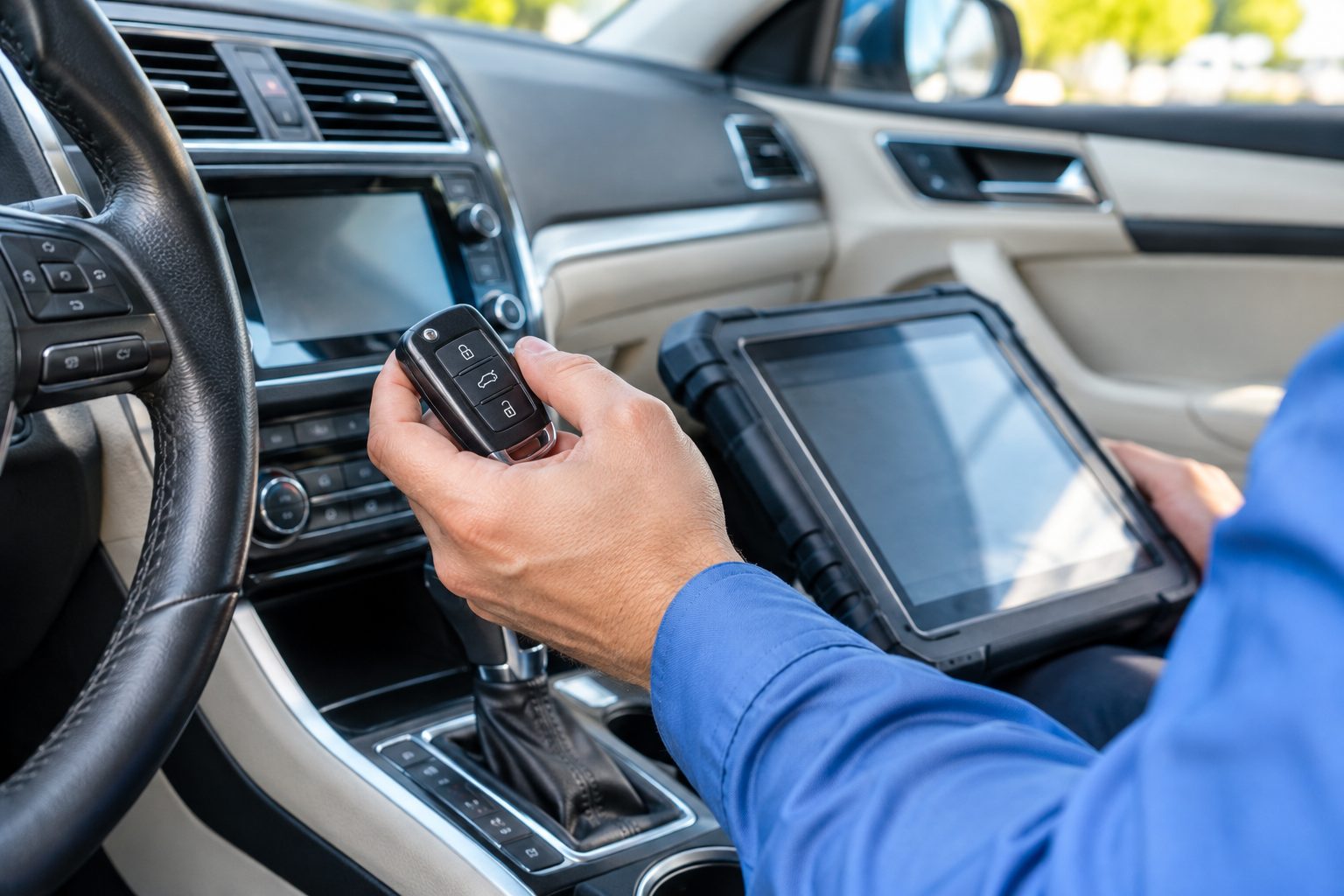
Orlando draws visitors from all over the country and the world, and many of them arrive by car. A theme park day is long, hot, crowded and busy, and it is nothing like a normal routine. People who rarely lose keys at home find themselves in a situation where keys are in a bag, a pocket, a locker or a stroller basket, and may be removed and replaced many times as they go through security, ride queues and restaurants.
The parking lots are large and look alike. After a long day, tired family members may not remember where they parked, and they may be trying to find a car that looks like many others. If a child is carrying the key, or it has been left with a friend, the confusion grows. Add rain showers, water rides, sunscreen on hands and a sweaty pocket and you have an environment that is hard on small electronic devices.
None of this is unusual or a sign of carelessness. It is the normal cost of a busy day. The goal of this guide is to point out the common failure points so you can plan around them, and to explain what to do if something goes wrong while you are far from home.
The most important moment is the one when you step out of the vehicle. Before you shut the door, check that you have the key in your hand, not in the cupholder, the console or on the seat. Many lockouts happen because a driver put the key down for a moment, closed the door and walked away. In cars with keyless entry, some systems will not lock a car with the fob inside, but not all, and the behavior varies by make and model.
Decide who carries the key, and stick to that person. One adult responsible for the fob is less likely to lose it than a key that is passed around. Put it in a zipped pocket or a closed bag compartment, rather than a loose outer pocket. If you are traveling with a group in two vehicles, make sure each driver knows who has which key.
Take a photo of where you parked. Most phones can mark a spot on a map, and a quick picture of the row number, a nearby sign or a landmark helps at the end of the day. Write down or save the level and section if you are in a structure. It takes seconds and it solves one of the biggest problems.
Rides are the main reason keys get lost on park days. Many attractions require loose items to be left in lockers or with a non-riding member of the party. A fob in a pocket can fall out on a ride, and it may not be recoverable if it lands in a place guests cannot reach. A fob in a locker can be forgotten when the group moves on. A fob left with a friend who then goes to a different part of the park can leave you stranded.
Think about the key before the ride. If you must carry it, use a zipped, secured pocket or a bag that closes completely. If the ride has a locker, use it, and take a photo of the locker number and the area. If possible, travel with a second person who can hold the fob while you ride and meet you at the exit.
Water rides are especially hard on fobs. A fob that goes through a soaking can corrode quickly. A waterproof pouch can help, though it is not a guarantee against water getting in. Keep in mind that a fob that stops working after a wet ride may seem fine for a while and then fail later. The guide on summer heat and key fob care explains how moisture harms fobs.
A spare key is the best single protection, and it is also the one most visitors overlook. If you have a second fob or key, decide who carries it and where. A common mistake is leaving the spare in the car, in a glove box or under a seat. That does not help if you are locked out, and it makes theft easier. Better to give the spare to a trusted person who is not with you in the park, such as a relative back at the hotel, or to keep it in a secure place that is not the vehicle.
If you have only one key, think about how you will cope if it is lost. Know your roadside assistance details, such as the number on your insurance card or membership, and keep them in your phone. Some policies and memberships include lockout help, and some do not, so it is worth checking in advance rather than at the lot. The guide on lockout prevention habits offers more ideas.
A spare also protects you from the situation where the key has gone through a ride or a locker and you cannot find it. With a spare, the day can continue. Without one, you may need a replacement, which takes time. The page on spare key storage ideas gives options that work while you travel.
If you do get locked out, first check who is around. Is anyone in the car? If a child or a pet is inside, particularly in the heat, call 911 right away. Do not wait for a locksmith. Emergency services can open the vehicle and are the right first call whenever someone's safety is at risk. Parks also have security staff who can help with emergencies in the lot, and their numbers are posted at the entrance.
If the car is empty and nobody is in danger, stay calm and move out of the sun. Check whether you have another way in: a spouse with a spare, a hotel contact, a roadside program. If not, a mobile locksmith can come to you. Have your exact location ready, such as a lot name, row and nearest sign, since parks have very large lots with several sections. Give the make, model and year of the car and be ready to show proof that it is yours.
Do not try to force the door, use a wire or a tool or pry at the window. Modern doors have airbags, sensors and wiring in places that can be damaged, and a scratched seal can lead to leaks. The page on car lockout service explains how a technician approaches it without damage.
If you lose a key in the park, report it to guest services or the lost and found, since keys are often turned in. Give a clear description, including any keychain, and contact details. Do this early, because items collected during the day are sometimes moved to a central location. Retrace your steps, including rides, lockers, restrooms and restaurants, and ask staff in those areas.
If it does not turn up, you will need a plan. If you have a spare, the problem is mostly solved. If you do not, a locksmith can make a new key for the vehicle, which may involve cutting and programming. The process depends on the make, model and year. The page on a lost car key at the beach or theme park goes through the situation, and the page on all keys lost explains the usual steps.
Proof of ownership matters. Be prepared to show your identification and the registration or title for the vehicle. For an out-of-state car, bring what you have. The guide on documents needed for car key replacement lists what is typically asked for, and why.
Many visitors stay in resorts, where parking may be self-park, valet or a mix. Valet means handing over your key, and some valets keep keys in a central box. Take your house key and any other keys off the ring before you hand it over, so only the car key is out of your hands. Keep a receipt or ticket, and note the time. Photograph the vehicle's condition and mileage if you like.
In self-park lots, remember that your room key and your car key are different things. Resorts often use cards or wristbands for rooms, and it is easy to confuse the sets of items you carry. Keep your car key where it always goes, and do not put it in the same pocket as a room card that you will take out repeatedly.
If you are using rideshare or shuttles for the park, you may not need your car for the day, which reduces the number of ways to lose a key. Leave the fob locked in the hotel room safe or with a family member, rather than carrying it through the park. That simple choice avoids water rides, lockers and crowds altogether.
Cars with keyless entry and start respond to a fob that is near. That is convenient, but it also means the fob should be kept away from the car when you are not using it. Do not leave a fob in the vehicle, since a car with the fob inside can be driven away by anyone who gets in. In crowded lots, a fob in a bag can also activate or fail to activate in unexpected ways.
Thieves have used devices that relay a fob's signal, and visitors in unfamiliar places may be more exposed to risks. The best practice is to keep the fob with you and, where it matters to you, in a shielded pouch when it is not in use. The guide on keeping car keys safe from relay theft explains the problem.
Do not leave valuables visible in the car. Even if the doors are locked, a bag on the seat tells people there is something to take. Put things in the trunk before you arrive at the lot, since people may watch what you load in. These habits protect the vehicle and reduce the chance of damage that could leave you with a broken lock or window.
Heat and moisture shorten fob battery life, and a day in the park can be the point where a weak battery gives up. You come back to the car and the doors do not unlock, or the car says it does not detect the key. Do not panic. Most cars have a backup method. Use the mechanical key hidden inside the fob to open the door, and hold the fob against the start button or a marked spot on the steering column to start the engine.
Know where this spot is in your car before you need it. Your owner's manual will show it. If you are in a rental, check with the company about how that model works. The page on a car key fob that is not working explains common causes.
If the car still will not start, or the key turns but nothing happens, the issue may be the transponder chip or the immobilizer. See the page on a car that will not start when the key turns. In any of these cases, a mobile technician can come to the lot, which is easier than arranging a tow for a problem that is only a key.
Calling from a crowded park lot is easier if you have the right information ready. Give your location in a way that someone unfamiliar with the lot can find: the lot name, row or section, nearby landmarks and any numbered signs. Describe the vehicle with make, model, year and color. Say what happened, such as keys locked inside, a lost key or a fob that has failed.
Be ready to prove ownership, since a technician should not open a vehicle or make a key for a person who cannot show a right to it. Have identification and the vehicle registration or rental agreement if you can. If the car is a rental, call the rental company too, since they may have to authorize the work. The guide on rental car key lockouts explains how that works.
Quotes are given by phone. A service call charge applies for dispatch and is explained before anyone is sent. Do not rely on a number you saw on a flyer or a sign in a lot, and be wary of anyone who approaches you offering help. The guides on how to spot locksmith scams and how to choose a locksmith explain what to look for.
| Situation | First step | Then |
|---|---|---|
| Child or pet locked inside | Call 911 immediately | Locksmith afterward if needed |
| Keys locked in empty car | Move to shade, check for a spare | Call a mobile locksmith with location and vehicle details |
| Key lost on a ride or in a locker | Ask guest services and lost and found | Plan for a replacement if it is not found |
| Fob stopped working after water | Use the hidden key and backup start | Have the fob checked or replaced |
| Rental car locked out | Contact the rental company | Ask what they allow and arrange service |
You do not need to remember everything above. A short plan, agreed before you leave the hotel, covers most of it. Share it with the adults in your group so everyone knows who has the key and what to do if it goes missing.
If you want help before your trip, for instance getting a spare key made, replacing a weak fob battery or checking that your keys work reliably, call and describe your vehicle. A mobile technician can arrange a visit, and the dispatcher can explain what is needed and give a quote by phone.
Rules vary by attraction, and many require loose items to be stored in a locker or left with someone. A fob in a pocket can fall out and be lost. Check the posted rules, use a locker where required and consider having a non-riding member of your group hold the fob while you ride.
If a child or pet is inside, call 911 straight away. If not, move out of the sun and check for a spare key. Otherwise call a mobile locksmith, giving your lot, row and vehicle details. Be ready to show proof of ownership, and avoid forcing the door yourself.
Guest services and lost and found can check whether a key was turned in, so report it early with a clear description. They cannot replace a key for your car. If it does not turn up, a locksmith can arrange a replacement, which needs proof of ownership and some details about the vehicle.
No. A spare in the car does not help if you are locked out, and it makes theft easier. Keep it somewhere else, such as with a relative, in a hotel room or in a secure bag that does not go in the car. Tell the person holding it what it is for.
Not necessarily, but it needs care. Do not press the buttons repeatedly. If you can, remove the battery, dry the fob in cool air and let it rest. Salt and chlorine are harder on electronics, so rinse with fresh water first. If it still fails, it may need replacing, and a technician can advise.
Valet is common, but take other keys off the ring so you hand over only the car key. Keep your ticket, and note the time and the car's condition. Do not leave valuables inside. If you prefer, self-park and keep the key with you, or use a shuttle and leave the fob locked in your room.
Describe the situation by phone and we will tell you what the job involves. Quotes are given by phone. Jobs that cannot be quoted without seeing them need a technician on site, and the service call charge is explained on the phone before anyone is dispatched.