Most people pick a locksmith while standing in a parking lot or on a porch, tired, worried and short on time. That is exactly when mistakes happen. This guide gives you a calm checklist of questions to ask on the phone, ways to verify who is really coming, and warning signs worth walking away from.
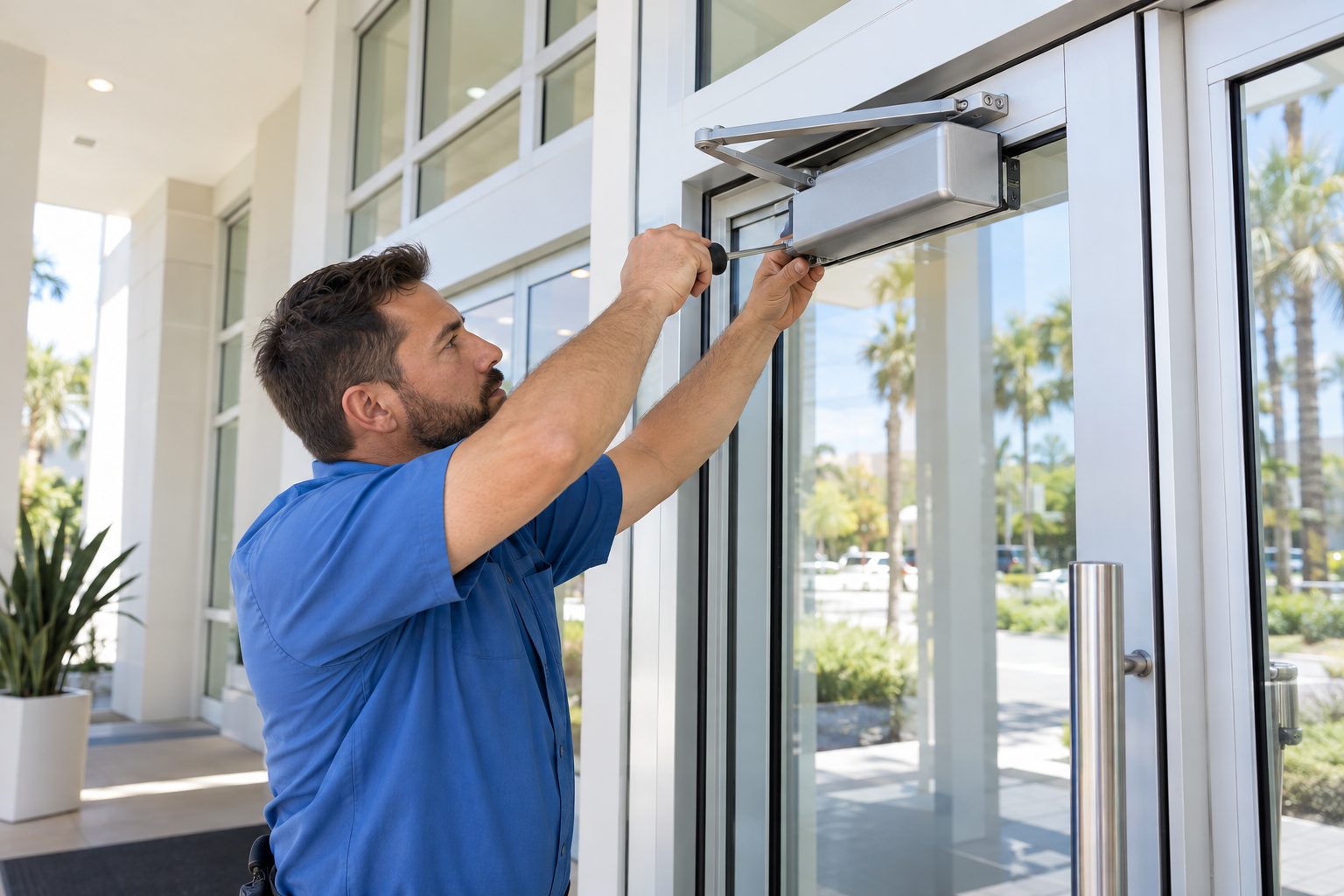
A locksmith is someone you let near the most important barrier on your property, and often someone you let inside it. They may handle your car keys, your door hardware, your safe, or the access system for your business. That is a position of real trust, and it deserves a few minutes of thought even when you are locked out and stressed.
The good news is that a few minutes is all it takes. A person who is calm and asks the right questions can usually tell within a single phone call whether a company is straightforward or evasive. You do not need technical knowledge. You need a short list of questions and the willingness to hang up and call someone else if the answers are vague.
In a large metro area such as Orlando, with its mix of theme park visitors, long-term residents, rental properties, condominiums and commercial corridors, there are many listings for locksmith services. Some are real local operations with a vehicle and a person who will actually arrive. Others are call-routing arrangements that collect your information and pass it along. Telling them apart is the heart of choosing well.
The first thing to pay attention to is how the phone is answered. A real business tends to answer with a company name that matches what you searched for. If the greeting is generic, such as a bare phrase like locksmith services with no business name, ask politely who you are speaking with and what the business name is. A legitimate company will tell you without hesitation.
Next, ask where the technician is based. You do not need a street address, but a real mobile locksmith can tell you roughly which part of the Orlando area they are coming from and whether they travel to your neighborhood. If the person on the phone cannot name the area or sounds like they are reading a script, treat that as a signal to slow down.
Finally, explain your situation in plain words and listen to what comes back. A good dispatcher asks follow-up questions: what kind of lock, what make and year if it is a vehicle, whether you have any key at all, whether anyone is in danger. Those questions exist because the answer changes the tools and parts needed. A call with no questions at all is a call where the company is not planning to match the job to the person.
Some questions are almost impossible to answer vaguely if the company is honest, which makes them useful filters. You do not have to sound suspicious. You can simply say that you like to understand how things work before you commit.
Ask how pricing is handled. A reputable locksmith will explain that the quote is given by phone, that there is a service call charge to dispatch a technician, and that more complicated work may need an on-site look before a final number can be given. What should worry you is a refusal to discuss any of this, or an answer that amounts to the technician will tell you when they arrive. Pricing that only appears after the work has started is the single most common complaint about this trade.
Ask what happens if you decide not to proceed once the technician arrives and you hear the quote. The honest answer is that you pay the service call charge you were told about on the phone and nothing else. Ask who will come, whether they will carry identification, and whether the vehicle is marked or the technician wears something that identifies the company. Ask what forms of payment are accepted so there is no surprise at the end.
Florida regulates certain security and locksmith-related activity at the state level, and requirements can differ depending on the type of work and on whether a business is operating in a specific county or city. Because rules and categories change over time, the most reliable approach is to ask the company directly what credentials they hold, then check that answer against the relevant public source yourself rather than taking a spoken claim at face value.
You can ask for a credential or registration number and look it up through the state or local office that issued it. A company that is comfortable with verification will offer the information readily and will not be offended that you checked. Be wary of answers like we are fully covered with nothing you can look up, or of numbers that turn out to belong to an unrelated business.
Also pay attention to name consistency. The name on the website, the name the phone is answered with, the name on the vehicle and the name on the invoice should all match. A mismatch is not proof of wrongdoing, since businesses use trade names, but it is a reason to ask one more question: what is the legal name behind the trade name, and why do they differ?
It is also reasonable to ask whether the technician is permitted to work on your type of job. Automotive key programming, safe work, access control and commercial master key systems each involve different skills. A company that says yes to everything with no distinction may be stretching, while a company that says we do this, we refer that, is often being honest about its limits.
When the technician arrives, you should be able to confirm that the person matches the company you called. Look at the vehicle first. A marked vehicle with a business name that matches your call is a good sign, though some small operators use unmarked vans, so an unmarked vehicle is not automatically a problem. What matters is that the technician can identify themselves and the company by the name you were given on the phone.
A professional technician will also ask you to confirm that you are entitled to have the lock opened or changed. For a home, that may mean showing something that connects you to the address, such as a piece of mail or an identification card with a matching address. For a vehicle, expect a request for identification and proof of ownership or registration. This can feel like an inconvenience when you are the one standing outside, but it is a mark of a careful company. A locksmith who will open any door for anyone without asking questions is a risk to every other homeowner and vehicle owner in the city.
Before any tool touches your lock or car, the technician should restate the quote you were given by phone. If the number or the scope of work changes, the technician should explain exactly why and give you the option to decline. You are always allowed to say no and pay only the service call charge you agreed to in advance.
Certain patterns appear again and again in complaints about locksmith services. None is a certain sign of wrongdoing on its own, but several together should end the conversation. The first is a refusal to discuss pricing structure before dispatch. The second is a vehicle that arrives with a different company name from the one that answered the phone. The third is a technician who begins drilling or destroying a lock immediately, without first telling you that this is necessary and why, when many situations have gentler options.
Another red flag is pressure. If you hear phrases like this offer is only valid right now, or the price goes up if you wait, it is time to slow down. Honest tradespeople may not be able to hold a job open forever, but they do not manufacture urgency to prevent you from thinking. Likewise, be cautious if the final bill is dramatically different from the phone discussion and the technician becomes defensive when you ask why.
Be cautious about demands for cash only, particularly when combined with refusal to provide a written invoice. Many honest operators accept several payment methods, and a written record protects both sides. If you do end up with a disagreement, a name, a business address and an invoice make it far easier to resolve through the proper channels.
| Warning sign | Why it matters | What to do |
|---|---|---|
| Generic phone greeting with no business name | You may be reaching a call-routing arrangement rather than a local operator | Ask for the business name; if unclear, call someone else |
| No discussion of the service call charge | Charges may appear after the work begins | Ask directly before dispatch and note the answer |
| Different company name on arrival | The person at your door may not be who you called | Ask for an explanation; decline if unsatisfied |
| Immediate drilling with no explanation | Many lockouts can be handled with less destructive methods | Ask the technician to explain why this is needed first |
| Pressure to decide immediately | Urgency can hide a poor offer | Pause and ask for the quote again |
| No written invoice | No record if a dispute arises | Request itemized paperwork before paying |
Locksmith work is not one skill. A residential lockout, a car key made from nothing, a commercial exit device and a safe each need different tools and experience. Before you call, it helps to know roughly which category your situation falls in, so you can ask whether the company handles it.
For a house or apartment, the questions are usually about the door hardware: how many locks, what brand, whether the door is wood, metal or glass, and whether anything has been damaged. For a car, the make, model and year matter a lot, because modern vehicles use transponder chips, smart key systems and immobilizers that require specific programming equipment. For a business, the questions broaden to include how many doors, whether there are exit devices, whether there is a master key system and whether access control is installed.
If a company tells you it can do everything, that may be true of a larger operation, but it is also worth asking which jobs are done on the road and which need a shop or a second visit. For example, cutting and programming a smart key for a particular vehicle may need equipment that only some technicians carry. An honest company will tell you if it needs to come back or refer you elsewhere. That honesty is worth more than a confident yes.
Your circumstances shape the best choice. If you are locked out of your home at night with children, the priority is safety and a quick, honest dispatch. If you are a visitor with a rental car at a theme park parking lot, you also need to think about who owns the vehicle and what the rental agreement allows. If you are a landlord changing locks between tenants, you need documentation and a clean invoice for your records.
Consider a few common scenarios. A tenant calls after a roommate moves out and takes keys: the right locksmith will ask about the lease and who is authorized, and will suggest rekeying so old keys no longer work. A business owner arrives after hours to find a key broken in the lock: the right locksmith will talk about extraction and then discuss whether the cylinder is worn enough to warrant replacement. A driver loses the only car key at the beach: the right locksmith will talk about ownership documents and the type of key before promising anything.
In each case the quality you are looking for is the same. The company listens, asks relevant questions, explains the plan in plain language, and does not hide the cost structure. That combination is more reliable than any single credential or any claim about experience.
Being prepared shortens the call and makes the conversation more accurate. If you can describe the situation precisely, the quote you receive by phone is more likely to hold up when the technician arrives.
For a home or business, note the address, the type of door and lock if you can tell, and whether you are inside or outside. Have your identification ready and, if you are not the owner, be prepared to explain your relationship to the property. For a vehicle, have the make, model, year, color and license plate, and the vehicle identification number if you can read it through the windshield or find it on paperwork. Know whether you have any working key at all, since that changes the type of service.
Also think about where you can wait safely. If you are in a poorly lit area or alone at night, say so on the call and consider waiting inside a business or with someone you trust. Technicians should not need you to wait in an unsafe place, and a considerate company will understand.
The work is not finished when the door opens. Before the technician leaves, test the result. Turn every new key in the lock several times. For a vehicle, start the engine, lock and unlock with the remote, and confirm that spare keys work as well. Ask the technician to show you what was done, particularly if parts were replaced, so you understand what changed.
Keep the invoice. It should show the business name, the date, a description of the work and the amount charged. If anything seems off, raise it politely while the technician is still present, since details are easiest to resolve on the spot. If a problem appears later, such as a key that sticks or a lock that feels loose, call the company and describe it. A business that cares about its reputation will want to hear about it.
It is also a good time to ask about next steps. Perhaps a spare key would be wise, or perhaps the door frame or strike plate needs attention so the new lock performs properly. Good advice at this stage helps you avoid a second emergency later, and it is one of the clearest signs that a locksmith is thinking about your property rather than only the immediate call.
If you remember only a handful of points, remember these. Ask for the business name. Ask how the quote and service call charge work. Ask what identification the technician carries. Ask what happens if you decline the work after the explanation. If those four questions are answered clearly and calmly, you are very likely dealing with a company that wants a fair job and a satisfied customer.
If any answer is evasive, you are allowed to hang up and call someone else, even if it costs you a few extra minutes. The cost of a bad choice is often much larger than the cost of a short delay, and the questions above take less than a minute to ask.
When you are ready, call and describe your situation. Explain what happened, where you are, and what you need, and expect the quote to be given by phone before anyone is dispatched. If the job is complicated, expect an on-site visit to be recommended, with the service call charge explained up front. We are glad to answer your questions the same way we encourage you to ask them of any locksmith, so call whenever you are ready.
Not automatically. Search position tells you very little about quality. Use the result as a starting point, then call and ask for the business name, how the quote and service call charge work, and what identification the technician carries. A few clear answers matter far more than ranking, and it takes under a minute to ask them.
Yes, and it is a good sign. A careful locksmith needs reasonable proof that you are entitled to the access being requested, whether that is a home, a business or a vehicle. It protects you and everyone else, because a company that opens anything for anyone without questions creates risk for the whole community.
For many common jobs, yes, and quotes are given only by phone. Some jobs are more complicated and need an on-site visit before a firm number is possible. In every case there is a service call charge to dispatch a technician, and an honest company explains it clearly before anyone is sent to you.
Ask them to explain why before they begin. Drilling is sometimes necessary, for example with certain high-security cylinders or failed hardware, but many situations have less destructive options. A professional can describe the reason, tell you what replacement will involve, and let you decide before any damage is done to your hardware.
Ask which credentials or registrations the company holds, request the number, and verify it through the relevant state or local office yourself. Requirements vary by type of work and location, so do not rely on a spoken claim alone. A company that welcomes verification and gives consistent answers is a good sign.
Stay calm and ask for an itemized written invoice that shows the work performed. Compare it to the quote you were given by phone. If there is a mismatch, raise it with the company in writing, and if it cannot be resolved, you may contact the relevant consumer protection or local authority. Keeping notes about the call, the time and the technician helps.
Describe the situation by phone and we will tell you what the job involves. Quotes are given by phone. Jobs that cannot be quoted without seeing them need a technician on site, and the service call charge is explained on the phone before anyone is dispatched.