Standing in a hallway without a key is stressful, and the right first call depends on who actually controls your door. This guide walks Orlando renters and owners through that decision, step by step.
Before you dial anyone, answer one question: who owns or manages the lock on your door? In a rented apartment the landlord or management company usually decides how locks are handled, and your lease often says what you may and may not change. In a condo you may own the unit, but the association can still have rules about entry hardware, master keys and who is allowed to open doors in the building. This guide is general guidance, so always read your own lease or association documents and ask the people who wrote them.
The answer matters because the wrong call wastes your time and can create a problem you did not have. A locksmith who opens a door the management never approved can leave a tenant arguing about a lease clause later. A management office that holds a spare key can often solve the whole thing with one visit to the front desk. Think of the first few minutes as sorting, not rushing.
Orlando has a very large number of apartments, condos, townhomes and vacation rentals, so the setups vary widely. One building has a leasing office with a lockbox of spares. Another has an off site management company that answers a phone line only during certain hours. A third is a small condo run by volunteers on a board. Knowing which kind of building you live in tells you where to start, and the next sections show you how to work out the rest.
An apartment lockout usually involves a landlord, a lease and sometimes a maintenance team with spare keys. A condo lockout adds a third party, the association, and sometimes a property manager hired by that association. Owners are often surprised to learn that the entry lock, the deadbolt and even the peephole can be covered by building rules. Our condo and high rise lock guide explains how those layers fit together.
In a tall building the door in front of you may be only one of several barriers. There can be a lobby, an elevator that needs a fob, a stairwell door that locks from the stair side and a corridor door that closes behind you. Being locked out of the unit itself is different from being locked out of the building, and the person who can help with one is not always the person who can help with the other. Describe exactly which door is the problem when you call.
Garden style apartments are simpler. You usually have one exterior door, maybe a screen door, and perhaps a back patio slider. Lockouts there are often caused by a latch that clicked shut behind you or a keyring left on a kitchen counter. The path to solving it is shorter, but the same rule applies: find out whose permission is needed before anyone touches the lock.
A calm, organized call gets a better result than a panicked one. Whoever you reach will need to know who you are, where you are and what kind of lock you have. If you can answer those three things in the first minute, the rest of the conversation goes smoothly. Have your phone charged and your thoughts in order before you start.
Proof matters because no responsible person opens a door for a stranger. A management office will want to see that you live there, and a mobile locksmith will check ownership or authority before opening or rekeying anything. Photo identification that matches the name on the lease or deed is the usual starting point. If your wallet is locked inside with everything else, say so honestly, because there are often other ways to confirm who you are, such as a call to the office or a neighbor who knows you.
Take a moment to look at the door itself. Notice whether the deadbolt is turned or only the handle lock is engaged, whether the door is fully closed and whether there is a keypad or smart lock. Do not try to force anything. Simply describing what you see helps the person on the phone understand the situation and explain the work and the price before it begins.
If your building has a leasing office, maintenance team or after hours line, that is usually the right first call. They may hold a spare key, they know your lease and they can approve entry without any argument later. Many leases require tenants to go through management for lockouts, and some buildings simply do not allow outside locksmiths to work on doors without notice. Using the official route protects you from breaking a rule you did not know about.
Ask plainly what the process is and what, if anything, you will be asked to pay or sign. Some properties keep a log of every entry and want your signature. Others send a maintenance worker who opens the door and leaves. Whatever the arrangement, listen carefully and write down the name of the person who helped you so there is a record.
If you reach a voicemail or an answering service, leave a clear message with your name, unit and callback number. Then wait a reasonable amount of time before escalating, rather than calling three other services at once. If the situation is urgent for safety reasons, say that in the message. Our guide to landlord lock responsibilities in Florida can help you understand what is normally expected of landlords, though your own lease and the law as it applies to you should be your final reference.
There are real situations where a locksmith is the better first call. The office may be closed, nobody may answer, the property may be self managed, or you may own the unit and have the right to decide for yourself. In those cases a mobile locksmith comes to you with tools and works at the door, which means you do not have to travel anywhere while locked out. You can read how this works in our explanation of mobile locksmith service.
A reputable technician will ask questions before agreeing to open anything. Expect to be asked where you are, what kind of door and lock it is, and how you can show that the unit is yours or that you are the lawful resident. That is not suspicion for its own sake. It is how a careful professional protects you and the person who actually owns the home. If a caller never asks for any of that, treat it as a warning sign and read about how to spot locksmith scams.
The process should be easy to follow. You call and describe what is happening and where. Ownership or authority is checked before the door is opened. The work and the price are explained before work begins, and the finished work is tested with you so you can see the lock behaves normally. If you want a preview of the conversation, how a phone quote works lays it out, and the locked out of apartment page covers the situation directly.
Some lockouts are not really about a forgotten key. A roommate may have changed the lock, a relationship may have ended badly, or a previous tenant may have kept a copy. In these cases a locksmith or manager has to be especially careful about who has the right to enter and who has the right to change the lock. If a former partner still has keys, our page on a former partner who has keys to your home explains why rekeying is often the cleaner answer.
Landlords face the opposite problem when a tenant leaves and does not return keys. Handling that situation requires paperwork and patience, because entering or changing a lock the wrong way can create legal trouble. Requirements vary, so ask your attorney, your property manager or the relevant local office before acting. The page about a tenant who moved out with keys goes through the practical side.
If you are locked out because of an emergency, such as someone inside who cannot answer, call emergency services first. Do not wait for a locksmith when a person may be in danger. A locksmith is a tool for ordinary lockouts, not a replacement for a rescue crew, and any honest technician will tell you the same.
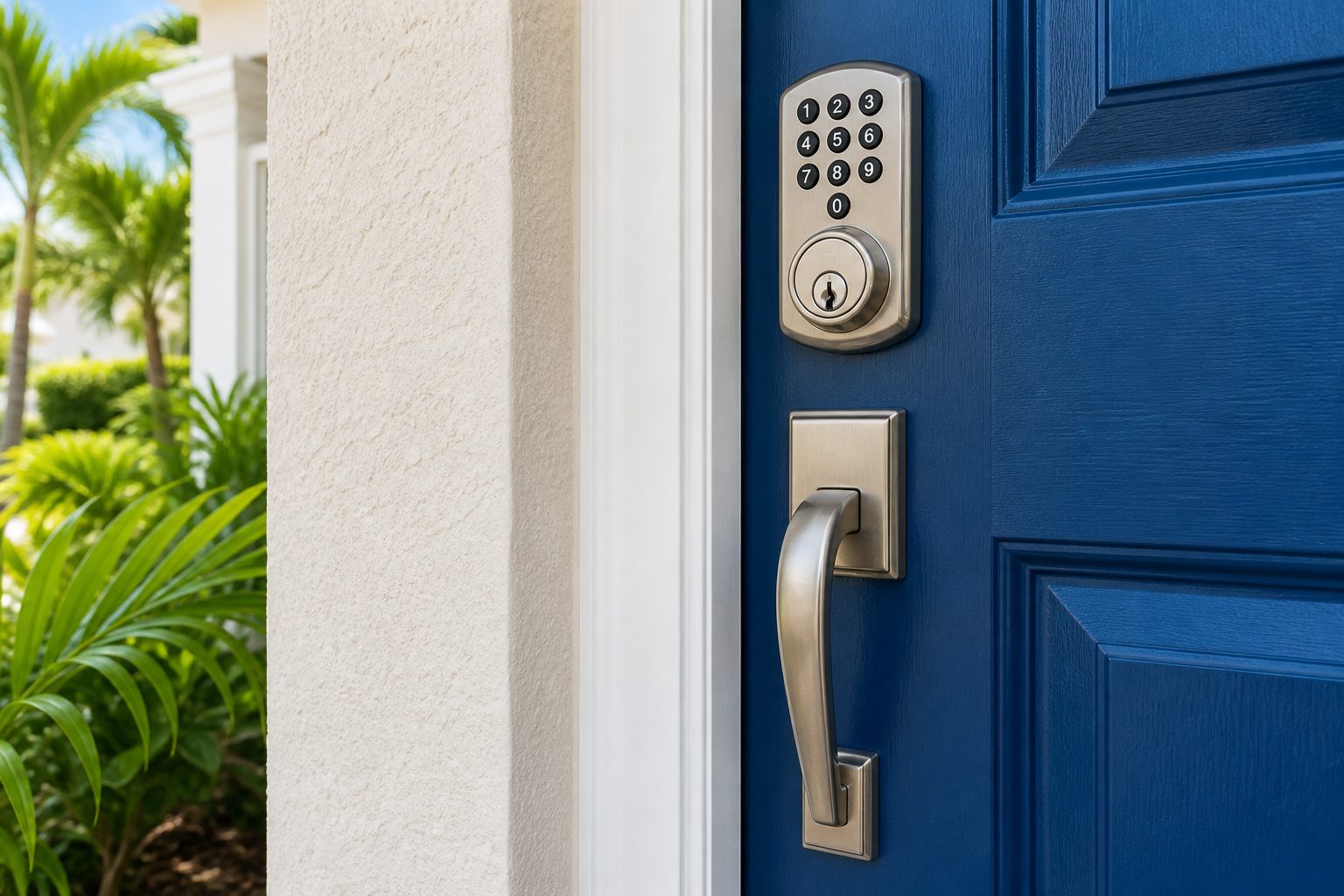
Many Orlando complexes have moved to keypads, electronic deadbolts and fob controlled entrances. These are convenient, but they fail in ways a plain brass key does not. A battery runs low after a humid summer, a code gets reset by management, or an app loses its connection at the worst moment. If your lock is electronic, tell the person you call, because the solution may be a battery, a reset or a visit from whoever manages the system rather than anything involving the cylinder.
A smart lock that keeps shutting you out deserves its own look. Our page on a smart lock that keeps locking you out describes the common causes, and the digital lock code habits guide explains how to manage codes sensibly so you are not guessing at a screen later. In shared buildings, ask management whether they keep an override code or master credential for emergencies.
Gated communities add another layer. You can be locked out of your home and also stuck at a gate that wants a code or a resident name. If you are expecting help to arrive, give the gate instructions to whoever is coming. Having the gatehouse or your property manager informed in advance prevents a second delay after the first one.
It is tempting to shoulder a door, pry at a frame or drill a lock when you are tired and frustrated. In a rented apartment, that can turn a small problem into a big one. Damaged frames, bent strike plates and broken cylinders are typically the tenant's responsibility under a lease, and repairs can involve both the lock and the surrounding door. A professional approach almost always costs less in trouble than a forced entry, even before you count the stress.
Damage also affects your safety. A door that has been forced may no longer latch properly, which leaves your home open until it is fixed. A frame with a cracked jamb is far easier to defeat the next time. If a door has been damaged, read about door frame and hinge security so you understand what needs repair.
Neighbors and building staff may offer help, and their kindness is usually genuine. Still, climbing from a balcony or reaching through a window is dangerous in a multi story building, especially in the wet and slippery conditions of an Orlando afternoon storm. Use the proper route, even if it takes longer than you would like. A calm, safe approach protects your body and your deposit.
Once you are in, spend a few minutes on prevention. Ask yourself why the lockout happened. Did the door lock automatically behind you? Was the key on a ring that does not stay in your pocket? Did a lost key leave you wondering who else might have a copy? The answers point to simple fixes, and our lockout prevention habits guide has practical routines you can adopt this week.
If a key is missing rather than just locked inside, think about rekeying. Rekeying changes the lock's internal pins so the old key no longer works, without replacing the whole hardware. In a rental you will need your landlord's approval first, since the lease may control it. Our guide on rekey versus replace locks explains how to decide.
Spare keys are worth thinking about carefully. A key under a mat or planter is easy for anyone to find, so avoid obvious places. Leaving a spare with a trusted friend or in a secure lockbox approved by your building is a better choice, and the spare key storage ideas page lists options that make sense for apartments and condos.
Central Florida has thousands of vacation rentals, and a surprising number of lockouts happen to guests rather than residents. If you are staying in a rented condo for a few days, the owner or the property manager is the one with authority over the lock. Call them first, because they know the lock, the code and the backup plan. A locksmith cannot normally verify a guest's right to enter, so be prepared for the answer to be no without the host's approval.
Hosts should plan for this. Giving guests a clear card with a contact line, a note about how the lock works and a backup entry method will prevent many calls. If your rental uses a keypad, make sure the code is current and the batteries are healthy before each stay. Our vacation lockup checklist is a helpful companion for hosts and owners.
Visitors with rental cars face a second issue, because a day out at a theme park can end with keys locked in a vehicle as well as a locked apartment door. Keep spare car keys and unit keys separated, and carry one reliable copy at all times. Our guide for theme park visitor car key tips gives some common sense habits that apply well to travelers.
Central Florida weather quietly affects locks and doors. Hot humid summers make wood and metal expand, which can cause a door to stick or a latch to bind. Afternoon storms leave moisture around thresholds, and salt or damp air can corrode hardware over time. A lock that worked yesterday may feel stiff today, and a stiff key tempts people to force it. Read about humidity and lock longevity to understand what is normal and what needs service.
Storm season adds a different risk. When power drops, electronic locks and gate controls may stop working, and building staff can be stretched thin. Before a big storm, check that you have a working physical key, that your battery operated locks have fresh batteries and that you know how to reach management. The hurricane season door and lock prep page has a good checklist.
Being locked out during bad weather is more than inconvenient. If you are outside in rain or heat, find shelter in a lobby or covered area while you wait, and keep your phone charged. Let the person helping you know about any urgency. The same calm approach applies, only with an extra layer of caution for your own comfort and safety.
Start with your leasing office, property manager or maintenance line, because they may hold a spare key and know your lease rules. If nobody answers, the property is self managed or you own the unit, a mobile locksmith is a reasonable next call. Be ready to show that you live there.
It depends on the building and its rules. Owners usually have the right to access their own units, but associations can set rules about hardware and entry. Ask your association or manager what applies to you, and tell the locksmith about any building requirements so nothing is done that could create a dispute later.
A careful technician asks where you are, what kind of lock you have and how you can show you live there or own the unit. Photo identification matching a lease or ownership record is common. The work and the price are explained first, and the finished work is tested with you.
No. Forcing a door can damage the lock and frame, and in a rental that damage can become your cost and your problem. Climbing from a balcony or window is dangerous, especially in wet weather. Use the office, a trusted locksmith or emergency services if someone inside may be in danger.
Maybe, but first think about batteries, code resets and app problems. Tell whoever you call that the lock is electronic. Management may control the system, and a locksmith may need to know the brand and model before deciding how to help. Do not force the door or the keypad.
Build a habit of checking for keys before the door closes, keep a spare with someone you trust and avoid hiding keys in obvious places. If a key was lost, ask your landlord or association about rekeying so the missing key no longer works. Small routines prevent most repeat lockouts.
Describe the situation by phone and we will tell you what the job involves. Quotes are given by phone. Jobs that cannot be quoted without seeing them need a technician on site, and the service call charge is explained on the phone before anyone is dispatched.