
- Locks After Burglary: After a break-in, call the police first, then secure the door. See how damaged hardware is assessed, when to rekey and how a mobile locksmith helps afterward.
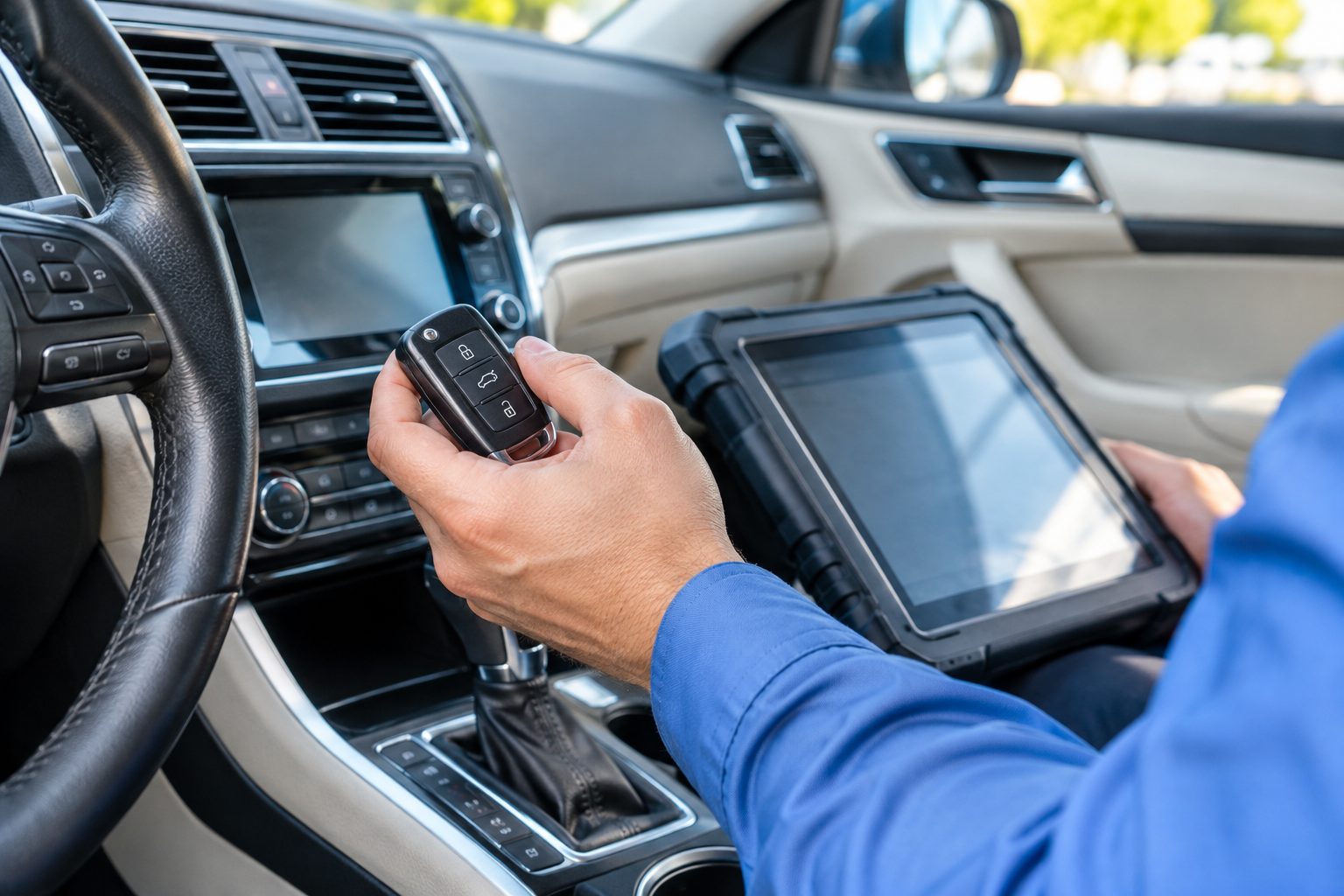
- Fob Not Working: Key fob dead or unresponsive? Learn about dead batteries, lost pairing and signal interference, what to try first and when to call a mobile locksmith.
- Car Will Not Start: The key turns but the engine will not start. Learn about immobilizer faults, worn keys and when the problem is the battery or starter instead of the key.
- Child Locked In Car: A child or pet locked in a hot car is an emergency. Learn why 911 comes first, how fast Florida heat builds and what to do while help is on the way.
- Bad Key Copy: Why a freshly duplicated key fails: cutting tolerances, worn originals, wrong blanks and burrs. Learn how re-cutting from the lock's specification fixes it.
- Deadbolt Stuck: A deadbolt that will not retract or extend usually points to alignment, a worn tailpiece or a misplaced strike. Learn the checks and when to call a locksmith.
- Loose Door Handle: A door handle that wobbles or falls off usually has a simple cause. Learn about set screws, worn spindles and when a handle set needs to be replaced.
- Jammed Door Lock: Why a door lock jams in Central Florida, from humidity swelling to worn latches, which safe steps help, and when a mobile locksmith should take over.
- Wobbly Lock: A loose or wobbly door lock usually means worn screws, a stripped hole or a door prep problem. Learn the causes, safe checks and when a mobile locksmith helps.
- Door Will Not Latch: A door that will not latch usually has a misaligned strike, sagging hinges or weatherstripping pressure. Learn simple checks and when to call a locksmith.
- Ex Has Keys: If an ex-partner still holds keys to your home, rekeying restores control. Learn the practical steps, what a locksmith does and where to find safety resources.
- Storm-Damaged Door Lock: Front door will not lock after a storm? Learn how swollen frames and shifted slabs affect latches, what to check safely, and when a locksmith should step in.
- Garage Entry Lockout: Locked out because the garage keypad stopped working? Learn how garage entry, side door locks and entry-door hardware fit together and what a locksmith can fix.
- Keys After Move: Lost a house key right after moving in? Learn why the first week matters, how rekeying restores key control, and what to do while you sort out the locks.
- Hard-to-Turn Ignition: An ignition key that is stiff, gritty or needs jiggling is warning you. Learn about worn wafers, damaged keys, heavy keyrings and ignition cylinder service.
- Key Broken in Ignition: Why car keys snap in an ignition, what to leave alone, and how extraction is approached so the cylinder and the vehicle's key system are protected.
- Key Stuck in Lock: A key that is stuck in a door lock has a handful of likely causes. Learn the safe steps to try first and when to stop and call a mobile locksmith in Orlando.
- Key Will Not Turn: A key that slides in but will not turn has a short list of causes. Learn what is safe to try, when to stop forcing it, and when to call a locksmith.
- Intermittent Key: A key that works only some of the time points to worn cuts, a tired cylinder or a copy of a copy. See the causes, what to check and when to call.
- Keypad Not Responding: A keyless entry pad that will not respond is often a weak battery, but moisture, wear or electronic failure can be the cause. Learn the checks and next steps.
- Keys in Trunk: Keys locked in the trunk? Learn about interior release levers, rear seat access and how a locksmith opens the car without damage, plus prevention tips.
- Spinning Cylinder: Key turns all the way around but the bolt does not move? Learn what a spinning lock cylinder means, what causes it and how a mobile locksmith repairs it.
- Grinding Lock: A lock that grinds, clicks or scrapes is warning you. Learn what gear wear in electronic locks and mechanical binding sound like, and when to call a locksmith.
- Rusted Locks: Rusted or corroded door locks are common in Florida. Learn why moisture and salt air damage hardware, how finish quality matters, and when to replace a lock.
- Apartment Lockout: Locked out of your Orlando apartment? Learn what management policies usually say, what proof of residency a locksmith needs, and your options after hours.
- After-Hours Business Lockout: Locked out of your shop or office after closing? Learn how owner verification, alarm concerns and safe entry options work with a mobile locksmith in Orlando.
- Key Lost on Trip: Lost your car key in a parking lot far from home? Learn what to do first, what papers to have ready, and how a mobile locksmith reaches you in Orlando.
- Only Car Key Lost: Lost your only car key? Learn how to gather vehicle information and proof of ownership, what your options are and how a mobile locksmith makes a new key.
- Mailbox Key Lost: Lost your mailbox or cluster box key? Learn who handles replacement, what the Postal Service controls and what a locksmith can and cannot do.
- Padlock Key Lost: Lost a padlock key or forgot the combination? See the common padlock types, what to check first and why ownership is verified before a locksmith opens anything.
- Remote Start Issue: Remote start stopped working after a new key or fob? Learn about bypass modules, programming and compatibility, and what a mobile locksmith can sort out.
- Forgotten Safe Combo: Forgot your safe combination or lost the key? Learn which records to check first, how ownership is verified and how professionals approach legitimate access.
- Slider Will Not Lock: A sliding glass door that will not lock leaves your home exposed. Learn the usual causes, from track debris to worn latches, and the security options available.
- Smart Lock Lockout: A smart lock that keeps locking you out is usually a battery, auto-lock or connection issue. Learn the common causes and why a mechanical key backup matters.
- Locked Steering Wheel: A steering wheel that will not release and a key that will not turn is common. Learn why the column locks, the gentle way to ease pressure and ignition wear.
- Tenant Keys Kept: A former tenant who still holds keys is a security gap. See how landlords confirm possession ended, when to rekey and what a mobile locksmith needs to proceed.
Talk to 24/7 Locksmith Orlando
Describe the situation by phone and we will tell you what the job involves. Quotes are given by phone. Jobs that cannot be quoted without seeing them need a technician on site, and the service call charge is explained on the phone before anyone is dispatched.
How this section of lock problems is organized
The pages in this section describe specific things that go wrong with locks, keys and vehicles, from a key that will not turn to a car that refuses to start. Each page is written to help you recognize the problem, understand the likely causes and know what a technician checks. They are organized by symptom because that is how people experience trouble, and few people begin by knowing the technical name for what is failing. Pick the page that matches what you are seeing, and use the links at the bottom to move to related issues.
Some pages deal with homes and doors, such as a deadbolt that sticks, a key that breaks or a lock that was tampered with. Others deal with vehicles, including a fob that stops responding, a key that is hard to turn or a car that will not start. A smaller group addresses situations involving safety and access, like a former partner who still has keys. If your problem seems to belong in more than one place, read both, because causes often overlap, such as a worn key that harms a lock.
These pages are meant to inform, not to replace a technician looking at the real hardware. They explain general causes and safe checks you can try, and they point out when to stop and call. When you do call, describe the symptom, the lock or vehicle and anything you already tried. The scope and any quote are explained before work begins, so you can decide with clear information. A good description shortens the conversation and helps the technician bring the right tools. Keep any old keys, receipts or notes together in one place so the next decision is easier to make.
Safe first steps that apply to almost every lock problem
Whatever the problem, a few cautious habits help. Stop forcing the key or the lock. Force bends keys, breaks them off inside cylinders and strips internal parts, turning a minor issue into a larger one. Instead, remove the key gently, check it for damage and try again with light pressure. If the lock still resists, step away for a moment and think about what changed recently, such as weather, a new key or a door that was repainted. Ask questions whenever a term or a recommendation is unclear, and expect a plain answer in return.
Check the simple things first. Is the key the correct one, and is it fully inserted? Is the door aligned with the frame, or is it sagging so the bolt cannot line up? Are batteries in a fob or keypad fresh? Is the vehicle's own battery strong? Many problems that look dramatic turn out to be one of these. Take photos or notes of anything unusual, including warning lights, error beeps and the exact way the key behaves, since those clues are valuable later. Local weather and daily use both play a part, so think about how your own routine affects the hardware involved.
Know when to stop. If a key is broken in a lock, if a door is jammed with someone inside, if you smell burning from a vehicle or if there is any safety concern, do not keep experimenting. Call for help right away, and call emergency services when anyone is in danger. For ordinary problems, a calm call to us with your notes gives the technician a head start. We explain the scope and quote before any work begins, and we focus on fixing the real cause instead of masking symptoms.
Why symptoms can mislead you
A lock problem rarely announces its true cause. A key that sticks may be worn, but the lock may be dirty or the door misaligned. A car that will not start with a good key may have a weak battery. A fob that fails may be fine while the car has a fault. Because of these overlaps, jumping to a conclusion can lead to buying parts you do not need. The pages here encourage you to test one thing at a time, so that each result narrows the possibilities.
Time and environment confuse matters. A swollen wooden door in humid weather may make a lock feel broken when the real issue is alignment that improves in dry weather. Heat can make plastic fobs behave oddly, and a heavy keyring may only cause trouble when the ignition is warm. Intermittent problems are the hardest, which is why noting when they occur helps. Patterns across time, weather and which key you used often reveal the answer faster than guesswork. It helps to share this information with everyone in the household or workplace who might be affected by the outcome.
Consider the history of the hardware as well. A lock that has been used daily for many years has wear, and a lock that was recently rekeyed or repaired may have an adjustment issue. If someone tried to fix it before, mention that, because their changes affect what the technician finds. Honest details help us choose the right fix. The scope and quote are explained before work begins, so you understand why a particular repair is recommended over another. Write down what you notice as you go, because small details are easy to forget once the situation is resolved.
What a good technician visit looks like
A well run visit begins with questions. The technician asks what you observed, which keys or locks are involved and whether anything was changed recently. Next comes a look at the hardware in place, testing the key, the lock and the door or vehicle behavior without rushing. The goal is to confirm the cause before repairing anything. You should be invited to watch and ask questions, and the technician should be able to explain what each finding means in plain terms. If something here does not match what you see, say so on the call, since your own observations matter more than any general rule.
Before work starts, the scope and any quote are explained. That includes what will be repaired or replaced, whether keys will be cut or programmed and what you will hold at the end. This is the time to raise concerns, ask about alternatives and decide whether to proceed. A clear conversation protects both sides. If new information appears during the work, the technician should stop and discuss it with you instead of expanding the job without your agreement. Take your time with this step, as rushing is the most common way a small issue turns into a larger one.
When the work is finished, test everything with the technician present. Try each key, operate the lock several times and check the door or vehicle behavior. Ask how many keys you have and whether old ones still work. Keep any receipts or notes about codes and key numbers. A final check turns the visit into a complete solution, and it leaves you with the knowledge to recognize early signs if something similar happens again. Keep any old keys, receipts or notes together in one place so the next decision is easier to make.
Preventing the next problem
Most lock and key problems give warning signs before they become emergencies. A key that begins to feel rough, a fob that needs several presses, a door that must be lifted to latch and a lock that needs jiggling are all early hints. Treat them as reminders to act, since repairs are easier and calmer when the lock still works. Early attention is often simpler than waiting for a complete failure at an inconvenient hour. Ask questions whenever a term or a recommendation is unclear, and expect a plain answer in return.
Build small routines. Test spare keys twice a year, replace fob batteries on a schedule, keep keyholes clean and avoid heavy keyrings on ignitions. Check door alignment after storms and during humid months, and keep a record of key numbers and codes in a safe place. These steps cost very little and prevent many calls. They also give you a clearer picture of the condition of your hardware over time. Local weather and daily use both play a part, so think about how your own routine affects the hardware involved.
Know your options in advance. Keep ownership documents and basic vehicle details handy, think about who else could hold a key and decide whom you would call first. When you need help, call us and describe the problem and your notes. We explain the scope and quote before work begins so there are no surprises. With a little preparation, a lock problem becomes a manageable task instead of a crisis. It helps to share this information with everyone in the household or workplace who might be affected by the outcome.
Using these pages with other parts of the site
The problem pages connect to services, guides and local pages elsewhere on the site. If a problem page describes a repair you may need, such as rekeying, key replacement or ignition work, follow the link to read what that service involves. If you want background on why something happens, the guides explain concepts like immobilizers, key control and pick resistance. Reading across these sections gives you a more complete picture than any single page can offer. Write down what you notice as you go, because small details are easy to forget once the situation is resolved.
Local pages describe how service works in specific areas around Orlando and Central Florida, including the kinds of housing and driving conditions typical of each. They help you judge whether a general piece of advice fits your neighborhood, whether you live in an apartment complex, a gated community or an older home with original hardware. Use them to frame your request, and mention your location and building type when you call. If something here does not match what you see, say so on the call, since your own observations matter more than any general rule.
If you cannot find a page that matches your situation, call and describe it. Not every issue fits neatly into a category, and a conversation often reveals the cause faster than reading. We explain the scope and quote before work begins and will tell you plainly what we can and cannot do. Treat the site as a starting point for understanding, and treat the call as the next step when you want hands-on help. Take your time with this step, as rushing is the most common way a small issue turns into a larger one.