Moving week is chaotic, and a missing house key is one of the most common casualties. A lost key in a new home is more than an inconvenience, because you do not yet know who else has copies. This page explains the first-week concerns and how to regain control of your locks.
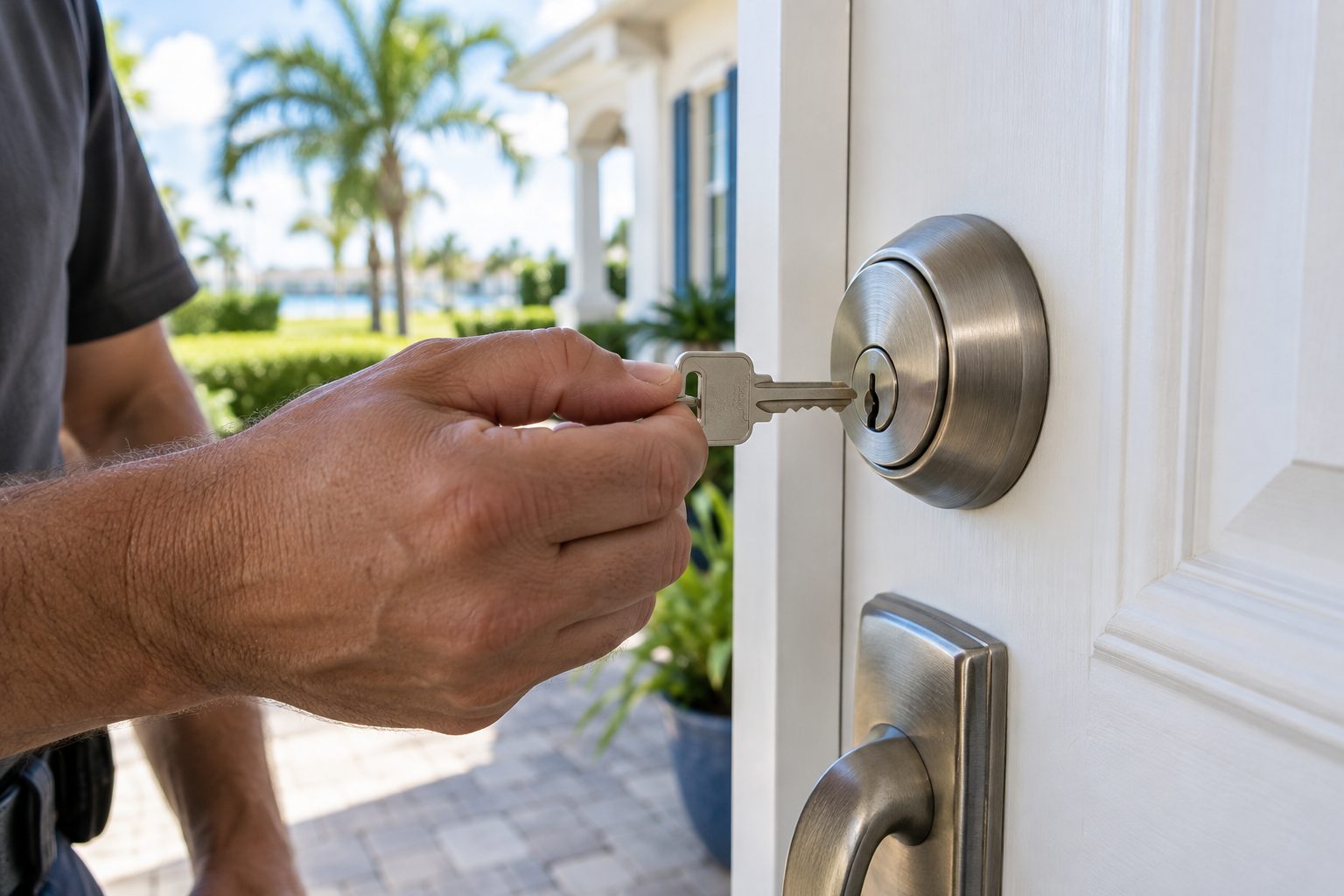
When you lose a key at a house you have lived in for ten years, you know roughly how many keys exist, where the spares are, and who has a copy. After a move, none of that is true. You may have received a handful of keys at closing or at the lease signing, and you may have no idea how many more are out there. The builder, a previous owner, a real estate agent, a property manager, a contractor, a cleaner, a neighbor who watered the plants, and a relative of the previous owner could each hold a copy.
That is why a lost key right after a move deserves more attention than the same loss later. The question is not only where your key went. It is also who might now have access to the home, and whether you can trust that no one else does. A key that disappears among moving boxes is probably in the house. But a key that fell out of a pocket in a parking lot or a truck is a different matter, and it should push you toward changing the locks.
The good news is that the fix is routine. Rekeying or replacing the locks resets the situation, so that old keys, including the one you lost and every copy that came with the house, stop working. After that, the only keys that open the door are the ones you hold. This page walks through how to think about the first week, what to check, and what a locksmith will do.
Before you decide the key is truly gone, give the move itself a thorough look. A move involves hundreds of small objects changing hands, and keys are small. Most lost keys during a move turn up within a day or two.
Check the pockets of the clothes you wore on moving day, including jackets, work pants and anything you changed out of. Check the kitchen counter, the key hook if there is one, and every flat surface that collected loose items during unpacking. Look inside open boxes marked kitchen, entry, junk drawer and miscellaneous, because keys often land in the first box that was packed in a hurry.
Look in the vehicle you used. Check the cup holders, door pockets, seat gaps and the cargo area of a moving truck or van. If you rented a truck, ask the rental company whether anything was left in the cab. Check the old home too, if you still have access, including the final walkthrough area, the garage and any place you handed over keys.
If you hired movers, contact them and ask whether they found keys while loading. Movers sometimes pack keys inside a box by accident, and a quick call can solve the mystery.
If you have been through all of that and the key is still missing, or if you know it was lost outdoors or in a public place, treat it as a security question rather than a search. At that point it is sensible to plan for new locks, even if the key eventually turns up.
It helps to think of the likely holders as a list. For a house you bought, the previous owner may have kept copies, given them to family, or left them with a neighbor. Real estate agents and their lockbox keys, inspectors, appraisers, contractors who did repairs before the sale, and the builder if the home is new construction all might have had access. Even if everyone was honest, the number of copies you cannot account for is the issue.
For a rental, the landlord or property manager typically keeps a master or duplicate key. Previous tenants may also have copied keys, and a tenant who moved out on bad terms might have kept one. Maintenance staff, cleaning services and any former roommate could hold a copy as well. Our page on landlord lock responsibilities in Florida explains what rules generally apply to rental housing and why it is worth reading your lease before changing anything.
For a condo or apartment, the association or management office may keep a key for emergencies, and that arrangement should be explained in your documents. Do not assume it. Ask what the policy is and whether you are allowed to change a lock yourself.
None of this means anyone intends to enter your home. It means you cannot know, and a new owner or tenant is entitled to start from a clean slate. Rekeying is the standard way to get there.
There are two main ways to take control of the locks, and the right one depends on what is already installed.
Rekeying changes the internal pins of the lock cylinder so that it works with a new key, while the lock hardware stays in place. Old keys, including the lost one, no longer work. This is typically the faster and more economical route when the existing locks are in good condition, and it lets you keep all the doors on one key. Our page on lock rekeying explains the process in detail, and our article on rekey vs replace locks helps you choose.
Replacement means installing new lock hardware. This is the better route if the existing locks are worn, loose, rusted, damaged or outdated, or if you want a higher level of security such as a better deadbolt. A move is a natural time to upgrade, particularly if the front door has only a basic knob lock. Our page on lock installation covers the options.
A technician can look at your doors and tell you which route fits. They can also check that the deadbolts actually extend into the frame, that the strike plates are solid, and that nothing about the door is weaker than it looks. If you want to understand grades and what they mean, read our guide on deadbolt grades explained.
Quotes are given by phone. When you call, mention how many exterior doors and locks you have, whether they are all keyed the same, and whether any are smart locks or keypad models. That lets the dispatcher give a realistic quote and tell you whether an on-site visit is needed for anything more complicated.
If the lost key has locked you out of the new home entirely, the first step is to confirm that the property is yours or that you are allowed to be there. A locksmith will ask for identification and some proof of residency or ownership before opening or changing a lock. A recent closing statement, a signed lease, a utility bill or a government letter showing the address can all help.
If you rent, contact the landlord or management first. They may have a key, and they may have rules about who can enter and whether you are permitted to change locks. Our page on being locked out of an apartment explains these questions in more detail.
If you own the home and are locked out, call and explain the situation. The technician will verify your information at the door and then restore access in a way that does not damage the lock where possible. We do not describe the methods here, because the safe approach is to leave that work to a professional.
If you can get in through another door, such as one you left unlocked on purpose, do so carefully and do not climb through windows or force anything. A damaged window or door frame can cost much more than a service call, and it can leave the house less secure than before.
If you have no safe place to wait, stay with a friend or at a hotel, and arrange the service call for the first reasonable time. Do not leave the home with an unlocked door overnight if you can avoid it.
Whether or not you lost a key, the first week in a new home is the best time to settle your security basics. Work through the list below, and you will end the week knowing where you stand. Our guide on moving into a new home security steps expands on each item.
Locks are not the only way into a home. Many houses have a garage keypad, a gate entry, an alarm panel, a smart lock or a lockbox with numbers that the previous occupant set. You have no idea who knows those numbers. If you bought the home, assume the previous owner, their family and their service providers know them. If you rented the home, the same applies to previous tenants.
Change every PIN and entry number you can find. For a garage opener, clear the stored remotes and reprogram it according to the manufacturer's instructions, which typically involves a learn button on the motor unit. Because that work involves a ceiling mounted unit with a tensioned door system, leave anything involving the door springs or cables to a professional, and use only the keypad and remote settings yourself.
Our page on keypad deadbolt installation covers installing a keypad lock, and our guide on digital lock PIN best practices explains how to choose and manage numbers so that they remain secure. The main points are to avoid birthdays and repeated digits, to change them after contractors or guests visit, and to keep a mechanical backup in case the batteries die.
If your new home has a smart lock tied to an account, find out who owns the account. A previous owner may still have app access. Ask them to remove the device from their account, or reset the lock to factory settings and set it up fresh under your own account.
A good locksmith visit after a move is a short security review as well as a key service. The technician will start by confirming your identity and your right to make changes. They will then look at each exterior door, noting the type of lock, how it is keyed and whether it works smoothly.
They will test the deadbolt throw, which is the distance the bolt extends into the frame. A bolt that barely enters the frame is much easier to defeat. They will check the strike plate and the screws holding it, because short screws into soft wood are a common weakness. They will look at the hinges, the door edge, and the gap between the door and frame.
They will examine the cylinders. If the lock is worn or damaged, or if a previous owner installed mismatched hardware, they may recommend replacement instead of rekeying. They may find that different doors have different keys and offer to combine them into one key system.
They will also ask about your plans. Do you want a keypad for the kids? Do you rent a room or have a guest suite that should be on a separate key? Do you want a master key arrangement for a detached garage or a workshop? A few minutes of conversation at this stage avoids multiple visits later.
When the work is done, they will hand over the new keys, show you how they operate, and let you test every lock before they leave. Count the keys you receive and ask how many additional copies can be made. Make the copies you need right away, because a spare made on day one prevents a repeat of the same problem.
New homes have no established routines, and that is the real reason keys go missing. You have no hook by the door yet, no bowl on the counter, no habit of reaching for a certain pocket. Create those habits deliberately in the first weeks.
Pick one place inside the house where keys always go, and make it visible. A hook next to the door, a bowl on a shelf, or a small tray works. Put the key there every time you enter, even if you are carrying groceries. Pick one pocket or bag compartment for the key when you leave.
Give each household member their own key if they need one, and mark them so you can tell them apart. A colored cap or a tag with a first initial helps. Avoid putting the address on a key tag, because a found key with an address is an invitation.
Keep a spare with a trusted friend or neighbor, not under a mat or in a planter. Hidden spares are well known to people who look for them. Our guide on spare key storage ideas goes through safer choices.
If your home uses a smart lock or a keypad, you may need fewer physical keys, but you should still keep a mechanical backup. Batteries run low at inconvenient times, and a backup key in a safe place prevents a lockout.
When you call, the dispatcher will ask a few simple questions. They will want to know the address, whether you are locked out or only missing a key, the number and type of exterior locks, and whether you own or rent. Be ready to say whether you can show identification and proof of residency.
Quotes are given only by phone. We do not list prices on the website, because the work depends on the number of locks and the condition of the hardware. Complicated jobs may need an on-site visit, and there is a service call charge, which is explained on the phone before dispatch. We do not promise arrival windows, but we will tell you what we know about scheduling when you call.
If the lost key turns up after you have booked the service, you can still go ahead. A key that has been missing is no longer one you can fully trust, and rekeying brings every key back to a known count. Many new owners find that having the locks changed gives them real peace of mind, which matters in a house that is still full of boxes.
If you are ready to take control of your locks, call and explain what happened. We will walk through your options and help you settle the new home's keys.
It is still worth considering. After a move, you do not know how many copies of the old keys exist or who holds them. Rekeying makes every old key useless and gives you a known set. Finding your own key is good, but it does not account for the previous owner, agents or contractors.
Check your lease and talk to the landlord or property manager first. Many leases require permission, and the landlord may need a key for emergencies. Changing locks without permission can cause a dispute. Our rental guidance page explains the general principles, and a locksmith can work with the landlord if both sides agree.
Rekeying works well when the locks are in good condition and you only need to change who has access. Replacement is better when locks are worn, loose, rusted or low in quality, or when you want an upgrade. A technician can inspect your doors and recommend one or the other when you call.
Expect to show photo identification and some proof that you live at or own the property, such as a closing statement, lease, utility bill or official letter with the address. The technician needs to confirm you are authorized before opening or changing a lock. This protects you as well as the property.
Change them. Previous owners, family and service providers may know the entry numbers, and a smart lock may still be linked to the old owner's account. Reset the device, set your own number or account, and remove stored remotes where the manufacturer allows. Leave work on garage door springs to a professional.
Enough that every household member who needs access has one, plus one spare kept with a trusted person away from the home. Avoid making many extras, because each copy is another key to track. Ask the technician how many can be made on the spot, and keep a written count of who holds what.
Describe the situation by phone and we will tell you what the job involves. Quotes are given by phone. Jobs that cannot be quoted without seeing them need a technician on site, and the service call charge is explained on the phone before anyone is dispatched.