Many Florida homes use the garage as the everyday entrance, with a keypad outside and a door into the house. When the keypad fails, or the entry door from the garage is locked, you can end up shut out of your own home. This page explains the parts involved and which problems a locksmith can address.
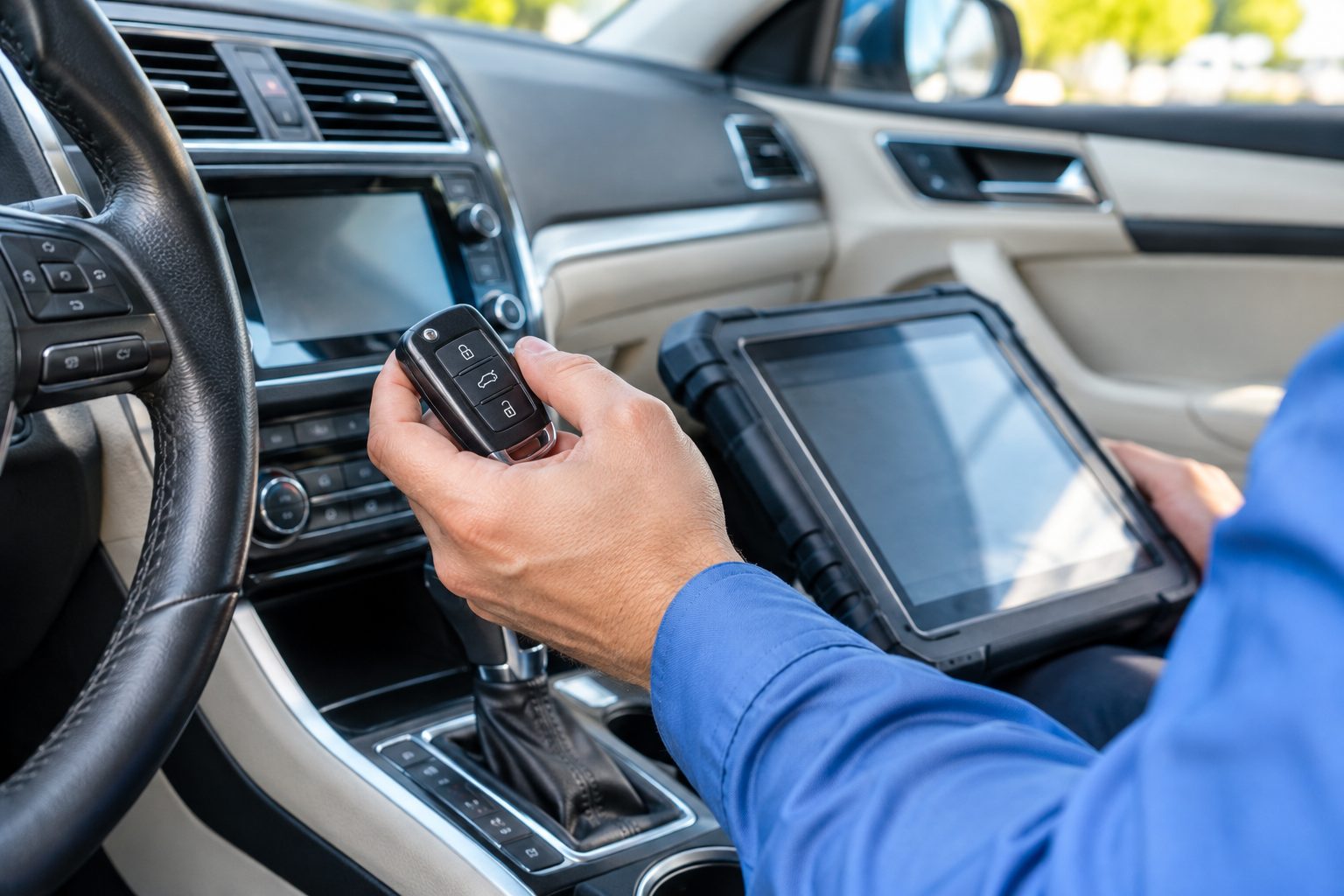
In much of Central Florida, the garage is the door that people actually use. You pull in, close the garage door behind you, and walk straight into the kitchen or laundry room. The front door may see visitors and deliveries, but the garage is the daily route. That is why a failed garage keypad feels like a bigger problem than the equipment suggests. If the keypad stops responding, or the interior entry door is locked and your key is in the house, you are shut out of the part of your home you use most.
A garage entry setup usually involves several separate components that people tend to treat as one thing. The garage door opener is a motorized unit on the ceiling that raises and lowers the big door. The keypad is a small wireless panel mounted outside, which sends a signal to the opener. The remote controls in your vehicles do the same job. The door between the garage and the house is an ordinary entry door with its own lock and deadbolt. A side door on the garage, if there is one, has yet another lock. When people say the garage locked me out, any of these could be the cause.
Understanding which part failed is the key to deciding who can fix it. A locksmith handles locks, keys, deadbolts and door hardware. A garage door technician handles the opener, the springs, the cables and the tracks. Some problems sit in between. This page helps you tell the difference, so that you call the right person and avoid unsafe attempts.
Before anything else, a clear warning. The big garage door is held up by springs under very high tension, and the cables and brackets that connect to them can cause serious injuries if they are handled incorrectly. Do not try to adjust, loosen, remove or repair springs, cables or brackets. Do not try to lift a door that is stuck partway while standing under it. Do not put your fingers in the joints between door panels. Those tasks belong to a garage door professional.
Our work as locksmiths does not include the door springs or the opener motor. If your problem is a broken spring, a door that will not move, or a door that falls when released, stop and contact a garage door company. In the meantime, keep children and pets away from the door.
Many openers have an emergency release, usually a red cord with a handle hanging from the track. Pulling it disconnects the door from the motor so that it can be lifted by hand. Do not use it unless you understand how, and never when the door is partly open and heavy. A door that is released at the wrong moment can drop. If you are not sure, leave it alone.
If the issue is in the keypad, in the side door lock or in the entry door from garage to house, those are locksmith matters and carry far less risk. The sections below focus on those.
A wireless garage keypad is powered by a small battery, and a dead battery is the most common reason it stops working. The signs include dim or missing backlight, buttons that do not beep, or a keypad that works only when you stand very close. Replacing the battery according to the manufacturer's instructions is a simple task, usually done by sliding off the cover on the back or the bottom. Use the type listed in the manual or printed inside the case.
If the battery is fine, the keypad may have lost its connection to the opener. Power surges, storms and a long period without use can wipe a keypad's pairing. Many openers allow you to teach the keypad again using a learn button on the motor unit. Because that button is on a ceiling mounted unit, use a sturdy step ladder, keep clear of the door and the chain, and follow the manual. If you are not comfortable on a ladder, ask someone else to do it.
Moisture is a common problem in Florida. Humidity, heavy rain and sprinklers can get into a keypad housing and corrode the contacts. A keypad that works on dry days and fails after rain is a sign. Replacement is usually the only fix.
Sun and heat can also fade or crack the plastic, and the buttons wear with years of use. A worn keypad may register only some digits. If you notice that certain keys need hard presses, it is time to replace it.
Finally, a keypad that works but the door does not open may point to the opener, a locked-out mode on the wall control, or a power issue. Check whether the wall button works, and whether the opener has a vacation or lock feature switched on.
Even if the garage door opens, you still need to get through the interior entry door. This door is often forgotten in security planning, yet it is one of the most important doors in the home. It usually has a knob or lever and a deadbolt, and it may be fitted with a self-closing hinge or a spring that pulls it shut. Many people use it without a key because it stays unlocked while they are home. That habit is where the lockouts begin.
A typical scenario goes like this. You step into the garage to take out the trash or to check the car, the door swings shut behind you, and the latch locks because the knob was set to lock. If the garage door has been closed and the keypad is outside, you may be unable to get back in, and your keys are on the kitchen counter. Another scenario is that you come home to find the entry door locked and the key at the bottom of a bag you left at the office.
A locksmith can restore entry through this door without damage in most cases, after confirming that you live there. Our page on garage entry door locks explains how these locks are set up. If the lock itself is worn, loose or stiff, we can repair or replace it at the same time.
This is also the best door in the house to upgrade. A solid deadbolt with a reinforced strike plate, installed with long screws into the frame, makes it much harder to force. Our page on strike plate reinforcement covers that.
Many garages have a side door, a small door on the side wall used to walk in without opening the big door. These are convenient, and they are often the weakest point of a garage. They commonly have a basic knob lock, sometimes without a deadbolt, in a light door and a thin frame.
If the side door is locked and you have lost the key, a locksmith can open it and, if needed, rekey or replace the lock. Because a side door is often on the back or side of the property, you may be using it as a way to reach the house when the keypad fails. Make sure the side door is locked when you are away. Many break-ins start in the garage, because the garage may be out of view and contain tools.
Check whether the side door has a deadbolt. If not, ask about adding one. Look at the frame around the lock, since a cracked or soft frame can fail under force. Hurricane-rated doors or reinforced frames are options. Our guide on securing garage doors and entry points covers these.
If the side door lock is corroded by moisture, a damaged cylinder or latch will make it hard to turn the key, and a lockout can follow. Our page on rusted locks from salt and humidity describes how that develops.
Because several trades touch a garage, it helps to sort the work. A locksmith can open a locked entry door, repair or replace the lock on the entry door or side door, rekey locks so old keys stop working, install or repair deadbolts and strike plates, and add keypad or smart locks to the interior or side doors. A locksmith can also change locks after a key is lost or stolen.
A locksmith does not handle springs, cables, tracks, door panels or opener motors. For those, you need a garage door company. A locksmith also does not wire or program a wall-mounted garage control, though some can help with keypad lock programming for door locks. If your problem is a garage opener that does not respond, check the batteries, the power and the manual before calling anyone.
Some jobs sit in between. A garage door keypad is made by the opener manufacturer and is paired to that opener, so it is typically a garage door company's product. If a keypad is simply worn out, a replacement may be handled by either, depending on who you call. We can tell you honestly when your problem is outside our work so you do not pay for a visit that cannot solve it.
If you are not sure, describe what is happening. Tell the dispatcher whether the big door opens, whether the entry door to the house will not open, and whether you have a key. A short conversation will tell you whether a locksmith is the right call.
In emergencies, such as a child or a pet locked in the house, or an unsafe situation, call 911 first. Our page on house lockout service explains how we help when you are shut out of your home.
Because the garage entry door is used so often, it is a good candidate for a keypad deadbolt. A keypad lock lets you enter by typing a PIN, so you never need to carry a key to take the trash out or check the mail. Family members can each have their own number, and you can change numbers when needed.
Keypad locks have their own considerations. They run on batteries, and a good model gives low-battery warnings well in advance. They should have a mechanical key backup, in case the batteries die. They should be durable enough for the humidity of a garage, where temperatures swing and moisture builds up. Not every product is designed for that, so ask which models suit a garage environment.
Choose a number that is hard to guess. Avoid birthdays, address digits, repeating or sequential numbers. Change the number when a contractor, a guest or a former partner no longer needs access. Our guide on digital lock PIN best practices expands on this, and our page on keypad deadbolt installation describes the options.
Consider the difference between a keypad on the garage opener and a keypad on the door lock. The first opens the big door, and the second opens the house door. Having both means a person who learns one number still needs the other. Using the same number for both reduces that benefit, so pick different numbers.
If you add a smart lock, make sure that it will not lock you out when your phone battery dies. Our guide on keypad vs key fob vs smart key compares the choices.
If you are shut out at this moment, work through these steps in order. First, stay calm and keep yourself safe. Do not climb on the garage door, do not try to lift it, and do not use tools to defeat the lock. A forced entry door or a damaged frame can cost far more than a service call.
Second, check for an easy route. Does anyone else in the household have a key or a remote? Is the keypad simply out of battery, and does the manual or a spare battery sit in your car? Does the vehicle's built-in remote still work? Is there a neighbor or trusted friend who holds a spare?
Third, check whether you can reach the opener's keypad area and confirm what is happening. A keypad that lights up but does not open the door is a different problem from one that is dark.
Fourth, if the garage door is open and only the entry door is locked, call a locksmith. If the garage door is closed and the keypad is dead, you may need to try the side door, a spare key or a garage door technician, depending on the cause.
Fifth, have identification ready. A locksmith will ask you to show that you live in the home. A driver license with the address, a utility bill or a piece of mail in the car can help.
While you wait, find a safe and comfortable spot. If the weather is hot or stormy, wait in your car or a neighbor's house rather than in the driveway. Keep your phone charged.
A few simple habits can stop most garage lockouts. Keep a key on your car key ring that works the entry door, not only the garage remote. Many people carry a remote but no door key, which leaves them stuck the moment the remote fails. Keep a spare key with a trusted person nearby, and avoid hiding one in the garage, where thieves look first.
Replace the keypad battery on a schedule. Pick a date, such as the start of hurricane season or a daylight savings change, and make it a routine. Keep spare batteries in a labeled bag in the house, not in the garage.
Check the interior entry door. If it locks itself when it closes, decide whether that is what you want. If you often step into the garage, consider a lock that stays unlocked until you turn the deadbolt, or a keypad lock that lets you back in without a key.
Think about moisture. Wipe condensation from the keypad, and replace worn weather seals. If a keypad has failed after rain, a cover or a better location may help. Our guide on humidity and lock longevity explains the effects.
If you are ready to get back inside, call and describe what has failed. We will tell you whether it is something we can fix, quote it by phone, and explain the service call terms before anyone is sent.
No. Locksmiths work on locks, keys, deadbolts and door hardware. Openers, springs, cables and tracks belong to a garage door company. We can open and repair the entry door between the garage and the house, and the side door lock. If your problem is outside our work, we will say so.
Replace the battery with the type listed in the manual, because a dead battery is the most common cause. If it still does not respond, the keypad may need to be paired again with the opener, or it may be damaged by moisture and need replacement. Use a stable ladder for any step near the ceiling unit.
Only if you understand how it works and the door is fully closed or fully open. The cord disconnects the door from the motor, and a partly open door can drop. The springs are under very high tension. If you are unsure, leave it alone and call a garage door professional.
Yes. A keypad deadbolt on the garage entry door lets you enter with a PIN, so you do not need a key for everyday trips. Choose a model with a mechanical backup key and low-battery warnings, and use a number that is hard to guess. A locksmith can install it and explain the options.
Photo identification and something that links you to the address, such as a utility bill, a piece of mail or a lease. A technician will confirm that you are entitled to enter before restoring access. This protects your home from anyone who might claim to live there.
Quotes are given only by phone, because the cost depends on the door, the lock and what is needed. Complicated jobs may need an on-site visit. There is a service call charge, explained on the phone before a technician is dispatched. You will know the terms before agreeing to anything.
Describe the situation by phone and we will tell you what the job involves. Quotes are given by phone. Jobs that cannot be quoted without seeing them need a technician on site, and the service call charge is explained on the phone before anyone is dispatched.