Closing the trunk with your keys inside is a surprisingly common mistake, and it often locks the whole car. The good news is that most vehicles have owner-intended ways in, and a locksmith can handle the rest without scratches or broken trim.
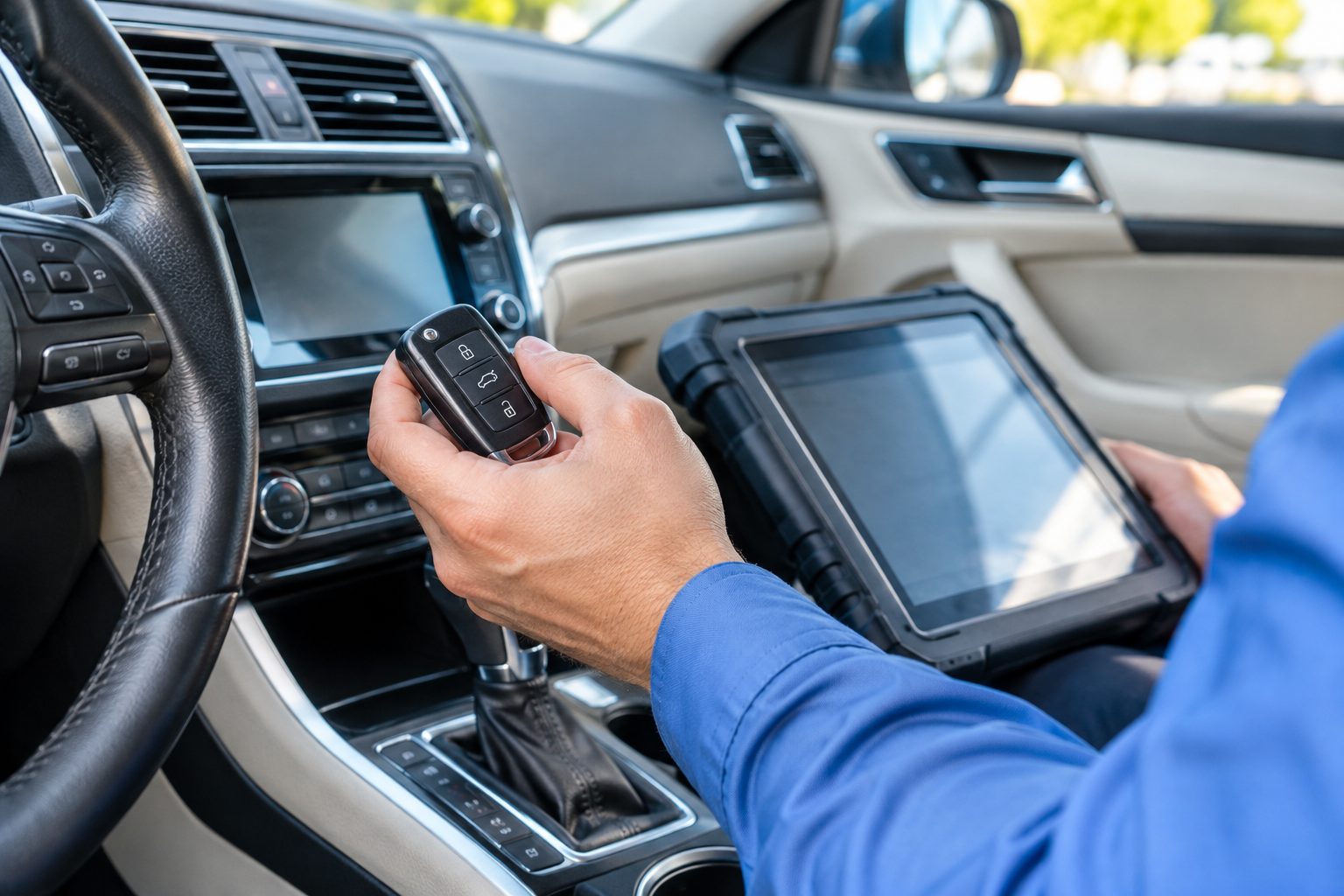
It happens in a few predictable ways. You load groceries or luggage, set the key fob down on top of the bags, and close the lid without thinking. A parent loads a stroller and a diaper bag with the fob tucked in a side pocket. A traveler at a hotel or a theme park lot piles bags in and forgets the fob is in one of them. A car with a touchless trunk lets you close the lid with the fob in your pocket, then you toss the fob into the cargo area to clear your hands.
Modern cars add a twist. If a car has keyless entry and push button start, it may lock itself when you walk away. If the fob is inside the trunk, the car may detect it, or it may not, depending on the model. Some cars refuse to lock with a fob inside the cabin, but the trunk is a more complicated case, because the antenna design may or may not pick up a fob in the cargo area.
The result is the same in most cases: you are standing outside a car with a closed trunk, no key in your hand and, depending on the car, locked doors. The next steps depend on your vehicle, and a calm look at what the car offers will often solve the problem.
Car makers know that trunks get closed on keys, and many have included features meant for the owner. The first is the interior trunk release. If you can get into the passenger cabin, most cars have a lever or button near the driver's seat or on the floor that opens the trunk. Note that the lever may be disabled if the car is locked or if a valet mode is active, and some vehicles require the ignition to be on.
The second is the rear seat pass-through. Many sedans have rear seats that fold down, creating an opening between the cabin and the trunk. If the cabin is accessible, the seat release is usually inside the trunk, and on some cars it is a pull strap on the seat back. Check your owner's manual for the layout of your vehicle.
The third is a spare key or a second fob. If you have a spare at home, a friend or family member may be able to bring it. A valet key, a small plain key that fits the doors and ignition but not the glove box or trunk on some models, may be tucked in the owner's kit.
The fourth is a phone app or roadside assistance. Many manufacturers offer an app that can unlock the doors remotely, and some insurance policies or credit cards include roadside services that dispatch a technician. Check the app first, since it is often the quickest route if you have already set it up.
A locked trunk is bad enough, but a locked trunk on a locked car is the worst combination, because you cannot reach the interior release. Many drivers assume a trunk lockout means they are stuck until they can fetch a spare key. Often a mobile locksmith can resolve it faster than a round trip across Orlando to find a spare.
A technician approaches the problem by first getting into the cabin without damaging the door, the weatherstripping or the electronics. Once inside, the interior trunk release or the pass-through usually opens the cargo area. In other words, a locksmith turns a trunk problem into an ordinary car lockout, and our page on car lockout service describes how that works at a high level.
You will be asked for proof of ownership before the technician opens the vehicle. This is a normal safeguard. Have your ID, the registration, or an insurance card ready, and expect the technician to verify that the name and the vehicle match. A locksmith who skips this step is not looking after your security.
Search results are full of tricks for opening a locked car with household items. These methods are risky and unreliable on modern vehicles. Door seals can tear, window glass can scratch, side airbags and wiring run inside the door panel, and many cars have sensors that react to forced movement. A repair for a damaged door can easily cost more than the lockout service.
This page will not describe such methods, and a responsible technician will not recommend them to a customer. What is safe for you to do is to check the features above, call someone who has a spare, and call a professional if those do not work. The professional's tools are made for the job, and the technician has training on how different vehicles are built.
Also avoid prying the trunk lid. Pulling on the lid or levering it with a screwdriver can bend the metal, crack paint and damage the latch, and a bent trunk lid may no longer seal against water. In Orlando's rainy season, a trunk that leaks is a real nuisance for luggage, spare tire storage and electronics in the cargo area.
The technician will first confirm who you are and that you have the right to open the vehicle. They will ask for ID and a match to the registration or insurance. They will then look at the car, noting the make, model and year, and decide on a careful way in. Newer vehicles may need a different approach than older ones, and the technician chooses a method to protect paint, seals and electronics.
Once the cabin is open, they will test the interior trunk release. If it works, the trunk opens and you can retrieve your keys. If the release is disabled, they will use the rear seat pass-through if the car has one. If neither works, they will check for a key cylinder on the trunk lid, which many cars still have as a backup, and can address the lock without harm to the finish.
Afterward, test your fob. Make sure the doors lock and unlock, the trunk opens with the fob and the car starts. If the fob was bent or the battery was jostled loose, it may need attention. Our page on a car key fob not working explains how a dead battery or a lost pairing can look like a broken fob.
Sometimes people assume the keys are in the trunk when they are somewhere else. If you cannot find your keys and the car is locked, take a moment to check the obvious places: pockets, a bag left on the pavement, the top of the car, the seat of a stroller, a restaurant table. A quick search can save you a call, and the keys may be closer than you think.
If you truly have lost the key, the situation changes. A lost key means a replacement is needed, and if the car is a modern vehicle the key must be programmed. In some cases, no key works at all, which is called an all keys lost situation. Our page on all keys lost explains what is involved, and our page on losing the only car key describes how to prepare.
If you left the keys in the trunk and you have a second key, consider what you can safely do to avoid repeating the mistake. Store the spare in a location that you can reach, and give a copy to someone you trust. A little planning makes a lockout a minor event.
A few habits can prevent most trunk lockouts. The simplest is the pocket rule: the key goes in your pocket before the trunk gets touched. Do not set the fob on top of bags, in a cup holder or in a shopping bag. If you are carrying a lot, put the fob in the pocket first and then start loading.
A second habit is to check for the fob before you close the trunk. A glance into the cargo area takes a second. If you load luggage at a hotel or a theme park lot, do a quick pocket check before shutting the lid.
A third habit is to know your car. Learn where the interior trunk release is, how your rear seats fold and whether your car has a touchless trunk with a sensor. Read the owner's manual once. Our guide to lockout prevention habits collects practical routines for cars and homes.
A fourth habit is to keep a spare key in a safe place. A spare is useful only if you can get to it. Give one to a family member who lives nearby, and keep the other at home in a place where you can reach it. Our page on spare key duplication explains how spares are made and programmed.
Orlando sees a great many visitors, and rental cars bring added trouble. A rental car has a fob that you have used for only a few days, and you may not know its quirks. A touchless trunk, an automatic lock or a keyless start can make a lockout easier to cause. If you lock the key in the trunk of a rental, call the rental company's roadside number as well as a locksmith, since the company may have rules about who can open the vehicle.
Theme park parking lots are huge, hot and busy. A lockout in a lot in midday sun is an uncomfortable and potentially unsafe experience for children and pets, so plan ahead. If there is a child or animal inside the vehicle, call 911 first, and see our page on a child locked inside a car. For ordinary lockouts, call from a shaded spot and give the lot, section and row so the technician can find you.
Our guide on theme park visitor car key tips lists habits that save visitors time. When you are ready, call and describe the vehicle. The quote is given by phone, a service call charge applies and is explained before dispatch, and a technician will take care of your car.
Yes. Usually the technician opens the cabin first and then uses the interior trunk release or the fold-down rear seats to reach the cargo area. If those are not available, the technician may address the trunk lock directly. The work is done to avoid damage to the paint, seals and electronics, and ID and proof of ownership are requested first.
It may, depending on the vehicle. Some cars trigger an alarm when a door opens without the fob present, and the alarm stops once the car recognizes a valid key or when the system resets. A technician is familiar with this and can often silence the alarm as part of the work. Tell the technician if your car has an aftermarket alarm.
It is not recommended. Prying can bend the lid, crack paint, damage the latch and ruin the weather seal, and in Florida rain a damaged seal means a wet trunk. The repair often costs more than a professional lockout service. A technician has safer tools and knows how each vehicle is assembled.
This is common with push button cars. The car may lock when you walk away even if a fob is in the cargo area. A technician can open the cabin, use the interior release and retrieve the fob. Afterward, test the fob and learn how your car handles locking so it does not happen again.
Yes. A reputable locksmith will ask for identification and a match to the vehicle, such as a registration or insurance card. This protects you and the vehicle's owner. If you are driving a rental, the technician may need the rental agreement and may contact the rental company to confirm that opening the car is allowed.
Quotes are given only by phone. Describe the vehicle's make, model and year, whether the car is locked and where you are. A service call charge applies and is explained before any technician is dispatched. For complicated situations, such as a lost key as well, an on-site visit may be needed first.
Describe the situation by phone and we will tell you what the job involves. Quotes are given by phone. Jobs that cannot be quoted without seeing them need a technician on site, and the service call charge is explained on the phone before anyone is dispatched.
Discovering your keys are in the trunk, especially in a hot parking lot, calls for a few sensible steps. First, make sure everyone is out of the car and in a safe, shaded place if possible. Central Florida sun heats a closed vehicle quickly, so never leave a child or pet inside, and if anyone is trapped, call emergency services immediately rather than waiting for a locksmith. Move away from traffic lanes and keep your phone charged and within reach while you arrange help. Local weather and daily use both play a part, so think about how your own routine affects the hardware involved.
Take stock of what you have. Do you have a spare key at home, with a friend or in a second vehicle? Can someone safely bring it? Does your phone work with a vehicle app that can unlock doors? Does the car have an interior trunk release or a pass through seat that may be reachable once the doors are open? Knowing the options helps you compare the time and effort of each. Do not try to pry the trunk or force a door, as this can damage seals and wiring.
When you call us, describe the vehicle, your location and whether the doors are locked as well. Have your identification and registration available, since ownership must be confirmed before a technician opens a vehicle. The scope and quote are explained before work begins, so you can decide calmly. After you retrieve the keys, take a moment to reset your habits, perhaps by placing the keys in a pocket before you load the trunk. Small changes prevent a repeat of the same problem. It helps to share this information with everyone in the household or workplace who might be affected by the outcome.
Trunk lockouts are usually the result of a simple sequence: you set your keys down while loading something, close the lid and the car locks automatically. Some vehicles lock when you walk away with the fob, while others lock after a timer. Hands full of bags, strollers or luggage make it easy to place keys on top of a pile and then close the lid. Attraction parking lots and shopping centers add distraction and time pressure, which makes the slip more likely. Write down what you notice as you go, because small details are easy to forget once the situation is resolved.
Design details matter. Many modern trunk lids close with a light push and latch fully, leaving no chance to reopen without a key or release. Some cars keep the fob inside the cabin as the key, and a keyless entry system refuses to lock the doors if it detects the fob nearby, but a fob inside the trunk may not be detected reliably. Understanding how your particular model behaves is worth a few minutes of reading the owner manual before the problem occurs. If something here does not match what you see, say so on the call, since your own observations matter more than any general rule.
Prevention is mostly about placement. Put your keys in a pocket or purse before you open the trunk, and keep a deliberate habit of checking before you close the lid. If your car has a trunk lock-out protection feature, learn how it works and test it once. Consider a hidden spare mechanical key in a secure place, such as with a trusted person. These measures cost little and save you from a long wait on a warm afternoon. Take your time with this step, as rushing is the most common way a small issue turns into a larger one.