Knowing how a locksmith call is supposed to go makes it much easier to stay calm when you are locked out. This guide follows the whole sequence from the first phone conversation through arrival, identification, assessment, the quote, the work and the final paperwork, with notes on what you should be asked and what you can ask in return.
If you can take a minute before dialing, use it. Move to a safe, well-lit spot. If you are in a car, make sure you are away from traffic. If you are at a building after hours, consider waiting inside a lit business or with a neighbor you trust. A locksmith visit goes much better when you are comfortable and can focus.
Gather the details that will matter. For a vehicle, that means make, model, year and color, the license plate, and the location. For a home or business, it means the address, the type of door, and whether you are alone. Know what you are asking for: is it getting in, making a key, changing a lock, or repairing something? Being specific shortens the call and makes the quote more accurate.
Think about who is entitled to authorize the work. If the property is yours, you can. If you are a tenant, an employee or a family member, the situation may be more complicated, and the locksmith may ask for additional proof or contact with the owner. Having that information ready avoids delays on arrival.
The call itself should feel like a conversation, not a script. The person answering should give a business name, ask what is going on, and ask follow-up questions that fit your situation. For a car, expect questions about the vehicle and whether you have any key. For a house, expect questions about the door, the lock, and whether anyone is inside who may need attention. If anyone is in danger, such as a child or a pet inside a hot vehicle, say so immediately and contact emergency services first.
This is also when the quote is discussed. Quotes are given by phone for common jobs, based on the details you provide. A trustworthy company explains that there is a service call charge to dispatch a technician, tells you what that covers, and says whether the job may need an on-site look. Ask any questions you have now rather than later. Ask what happens if you decide not to proceed after the technician explains the work.
Finally, expect to be asked for a callback number and a location. You may be asked to confirm that you are the owner or authorized person, and to have identification ready when the technician arrives. These are normal steps, and they exist to protect you and others.
While you wait, stay somewhere safe and keep your phone on. If the technician needs directions or has trouble finding the location, they may call. Avoid giving the location to others who contact you unexpectedly. Only communicate with the number that called you or the number you dialed.
We do not promise arrival windows because traffic, weather, distance and the number of calls all affect timing, especially across a metro area like Orlando. What you can expect is that the dispatcher will let you know if something changes and answer your questions honestly. If a company gives a specific number of minutes and then repeatedly pushes it back, that is worth noting.
Use the time to prepare. Locate your identification and any documents that connect you to the property or vehicle. If it is a vehicle, find the registration or title and note where the vehicle identification number appears, usually on the dashboard near the windshield or on the driver door jamb. If it is a home, gather a piece of mail or something with your name and the address.
When the technician arrives, take a moment to confirm that the person and the company match what you were told on the phone. Ask for the technician name and the name of the company. A professional is used to this and will not mind. Look at the vehicle: many mobile locksmiths use marked vans or cars, though some operate unmarked, so what matters most is that the person can explain who they represent.
The technician will usually introduce themselves and ask to confirm the details of the job. They may ask you to show identification and proof that you are entitled to the access. For a home, that might be a driver license with a matching address or a piece of mail. For a vehicle, expect to show identification and registration or title. This step can feel annoying when you are cold and tired, but it is the sign of a careful operator, and it prevents anyone else from using the same service to get into your property.
If the technician cannot identify the company, refuses to confirm the quote or becomes irritated by simple questions, you have the right to pause. Tell them you would like to confirm details before proceeding, and call the dispatch number if necessary.
Before starting work, the technician looks at the situation. For a lockout, that means observing the door, the lock type, the condition of the hardware, and any signs of damage. For a vehicle, it means identifying the make and model, the type of key and any additional security features. For a repair or replacement, it means checking the lock, the door and the frame to see what is causing the problem.
The assessment is when the technician compares the reality to what you described by phone. Most of the time they match, and the job goes ahead as quoted. Sometimes there is a difference, such as a different lock type or a damaged frame that was not apparent before. A good technician explains what they see, what it means, and what the options are, in plain language.
This is also the point at which the technician should tell you whether the job is straightforward or complicated. A complicated job may need an on-site visit with a longer evaluation, or parts that are not on the vehicle. In that case, you will hear what the next step is and how any charge applies. You are not obligated to proceed, and you can ask for time to think.
This is the most important step and the one most often skipped by less careful operators. Before any tool touches your lock or vehicle, the technician should restate the quote you were given by phone and confirm the scope of work. If anything has changed, the technician should explain exactly why and give you the opportunity to agree or decline.
Do not feel awkward about asking. You can say something simple like, I would like to confirm the quote before we start. A professional will respond by repeating the details and asking for your agreement. If you decline, you owe the service call charge that was explained on the phone, since the technician traveled to you, and nothing more.
If the scope has changed, ask for the new amount to be written down. A written note or message protects both sides and removes any later disagreement about what was agreed. If the technician is unwilling to write it down, that is a signal to reconsider.
| Situation on arrival | What the technician should do | What you can do |
|---|---|---|
| Job matches the phone description | Restate the quote and begin once you agree | Confirm the amount and the scope |
| Job differs from what was described | Explain the difference and the options clearly | Ask for the new amount in writing and decide |
| Job is complicated | Recommend an on-site visit and explain the service call charge | Ask what the visit will cover and what happens next |
| You choose not to proceed | Accept the decision and explain what is owed | Pay only what was explained on the phone |
Once you agree, the technician begins. How long it takes depends on the lock, the vehicle, the condition of the hardware and what is needed. A simple lockout may be quick, while key programming, lock replacement or repair of damaged hardware can take longer. Ask the technician what to expect, and avoid hovering over the work in a way that gets in the way, though you are welcome to watch from a reasonable distance.
A professional works carefully and explains what is happening if you ask. They protect your property, such as covering a door frame or car paint where needed, and they clean up. If they run into a surprise, such as a damaged internal part or a different system than expected, they stop and tell you before proceeding.
You may be asked to make decisions during the work. For example, the technician may find that a lock is worn and recommend replacing it, or may suggest rekeying so old keys no longer work. These are recommendations, not requirements, and you can ask how they affect the quote. Good technicians will give you honest advice, including advice that results in a smaller job.
Before the technician leaves, test the result together. If a door was opened, check that the lock still works with your key. If a lock was rekeyed or replaced, try each new key several times, turning it fully in both directions. If a vehicle key was made or programmed, start the engine, lock and unlock the doors, and test any remote or trunk functions.
Ask the technician to show what was done, particularly if parts were replaced. Seeing the old part and understanding why it was swapped helps you trust the result. Ask whether anything else about the door, frame or vehicle should be watched in the coming weeks, and whether a spare key would be sensible.
This is the right time to raise any concern. A key that feels stiff, a latch that does not engage or a remote that responds slowly is far easier to fix while the technician is still there. Do not feel that you are being difficult. A good technician wants the job to work.
At the end, you should receive an invoice that lists the business name, the date, a description of the work and the amount charged. Check that it matches what you agreed to. Ask about accepted payment methods before the job if this matters to you, since it was one of the topics to confirm on the phone.
Keep the invoice. It is useful for warranties on parts if any are offered by the manufacturer, for insurance or property management records, and for any follow-up. If you are a landlord or business owner, store it with your property records so you know when locks were changed and which keys were issued.
If something does not look right on the invoice, raise it politely and calmly before you pay. Most errors are simple to fix on the spot. If there is a genuine disagreement, ask the technician to note it on the paperwork, and follow up with the company afterward.
Once the immediate problem is solved, take a few steps to avoid repeating it. If you lost or locked in your only key, make a spare and keep it with someone you trust. If a key was lost in a public place, consider rekeying so that anyone who finds it cannot use it. If the lock was worn or damaged, schedule repairs rather than waiting for the next failure.
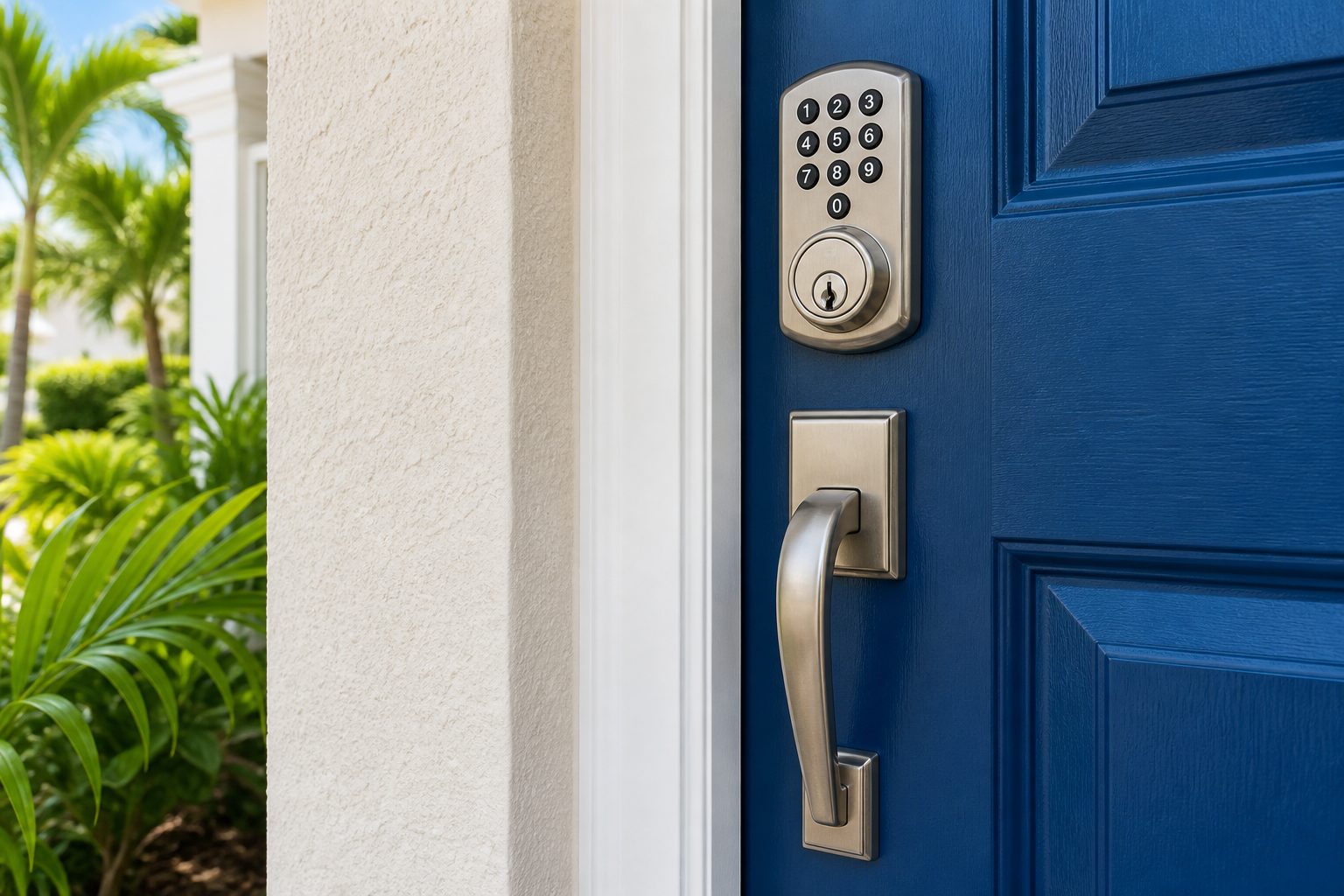
For vehicles, think about whether a second key should be programmed while you have a working one, since replacing every key from scratch is a bigger job. For homes and businesses, think about whether the hardware matches how the property is used, and whether a more convenient option such as a keypad might reduce lockouts.
If you have questions about any of this, or want to understand what a call for your particular situation would involve, call and describe what is going on. We will explain how the quote works and what the service call charge covers before anyone is dispatched.
Yes, usually. A careful locksmith asks for reasonable proof that you are entitled to the access being requested, such as identification with a matching address for a home, or identification and registration for a vehicle. It is a sign of a responsible company and it protects you and everyone else from misuse.
No. You can decline if the job or the quote differs from what was discussed. You should expect to pay the service call charge that was explained on the phone, since the technician traveled to you, but not the cost of work you did not agree to. Ask for any change in scope to be written down.
We do not promise arrival windows, because distance, traffic, weather and call volume all vary across the Orlando area. The dispatcher will keep you informed and answer your questions honestly. If a company gives a firm number and repeatedly changes it, treat that as something to question.
It can if the job turns out to be different from what was described, for example a different lock type or damaged hardware. In that case the technician should explain why, give you the new amount, and let you decide before work starts. A change with no explanation or in writing is a warning sign.
Some jobs need an on-site visit before a final amount can be given. In that case you will be told on the phone that a visit is recommended, and the service call charge will be explained before dispatch. The technician evaluates the situation, explains the options, and you decide whether to go ahead.
Test every key several times, make sure doors latch and open smoothly, and for vehicles start the engine and try all remote functions. Ask what was changed, request an itemized invoice, and raise any concern before the technician goes. Problems are easiest to fix while the technician is still there.
Describe the situation by phone and we will tell you what the job involves. Quotes are given by phone. Jobs that cannot be quoted without seeing them need a technician on site, and the service call charge is explained on the phone before anyone is dispatched.