Short-term rentals near the theme parks see a new guest every few days. That pace puts steady pressure on locks, passcodes and key control. This page explains how a mobile locksmith helps hosts and managers keep entries working, secure and easy for guests to use.
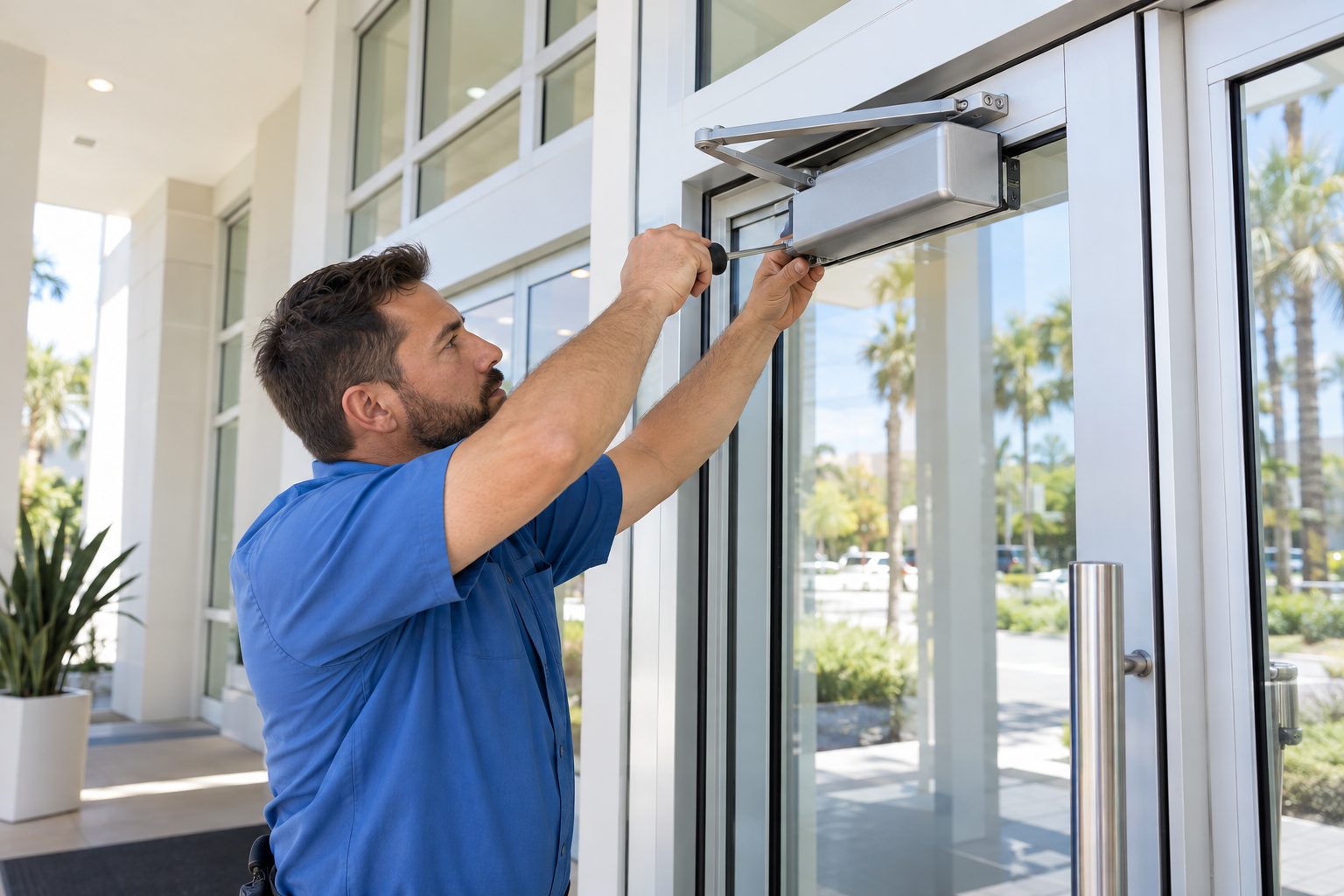
A family house sees the same few people use the same door year after year. A vacation rental near the tourist corridor might see a new party every weekend, sometimes every night. Guests arrive tired after a flight and a drive, often after dark, with luggage and children, and expect the door to open on the first try. They are unfamiliar with the lock, the door and sometimes the language of the instructions.
That means more use, more mistakes and more wear. Keypads are pressed by wet hands and sandy fingers. Deadbolts are forced when the door is slightly out of alignment. Lever handles loosen from heavy luggage. Doors are slammed. Guests lock themselves out, lock out friends, and leave the house with the door ajar.
On the host's side, every turnover is a chance for a key to go missing or a code to be shared. A cleaner who has worked for several properties, a handyman who needs a quick visit, a pool service tech who comes weekly: each needs access, and each adds to the list of people who know how to get in.
The result is that a vacation rental needs a deliberate lock plan, not a default one. A locksmith can help design that plan, install the hardware, and respond when something fails. Pricing is by phone only, because it depends on the number of doors, the hardware and what the visit involves. Describe your situation and the dispatcher will explain what is needed.
Most hosts prefer keypad or smart locks because they avoid handing out physical keys. A code can be sent to the guest before arrival and changed afterward. No lockbox, no key return, no lost keys. For many hosts it is the best way to manage self check-in.
The choice among models comes down to a few practical questions. Does the lock fit your door preparation? Is it rated for outdoor humidity and sun? Does it let you create many codes, including temporary ones? Does it have a mechanical key override? Does it work with your property management software, if you use one? Is battery life suitable for the volume of use?
Florida weather matters. Heat, humidity and rain affect electronics and finishes. A lock that works well in a dry climate may fail early on a covered but humid porch. Choose models with sealed keypads and corrosion-resistant finishes. Even so, plan to replace batteries on a schedule rather than waiting for a low-battery warning that a guest may ignore.
A locksmith can install the hardware, test it and walk you through programming. The pages on smart locks and keyless entry and keypad deadbolt installation explain how these locks work. The smart lock buying guide lists the points to compare before you choose. If a lock already installed is acting up, see smart lock troubleshooting.
Technology does not fix poor habits. A passcode scheme for a rental should be planned. Avoid codes based on the street address, the phone number, or the last four digits of a guest's number. They are easy to guess and easy to share.
Give each guest a unique code that is valid for their stay and expires after checkout, if the lock supports it. Give cleaners and other regular visitors their own codes so that you can disable one without affecting the others. If a person leaves your employment, delete their code the same day.
Never keep the master or admin code in a text message thread that anyone can access, or in a shared note without protection. Store it where only you and a trusted backup person can find it. If you use a management company, make sure the account is under your control and not the company's personal one.
Review the code list at regular intervals. Remove codes that are no longer needed. If you notice a code used at an unexpected time, investigate. Many smart locks keep an activity log, and some cloud-based systems send alerts. For a more thorough discussion, see digital lock code best practices.
Finally, remind guests not to share the code. A short note in the welcome message is enough. Guests rarely intend harm; they simply do not think about it.
Every electronic lock should have a mechanical override. A keyed cylinder hidden under a cap, a standard deadbolt used alongside the keypad, or a lever with a cylinder are common arrangements. The override ensures that a dead battery or a failed circuit does not become a lockout.
A backup key must be stored somewhere safe and accessible to you or a trusted person, not left in an obvious place at the property. A rock or a planter near the door is the first place anyone looks. A secured lockbox with a code that changes between guests is more sensible, but only if the lockbox is mounted well and the code is controlled.
Test the mechanical override periodically. It is common for a hidden cylinder to seize because it was never used. If a guest calls at midnight with a dead keypad and the key will not turn, the situation becomes urgent. A technician can check and lubricate the cylinder as part of a visit.
If a guest is locked out, there are few options. You or your backup person can bring the key. The locksmith can assist if the lockout is not a safety emergency and the authority question is settled. Because the guest is not the owner, the locksmith will need to confirm that the host or manager authorizes the work. The technician will typically speak with you by phone. A page on house lockout explains how a typical call proceeds. If anyone inside the rental is in danger, call 911 first.
The most common leak in a short-term rental key system is the turnover crew. Cleaners and inspectors often have a key or code for many properties and may visit when the house is empty. A host who has not tracked who holds keys might not realize how many people can enter.
A sensible practice is to give each cleaning crew a code that is unique to your property or one that you can revoke. If physical keys are used, label them with a coded tag and log them out and in. If a cleaner leaves, change the code or rekey. This sounds like a lot of work, but a rekey is a modest task and can be scheduled with other maintenance.
Check the property after each turnover for signs of trouble: a door that does not latch, a sliding door that does not lock, a window left open, a gate left unlatched. A simple checklist for the cleaner, with a photo of each secured entry, creates a record and a habit.
Inspect hardware on a schedule. Every few months, test each lock, tighten loose screws, check strike plates and look for corrosion. See lock lubrication and maintenance for what a technician does during a check, and lockout prevention habits for guest-facing tips.
Vacation rentals in Central Florida often have a pool, a lanai, sliding glass doors and screened enclosures. Each has its own lock. A pool cage door with a faulty latch is a safety problem for small children. A sliding door with a worn latch is a security problem. A garage entry door that is left unlocked because the key is hard to find is both.
Slider locks are frequently the weak point. The factory latch is light, the track can be lifted, and guests may not realize that a door is not secure. A locksmith can service the latch, install a secondary lock or a bar and adjust the door so it closes properly. See sliding patio door locks and securing sliding glass doors.
Pool barrier hardware should close and latch by itself. Do not rely on guests to shut a gate. If a spring is weak or a latch no longer catches, address it promptly. See pool gate lock service.
Make sure guests know how to lock each door. A laminated card or a short note in the welcome guide with a simple instruction can reduce unlocked doors, lockouts and calls at odd hours. Keep the language plain and avoid jargon.
Guest lockouts are inevitable. The guest steps onto the lanai to take a call and the door closes behind them. A child pushes the lock button. A keypad shows a code error after the battery drops. A guest forgets the code and has no phone signal.
Prepare in advance. Give guests a phone number they can reach at any hour, and decide who responds. Know whether you can bring a key or reset a code remotely. Have the number of a locksmith saved. If a guest is locked out with a child or a pet inside in hot weather, it is an emergency. Call 911 and tell the dispatcher what you know.
For a regular lockout, a locksmith needs the property address, the type of lock, who is asking and whether the host authorizes the visit. Because the technician is not on site yet, the dispatcher may ask you to confirm by phone. Some hosts keep a short authorization note in the file for the property so that confirmation is fast.
This site does not promise arrival times, and no locksmith can honestly promise a technician at every hour and location. When you call, you will be told what is available and what the call involves, including any service call charge, before a technician is dispatched. For related situations, see emergency locksmith and keyless entry pad not responding.
Rentals near International Drive, Universal, Lake Buena Vista, Kissimmee and Davenport share common patterns. Many are townhomes or single-family homes in gated communities with shared amenities. Guests arrive from the airport or the highway, often at odd times. Seasonal peaks bring heavier use.
Heat and humidity accelerate corrosion on exposed hardware and shorten the life of batteries. Afternoon storms can drive rain into keypads and cylinders. Plan inspections before the busiest seasons and after hurricane season. The pages on humidity and lock longevity and hurricane season door and lock prep are useful reading.
Many communities have rules about door hardware, key management and gate access. If you are in a gated community, find out how guests get past the gate, who controls the codes, and whether the community has rules on short-term rentals. A locksmith does not give legal advice and cannot interpret local rules for you, but they can work with the hardware once you know what is allowed.
Finally, think about your guests' experience. A lock that works smoothly on the first try, with clear instructions, is part of a good stay. It is also a signal that the home is cared for, which tends to lead to fewer problems.
Have the property address and a description of the entry doors. Say whether you use keypads, smart locks or keys, and the brand if you know it. Describe the issue: a lockout, a keypad failure, a rekey after a cleaner left, an installation, or a general inspection.
Be ready to show authority. A host or manager should be able to show ownership or a management agreement, or at least confirm by phone with details that match the property records. A guest who is locked out cannot authorize a locksmith to open the property without the host's confirmation.
If you have a list of the codes in use and the number of keys that exist, have it nearby. Tell the dispatcher about any upcoming check-ins, so the visit can be planned around them if possible.
Quotes are by phone. Jobs with several doors or a replacement of multiple locks may need an on-site visit, and a service call charge applies and is explained before dispatch. When you are ready, call and describe what is happening. The person on the phone will explain the options and what to expect.
For many hosts, yes. A keypad lets you issue a unique passcode per stay and delete it afterward, with no key to return. It needs batteries, a mechanical override and attention to Florida humidity. A lockbox can work as a backup if it is mounted well and its code is controlled.
First, if anyone is in danger, call 911. Otherwise confirm the situation by phone, decide whether you or a backup person can bring a key or reset a code, and call a locksmith if needed. The locksmith will want to confirm that you, as host or manager, authorize the visit.
Give each guest a unique code that expires after the stay if your lock supports it. Remove codes for former cleaners or staff the day they leave. Review the full code list at regular intervals and delete anything unneeded. There is no single schedule that fits every property.
Yes. Every electronic lock should have a mechanical override so a dead battery or circuit failure does not lock people out. Store the key where only you or a trusted person can reach it, and test the cylinder periodically because hidden cylinders can seize from lack of use.
If the cleaner held a physical key, rekeying is a reasonable step because you cannot be sure no copy exists. If the cleaner used an individual passcode, deleting that code may be enough. Using unique codes for each person makes this much simpler.
Yes. Technicians service pool cage latches, slider locks and secondary bars, and can adjust doors that do not close properly. Pool barrier gates should close and latch on their own, so a weak spring or latch should be fixed promptly. Call and describe the door and the problem.
Describe the situation by phone and we will tell you what the job involves. Quotes are given by phone. Jobs that cannot be quoted without seeing them need a technician on site, and the service call charge is explained on the phone before anyone is dispatched.
Guests arriving at a vacation rental are tired, carrying luggage, and unfamiliar with the door, which makes lock design more important than usual. A technician considers the approach to the entry, the lighting, and how a person with full hands will operate the keypad or key. Keypads should be easy to read and reach, and the deadbolt should engage smoothly without a special trick. Written instructions inside the property and in the booking message prevent the most common calls. Walking through the arrival as a guest would, step by step, often reveals small fixes that make the entry far less frustrating.
Think about how the lock is affected by guest behavior. Doors get slammed, codes get shared, batteries drain faster than expected, and humid, salty air attacks finishes. A technician checks the strength of the latch, the condition of the weatherstripping, and whether the door closes by itself without being pushed. They may suggest hardware with a bolt that extends automatically, or a finish rated for coastal humidity. Hosts who manage several properties benefit from using the same lock model throughout, since spare parts, instructions, and troubleshooting steps then apply everywhere and cleaners become familiar with them.
Finally, build a plan for when something goes wrong. Decide who guests should contact, what information they should have, and how a host will confirm a guest is genuinely locked out. Keep a physical backup key in a secure location that is not obvious to others. A technician can set up the lock so codes can be changed between stays quickly, and can explain how to reset the lock if the batteries die. The scope and any quote are explained before work begins. A tested plan makes the difference between a minor inconvenience and a stressed guest on the doorstep late in the evening.