Most storm preparation focuses on shutters and supplies, yet doors, locks and keys decide whether your home stays secure and whether you can get back in afterward. This checklist walks through each one in plain order.
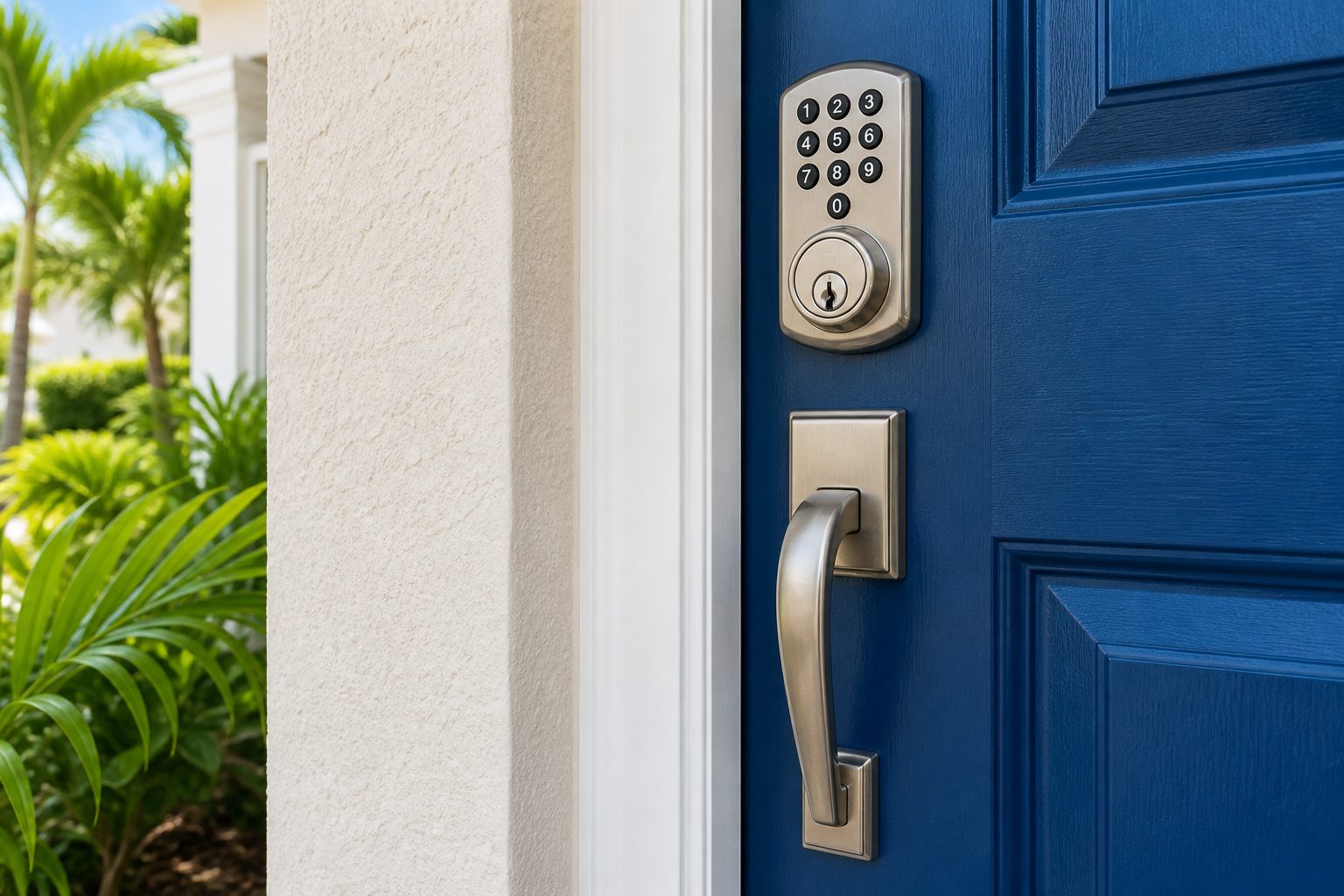
When people in Central Florida prepare for a hurricane, they usually think of water, batteries, fuel and shutters. Doors and locks rarely make the list until something goes wrong. Yet the entry points of a home take the most stress during a storm: wind pushes on the door slab, rain is driven against every gap, and humidity swells wood and sticks hardware that was fine last week.
Keys matter just as much. A storm can mean an evacuation, a stay with relatives, a rental car, or a long drive home after the roads reopen. Each of those situations creates a chance to lose a key, lock one inside a house you cannot reach, or arrive at a door that no longer turns smoothly. A little checking ahead of time removes most of that risk.
This guide is general information for Orlando and Central Florida households, not a substitute for instructions from local emergency officials. If you rent, live in a condo or belong to a homeowners association, the building or association may control some of the hardware. Ask them before you change anything, and treat this page as a list of questions and observations rather than a rulebook.
Pick a calm, dry afternoon well before any storm is forecast and walk through the house door by door. Open each one fully, close it gently, and watch how it meets the frame. A door that has to be lifted, shoved or slammed to latch is telling you something. The cause may be a loose hinge, a swollen slab, a shifted frame or a worn latch, and each of those is easier to deal with now than during a rainy evening.
Look at the gap around the edge. An even line on the latch side, the top and the hinge side suggests the door is sitting square. A gap that is wide at the top and tight at the bottom points toward a sagging hinge or a frame that has moved. Light showing through at the edges, or a draft you can feel with your hand, shows where wind and water will find their way in.
Do the same check on the door between the garage and the house, on side doors, on the back door and on any sliding glass door. People tend to inspect the front door and forget the others, but a storm does not care which entrance you were proud of. Write down anything that sticks, rattles or rubs so you can sort the list by importance afterward.
A deadbolt only helps if its bolt travels all the way into the frame and the frame can hold it. Lock the deadbolt with the door closed and look at how the bolt lines up with the hole. If you have to pull or push the door to get the bolt to slide, the bolt is dragging against the edge of the opening, which wears the hardware and weakens the grip when wind pushes on the door.
The strike plate is the small metal piece on the frame that receives the bolt. On many homes it is held by short screws that bite only into thin trim. A longer screw that reaches the solid framing behind the trim spreads the load much better, and a reinforced plate does the same job on a larger area. Our page on strike plate reinforcement explains what that work involves, and the guide to door frame and hinge security covers the other half of the opening.
If a bolt does not line up, resist the urge to file the strike or force the screws tighter and hope. Misalignment usually has a cause, such as a hinge that has loosened or a frame that has shifted with moisture. Fixing the cause gives you a door that closes on its own and locks without ceremony. Fixing only the symptom tends to come back the first time the weather turns.
When a strong wind loads a door, the stress goes to the hinges and the latch at the same time. Open the door and look at the hinge screws. Any that spin without tightening, sit crooked or have stripped the wood need attention. A common and sensible improvement is replacing one short screw in each hinge with a longer one that reaches the framing, which ties the door to the house rather than just to the trim.
Check the bottom of the door as well. A worn threshold or sweep lets wind driven rain slide under the slab and soak the floor, and persistent moisture is what swells wood doors and rusts the hardware over time. Humidity is a constant in Central Florida, so the habits in our guide on humidity and lock longevity are worth reading alongside this checklist.
Pay attention to how the door sits when it is closed but not locked. A door that drifts open on its own, or one that has to be held until the latch catches, has a hinge or frame problem that a lock cannot solve. A trained technician can tell you whether the fix is adjustment, new screws, a new strike or something larger. For anything involving the frame itself, a carpenter or door installer may be the right call, and a good locksmith will say so.
Sliding glass doors are popular in Florida homes and they deserve their own pass. Slide the door fully open and closed, and listen for grinding. Dirt and salt in the track make the door hard to move, and a door that is hard to close is often left partly latched. Clean the track, check that the latch hook catches the keeper, and make sure any secondary bar or pin you rely on is in working order. More detail is in our sliding glass door security guide.
The door between the garage and the house is the other entrance that gets overlooked. It is often a basic knob with a lock button, and it may sit behind a garage door that you assume protects it. If the garage door loses power during a storm, or is left open during an evacuation, that interior door becomes the main barrier. Look at its hinges, its strike and its deadbolt just as you would a front door, and read our notes on securing garage doors and entry points.
A word of caution about the garage door itself. The springs, cables, brackets and opener on a garage door carry high tension and are dangerous to adjust or repair without training. Look, listen and keep people and vehicles clear if something seems wrong, and leave the repair to a trained technician. You can also locate the manual release and make sure everyone in the household knows what it is, without trying to modify anything.
Hurricane season is the right moment to sort out your key situation, because storms scatter households. Count how many working keys exist for each lock, and decide who should hold them. A spare with a trusted neighbor, a relative outside the area or inside a family member's bag means you are not stranded if your own set is lost, left behind or locked in a car or a house you evacuated.
Think carefully about where spares go. A key hidden in a fake rock or under a mat is the first place a stranger looks, and it can also be washed away or buried in a wet yard. Our guide on spare key storage ideas compares safer options, including keeping a spare with a person rather than a place. Whatever you choose, tell everyone involved so the key is not forgotten when it matters.
Test every spare. A copied key that does not turn smoothly is a copy that was cut badly or that the lock has outgrown. If you find a key that sticks, it is better to learn that on a dry weekend than at a darkened door after a storm. Replace the weak copy, and consider whether it is time to rekey the lock so that old, lost or unaccounted for keys stop working. Our lock rekeying service page explains how that works.
Vehicles are part of the plan because an evacuation or a long drive home often puts the whole household in cars. Locate every key and fob for each vehicle now, including the spare that has been in a drawer for ages. Press the buttons on each fob and check that the vehicle responds, and look at the small battery cover to see whether the fob looks worn. A fob that works only when held against the door is asking for a new battery.
Heat and humidity are hard on fobs, and a flooded or damp car can cause electronic trouble even when the key itself is fine. If a vehicle has been exposed to water, avoid forcing anything and ask a professional what is safe to try. If you end up with no working key at all, the page on car key replacement explains how a mobile locksmith checks ownership before cutting or programming a key.
Visitors add a twist. Many people in the Orlando area are in rental cars when a storm approaches, and a rental key lost or locked in the trunk is a problem with extra paperwork. Know what the rental agreement says about lost keys before you need it, and keep the agreement and the key together in a waterproof bag. Planning ahead for the car turns a bad day into an inconvenient one.
Keypad and smart locks are convenient, and most of them run on batteries, which means a power outage does not necessarily disable them. The weak point is the battery itself. Replace batteries in every electronic lock before storm season rather than waiting for a low battery chime, and keep a spare set in a dry spot. Note that some smart locks depend on a home network or a phone app for features like remote access, and those features may stop when the router loses power.
Every electronic lock should have a way to get in without the electronics, such as a physical key, a backup code method or a terminal for a temporary power source. Make sure you know where that is, that a working key exists, and that someone besides you knows how to use it. Our smart lock troubleshooting page is good follow up reading.
Moisture is the other enemy. Keypads exposed to driving rain can misread presses, and a lock that was working may start acting up after a very wet day. Do not spray random products into an electronic lock, because many cleaners damage the internal parts. If a lock misbehaves, note what it does and when, and have it looked at by someone who understands how that model works.
Many Orlando area residents live in condos, apartments and gated communities, and some own vacation rentals. In those settings the rules about who may change hardware vary. Ask your property manager, landlord or association what is allowed before you replace a lock or add a bolt, and keep a written note of the answer. Our guide to condo and highrise locks explains the usual questions to raise.
If you are leaving the area, make sure the property is locked, that someone nearby holds a key, and that any lockbox or keypad code is known to the person who will check on it. Hosts of short term rentals should think about how guests, cleaners and maintenance staff will get in after the storm, and whether codes should be changed once the situation settles. Leaving a house empty for a while takes its own planning.
Residents who are out of town when a storm hits should plan for how a neighbor, a relative or a property manager can enter if needed. Write down who has authority to approve entry, and keep that information with the person who will call for help. A locksmith will normally confirm ownership or authority before opening or rekeying a property, so having that documentation easy to reach saves a lot of frustration.
When you return, look at the doors before you open them. Check for debris against them, signs of water at the base, and any damage to the frame. Do not force a key in a lock that will not turn. Humid air and water can swell wood and gum up hardware, and force tends to snap a key or bend a latch. Our problem page on a front door that will not lock after a storm goes through the usual causes in more depth.
If you find yourself outside without a working key, call a mobile locksmith and describe what is happening and where you are. Ownership or authority is checked before opening, the work and the price are explained before anything begins, and the finished work is tested with you. For homes, the house lockout page explains what to expect, and the guide to lockout prevention habits helps you avoid repeating the problem.
After the dust settles, spend a few minutes on maintenance. Clean off salt, mud and moisture, dry the hardware, and keep an eye on any lock that starts feeling rough. Regular care is covered in our page on lock lubrication and maintenance. A calm look back after each season, with a short list of what changed, is the surest way to be ready for the next one.
Do it well before any storm is forecast, on a calm and dry day. That gives you time to notice a sticking latch, loose hinge or worn key, and to ask a landlord, association or locksmith for help without competing with everyone else. A short walk through every door each spring is a good habit.
Consider rekeying if you have lost keys, had tenants or contractors with copies, or simply do not know who holds spares. It makes old keys stop working without replacing the hardware. If you rent or live in an association, ask who controls the locks first, because permission may be required.
A spare held by a trusted person is usually safer than one hidden outside. Hidden keys can wash away and are the first place a stranger looks. Choose someone you trust who lives outside the likely storm path, and make sure they can reach it easily and know what it opens.
Many smart locks run on batteries, so the lock itself may keep working, but features that rely on home internet or an app may not. Replace the batteries before storm season, keep spares dry, and make sure a physical key or backup entry method exists and that someone knows where it is.
Often it is the door or frame, not the lock. Humidity can swell wood and shift a door so the latch no longer lines up with the strike. Do not force the key. Dry the area, check for obvious causes, and if it persists, have the hinges, frame and hardware inspected.
Stay safe and stay clear of damaged structures or downed lines. Do not try to force the door. Call a mobile locksmith, describe the situation and your location, and be ready to show that you live there or have authority. The work and the price are explained before anything starts.
Describe the situation by phone and we will tell you what the job involves. Quotes are given by phone. Jobs that cannot be quoted without seeing them need a technician on site, and the service call charge is explained on the phone before anyone is dispatched.