Running a vacation rental in Central Florida means handing your front door to a new household again and again. This guide explains how to control who can get in, and how to keep guests from getting stuck outside.
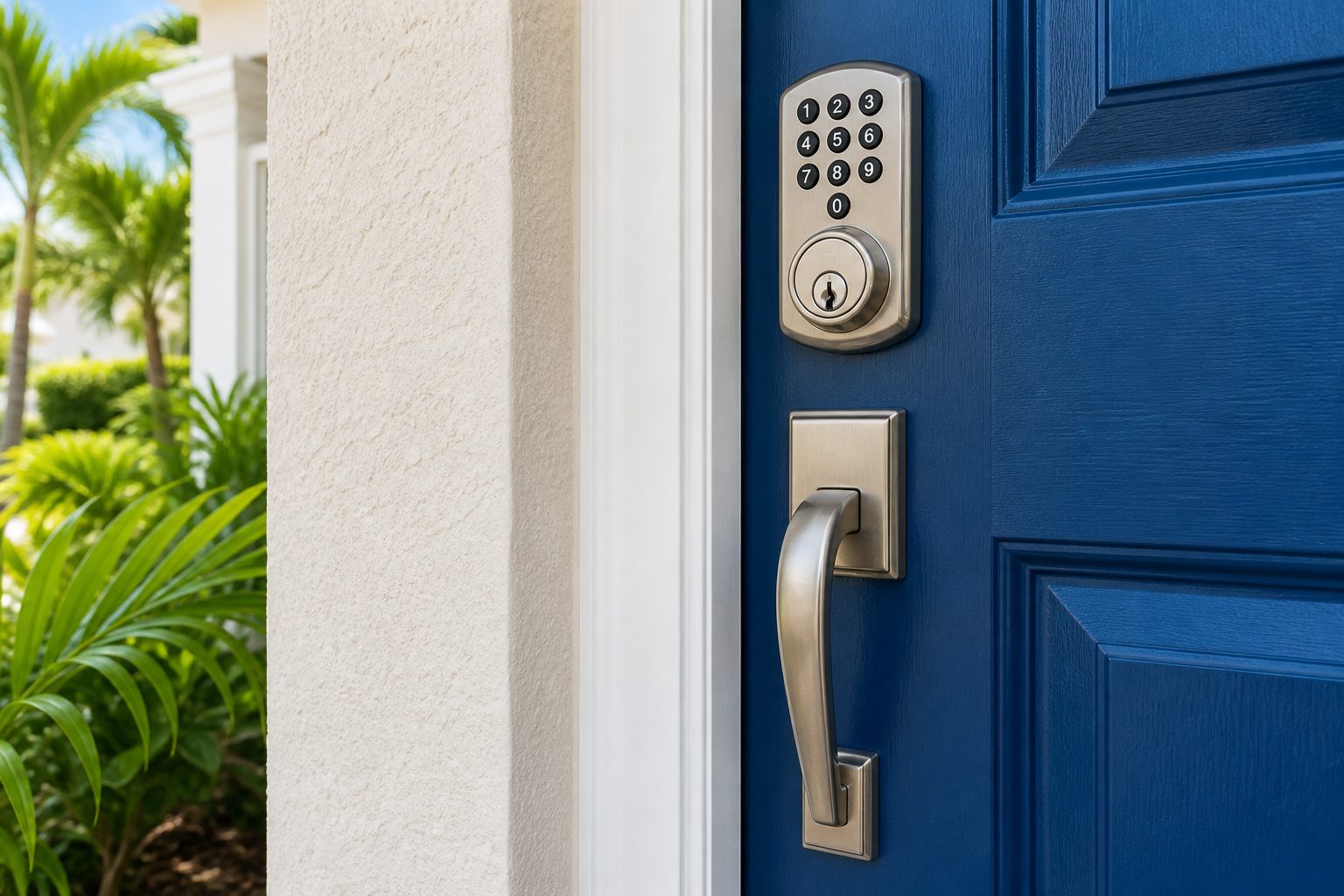
A family home might see the same four or five people use the same locks every day. A vacation rental is the opposite. Dozens of strangers arrive with luggage, unfamiliar hardware to figure out, and a lot of tired energy after a flight or a long drive to the parks. Every one of them touches the lock in a slightly different way, and some of them force things when a key does not behave the way they expect.
That wear adds up in ways a host does not always notice. Cylinders loosen, latches start to drag, keypad buttons wear unevenly, and a door that closed smoothly last spring now needs a shoulder push. None of this is dramatic on its own. Together it is the reason a rental needs a more deliberate lock plan than the house you live in.
The second difference is control. In your own home you know exactly who holds a key. In a rental the list of people who have ever touched a key, a code or a lockbox grows every season: cleaners, a co host, a handyman, a previous property manager, and the guests themselves. A good plan starts by admitting that the list is longer than you think and then shrinking it on purpose.
Before you buy hardware or call anyone, walk the property and write down every opening that could let a person inside. Most hosts remember the front door and the back door. Fewer remember the garage entry door, the sliding door onto the lanai, the side gate to the pool area, the screened enclosure latch, a storage closet that holds linens, and any smart lock or lockbox that was installed by an earlier owner.
For each entry, note what kind of lock it is, how many keys or codes exist, and who has them. This is the same exercise explained in our guide to security steps after moving in, and it matters even more for a rental because the previous trail of keys may be completely unknown to you.
Write the result as a simple sheet you keep with your host records. When something goes wrong later, whether a guest reports a stiff lock or a cleaner loses a key, you will know exactly which door, which cylinder and which codes are involved, and you can act on facts instead of guesses.
Photographs help here too. Take clear pictures of each door, each lock and any label or markings on the hardware, and store them with your host records. If a technician ever needs to match a cylinder, a photo of the lock face and the edge of the door is far more useful than a verbal description, and it lets you ask sensible questions before anyone arrives.
Traditional keys are simple and they never need a battery, but every copy is a permanent door opener until you change the cylinder. A guest who forgets to leave a key behind, or a cleaner who drops one at a gas station, leaves you with an unknown. For a rental that turns over often, keys serve better as a backup rather than the main way guests enter.
Keypad deadbolts let you give each stay its own code and remove it afterward. That solves the lost key problem, but it creates new ones: batteries, buttons that wear in a predictable pattern, and codes that get reused for too long. Good habits around digital lock codes cover how to keep codes from drifting into a security gap.
Smart locks add scheduling and remote management, which many hosts like, but they also add a phone app, a hub or a network connection, and one more thing that can fail during a thunderstorm. If you are weighing options, read the smart lock buying guide first. Whatever you choose, keep a physical key route available, because power and connectivity problems tend to arrive at the worst time.
Think also about who is staying. A couple on a quiet weekend will not stress a lock much. A large family with children, luggage carts, strollers and rental car keys in several pockets is far more likely to lose a key, jam a latch or slam a door. Choose hardware and instructions that suit your busiest, most tired guests, not your calmest ones.
The hours between one checkout and the next check in are the right moment to protect the property. If your plan relies on a unique code per stay, this is when the old code gets removed and the new one is created. If you use physical keys, this is when you count them. Treat it as a routine as ordinary as restocking towels, not an occasional project.
A simple turnover list helps. Confirm every door and window latch is working, confirm the sliding door locks and its backup bar sits properly in the track, and test the main lock from outside with the door closed behind you. Notice small changes: a deadbolt that now needs a lift on the door to engage, a key that feels rough, or a keypad that takes two presses to wake up. These are early signals worth acting on before a guest finds them for you.
If a guest reports a lost key or a code that was shared too widely, do not wait for the next scheduled change. Rekeying or changing the code between stays is a normal host expense and a normal host habit. Our overview of rekeying versus replacing locks explains how to decide which makes sense for your doors.
Keep a small turnover kit in a locked closet: spare batteries for every electronic lock, a tiny note card with the entry instructions, and a labelled spare key or two. Having these in the property means a cleaner who notices a weak keypad can fix it on the spot instead of reporting it later, after a guest has already had a frustrating arrival.
A lockbox is a small, coded storage box that holds a key outside the property. It is popular with hosts because guests can arrive at any hour and let themselves in without meeting anyone. It is also one of the weakest points in a rental security plan if it is handled casually, because the code often stays the same for months and is texted around among cleaners, guests and contractors.
If you use one, mount it on something solid rather than a loose rail, change the code regularly, and never leave it open or reset by a guest. Remember that the key inside is a real key to the property, so it should be one of a small number you can account for. Our page on lockbox service explains the hardware side and what a technician can set up for you.
For many hosts the better long term answer is to use the lockbox only as a backup, with a keypad or smart lock handling normal arrivals. That way, if a code fails or a battery dies, there is still a secure fallback, and guests are not stranded on the doorstep with luggage and tired children.
Hot, humid summers and daily afternoon storms are hard on exterior locks. Moisture gets into cylinders and keypads, metal parts corrode, and sun exposure bakes plastic housings until they become brittle. A rental door that faces west and takes the full afternoon sun can age much sooner than the same lock on a shaded side of the building.
Hosts often notice the first symptoms as a key that sticks, a deadbolt that does not fully retract, or keypad buttons that respond unevenly. Our guide on humidity and how long locks last explains what is happening inside the hardware, and the lock maintenance service page covers what routine care looks like when a technician does it for you.
Hurricane season adds another layer. Doors may be shut tight for days, shutters may be installed, and power can go out for long stretches, which matters for any electronic lock. Plan ahead using the hurricane season lock checklist so your doors, backup keys and battery supply are ready before a storm is in the forecast, not after.
Mobile phone coverage and home internet can also shape your choices. Smart locks that depend on a hub need that hub to stay powered and connected, and rental properties are often unplugged or reset by guests who do not know what a small device in the corner does. Label equipment plainly and keep a note on how to reconnect it.
The people who touch your property most often are usually not the guests. They are the cleaning crew, a co host or property manager, a pool service, and the occasional repair visit. Each of them needs a way in, and each is a separate chance for a key or code to travel further than you intended.
Give each person or company their own code if your lock supports it, so that a change affects only one of them. If you must use shared keys, mark them and keep a short log of who holds which. When a cleaning company changes staff or a co host stops working with you, treat it the same way you would treat an employee leaving a business: take back keys, change codes, and rekey if keys cannot be accounted for.
Larger operators can borrow ideas from commercial properties. The principles in our key control policies guide apply neatly to a portfolio of rentals, even if you only manage two or three units. A written rule about who may copy a key, and how copies are recorded, prevents most surprises.
A short conversation each season is worth having with your cleaners and co hosts. Ask what they notice about the doors: which one sticks, which keypad is slow, which key they dislike. The people who open your property daily often spot a failing lock long before it fails completely, and their observations cost nothing to collect.
Lockouts are the most common lock related complaint in a rental, and they usually happen at night, after a long day at a theme park, with children in tow. The most helpful thing a host can do is make the entry process obvious before the guest ever reaches the door: a clear message with the door location, a note on how the keypad wakes up, and a plain explanation of what to do if the code does not work.
If a guest does get locked out, the first step is to confirm who they are and that they are authorized to be in the property. Do not talk anyone through forcing a door or window. If you need professional help, a mobile locksmith will confirm authority before opening anything, explain the work, and test the lock with you afterward. Our pages on house lockout service and vacation rental lock service describe how that works.
It also helps to understand the similar situation for apartment and condo guests, covered in our apartment and condo lockout guide. Many rentals sit inside buildings where the lobby, elevator and unit door each have separate access, and a lockout can involve more than one lock.
Write your arrival message as if the guest has never seen your door. Say which entrance to use, what the keypad looks like, how to wake it, and whom to call if it does not respond. Add a line asking guests not to prop doors open or share the code with visitors. Small, friendly instructions prevent most calls before they start.
Plenty of Orlando area rentals sit in condo buildings, townhome communities or gated neighborhoods. In those settings your unit door is only one layer. There may be a gate code, a building fob, a mailbox key, a pool access card and a parking tag, and the association may have its own rules about who can hold which key and who can change which lock.
Requirements vary from one community to the next, so ask your association or property manager before changing exterior hardware, especially anything visible from the common areas. Do not assume what is allowed. A short written confirmation saves a lot of trouble later, and a technician can work within whatever limits you have been given. Our condo and highrise lock guide explains the typical layers in more detail.
If your rental belongs to a larger community, it helps to know which locks are yours and which belong to the shared property. Keeping your own records of which items belong to you and which belong to the association makes every future call simpler.
Treat lock care as a repeating routine rather than a reaction to problems. At the start of the busy season, test every lock on every door, replace batteries in keypads and smart locks on a set schedule, and check that your spare keys still fit smoothly. A key that works but feels rough is telling you the cylinder is ready for attention.
Before storm season, go over your backup plan: where the physical keys are, who knows how to get into the property if the power fails, and whether anything outdoors needs to be secured or taken inside. After a major storm, walk the property again, because swollen doors and shifted frames can change how a lock behaves. The frame matters as much as the lock, because a shifted frame can make a good deadbolt feel like a bad one.
Finally, book periodic checkups the way you would for an air conditioner. A mobile technician can inspect, adjust and rekey when needed, and you can ask questions before a problem becomes a guest complaint. Keep notes about what was done so the next person, or you next season, knows the history of every door.
Finally, keep a short list of the details a technician will ask for: the type of door, how many entry points you have, whether the lock is keyed, keypad or smart, and any building access rules. When you call, describe what is happening and where the property is. A prepared host gets clearer answers and a smoother visit.
Many hosts combine them. A keypad or smart lock handles normal arrivals so each stay can have its own code, while a physical key and a protected lockbox act as a backup. The right mix depends on your doors, your guests and how comfortable you are managing batteries and apps.
Change it between stays whenever your lock allows, and change shared codes whenever someone leaves your team. A code that stays the same for months slowly spreads to people you never meant to include. Short, scheduled changes are easier to manage than emergency changes after a problem.
Treat the property as if the unknown keys are still active. Rekeying the cylinders makes every old key useless while keeping the same hardware, which is often a sensible first step. A locksmith will check that you are authorized before doing the work and will explain it first.
It can work, but it is a single point of failure. If the code is shared widely or the box is damaged, you have no good fallback. Many hosts keep the lockbox as a backup and use a keypad or smart lock as the main entry method.
Check every lock and spare key, replace weak batteries, and make sure you know how to enter the property if power or internet service fails. Secure outdoor items, and look over your doors and frames. Afterward, test each lock again because swollen frames can change how a deadbolt lines up.
First confirm the guest is the person who booked and is authorized to be there. If your own backup entry is not available, call a mobile locksmith, describe the door and location, and expect them to confirm authority before opening anything. They will explain the work and test the lock with you.
Describe the situation by phone and we will tell you what the job involves. Quotes are given by phone. Jobs that cannot be quoted without seeing them need a technician on site, and the service call charge is explained on the phone before anyone is dispatched.