Mobile key cutting brings the machine to you instead of sending you across town with your only key. This page explains what a locksmith van actually carries, which keys can be cut at the curb or the front door, which jobs still need a shop, and how to prepare so the visit goes smoothly.
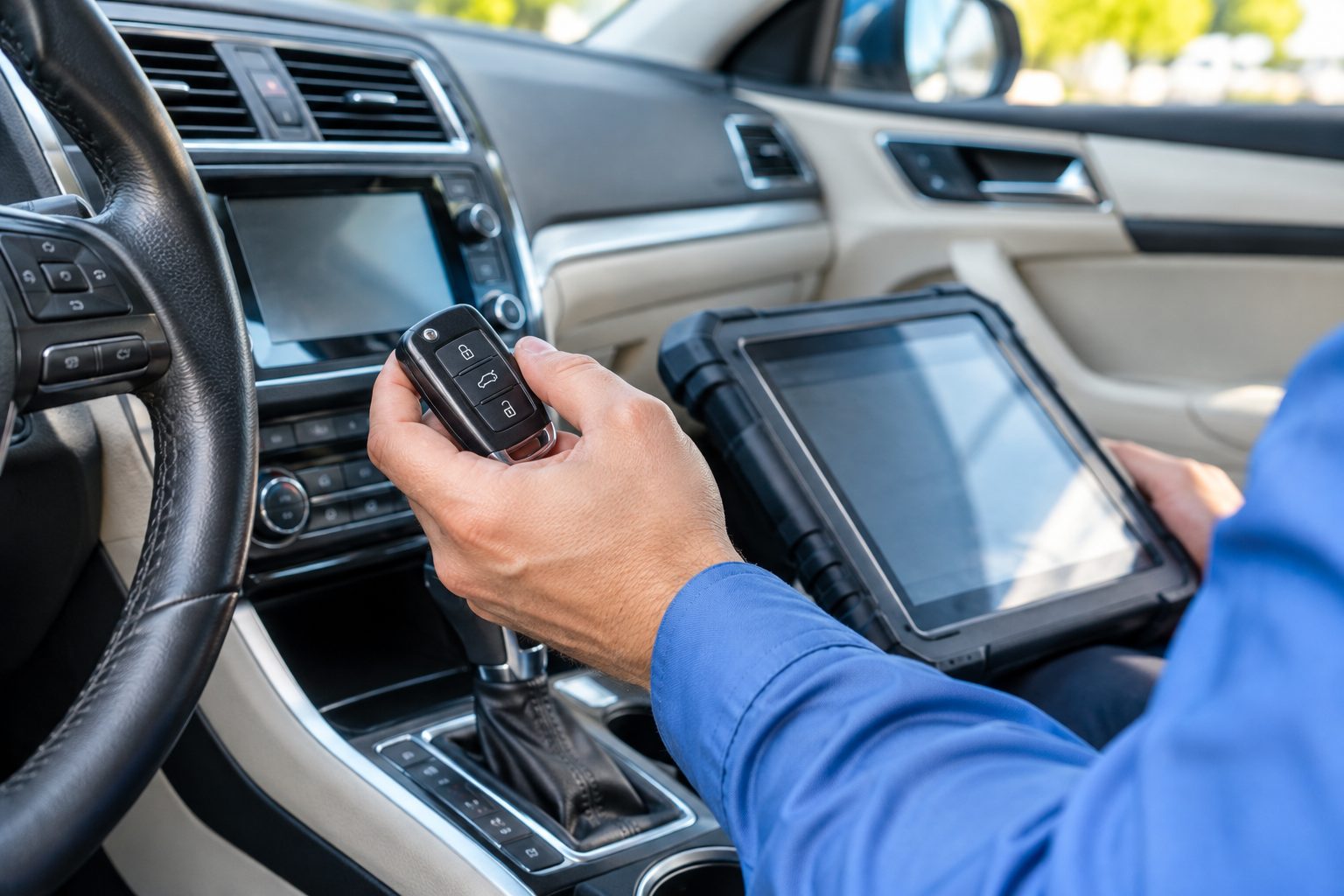
Mobile key cutting is a simple idea with a lot of equipment behind it. Instead of you driving to a hardware counter, a technician arrives in a service vehicle that is set up like a small workshop. Inside are battery or inverter powered cutting machines, a large range of key blanks, a set of tools for reading and testing locks, and, for vehicle work, programming equipment that talks to the car. The goal is to let you stay where you are, whether that is your driveway, your office lobby, or a parking space at a shopping center.
This matters most in the moments when leaving is hard. If you have one key and need a second, handing that key to a stranger across a counter and waiting leaves you without access. If a vehicle will not start or you are looking after a child or a pet, you may not be able to go anywhere at all. If a business owner is alone at the shop, closing up to run an errand costs a day of work. Mobile service removes the trip.
It is also worth saying what mobile key cutting is not. It is not a promise that every key in the world can be made in a driveway. Some keys need a particular machine, a blank that has to be ordered, or a bench setup that does not fit in a vehicle. A responsible locksmith will tell you which category your key falls into on the phone, before a technician is sent.
The most common mobile jobs involve standard pin tumbler keys for houses, apartments, mailboxes, padlocks, and filing cabinets. These keys have well known profiles, and the blanks are stocked in large numbers. A technician can match the keyway, cut the copy, deburr it, and test it in the lock while you watch. Most of the time, this takes far less effort than the trip to a counter and back.
Many car keys can also be cut on site. A traditional metal car key with no chip is similar to a house key. A transponder key is a two step job: the blade is cut to fit the doors and ignition, and the chip is programmed so the vehicle accepts it. Both steps are normally done at the vehicle, which is a good reason for mobile service. Our page on transponder key programming explains the chip side in more depth.
Laser cut keys, which have a groove milled into the blade rather than cuts along the edge, are also common on newer vehicles. They need a different type of machine, and many mobile locksmiths carry one. Keys that are less likely to be cut on site include certain restricted key programs, very old keys for obsolete locks, and keys that have to be generated from factory data supplied only to a limited group of sources.
A fair description of mobile work includes its limits. Some high security keys have restricted blanks that are controlled by the manufacturer. Copying them requires proof of authority and sometimes a registration card. A technician may be able to take your information on site and order the blank, or they may suggest a shop visit where the right machine is available. In either case you should hear about it on the phone first, not after a technician has already arrived.
Some vehicle keys also fall outside what can be done in the field. A few makes require factory access for certain security systems, or need a part that is not carried in stock. Some European vehicles and some newer models require specific tools and authorization. Again, the honest path is for the locksmith to tell you what the job needs, give you the facts about what can be done where you are, and let you decide.
If you are in doubt, call and describe what you have. A good dispatcher will ask about the make, model, and year of the vehicle, or the brand and type of the lock, and will tell you whether the job normally goes on site. For complicated jobs, an on-site visit may be needed first so the technician can look at the lock or vehicle directly. The service call charge and the process are explained on the phone before anyone is dispatched.
The visit starts with the call. You describe the key, the lock or vehicle, and the location. The dispatcher asks a few questions to understand the job, explains how pricing works, and quotes the work by phone. Nothing is quoted by text or by guesswork in advance of that conversation. If the call charge and the process sound right to you, a technician is dispatched.
On arrival, the technician confirms what the job is. They look at the original key, inspect the lock or the vehicle, and verify that the plan matches what you were told. If the job is a vehicle key, they will ask for identification and proof of ownership. This is a standard and responsible step, and it protects you from someone else obtaining a key to your car.
The technician then cuts the key. You can watch the process, and you are welcome to ask questions. Once the key is cut, it is tested in the lock or in the vehicle. If it is a transponder key, the technician programs it and checks that the vehicle starts and that the doors, trunk, and any remote functions respond. You pay at the end, according to the terms explained on the phone. The visit is complete when you have a key that turns smoothly and you know how to care for it.
A few minutes of preparation saves time at the door. Find the working key you want copied, if you have one, and wipe it clean. A key that is gritty or oily can affect how it sits in the machine. If you are asking for several keys, put them together and note which lock each one operates. If the key is for a vehicle, have the vehicle where the technician can reach it and the ignition accessible.
Gather your identification and something that shows you are entitled to have the key made. For a house, that can be a utility bill or lease. For a vehicle, it can be the registration or title along with your photo identification. If the vehicle belongs to a company, a letter or a work order is useful. These are the documents a careful technician will ask for, and our page on documents needed for car key replacement lists them in more detail.
Clear a little space. A technician cutting a key on the driveway needs room to work. If your car is in a garage, pull it out if you can. If the lock is behind a gate, make sure access is arranged. Keep pets and children out of the way of the equipment. These small steps cut the time of the visit and help the technician concentrate on getting the key right.
Central Florida conditions affect mobile work in practical ways. Summer afternoons can push the temperature inside a parked car well beyond comfortable, and plastic key heads and fobs soften when they are overheated. A technician will often prefer to work in shade or inside a garage when possible. Sudden afternoon thunderstorms are common in the warm months, and a key cutting setup does not belong in the rain. If weather turns, a good technician will suggest moving the work under cover, and you should feel comfortable asking for that.
Humidity is the quiet factor. Brass and steel keys that have been exposed for years can show surface corrosion, and a lock that is stiff from moisture can make a perfect copy feel rough. A technician who sees this will usually suggest cleaning the lock or applying a suitable lubricant before blaming the new key. Our guide on humidity and lock longevity explains why this happens and what helps.
Orlando also has a large number of visitors, rental cars, and short term residents. Mobile service is often the only practical option for someone staying in a hotel or a vacation rental who has lost a key. It is also helpful for the many residents who work nights or in shifts and cannot reach a counter during daytime hours.
Cutting a key is only part of the job. A well made copy is one that matches the original within a very small tolerance, has clean edges, and turns the lock without force. A technician should check several things before handing the key over. First, the blank must match the keyway and the brand. Second, the shoulder or tip stop must be set properly so the cuts are in the right place. Third, burrs must be removed. Fourth, the key must be tested in the lock several times, including by locking and unlocking the door from both sides.
If a key requires force, sticks when you remove it, or feels different from the original, mention it at once. It may be a slight misalignment that can be recut in moments. It is much easier to fix a copy at the door than to find out a week later that your new key works only when you wiggle it. We cover this situation in our page on keys that work only sometimes.
For vehicle keys, the checks go further. The key must start the vehicle, but also operate the door locks, the trunk, and any remote buttons. If the vehicle has a separate valet or glove box lock, those should be tried too. A technician who is careful about this will not leave until you confirm that the key does everything the original does.
Mobile key cutting is useful beyond individual households. A small business can have extra keys made at the shop without closing. A property manager with several units can have keys cut at the building, which speeds up turnovers and reduces the risk of a key being misplaced on the way to a counter. A church, school, or community group may need several copies of a door key and can have them cut on site.
For buildings with master key systems, restricted keys, or access control, the technician will ask who authorizes new keys. Some systems are controlled by the owner or a security contractor, and copies must be approved by that person. A responsible locksmith will not copy keys that are marked for restricted use without confirming authority, and this protects the building. You can read more on our page about master key systems.
Whenever you have several keys to cut, tell the dispatcher how many and what types. The planning helps the technician bring the right blanks and set aside enough time for testing each one. It also helps you ask for a quote that reflects the whole job.
The best time to arrange mobile key cutting is before you are in a hurry. If you can plan a visit, you can choose a time that suits you, have the paperwork ready, and ask any questions without pressure. If you cannot wait, the same steps apply, only faster. You will be told what the service call charge is and what the work is likely to involve before a technician is dispatched.
If your situation is complicated, such as a vehicle with no remaining keys or a lock that has been damaged, say so at the start. Those jobs sometimes need an on-site visit to evaluate, and it is better to know that in advance. Our spare key duplication page explains how to plan your set of copies, and our page on how mobile locksmith service works gives a wider picture of the process.
When you are ready, call and tell us what you need. We will ask a few questions, explain the next step, and quote the job by phone. If you are not sure what kind of key you have, that is fine, because describing what you see is enough to start.
No. Most house keys, many car keys, and common padlock keys can be cut on site. Restricted keys, some high security keys, and a few vehicle keys need parts, authorization, or machines that are not carried in a van. Describe the key when you call, and you will be told whether the job fits on site before anyone is dispatched.
Yes, in most cases. The technician needs to confirm the job, verify identification for vehicle keys, and test the finished key in the lock or the car with you. For property managers and businesses, an authorized person must be present or must approve the work in advance. Arrangements can be discussed on the phone.
Tell the technician right away. A copy that sticks or does not turn may need a small recut, or the lock itself may be worn or dirty. Testing the key several times before the visit ends is part of a proper job. If a problem appears later, call and describe what the key is doing, and a technician can look at it.
Often, yes. Many vehicles with transponder keys can be cut and programmed at the car. The technician will ask for the make, model, and year, as well as identification and proof of ownership. Some makes need factory access or other tools, and the dispatcher can tell you whether yours is a good fit for on-site work.
Quotes are given by phone after you describe the key and the location. There is a service call charge, and it is explained before dispatch. Complicated jobs may need an on-site visit so the technician can look at the lock or the vehicle. Nothing is decided by guesswork, and you can ask questions before agreeing to the visit.
Do not wait until it fails. Mobile service is well suited to this situation because you keep the key while the copy is made. Clean the key, bring it to the technician, and have at least one spare cut and tested. Keep the original in a safe place and make future copies from it rather than from a copy.
Describe the situation by phone and we will tell you what the job involves. Quotes are given by phone. Jobs that cannot be quoted without seeing them need a technician on site, and the service call charge is explained on the phone before anyone is dispatched.