The cylinder is the part of a lock that reads your key. It is also the part most often changed, because swapping or rekeying it controls who can open the door without replacing the whole lock. Knowing the cylinder type tells you what your options are.
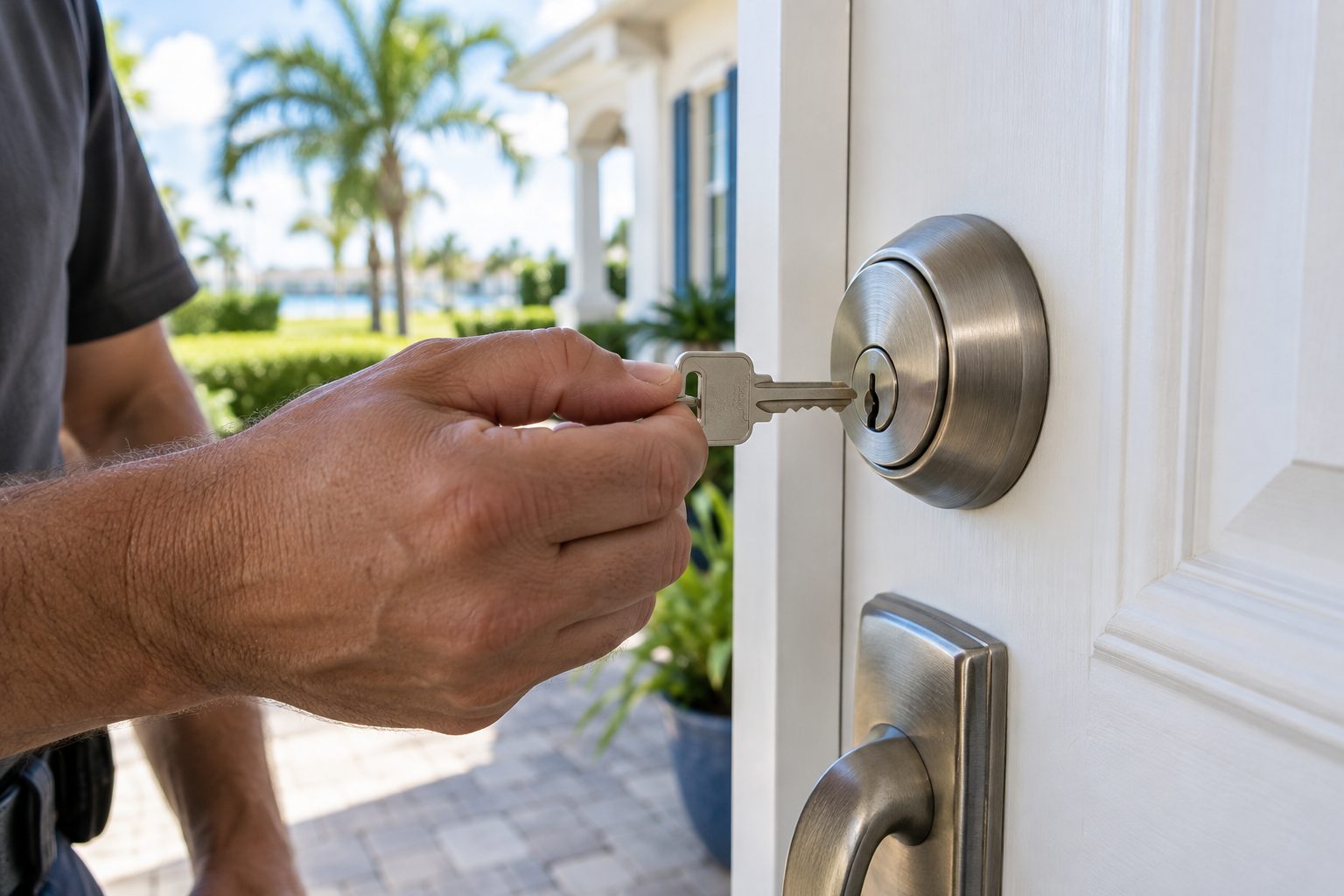
A lock has two jobs. One is to hold the door shut with a bolt or latch. The other is to decide who is allowed to move that bolt. The cylinder handles the second job. Inside is a set of small pins or discs that line up only when the correct key is inserted. When they line up, the plug in the middle can turn, and that turn moves the bolt through a cam or tailpiece.
Because the cylinder is a self-contained part, it can often be changed without touching the rest of the lock. That is useful. If a key is lost, a tenant moves out or a business changes staff, the owner does not need a new door or even a new lockset. A technician can rekey the cylinder so old keys no longer work, or swap in a different cylinder entirely. The rest of the hardware stays on the door.
Different doors use different cylinder shapes. Houses in Orlando neighborhoods such as College Park or Winter Park often have standard pin-tumbler cylinders inside a knob or deadbolt. Older storefronts and some historic buildings use mortise cylinders threaded into a lock body set into the edge of the door. Many commercial doors with push bars or surface-mounted locks use rim cylinders. Each has its own size, thread, cam and options, which is why a locksmith will want to see the lock before ordering parts.
A rim cylinder is the type that sits on the inside face of a door and connects through a hole to a surface-mounted lock. You see it on many older apartment doors, on some night latches, and on exit-device trim where a key is used from outside. The cylinder is usually a round barrel with a flat tailpiece that passes through the door and engages the lock case on the interior side. A metal ring or collar holds it to the outside of the door.
Rim cylinders are fairly easy to change in principle, but the fit matters. The tailpiece length has to match the door thickness and the lock case. The hole size and the mounting screws have to align. If the cylinder is too short the tailpiece will not reach, and if it is too long it will bind. A technician will measure the door, check the existing cylinder and confirm the keyway before selecting a replacement.
Rekeying a rim cylinder is common. The plug is removed, the old pins are replaced with a new set that matches a new key, and the cylinder goes back into the door. This takes a short visit when the cylinder is in good condition. If the cylinder is worn, corroded or damaged, replacement is usually the better move, and a technician can explain which path makes sense once they have seen it.
A mortise cylinder is a threaded, collar-style cylinder that screws into a mortise lock body. The lock body is a rectangular case that sits in a pocket cut into the edge of the door. You see this in many storefronts, older homes, office suites and institutional buildings. The cylinder has external threads and a cam on the back that engages the lock body. A small set screw usually holds it in place from the edge of the door.
Mortise cylinders are sold in various lengths to match the door and the trim. The length is measured from the shoulder to the back, and the cam type depends on the lock body brand. Some use a standard cam, some use an offset cam, and some use a tailpiece. A technician will measure these and match them so the cylinder sits flush and turns smoothly.
The great advantage of this design is that the cylinder can be changed in minutes without dismantling the lock body. A business that wants to rekey after an employee leaves can often keep the same lock and trim. If the mortise lock body itself is worn, the page on mortise lock service explains what repair or replacement looks like. For businesses with many doors, a master key plan can tie them together, as discussed on master key systems.
An interchangeable core, often called an IC core, is a cylinder insert that can be removed with a dedicated control key. The housing stays in the door, and the core slides out and a different core slides in. The housing is shaped like a standard rim, mortise or knob cylinder, so the same system can be used throughout a building.
Facilities choose this design for a simple reason: speed and control. When a tenant leaves or a staff member loses a key, the manager swaps the core instead of rekeying pins. The whole job can happen in seconds at the door. The old core can be rekeyed later on a bench and reused somewhere else. This makes IC systems popular in apartment complexes, property management offices, schools, medical suites and vacation rental operations around Orlando.
The trade-off is that cores need good key control. The control key is powerful, because it can remove cores. Whoever holds it can change the lock. A business using IC cores should keep a written list of who holds control keys, store spares securely and restrict who is allowed to swap cores. For more on this idea, read key control policies for businesses.
Rekeying changes the internal pins so a new key works and old keys do not. The cylinder stays, the lock stays, and the finish stays. It is the usual choice when the hardware is in good condition and the goal is simply to control who has keys. After a move, a breakup, a tenant turnover or a lost key, it is often the right answer.
Replacing the cylinder makes sense when the old one is worn, corroded, damaged or does not match a new system. If the key turns hard even after cleaning, if the plug has loose play, or if the keyway is chewed up, a new cylinder avoids a repeat call. Replacing also lets you choose a different keyway, a higher-security cylinder with pick-resistant features, or a cylinder that matches other doors in your system.
Sometimes you will want both. A technician can swap in a better cylinder and key it to match your other locks. The guide on rekey versus replace lays out the reasoning in more detail, and the page on lock rekeying covers the standard home process. The point is to match the fix to the condition of the hardware, not to default to the most involved option.
Cylinders are not universal. Each brand and product line has its own keyway, which is the shape of the slot the key slides into. Some keyways are common and widely stocked. Others are restricted, meaning blank keys are only sold to authorized distributors, which makes duplication harder and more controlled. A locksmith will look at the key and the cylinder to identify the keyway.
Compatibility also depends on the cam or tailpiece, the thread pitch for mortise cylinders, and the length for both rim and mortise types. Pairing a cylinder with the wrong lock body can lead to a lock that feels fine at first but fails when the cam does not fully engage the bolt. This is a common reason a quick online purchase turns into a second visit.
If you want your new cylinders to work with your existing keys on other doors, say so before the visit. A technician can match a keyway, pin to an existing key or create a keyed-alike set. For how keyed-alike systems work, see how keyed-alike locks work. When you have a property with a mix of old and new hardware, expect the technician to propose a simple plan rather than rekeying every door in a single visit.
A healthy cylinder turns with light pressure and returns smoothly. Trouble usually appears gradually. The key starts to feel stiff, sticks halfway, or needs a wiggle to turn. The plug may rotate partially and spring back. The key may work in the morning and fail in the afternoon, or work from one side of the door and not the other.
Visible signs matter too. A cylinder collar that is loose or spinning, a keyway full of grit, or green and white corrosion around the face points to moisture or wear. In Central Florida, daily humidity and summer storms push moisture into outdoor cylinders. If a rim cylinder on a back door or a mortise cylinder on a storefront is outdoors for long periods, the pins can swell and stick. The page on locks rusted from salt and humidity explains what to look for.
Do not wait for a total failure. A cylinder that is sticking now can seize completely when you need to leave in a hurry. If you notice multiple warning signs, plan a visit while the door still works, since replacing a working cylinder is simpler than removing a broken one. For a key that has snapped or lodged, read about broken key extraction.
A typical visit starts with a short phone call. You describe the door, the type of lock and the reason for the change. The technician asks whether it is a house, apartment, shop or office, how many cylinders are involved, and whether you have working keys. Quotes are given by phone for standard jobs. Complicated or unclear situations need an on-site look, and the service call charge is explained before anyone is dispatched.
On site, the technician identifies the cylinder type, removes it, inspects it and tests the lock. If rekeying, they disassemble the plug, change the pins and test the new keys several times. If replacing, they fit the new cylinder, check the cam alignment and test the bolt through its full travel. They will also check the strike and the door alignment, since a cylinder that turns smoothly while the door is binding is not a finished job.
You should receive every new key, and you should test each one before the technician leaves. Ask the technician to mark which key belongs to which door when there are several. Keep a note of the keyway and the date, since this makes future duplication easier. If you manage a property, record which cylinders were changed and who received keys.
A few minutes of preparation make the visit smoother. Gather all existing keys for the doors involved. If a key is lost, say so, since it changes whether the technician needs to remove the cylinder rather than operate it with a key. Take a photo of the existing cylinder from both sides of the door, and note any brand name stamped on the face.
Clear the area around the door. Move any furniture, remove tape or paint that covers the edge of the door and make sure the technician can reach the cylinder. For mortise cylinders, the set screw is on the door edge, and it may be hidden by paint. If you manage a building, tell tenants in advance and arrange access to each unit.
If you have a plan for how you want keys to work, share it. Do you want one key for the front and back doors? A separate key for the shed or the pool gate? A master key for a manager? Say so upfront. It is far easier to key a set correctly the first time than to redo it. The page on master key systems explains how hierarchies are built.
When a cylinder is being changed anyway, it is a good moment to ask whether a better one is justified for the door. Standard pin-tumbler cylinders offer basic protection. Higher-security cylinders add extra pins with unusual shapes, restricted keyways, drill-resistant inserts and designs that resist common attack methods. The right level depends on the door, the neighborhood and what the lock protects.
A cylinder is only as strong as the hardware around it. A high-security cylinder in a flimsy lock body or a door with a weak frame is a mismatch. Check the strike plate, the screws that hold it, the door edge and the hinges. The page on high-security locks describes the options, and the guide on lock bumping and pick resistance explains what the extra features are meant to resist.
Do not buy features you will not use. A restricted keyway is useful when you want control over duplication. An IC core is useful when you swap keys often. If you have a single front door and a family that rarely changes, a quality standard cylinder, correctly installed, may be all you need. A good technician will say so rather than push an upgrade.
One common mistake is buying a cylinder online without measuring. Lengths and cams vary, and a cylinder that is a few millimeters off will either not fit or not turn the bolt. Another is tightening the set screw too far, which can crush the threads of a mortise cylinder. A third is lubricating the cylinder with oil, which attracts dust and gums the pins. Use a dry graphite or lock-specific lubricant sparingly, as described in lock lubrication and maintenance.
Another mistake is rekeying a cylinder that is already failing. If the plug is worn or the pins are damaged, the new key will feel just as stiff as the old one, and you will be calling again in a few weeks. A technician who sees a worn cylinder should recommend replacement and explain why.
Finally, some people forget that a new cylinder does not fix a door problem. If the door sags, the latch will bind regardless of the cylinder. A smooth cylinder on a misaligned door still feels stiff. Ask the technician to check the door while they are there. Fixing alignment and cylinder wear together is more efficient than treating them as separate calls.
Call when a key is lost, when someone with access should no longer have it, when a cylinder is sticking or when you are changing a tenant, employee or contractor. Call before a move if you want the locks changed on the day you take possession. Call after any break-in or attempted entry, since a damaged cylinder may still look intact.
When you call, describe the door, the type of lock if you know it, what is happening and how many cylinders are involved. Mention whether the door is exterior or interior, whether it is part of a business and whether you want a new key system. The more clearly you describe the situation, the better the phone quote will match the actual job.
If you are not sure which type of cylinder you have, a photo helps. Describe what you see, even if you do not know the terms. A technician can usually tell from a description or photo which type is installed and what the options are. When you are ready, call and talk it through. Quotes come by phone, and the service call charge is explained before anyone is sent.
A rim cylinder passes through the door and connects to a surface-mounted lock on the inside face. A mortise cylinder screws into a lock body set into the edge of the door. Both are keyed the same way inside, but they have different shapes, threads and cams, so one cannot simply be swapped for the other without changing the lock body.
Most pin-tumbler cylinders in good condition can be rekeyed. Some restricted or high-security models can only be rekeyed by authorized distributors or the manufacturer. A worn, corroded or damaged cylinder is usually better replaced. A technician will examine it and tell you honestly whether rekeying or replacement is the better option for that door.
An interchangeable core is a removable cylinder insert released by a control key. It lets a facility swap the lock in seconds without disassembling pins. It suits apartment communities, offices and rentals with frequent turnover. A single-family home rarely needs one, since standard rekeying is simple enough for occasional changes.
No. Rekeying changes the pins so only the new key works and the old keys no longer turn the plug. That is the point of the service. If you want one old key to keep working, the technician can match the new pins to that key instead, but any other copies would continue to work as well.
Most single cylinders take a short visit once the technician has the right part. Time depends on the lock type, how many doors are involved and whether the cylinder is stuck or corroded. A mortise cylinder is often quick to swap. Multiple doors, restricted keyways or damaged hardware take longer, and the technician can explain when you call.
Quotes are given only by phone. Describe the lock type, how many cylinders you have and what you want done. Standard jobs can be quoted from that description. Complicated jobs need an on-site look, and a service call charge applies, which is explained on the phone before any technician is dispatched.
Describe the situation by phone and we will tell you what the job involves. Quotes are given by phone. Jobs that cannot be quoted without seeing them need a technician on site, and the service call charge is explained on the phone before anyone is dispatched.