A door that drags, a handle that wobbles or a latch that will not catch is rarely a sign the whole door needs replacing. Most of these problems come from a few small parts that wear, loosen or drift out of line. Here is how a technician finds the cause and fixes it.
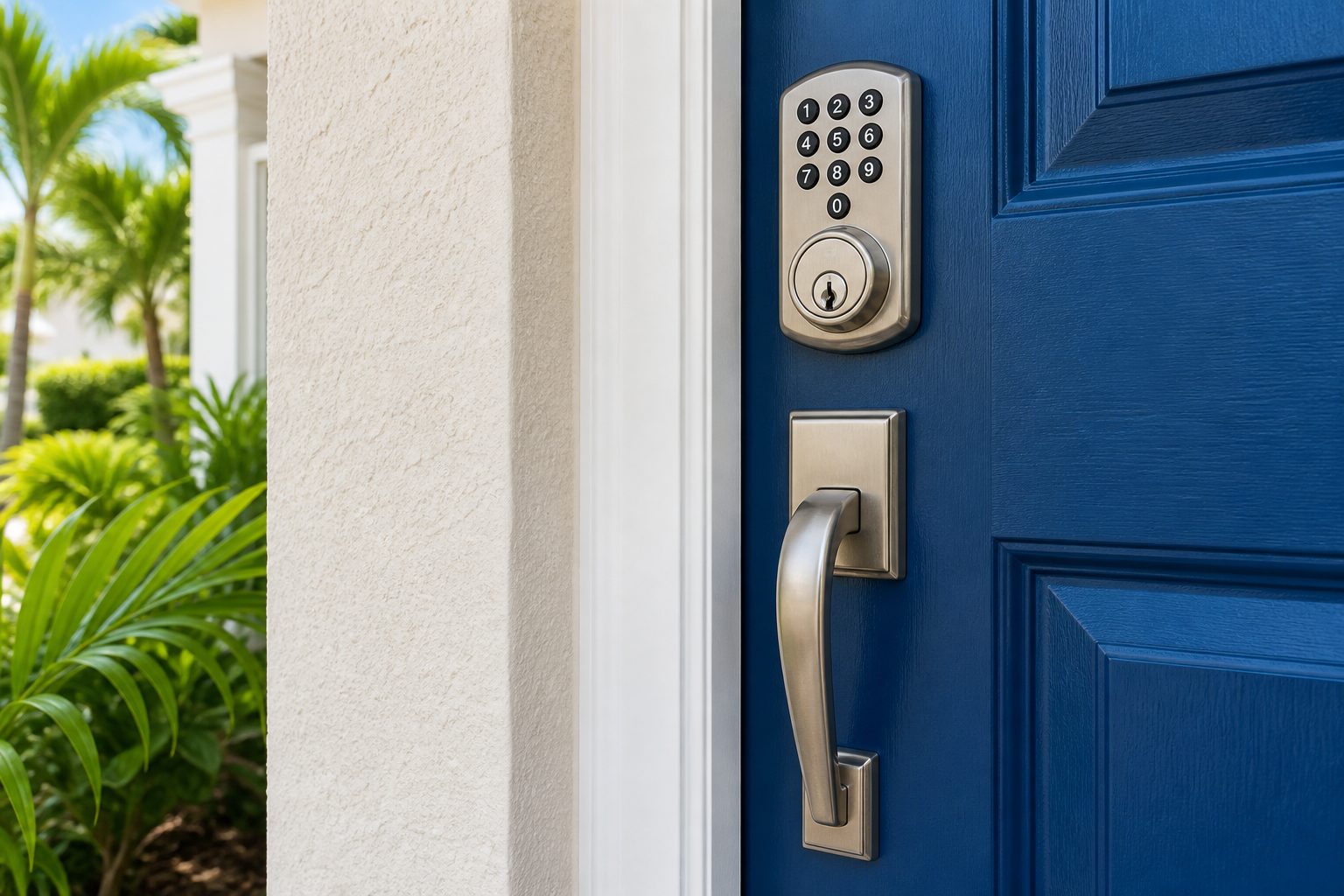
A door is a moving assembly: a slab, hinges, a latch, a strike plate, a handle and a frame, all depending on each other. When one part shifts by a fraction of an inch, the others start to compensate and wear faster. The first signs are subtle. You need to lift the handle slightly to latch the door. The deadbolt needs a push to slide home. The door rubs at the top corner on the latch side.
In Central Florida the weather does a lot of this work. Humidity makes wood doors and frames swell in summer and shrink in drier months, which moves everything slightly. Heavy exterior doors with large glass panels or decorative inserts put steady strain on the hinges. Daily use, kids hanging on handles and doors that are slammed all contribute.
The good news is that most of these issues are fixable on site, in a single visit, with hand tools and common replacement parts. The skill is in diagnosing the real cause rather than replacing the visible part. A new handle on a door that is sagging on its hinges will feel good for a week and then loosen again.
The most common root cause of hardware trouble is a door that has dropped. Over time, hinge screws loosen in their holes or the wood around them crumbles, and the door sags toward the latch side. That moves the latch and bolt out of line with the strike, so the door catches, rubs the frame or fails to latch at all.
You can often see it. Look at the gap around the door: a gap that is wide at the top on the hinge side and narrow or absent at the bottom on the latch side is a classic sign of a sag. Look for shiny rub marks on the edge or frame.
A technician will check the hinges first, particularly the top one, which carries the most strain. Loose screws can often be replaced with longer ones that reach the solid framing behind the jamb. If the screw holes are stripped, they may be filled and re-drilled. In some cases a hinge has bent or worn and should be replaced. Correcting the sag usually fixes the latch trouble without touching the lock. This kind of alignment work is also the first step before installing any new electronic lock, as covered on the smart lock repair page.
A handle that moves or rattles is more than an annoyance. The screws and spindle that hold it can work loose, and a loose handle puts uneven force on the latch inside the door, which then wears out sooner. A handle that can twist on the door can also pull its inner mounting apart.
Often the fix is as simple as tightening set screws or mounting screws. If the handle was installed with the wrong length spindle, or the rose does not sit flat against the door, it will keep working loose until that is corrected. Worn or stripped threads in the mounting posts are another cause, and a cracked handle casting needs to be replaced entirely.
Lever handles can also sag with age as an internal spring weakens. A lever that drops down instead of resting level is a sign the return spring is tired, and that part is usually replaced with the handle set. For information on new lever hardware and ADA friendly choices, the lever handle installation page goes into detail on sizes and fitting. If a handle has come off completely, the door handle fell off page explains what happened and what comes next.
The latch is the beveled bolt that springs out of the door edge and holds the door closed. It has to slide in and out smoothly thousands of times. Over the years the spring weakens, dirt and corrosion build up, and the bevel wears. A worn latch may stick in the extended position, fail to spring back fully, or let the door rattle.
A sticking latch can sometimes be cleaned and lubricated, but lubricating a worn mechanism only delays the problem. A technician will remove the latch, check how it moves and replace it if it is worn. Latches come in standard sizes, so replacement is usually quick when the correct backset and faceplate shape are matched.
Be cautious with heavy oil sprays, which attract dust and gum up the mechanism in humid weather. A dry graphite or Teflon based lubricant works better on moving latch parts, and the lock lubrication and maintenance page explains which products suit which parts. If the latch works but the door still will not stay shut, the problem may be on the other side of the gap: the strike plate.
The strike plate is the metal plate screwed into the door frame where the latch and bolt land. If it sits a few millimeters too high, too low or too far out, the door can feel like it is fighting the frame. You may hear a click and then find the door springs open, or have to lean on the door to make the deadbolt engage.
A common way to diagnose this is to rub a bit of lipstick, chalk or washable marker on the latch, close the door and see where the mark transfers on the strike. If the mark lands at the edge rather than the center of the opening, the strike is out of line. Sometimes the answer is to move the strike slightly. Other times the opening needs to be filed or the frame mortise adjusted.
A technician will also look at the screws holding the strike. Short screws that bite only into the thin jamb trim are a common weakness. Longer screws that reach the framing behind improve both alignment stability and strength. For a full explanation of why frames split and what reinforcement does and does not do, read the strike plate and door frame reinforcement page.
A deadbolt that is stiff in the door may not be a lock problem at all. If the bolt works smoothly when the door is open and sticks when the door is closed, the problem is alignment between the bolt and the strike. Pushing or lifting the door to make the bolt move is a clear sign.
Other causes include a bolt that has been painted over, grit or debris in the bolt channel, and a thumb turn that has loosened on its shaft. A bolt that has swollen in a damp season may also bind in a tight hole. Persistently forcing a stiff deadbolt can bend the bolt or break the internal cam.
If a bolt will not retract at all, it is more serious. A jammed bolt can trap you in or out. The separate page on a deadbolt that will not retract explains how that situation is handled. Do not put a tool into the mechanism to force it. A calm call and a technician with the right equipment is the safer route.
Hardware near the coast or on an exposed porch lives a harder life. Salt air and humidity corrode springs, screws and latch components over time. Brass finish can tarnish and plated parts can flake. Rust on screws can cause them to seize or snap when someone tries to tighten them.
Metal and fiberglass doors resist swelling better than wood, but their hardware still faces the same corrosion. Storm exposure matters too: after a heavy storm, a door that was fine can suddenly misalign as frames shift, trim swells or the house moves slightly. The page on a front door that will not lock after a storm goes through these situations.
Corrosion resistant hardware is available for exterior use, and a technician can recommend finishes that last longer in Florida conditions. Replacing rusty screws with stainless steel ones when new hardware is installed is a small step that pays off. A little regular maintenance can add years to door hardware.
A good repair visit is an inspection first and a repair second. The technician works through the door as a whole before replacing anything, so you do not pay for parts you do not need.
Having this list in mind also helps you describe the problem on the phone. The more precisely you can say where the door rubs, which part feels loose and when the problem started, the better the preparation.
Most door hardware problems end in an adjustment or a small part replacement. Tightening or lengthening hinge screws, shifting a strike plate and swapping a worn latch often restore a door completely. Replacing the whole lockset is reasonable when the finish is badly worn, the internals are failing or the hardware no longer suits the door.
Replacing a door or frame is a separate matter. If the frame is rotted, split or soaked, hardware will never hold properly and the work may involve a carpenter. A technician will say so frankly rather than cover a structural problem with a new handle.
Quotes are given only by phone. Simple adjustments and part swaps can often be priced after a conversation, while doors with visible damage or complicated problems need an on site visit. A service call charge applies and is explained before anyone is dispatched.
Before you call, spend a minute looking at the door. Note where it rubs, whether the problem is worse in certain weather and whether the lock itself still turns smoothly when the door is open. If you can, take a photo of the gap around the door and of the handle and strike plate. Do not remove parts to take pictures, since reassembly can introduce new problems.
Tell the dispatcher what kind of door it is, whether it is an interior or exterior door and whether it is a house, apartment or business. Mention any recent events such as painting, a storm, a move or a break in attempt. Rental tenants should check with the landlord before authorizing changes to hardware.
When you are ready to have a door that closes, latches and locks properly again, call and describe what is happening. A short, accurate description helps the technician arrive with the right parts and fix the real cause the first time.
That usually means the door has dropped on its hinges, so the latch no longer lines up with the strike opening. Lifting the door brings it back into line. The lasting fix is tightening or replacing hinge screws, and sometimes shifting the strike plate, rather than changing the handle. A technician can usually correct it in a single visit.
Often yes. Loose mounting screws, set screws or a mismatched spindle can usually be corrected. If the threads are stripped, the casting is cracked or the return spring has failed, replacement of the handle set makes more sense. The technician checks the whole assembly so the new handle does not loosen again for the same reason.
A small amount of dry graphite or a Teflon based lubricant is generally better than heavy oil, which collects dust and gums up in humid weather. Lubrication will not cure a worn latch or a misaligned strike, though. If the latch is worn or the door is out of line, the lubricant only delays the repair.
In Florida it is common. Humidity makes wood doors and frames swell, which tightens the fit. The door may release in drier months. If the sticking is severe or the hardware binds year round, the door may need adjustment, and a technician can tell whether it is seasonal swelling or a sagging hinge.
Technicians can repair or reinforce hardware and frames that are cracked or split, and replace the lock. Heavily damaged doors may need a carpenter. For the security side, the page on lock change after a break in explains the usual steps, and a technician can assess how much the door itself needs.
Prices are given by phone only. A straightforward adjustment or part swap can often be quoted after you describe the problem. Doors with visible damage or several issues need an on site visit. A service call charge applies and is explained before a technician is sent, so you know the terms in advance.
Describe the situation by phone and we will tell you what the job involves. Quotes are given by phone. Jobs that cannot be quoted without seeing them need a technician on site, and the service call charge is explained on the phone before anyone is dispatched.
Many hardware complaints are misdiagnosed because people focus on the part that is visible instead of the motion of the whole door. A technician starts by opening and closing the door slowly several times, watching how the latch meets the strike and whether the door scrapes, lifts, or drifts. Looking at the gap along the top and sides of the door shows if it has dropped. Pressing on the handle and listening can reveal a loose spindle or a worn spring. This simple observation often explains why a lock that tests fine on the bench still fails at the door, and it prevents unnecessary replacement of good parts.
Once the cause is narrowed, the technician tests one variable at a time. They may loosen a strike plate screw to see whether the door latches more easily, back off a hinge screw to check for binding, or hold the latch in with a tool to find out whether the bolt is actually the stubborn part. Taking things apart in that order keeps the repair targeted and avoids creating new problems. Customers can help by describing exactly when the trouble occurs, such as only in rainy weather, only when the door is pulled shut hard, or only after the house has been closed up.
Afterward, the technician explains what was found in plain language, including which parts were worn and which were fine. If a simple adjustment solved the issue, you will hear that directly, and if replacement parts are the better path, the reasons are explained. The scope and any quote are explained before work begins. Ask what you can do to extend the life of the repair, such as keeping hinges tightened and avoiding slamming. Check the door again over the next few weeks, since wood and frames can shift slightly as seasons change and humidity moves.
Door hardware lasts longer when it is treated gently and checked occasionally. Once a season, open the door and test the handle, the latch, and the deadbolt separately, noting anything that feels gritty, loose, or hesitant. Tighten visible screws gently with the right size driver, and stop if a screw spins without gripping, since that means the wood behind it has worn and needs a longer screw or a proper repair. Wipe dust and grit from the latch face. Avoid heavy oils, which can attract debris, and ask the technician which lubricant suits your particular lock if you are unsure.
Watch the door itself, not just the hardware. If a door starts rubbing at the top corner, closing with a thud, or leaving a thin band of daylight along an edge, the hinges or the frame may be shifting. Humidity in Central Florida makes wood swell in summer and shrink a little in drier months, which can change the fit without any visible damage. Pay attention to how a door sounds when it latches. A clean click suggests good alignment, while a scrape or a bounce means something is slightly off and may be worth looking at before it gets worse.
Finally, keep a little information about your doors. Note the brand stamped on the lock, the finish, and whether the door opens inward or outward. When a part wears out, that record helps the technician bring the right replacement. Take a photo of the hardware and the edge of the door where the latch sits. If you ever need help again, those photos let the conversation start with real details. Any quote is explained before work begins, and you are never expected to approve work you do not understand or that you feel is not needed.